BOARD CERTIFICATION EXAM STUDY GUIDES Lower Extremity Trauma
[Click on Image to Enlarge]
ME-P Free Advertising Consultation
The “Medical Executive-Post” is about connecting doctors, health care executives and modern consulting advisors. It’s about free-enterprise, business, practice, policy, personal financial planning and wealth building capitalism. We have an attitude that’s independent, outspoken, intelligent and so Next-Gen; often edgy, usually controversial. And, our consultants “got fly”, just like U. Read it! Write it! Post it! “Medical Executive-Post”. Call or email us for your FREE advertising and sales consultation TODAY [678.779.8597] Email: MarcinkoAdvisors@outlook.com
Medical & Surgical e-Consent Forms
ePodiatryConsentForms.com
iMBA Inc., OFFICES
Suite #5901 Wilbanks Drive, Norcross, Georgia, 30092 USA [1.678.779.8597]. Our location is real and we are now virtually enabled to assist new long distance clients and out-of-town colleagues.
ME-P Publishing
SEEKING INDUSTRY INFO PARTNERS?
If you want the opportunity to work with leading health care industry insiders, innovators and watchers, the “ME-P” may be right for you? We are unbiased and operate at the nexus of theoretical and applied R&D. Collaborate with us and you’ll put your brand in front of a smart & tightly focused demographic; one at the forefront of our emerging healthcare free marketplace of informed and professional “movers and shakers.” Our Ad Rate Card is available upon request [678-779-8597].
Carry-Oriented Currencies are higher-yielding currencies of countries where interest rates are generally higher than those of countries with lower-yielding currencies.
These higher-yielding currencies are targeted for “carry trades,” where investors borrow money in a low-interest rate currency and invest in a higher yielding currency, potentially profiting from the difference in interest rates.
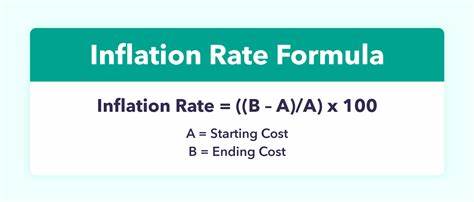
The breakeven inflation rate is the difference between the nominal yield (usually the market yield, which includes an inflation premium) on a fixed-income investment and the real yield (with no inflation premium) on an inflation-linked investment of similar maturity and credit quality.
So, if inflation averages more than the breakeven rate, the inflation-linked investment will outperform the investment with the nominal yield.
Conversely, if inflation averages below the breakeven rate, the investment with the nominal yield will outperform the inflation-linked investment.
Breakeven inflation rates are also considered useful measures of inflation expectations—higher breakeven rates represent higher inflation expectations (and higher relative prices for inflation-linked investments), while lower breakeven rates represent lower inflation expectations (and lower relative prices for inflation-linked investments).
Therefore, ideally, investors want to purchase inflation-linked investments when breakeven rates are relatively low because that’s typically when prices are also relatively low.
Spread duration is a risk measure, expressed in years, that estimates the price sensitivity of a fixed income investment to a 100 basis point change in credit spreads relative to similar-maturity Treasuries.
Spread sectors (aka “spread products,” “spread securities”) in fixed income parlance, are typically non-Treasury securities that usually trade in the fixed income markets at higher yields than same-maturity U.S. Treasury securities. The yield difference between Treasuries and non-Treasuries is called the “spread”), hence the name “spread sectors” for non-Treasuries.
These sectors–such as corporate-issued securities and mortgage-backed securities (MBS–typically trade at higher yields (spreads) than Treasuries because they usually have relatively lower credit quality and more credit / default risk and / or they have more prepayment risk.
Spread widening, tightening are changes in spreads that reflect changes in relative value, with “spread widening” usually indicating relative price depreciation and “spread tightening” indicating relative price appreciation.
In fixed income parlance, spreads are simply measured differences or gaps that exists between two interest rates or yields that are being compared with each other. Spreads typically exist and are measured between fixed income securities of the same credit quality, but different maturities, or of the same maturity, but different credit quality.
Changes in spreads typically reflect changes in relative value, with “spread widening” usually indicating relative price depreciation of the securities whose yields are increasing most, and “spread tightening” indicating relative price appreciation of the securities whose yields are declining most (or remaining relatively fixed while other yields are rising to meet them). Value-oriented investors typically seek to buy when spreads are relatively wide and sell after spreads tighten.
Stocks sank yesterday on news that Russian President Vladimir Putin lowered the threshold for using nuclear weapons, retaliation against the US for allowing Ukraine to use American-made long-range missiles. The NASDAQ and S&P 500 managed to recover, but the DJIA stayed all day in the red.
Treasury yields dropped as bonds rose.
Gold popped as traders sought safety, as the commodity benefited from the US dollar pulling back from a recent one-year high.
Bitcoin continued to climb slowly but surely, reaching another new all-time high.
Posted on June 30, 2024 by Dr. David Edward Marcinko MBA MEd CMP™
MEDICAL EXECUTIVE-POST–TODAY’SNEWSLETTERBRIEFING
***
Essays, Opinions and Curated News in Health Economics, Investing, Business, Management and Financial Planning for Physician Entrepreneurs and their Savvy Advisors and Consultants
“Serving Almost One Million Doctors, Financial Advisors and Medical Management Consultants Daily“
A Partner of the Institute of Medical Business Advisors , Inc.
The S&P 500 and NASDAQ shot to record highs last week on a solid PCE reading. But all three indexes spent Friday hovering around flat levels before they all fell into the red by the end of the trading session.
Treasury yields and gold prices alike popped higher on PCE news, with traders hoping that the Fed now has good reason to cut interest rates sooner rather than later. Despite this decline, oil wrapped up a fantastic month, with prices rising for a third straight week on higher demand this summer in the US and higher risks to supply given geopolitical turmoil between Israel and Lebanon.
But, Bitcoin continued to fall, with the crypto inching closer to the all-important $60,000 price point—a line in the sand that traders are desperate not to cross for fear of further declines.
Posted on October 3, 2022 by Dr. David Edward Marcinko MBA MEd CMP™
By Staff Reporters
***
***
Stock Market Last Week
The major indexes tried to bounce at various points last week, but ultimately fell solidly for the week, right at bear market lows.
The Dow Jones Industrial Average skidded 2.9% in last week’s stock market trading.
The S&P 500 index also retreated 2.9%. The NASDAQ composite lost 2.7%.
The small-cap Russell 2000 gave up 1.4%. For September, the Dow lost 8.8%, the S&P 500 9.3%, the NASDAQ 10.5% and the Russell 2000 10.1%.
The 10-year Treasury yield rose 11 basis points in the past week to 3.81%. The yield backed off after topping 4% early Wednesday morning, but rebounded from Friday’s lows. The 10-year Treasury yield has risen for nine straight weeks.
U.S. crude oil futures rose 1% to $79.49 a barrel in the past week, even with Friday’s 2.1% loss.
Posted on June 7, 2022 by Dr. David Edward Marcinko MBA MEd CMP™
By Staff Reporters
***
***
Cathie Wood’s ARK Innovation fund composed of high-growth tech stocks is up 17% since hitting rock bottom on May 11th compared to the S&P’s 4.4% gain over the same period.
Americans are burning through their savings and might virtually exhaust them within months. Colleague Michael Burry MD warned the US economy could suffer once consumers empty out their savings accounts. “The Big Short” investor expects rising debt and reduced savings to hit growth and company profits.
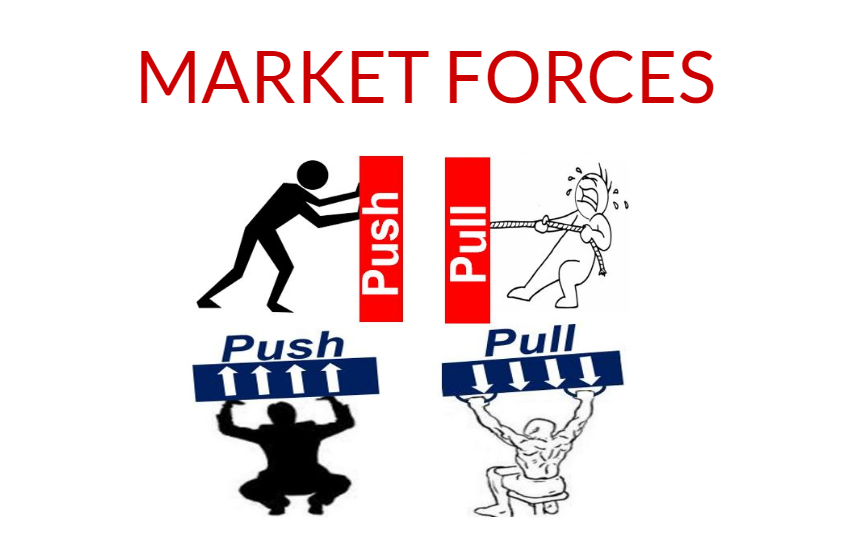
The push and pull between bond yields and equities continue with stock gains kept in check by a drop in Treasuries that pushed a swath of rates above 3%.
The CDC raised its alert level for Monkeypox to level 2 recommending that travelers wear masks, among other health measures.







 Support our online development, and advance our onground research initiatives in free market economics, as we seek to showcase the brightest Next-Gen minds.
THE ME-P DISCLAIMER: Posts, comments and opinions do not necessarily represent iMBA, Inc., but become our property after submission. Copyright © 2006 to-date. iMBA, Inc allows colleges, universities, medical and financial professionals and related clinics, hospitals and non-profit healthcare organizations to distribute our proprietary essays, photos, videos, audios and other documents; etc. However, please review copyright and usage information for each individual asset before submission to us, and/or placement on your publication or web site. Attestation references, citations and/or back-links are required. All other assets are property of the individual copyright holder.
Support our online development, and advance our onground research initiatives in free market economics, as we seek to showcase the brightest Next-Gen minds.
THE ME-P DISCLAIMER: Posts, comments and opinions do not necessarily represent iMBA, Inc., but become our property after submission. Copyright © 2006 to-date. iMBA, Inc allows colleges, universities, medical and financial professionals and related clinics, hospitals and non-profit healthcare organizations to distribute our proprietary essays, photos, videos, audios and other documents; etc. However, please review copyright and usage information for each individual asset before submission to us, and/or placement on your publication or web site. Attestation references, citations and/or back-links are required. All other assets are property of the individual copyright holder.















 The Leading Business Education Network for Doctors, Financial Advisors and Health Industry Consultants