BAD MONEY MOVES of Physicians!

By Dr. David Edward Marcinko MBA MEd

SPONSOR: http://www.MarcinkoAssociates.com

***

***

Money is a powerful tool. It can provide security, open opportunities, and help build a fulfilling life. Yet, when mismanaged, it can quickly become a source of stress and regret. Understanding the worst ways to use money is essential for anyone who wants to avoid financial pitfalls and build lasting stability.

1. Impulse Spending

One of the most damaging habits is spending without thought. Buying items on impulse—whether it’s clothes, gadgets, or luxury goods—often leads to regret and wasted resources. These purchases rarely align with long‑term goals and can drain savings meant for emergencies or investments.

2. High‑Interest Debt

Credit cards and payday loans can trap people in cycles of debt. Paying 20% or more in interest means that even small purchases balloon into massive financial burdens. Using debt irresponsibly is one of the fastest ways to erode wealth.

3. Ignoring Savings and Investments

Failing to save for the future is another critical mistake. Without an emergency fund, unexpected expenses like medical bills or car repairs can derail financial stability. Similarly, neglecting investments means missing out on compound growth that builds wealth over time.

4. Chasing Get‑Rich‑Quick Schemes

From pyramid schemes to speculative “hot tips,” chasing unrealistic returns is a recipe for disaster. These schemes prey on greed and impatience, often leaving participants with nothing but losses. Sustainable wealth comes from patience and discipline, not shortcuts.

5. Overspending on Status

Many people waste money trying to impress others—buying luxury cars, designer clothes, or extravagant experiences they cannot afford. This pursuit of status often leads to debt and financial insecurity, while providing only fleeting satisfaction.

6. Neglecting Insurance

Skipping health, auto, or home insurance to save money may seem smart in the short term, but it can be catastrophic when disaster strikes. Without protection, one accident or emergency can wipe out years of savings.

7. Failing to Budget

Living without a plan is like sailing without a map. Without a budget, it’s easy to overspend, miss bills, or fail to allocate money toward goals. Budgeting is not restrictive—it’s empowering, because it ensures money is used intentionally.

8. Ignoring Education and Skills

Spending money without investing in personal growth is another hidden mistake. Education, training, and skill development often yield lifelong returns. Neglecting these opportunities can limit earning potential and financial independence.

Conclusion

The worst things to do with money often stem from short‑term thinking, lack of discipline, or the desire for instant gratification. Impulse spending, high‑interest debt, chasing schemes, and neglecting savings all undermine financial health. By avoiding these traps and focusing on budgeting, investing wisely, and protecting against risks, money can serve as a foundation for security and freedom rather than a source of stress.

COMMENTS APPRECIATED

Like, Refer and Subscribe

EDUCATION: Books

SPEAKING: Dr. Marcinko will be speaking and lecturing, signing and opining, teaching and preaching, storming and performing at many locations throughout the USA this year! His tour of witty and serious pontifications may be scheduled on a planned or ad-hoc basis; for public or private meetings and gatherings; formally, informally, or over lunch or dinner. All medical societies, financial advisory firms or Broker-Dealers are encouraged to submit an RFP for speaking engagements: CONTACT: Ann Miller RN MHA at MarcinkoAdvisors@outlook.com -OR- http://www.MarcinkoAssociates.com

***

***

DAILY UPDATE: Retirement Savings Up But Stock Markets Down

MEDICAL EXECUTIVE-POST TODAY’S NEWSLETTER BRIEFING

***

Essays, Opinions and Curated News in Health Economics, Investing, Business, Management and Financial Planning for Physician Entrepreneurs and their Savvy Advisors and Consultants

Serving Almost One Million Doctors, Financial Advisors and Medical Management Consultants Daily

A Partner of the Institute of Medical Business Advisors , Inc.

http://www.MedicalBusinessAdvisors.com

SPONSORED BY: Marcinko & Associates, Inc.

***

http://www.MarcinkoAssociates.com

Daily Update Provided By Staff Reporters Since 2007.
How May We Serve You?
© Copyright Institute of Medical Business Advisors, Inc. All rights reserved. 2025

REFER A COLLEAGUE: MarcinkoAdvisors@outlook.com

SPONSORSHIPS AVAILABLE: https://medicalexecutivepost.com/sponsors/

ADVERTISE ON THE ME-P: https://tinyurl.com/ytb5955z

Your Referral Count -0-

CITE: https://www.r2library.com/Resource

Americans are squirreling away a larger percentage of their earnings than ever before. In the first three months of the year, Americans stashed an average of 14.3% of their income in their 401(k)s, up from 13.5% in 2020, according to Fidelity Investments, which manages millions of accounts. That’s a record, and it also nearly approaches the 15% that’s recommended to be able to maintain your lifestyle after a 40-year career, as per the Wall Street Journal.

CITE: https://tinyurl.com/2h47urt5

🟢 What’s up

  • Planet Labs exploded 49.37% thanks to the satellite imagery stock beating Wall Street forecasts, posting its first quarter of positive cash flow and record revenue.
  • MongoDB soared 12.84% after the software company crushed analyst estimates last quarter and projected better-than-expected earnings next quarter.
  • Five Below continued the trend of discount retailers beating expectations, rising 5.59% on an impressive beat-and-raise earnings report.
  • Land’s End missed revenue forecasts but beat on profits last quarter. Shares climbed 13.02% after the clothing company promised tariffs won’t hurt its bottom line.
  • Scott’s MiracleGro rose 11.04% after the fertilizer titan reiterated its healthy forward guidance.

What’s down

  • Tesla fell yet again today, down another 14.26% thanks to a growing rift between CEO Elon Musk and President Trump.
  • Procter & Gamble fell 1.90% after the consumer goods giant announced it will slash 7,000 jobs over the next two years.
  • Brown-Forman tumbled 17.92% on poor earnings for the alcohol maker and worse-than-expected forecasts for the coming year.
  • Kimberly-Clark lost 2.27% due to an agreement to sell a majority stake in its international Kleenex tissue business.
  • PVH plunged 17.96% after the parent company of brands like Calvin Klein beat earnings estimates last quarter but predicted a much worse quarter ahead.
  • ChargePoint Holdings plummeted 22.49% thanks to a rough quarter for the EV charging company.
  • Ciena sank 12.85% following a much-weaker-than-expected quarter for the communications equipment maker.

CITE: https://tinyurl.com/tj8smmes

Visualize: How private equity tangled banks in a web of debt, from the Financial Times.

D-DAY: Normandy Landing, 1944.

COMMENTS APPRECIATED

PLEASE SUBSCRIBE: MarcinkoAdvisors@outlook.com

Thank You

***

***

***

***

EDUCATIONAL TEXTBOOKS: https://tinyurl.com/4zdxuuwf

***

Four Percent Rule VERSUS Rule of Twenty-Five

PHYSICIAN RETIREMENT PLANNING

By Staff Reporters

***

***

The rule of 25 is just a different way to look at another popular retirement rule, the 4% rule. It flips the equation (100/4% = 25) to emphasize a different part of the retirement planning process — withdrawing vs. saving.

The 4% rule outlines a safe rate to withdraw funds for 30 years without running out of money. On the other hand, the rule of 25 is a savings-focused approach, providing a quick estimate of how much you need to accumulate before exiting the workforce.

LINK: https://www.nerdwallet.com/calculator/retirement-calculator

Let’s consider a scenario to highlight the difference:

  • Rule of 25: After accounting for her Social Security and other sources of retirement income, Dr. Matie PhD plans to spend $40,000 a year in retirement. 40,000 x 25 = $1 million, so Matie would need $1 million invested to cover annual expenses of $40,000.
  • The 4% rule: Dr. Matie, now a retiree, has $1 million in retirement savings and follows the 4% rule. She can safely withdraw $40,000 annually (4% of $1 million).

CITE: https://www.r2library.com/Resource/Title/082610254

While the 4% rule helps plan withdrawals during retirement, the rule of 25 helps establish a savings goal before retirement begins.

COMMENTS APPRECIATED

Thank You

***

***

SAVINGS: Rates Plummet!

By Staff Reporters

***

***

The personal savings of Americans have plunged this year, hitting $629 billion in the second quarter of 2022, according to the Federal Reserve Bank of St. Louis. That’s down from $1.98 trillion in the second quarter of 2021, and $4.85 trillion in the second quarter of 2020, boosted by COVID-related government cash. But it’s also down from $1.41 trillion in the second quarter of 2019, before the pandemic.

In fact, the personal saving rate — meaning personal saving as a percentage of disposable income, or the share of income left after paying taxes and spending money — fell to 3.5% in August, according to the Bureau of Economic Analysis. It’s quite a U-turn: The personal saving rate recently peaked at 26.3% in March 2021 and 33.8% in April 2020. But the drop in the personal saving rate isn’t all pandemic-related: In January 2020, before the coronavirus pandemic, it was 9.1%.

But, what about doctors and other medical professionals?

***

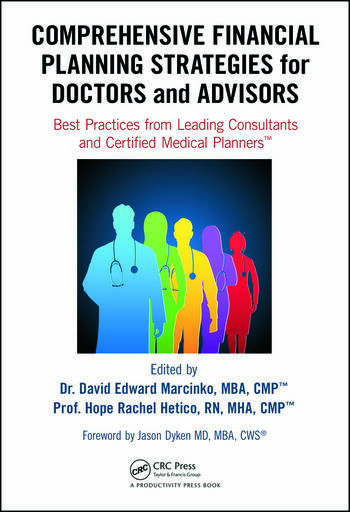
ORDER: https://www.routledge.com/Comprehensive-Financial-Planning-Strategies-for-Doctors-and-Advisors-Best/Marcinko-Hetico/p/book/9781482240283

***

COMMENTS APPRECIATED

Thank You

***

Got Cash Money in the Bank?

Join Our Mailing List

Is it Really a Long-Term Investment?

By Rick Kahler CFP® http://www.KahlerFinancial.com

Rick Kahler CFPGot money in the bank? Of course, that’s a good thing.

But, more than a fourth of Americans think the best long-term investment strategy is money in the bank. However, that may be a bad thing!

So, what about medical professionals; and what is a doctor to do?

The Bankrate Survey

Here is the rather discouraging result of a July survey by Bankrate. One of its questions was, “For money you wouldn’t need for more than 10 years, which one of the following do you think would be the best way to invest the money?”

Cash was the top choice at 26%, followed by real estate at 23%. Sixteen percent of the respondents chose precious metals such as gold. Only 14% would put their long-term investment into the stock market, and just 8% thought bonds were the best choice.

Head-on-Desk Syndrome

Doh! That thumping sound you hear is me banging my head on my desk.

I assume those who opted for cash did so because keeping money in the bank seemed to be the safest choice. For long-term investing, however, that safety is an illusion. The best and safest place to put your nest egg for the future is not in the bank, but in a well-diversified portfolio with a variety of asset classes.

Here’s why:

Savings accounts and CDs are safe places to store relatively small amounts of cash that you expect to need within the next few months or years. The funds are protected by insurance. You know exactly where your money is, and you can get your hands on it anytime you want.

Short Term Stability

This short-term safety does not make the bank a good place for money you will need for retirement or other needs ten years or so into the future. It may seem like safe investing because the amount in your account never goes down. You’re always earning interest. Yet, over time, that interest isn’t enough to keep pace with inflation. The purchasing power of your money decreases, which means you’re actually losing money. It just doesn’t feel like a loss because you don’t see the loss in value.

Stock Markets Fluctuate

In contrast, the stock market fluctuates. The media reports constantly that “the DOW is up” or “NASDAQ is down,” as if those day-to-day numbers matter. This fosters a perception that investing in the stock market is risky. Combine that with the scarcity of education about finances and economics, and it’s no wonder that so many people are afraid of the stock market and view investing almost as a form of gambling.

Wise long-term investing in the stock market is anything but gambling. Instead of trying to buy and sell a few stocks as their prices go up and down, wise investors neutralize the impact of market fluctuations by owning a vast assortment of assets.

A Dual Strategy

This is accomplished with a two-part strategy.

1. The first is to invest in mutual funds rather than individual stocks. With just one mutual fund that invests in an index of stocks, you might own thousands of different companies. Your hard-earned fortune isn’t dependent on the fortunes of just a few companies.

2. The second component is asset class diversification. An asset class is a type of investment, such as U. S. and International stocks, U. S. and International bonds, real estate investment trusts, commodities, market neutral funds, Treasury Inflation-Protected Securities, and junk bonds. Ideally, a diversified portfolio should include nine or more asset classes.

###

MD Retirement planning

###

Assessment

By holding small amounts of a great many different companies and asset classes, you spread your risk so broadly that the inevitable fluctuations are small ripples rather than steep gains or losses. As some types of investments decline in value, other types will be gaining value. Over the long term, the entire portfolio grows.

And, in the long term and for most medical professionals, investing this way is usually safer than money in the bank.

Conclusion

Your thoughts and comments on this ME-P are appreciated. Feel free to review our top-left column, and top-right sidebar materials, links, URLs and related websites, too. Then, subscribe to the ME-P. It is fast, free and secure.

Link: http://feeds.feedburner.com/HealthcareFinancialsthePostForcxos

Speaker: If you need a moderator or speaker for an upcoming event, Dr. David E. Marcinko; MBA – Publisher-in-Chief of the Medical Executive-Post – is available for seminar or speaking engagements. Contact: MarcinkoAdvisors@msn.com

OUR OTHER PRINT BOOKS AND RELATED INFORMATION SOURCES:

DICTIONARIES: http://www.springerpub.com/Search/marcinko
PHYSICIANS: www.MedicalBusinessAdvisors.com
PRACTICES: www.BusinessofMedicalPractice.com
HOSPITALS: http://www.crcpress.com/product/isbn/9781466558731
CLINICS: http://www.crcpress.com/product/isbn/9781439879900
ADVISORS: www.CertifiedMedicalPlanner.org
PODIATRISTS: www.PodiatryPrep.com
BLOG: www.MedicalExecutivePost.com
FINANCE: Financial Planning for Physicians and Advisors
INSURANCE: Risk Management and Insurance Strategies for Physicians and Advisors

Product Details  Product Details

Consumer Confidence and Savings Rates

Join Our Mailing List

Are Doctors Just Like the Rest of Us?

By Rick Kahler CFP® MS ChFC CCIM

www.kahlerfinancial.com

After a short period of saving more of their disposable income at the depths of the recent recession, Americans are returning to recent historical patterns of spending more and saving less.

Usually this trend indicates “happy days are here again” as the decline in savings means consumers’ confidence is rising. That is not the case today. Consumer confidence is just half of what it was at the peak of the “good old days” of 2007. That year our national savings rate was 2.1%, just above its post-WWII low in 2005 of 1.5%.

A Jobless Recovery?

As millions of jobs disappeared and consumers hunkered down during the 2008-09 recession, our savings rate almost tripled. In 2008 it was 6.2%. This thriftiness didn’t last long; by the fall of 2011 our savings rate was back to a paltry 3.6%.

American Not Always Big Spenders

We were not always such spenders. During the four years of WWII we saved over 20% of disposable income annually. Between 1974 and 1992 the savings rate often bounced between 7% and 11%. Since 1992, the beginning of the unprecedented 18-year bull market in stocks, our personal savings rate reflected the good times in the economy and averaged just 4%.

Savings Rate Decline

One possible reason for the decline in the savings rate in the past three years may be that we’re paying off all the consumer debt that got us into trouble in the first place. In 2000 our individual debt load (including student loans and mortgages) was $19,750 per person. In the fall of 2011 it was $36,420, 8.6% less than the 2008 high but 85% higher than the 2000 amount.

Running out of Money?

While Americans are not substantially reducing their debt, their equity in home ownership plunged from $12.9 trillion in 2006 to $6.2 trillion in 2011. No wonder consumer confidence is so low.

It appears our return to low savings rates isn’t the result of renewed optimism, paying down personal debt, or a surging economy, but rather that Americans are running out of money in the face of staggering personal debt and declining net worth. This leaves them incredibly vulnerable to another downturn in the economy.

Ironically, Americans’ personal finances are a reflection of our government’s fiscal woes. Washington also finds itself compromised to respond to a national emergency because of a debt that exceeds our national income.

Personal Three-Pronged Approach

There isn’t much you and I can do about our government’s over-indebtedness and overspending except to vote for politicians that promise to end the insanity and hold them accountable. But, we can take better care of our own affairs with a three-pronged approach.

1. Get out of debt. We may not be able to earn more or work harder, but I’ll guarantee you that we can spend less.

2. Start saving for emergencies. You need one savings account for periodic expenses like medical deductibles and car repairs. A second is for bona fide emergencies like losing your job or the death of a spouse. It should represent six to 12 times your monthly expenses.

3. Start investing for financial independence. Ideally, you need to put aside 15% to 35% of your income for the time you no longer can or want to work.

Assessment

The hardest part of this approach is becoming willing to downsize your lifestyle. Too many of us say we are willing to cut spending and economize until it actually comes time to do it. In the two decades before the recession, Americans got out of the habit of making hard decisions in our own best interests. However, as our historical patterns show, we’ve treated ourselves with “tough love” in the past. When we have to, we can do it again.

Conclusion    

And so, your thoughts and comments on this ME-P are appreciated. When it comes to consumer confidence and savings rates, are doctors and medical professionals just like the rest of us?

Please review our top-left column, and top-right sidebar materials, links, URLs and related websites, too. Then, subscribe to the ME-P. It is fast, free and secure.

Link: http://feeds.feedburner.com/HealthcareFinancialsthePostForcxos

Speaker: If you need a moderator or speaker for an upcoming event, Dr. David E. Marcinko; MBA – Publisher-in-Chief of the Medical Executive-Post – is available for seminar or speaking engagements. Contact: MarcinkoAdvisors@msn.com

Our Other Print Books and Related Information Sources:

Health Dictionary Series: http://www.springerpub.com/Search/marcinko

Practice Management: http://www.springerpub.com/product/9780826105752

Physician Financial Planning: http://www.jbpub.com/catalog/0763745790

Medical Risk Management: http://www.jbpub.com/catalog/9780763733421

Healthcare Organizations: www.HealthcareFinancials.com

Physician Advisors: www.CertifiedMedicalPlanner.com

Subscribe Now: Did you like this Medical Executive-Post, or find it helpful, interesting and informative? Want to get the latest ME-Ps delivered to your email box each morning? Just subscribe using the link below. You can unsubscribe at any time. Security is assured.

Link: http://feeds.feedburner.com/HealthcareFinancialsthePostForcxos

Sponsors Welcomed: And, credible sponsors and like-minded advertisers are always welcomed.

Link: https://healthcarefinancials.wordpress.com/2007/11/11/advertise


Product Details  Product Details