I was recently interviewed by Millennial Investors podcast. They sent me questions ahead of time that they wanted to ask me “on the air”. I found some of the questions very interesting and wanted to explore deeper. Thus, I ended up writing answers to them (I think through writing). You can listen to the podcast here.
By the way, I often get asked how I find time to write. Do I even do investment research? Considering how much content I’ve been spewing out lately, I can understand these questions. In short – I write two hours a day, early in the morning (usually from 5–7am), every single day. I don’t have time-draining hobbies like golf. I rarely watch sports. I have a great team at IMA, and I delegate a lot. I spend the bulk of my day on research because I love doing it.
This is not the first time I was asked these questions. If you’d like to adapt some of my daily hacks in your life, read this essay.
How has Covid-19 changed the game of value investing?
Value investing has not changed. Its fundamental principles, which I describe in “The Six Commandments of Value Investing,” (one-click sign up here to receive it in your inbox) have not changed one iota. The principles are alive and well. What has changed is the environment – the economy.
I learned this from my father and Stoic philosophers: You want to break up complex problems into smaller parts and study each part individually. That way you can engage in more-nuanced thinking.
Let’s start with what has not changed. Our desire for in-person human interaction has not changed. At the beginning of the pandemic, we (including yours truly) were concerned about that. We were questioning whether we were going to ever be able to shake hands and hug again. However, the pandemic has not changed millions of years of human evolution – we still crave human warmth and personal interaction. We need to keep this in mind as we think about the post-pandemic world.
What we learned in 2021 is that coronavirus mutations make predicting the end of the pandemic an impossible exercise. From today’s perch it is safe to assume that Covid-19 will become endemic, and we’ll learn how to live with it. I am optimistic on science.
Let’s take travel, for example. Our leisure travel is not going to change much – we are explorers at heart, and as we discovered during the pandemic, we crave a change in scenery. However, I can see business travel resetting to a lower base post-pandemic, as some business trips get resolved by simple Zoom calls. Business travel is about 12% of total airline tickets, but those revenues come with much higher profit margins for airlines.
Work from home. I am still struggling with this one. The norms of the 20th-century workplace have been shaken up by the pandemic. Add the availability of new digital tools and I don’t need to be a Nostradamus to see that the office environment will be different.
By how much?
The work from home genie is out of the bottle. It will be difficult to squeeze it back in. My theory right now is that customer support, on-the-phone types of jobs may disproportionately get decentralized. The whole idea of a call center is idiotic – you push a lot of people into a large warehouse-like office space, where they sit six feet apart from each other and spend eight hours a day on the phone talking to customers without really interacting with each other. Current technology allows all this work to be done remotely.
On another hand, I can see that if you have a company where creative ideas are sparked by people bumping into each other in hallways, then work from home is less ideal. But again, I don’t think about it in binary terms, but more like it’s a spectrum. Even for my company. Before the pandemic, half of our folks worked outside of the IMA main office in Denver. Most of our future hires will be local, as I believe it is important for our culture. However, we provide a certain number of days a year of remote work as a benefit to our in-office employees.
From an investment perspective, we are making nuanced bets on global travel normalizing. We don’t own airlines – never liked those businesses, never will. Most of their profitability comes from travel miles – they became mostly flying banks.
Office buildings I also put into a too-difficult-to-call pile. There was already plenty overcapacity in office real estate before the pandemic, and office buildings were priced for perfection. The pandemic did not make them more valuable. Maybe some of that overcapacity will get resolved through conversion of office buildings into apartments. By the way, this is the beauty of having a portfolio of 20–30 stocks: I don’t need to own anything I am not absolutely head over heels in love with.
What is the importance of developing a process to challenge your own beliefs?
My favorite quote from Seneca is “Time discovers truth.” My goal is to discover the truth before time does. I try to divorce our stock ownership from our feelings.
Let me give you this example. If you watch chess grandmasters study their past games, they look for mistakes they have made, moves they should have made, so in the future they won’t make the same mistake twice. I have also noticed they say “white” and “black,” not “I” and “the opponent.” This little trick removes them from the game so that they can look for the best move for each side. They say “This is the best move for white”; “This is the best move for black.”
You hear over and over again from people like Warren Buffett and other value investors that we should buy great companies at reasonable prices, and I’d like to dig deeper on that idea and its two key parts, great companies and reasonable prices. Could you tell us what it takes for a company to qualify as a “great” company?
This question touches on Buffett’s transformation away from Ben Graham’s “statistical” approach, i.e., buying crappy companies that look numerically cheap at a significant discount to their fair value, to buying companies that have a significant competitive advantage, a high return on capital, and a growth runway for their earnings.
The first type of companies often will not be high-quality businesses and will most likely not be growing earnings much. Let’s say the company is earning $1. Its earnings power will not change much in the future – it is a $5 stock trading at 5 times earnings. If its fair value is $10, trading at 10 times earnings, And if this reversion to fair value happens in one year, you’ll make 100%. If it takes 5 years then your return will be 20% a year (I am ignoring compounding here). So time is not on your side. If it takes 10 years to close the fair value gap, your return halves. Therefore you need a bigger discount to compensate for that. Maybe, instead of buying that stock at a 50% discount, you need to buy a company that is not growing at a 70% discount, at $3 instead of $5. This was pre-Charlie Munger, “Ben Graham Buffett.”
Then Charlie showed him there was value in growth. If you find a company that has a moat around its business, has a high return on capital, and can grow earnings for a long time, its statistical value may not stare you in the face. But time is on your side, and there is a lot of value in this growth. If a company earns $1 today and you are highly confident it will earn $2 in five years, then over five years, if it trades at 10 times earnings, a no-growth company may be a superior investment if the valuation gap closes in less than 5 years, while one with growing earnings is a superior investment past year 5.
Both stocks fall into the value investing framework of buying businesses at a discount to their fair value, looking for a margin of safety. With the second one, though, you have to look into the future and discount it back. With the first one, because the lack of growth in the future is not much different from the present, you don’t have to look far.
There is a place for both types of stocks in the portfolio – there are quality companies that can still grow and there are companies whose growth days are behind them. In our process we equalize them by always looking four to five years out.
What qualifies as a “reasonable price”?
We are looking for a discount to fair value where fair value always lies four to five years out. In our discounted cash flow models, we look a decade out. Our required rate of return and discount to fair value will vary by a company’s quality. There are more things that can go wrong with lower-quality companies than with the better ones. High-quality companies are more future-proof and thus require lower discount rates. We are incredibly process-driven. We have a matrix by which we rate all companies on their quality and guestimate their fair value five years out, and this is how we arrive at the price we want to pay today.
Why do you believe that buying great companies sometimes isn’t a great investing strategy?
Because that is first-level thinking, which only looks at what stares you in the face – things that are obvious even to untrained eyes and thus to everyone. First-level thinking ignores second-order effects. If everyone knows a company is great, then its stock price gets bid up and the great company stops being a great investment. With second-level thinking you need to ask an additional question, which in this case is, what is the expected return? Being a great company is not enough; it has to be undervalued to be a good stock.
We are looking for great companies that are temporarily (key word) misunderstood and thus the market has fallen out of love with them. Over the last decade, when interest rates only declined, first-level thinking was rewarded. It almost did not matter how much you paid for a stock. If it was a great company, its valuations got more and more inflated.
You’re a big advocate of having a balanced investment approach that is able to weather all storms. What investments have you found that you expect will be able to hold their buying power if inflation persists through 2022 and 2023?
There are many different ways to answer this question. In fact, every time I give an answer to this question I arrive at a new answer. You want to own companies that have fixed costs. You want assets that have a very long life. I am thinking about pipeline companies, for instance. They require little upkeep expense, and their contracts allow for CPI increases (no decreases); thus higher inflation will add to their revenue while their costs will mostly remain the same.
We own tobacco companies, too. I lived in Russia in the early ’90s when inflation was raging. I smoked. I was young and had little money. I remember one day I discovered that cigarette prices had doubled. I had sticker shock for about a day. I gave up going to movies but somehow scraped up the money for cigarettes.
Whatever answer I give you here will be incomplete. It’s a complex problem, and so each stock requires individual analysis. In all honesty, you have to approach it on a case-by-case basis.
With higher inflation, you’d expect bond yields to rise, since bond investors will demand a higher return to keep pace with inflation. However, CPI inflation is currently over 6%, and the 10-year Treasury is sitting at 1.5%. Why haven’t we seen Treasury yields rise more, and what does it mean for investors if a spread this wide persists?
I am guessing here. My best guess is that so far investors have bought into the Fed’s rhetoric that inflation is transitory due to the economy’s rough reopening and supply chain problems. I wrote a long article on this topic. To sum up, part of the inflation is transitory but not all of it.
I am somewhat puzzled by the labor market today. I’ve read a few dozen very logical explanations for the labor shortage, from early retirement of baby boomers to the pandemic triggering a search for the meaning of life and thus people quitting dead jobs and all becoming Uber drivers or starting their own businesses. Labor is the largest expense on the corporate income statement, and if it continues to be scarce then inflation will persist.
I read that employees are now demanding to work from home because they don’t want to commute. The labor shortages are shifting the balance of power to employees for the first time in decades. This will backfire in the long run, as employers will be looking at how to replace employees with capital, in other words, with automation. If you run a fast-food restaurant and your labor costs are up 20–30% or you simply cannot hire anyone, you’ll be looking for a burger flipping machine.
If we continue to run enormous fiscal deficits, then the US dollar will crack. The pandemic has accelerated a lot of trends that were in place. We were on our way to losing our reserve currency status. Let me clarify: That is going to be a very slow, very incremental process. It will be slow because currency pricing is not an absolute but a relative endeavor, and the alternatives out there are not great. But two decades ago the US dollar was a no-brainer decision and today it is not. So we’ll see countries slowly diversifying away from it. A weaker US dollar means higher, non transitory inflation.
You wrote The Little Book of Sideways Markets, in which you point out that history shows that a sideways market typically occurs after a secular bull market. With the role that the Federal Reserve plays in the financial markets, do you still anticipate that valuations will normalize in the coming years?
I say yes, in part because declining interest rates have pushed all assets into stratospheric valuations. Rising bond yields and valuations pushed heavenward are incompatible. Yes, I expect valuations to do what they’ve done every time in history: to mean revert. In big part this will depend on interest rates, but if rates stay low because the economy stutters, then valuations will decline – this is what happened in Japan following their early-1990s bubble. Interest rates went to zero or negative, but valuations declined.
The stock market today is very much driven by the Federal Reserve’s monetary policy. Is there a point at which they are able to take the gas off the pedal and allow markets to normalize?
I am really puzzled by this. We simply cannot afford higher interest rates. Going into the pandemic our debt-to-GDP was increasing steadily despite the growing economy. In fact, you could argue that most of our growth has come from the accumulation of debt (the wonders of being the world’s reserve currency). Our debt has roughly equaled our GDP, and all of our economic growth in some years equaled the growth in government debt.
During the pandemic we added 40% to our debt in less than two years. We have higher debt-to-GDP than we had during WWII. After the war we reduced our debt. Also, we were a different economy then – we were rebuilding both the US and Europe. As a society we had a high tolerance for pain.
Just like debt increases stimulate growth, deleveraging reduces growth. Also, I don’t think politicians or the public care about high debt levels. So far debt has only brought prosperity. However, higher interest rates would blow a huge hole in government budgets. If the 10-year Treasury rises a few percentage points, interest rates will increase by the amount we spend on national defense. One thing I am certain about is that our defense spending will not decline, so higher interest rates will lead to money printing and thus inflation.
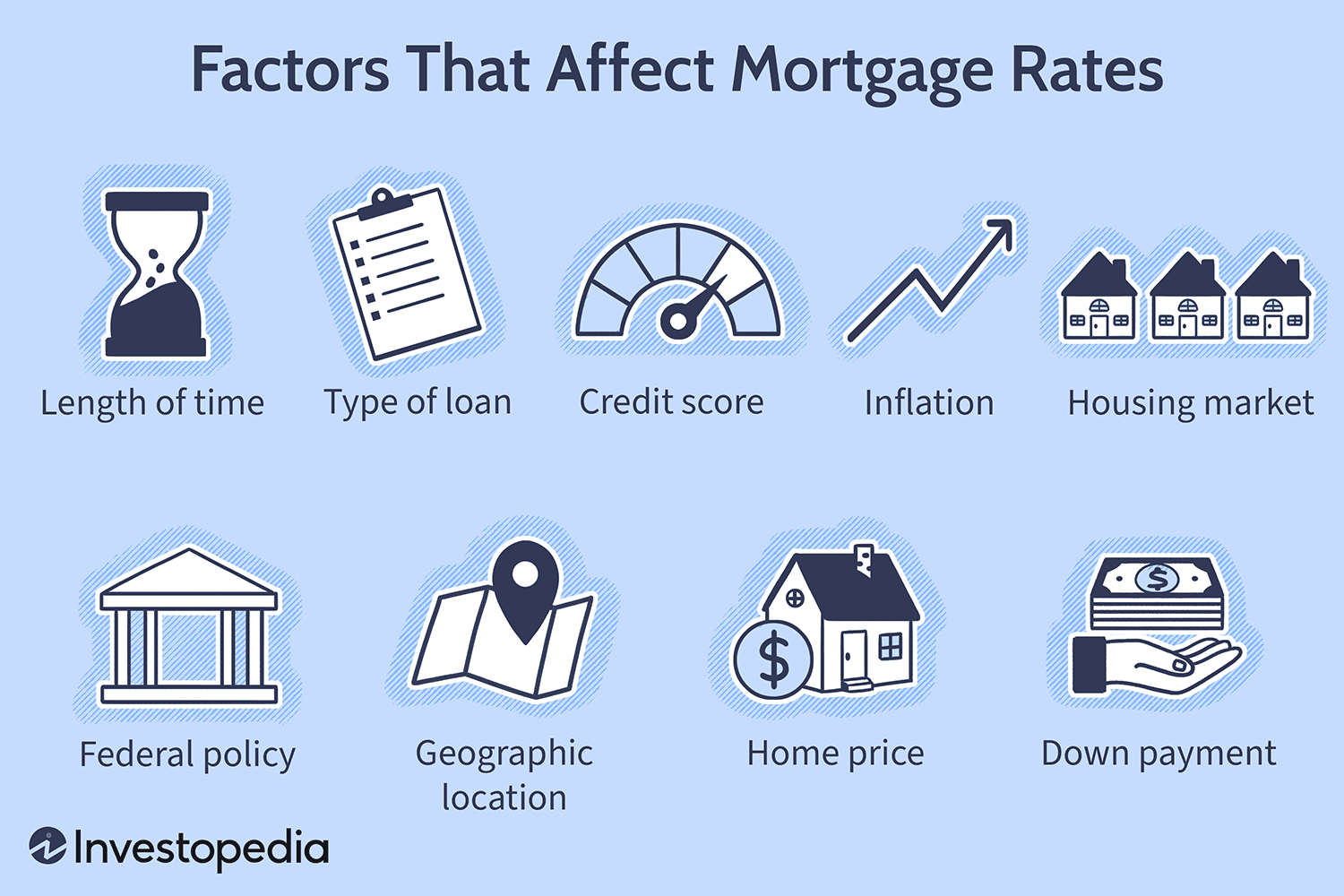
I am also puzzled by the impact of higher interest rates on the housing market. Housing will simply become unaffordable if interest rates go up a few percentage points. Loan-to-income requirements will price a huge number of people out of the market, and housing prices will have to decline. This Higher rates will also reduce the number of transactions in the real estate market, because people will be locked into their 2.5% mortgages, and if they sell they’d have to get 4-5-6% mortgages. There are a lot of second-order effects that we are not seeing today that will be obvious in hindsight. Housing prices drive demand in adjacent sectors such as home improvement. And think of the impact of higher rates on any large purchase, for example a car.
We’re seeing the continuing rise of China has a big player in the global economy, and I know you like to invest internationally. As a value investor, how do you think about China’s rise as a global powerhouse and how it might affect the financial markets?
During the Cold War there were two gravitational centers, and as a country you had to choose one – you were either with the Soviets or with the West. Something similar will likely transpire here, too. I have to be careful using the Cold War analogy, because the Cold War was driven by ideology – it was communism vs. capitalism. Now the tension is driven by economic competition and our unwillingness to pass the mantle of global leader to another country.
We are drawing red lines in technology. Data is becoming the new oil. China is using data to control people, and we want to make sure they don’t have control over our data. Therefore, the West wants to make sure that our technology is China-free. The US, Europe, and India will likely be pursuing a path where Chinese technology and Chinese intellectual property are largely disallowed. We have already seen this happening with Huawei being banned from the US and Western Europe. Other countries, including Russia, will have to make a choice. Russia will go with China.
Also, we are concerned that most chip production is centered in Taiwan, which at some point may be grabbed by China. The technological ecosystem would then have to undergo a significant transformation. This has already started to happen as we begin to bring chip production back to the US and Europe.
The pandemic made us realize that globalization had made us reliant on the kindness of strangers, and we found we could not even get facemasks or ventilators.
Globalization was deflationary; deglobalization will be inflationary.
This increased tension between countries has led to your investing in the defense industry. Could you tell us how you think about this industry?
Despite the rise of international tensions, the global defense industry has been one of sectors that still had reasonable (sometimes unreasonably good) valuations. We have invested in half a dozen US and European defense companies. The US defense budget is unlikely to decline in the near future. There is a common misperception that Republicans love defense and Democrats hate it. Those may be party taglines, but history shows that defense spending has been driven by macro factors – it did not matter who was the occupant of the White House.
There are a lot of things to like about defense businesses. They are an extension of the US or European governments. Most of them are friendly monopolies or duopolies. They have strong balance sheets, good returns on capital, and predictable and growing (maybe even accelerating) demand. They are noncyclical. They have inflation escalators built into their contracts. I don’t have to worry about technological disruptions. They are also a good macro hedge.
We added to our European defense stocks recently for several reasons. Europe has underinvested in defense, relying on the US Yet we have shown time and again that we may not be as dependable as we once were. |







 Support our online development, and advance our onground research initiatives in free market economics, as we seek to showcase the brightest Next-Gen minds.
THE ME-P DISCLAIMER: Posts, comments and opinions do not necessarily represent iMBA, Inc., but become our property after submission. Copyright © 2006 to-date. iMBA, Inc allows colleges, universities, medical and financial professionals and related clinics, hospitals and non-profit healthcare organizations to distribute our proprietary essays, photos, videos, audios and other documents; etc. However, please review copyright and usage information for each individual asset before submission to us, and/or placement on your publication or web site. Attestation references, citations and/or back-links are required. All other assets are property of the individual copyright holder.
Support our online development, and advance our onground research initiatives in free market economics, as we seek to showcase the brightest Next-Gen minds.
THE ME-P DISCLAIMER: Posts, comments and opinions do not necessarily represent iMBA, Inc., but become our property after submission. Copyright © 2006 to-date. iMBA, Inc allows colleges, universities, medical and financial professionals and related clinics, hospitals and non-profit healthcare organizations to distribute our proprietary essays, photos, videos, audios and other documents; etc. However, please review copyright and usage information for each individual asset before submission to us, and/or placement on your publication or web site. Attestation references, citations and/or back-links are required. All other assets are property of the individual copyright holder.



 8
8








 The Leading Business Education Network for Doctors, Financial Advisors and Health Industry Consultants