







 Support our online development, and advance our onground research initiatives in free market economics, as we seek to showcase the brightest Next-Gen minds.
THE ME-P DISCLAIMER: Posts, comments and opinions do not necessarily represent iMBA, Inc., but become our property after submission. Copyright © 2006 to-date. iMBA, Inc allows colleges, universities, medical and financial professionals and related clinics, hospitals and non-profit healthcare organizations to distribute our proprietary essays, photos, videos, audios and other documents; etc. However, please review copyright and usage information for each individual asset before submission to us, and/or placement on your publication or web site. Attestation references, citations and/or back-links are required. All other assets are property of the individual copyright holder.
Support our online development, and advance our onground research initiatives in free market economics, as we seek to showcase the brightest Next-Gen minds.
THE ME-P DISCLAIMER: Posts, comments and opinions do not necessarily represent iMBA, Inc., but become our property after submission. Copyright © 2006 to-date. iMBA, Inc allows colleges, universities, medical and financial professionals and related clinics, hospitals and non-profit healthcare organizations to distribute our proprietary essays, photos, videos, audios and other documents; etc. However, please review copyright and usage information for each individual asset before submission to us, and/or placement on your publication or web site. Attestation references, citations and/or back-links are required. All other assets are property of the individual copyright holder.


Delta Dental Sends More Easy Prey My Way
By Darrell K. Pruitt; DDS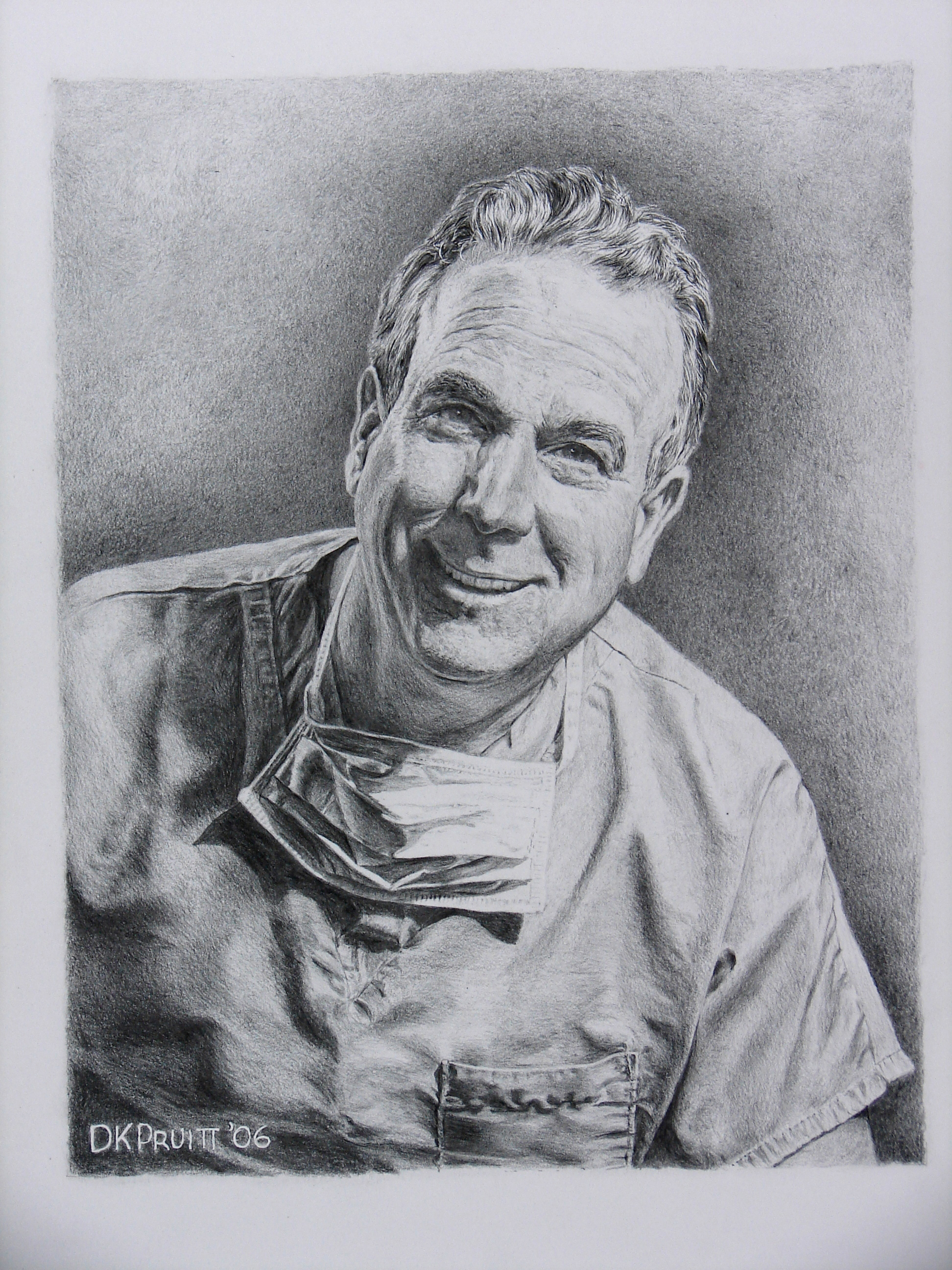
When it comes to blindsiding witless PR departments, what good is Schadenfreude if it can’t be shared for the entertainment of my large collection of quirky, unshaven sports fans – a special class of readers who would stick around to watch the sequelae of an ignited paper bag on a front porch … even if from a safe distance.
Devoted and Abandoned Employees
The rumor is, watching PR professionals silently vanish from the Internet is becoming a popular spectator sport – especially when it’s the more expensive hacks for sleazy discount dental companies like Delta Dental. I intend to show you that when someone writes really nasty things about their most devoted employees – employees who publicly donate their name and reputation to Internet branding for the interests of Delta Dental – Delta Dental will still not come to their defense (No wagering, please). The devoted and abandoned, whose objectives in life are to take hits for some team, make easy prey.
Thinking of Ari Adler
Remember Ari Adler? He heads Delta’s Corporate and Public Affairs division, and was quoted in DrBicuspid Assistant Editor Rabia Mughal’s article, “Dentists or patients: Who should get the insurance check?”
http://www.drbicuspid.com/index.aspx?d=1&sec=sup&sub=pmt&pag=dis&ItemID=301436&wf=34
It was on DrBicuspid that Adler broke the news to the nation that Delta Dental now guarantees the fillings done by their preferred providers. When confronted by a special bastard to explain Delta’s unprecedented sales pitch, Adler immediately sat his butt down and shut up. (See “I will hurt you Delta Dental”)
http://community.pennwelldentalgroup.com/forum/topics/i-will-hurt-you-delta-dental
Lost in Web Space
That was two months ago, and Adler still hasn’t uttered another peep on behalf of Delta Dental. Now doesn’t that make the air in the land of the free just a little more pleasant? And yesterday, Rabia Mughal posted another article illustrating managed care dentistry’s level of ethics titled “Study: Insurers’ market power lowers dentists’ income.”
http://www.drbicuspid.com/index.aspx?sec=sup&sub=pmt&pag=dis&ItemID=301668&wf=34
Mughal describes the findings of a study titled “The effects of insurance carrier market power on dentists and patients” that appeared in the January edition of the JADA. Here is the abstract of the study:
http://jada.ada.org/cgi/content/abstract/140/1/90
The effects of insurance carrier market power on dentists and patients
By L. Jackson Brown; DDS, PhD
By Albert H. Guay; DMD
By Donald R. House; PhD
Background
Market power among dental insurance carriers is a carrier’s ability to reimburse dentists at rates below what would exist in more competitive areas. Competition among carriers for dentists’ participation in their networks protects dentists from highly discounted fees. The authors examined the extent to which dental insurance carriers facing less competition increase fee discounts.
Methods
The authors selected a sample of dentists from listings of general practitioners. They identified 219 metropolitan areas and contacted 11,542 dentists in those areas by mail, telephone or both. A total of 8,017 dentists completed surveys (a response rate of 69.46 percent). The authors’ key focus was the possible relationship between carrier market power and the size of the fee discount. The authors compared discounts across metropolitan areas with their differing levels of insurance coverage and carrier market shares.
Results
Carrier market power was directly related to the sizes of fee discounts. The larger discounts were found where there was significant dental insurance coverage and few carriers providing this coverage. Dentists’ net incomes were significantly less in areas with larger fee discounts.
Conclusions and Practice Implications
Dental insurance carrier market power leads to increased fee discounts. These higher discounts reduce dentists’ earnings. Although the larger discounts may result in lower overall patient costs, this patient benefit is temporary. Ultimately, the number of practicing dentists in these communities will decrease as dentists seek improved practicing conditions elsewhere. This reduction will lead to overall fee increases until the earning potential of dentists is restored.
Abbreviations: IPAs: Independent practice associations. • PPO: Preferred provider organization. • UCR: Usual, customary and reasonable.
####################
As one can imagine, Delta Dental, the largest dental discount service in America, did not like what both the ADA study and Mughal had to say about discount dentistry brokers. This time though, instead of sending Ari Adler into the wide open spaces once more, Delta sacrificed a new, unsuspecting traditional-type of PR executive whose feelings have never been hurt. Her name is Janis Oshensky, and she is the vice president of professional relations for Delta Dental Plans Association.
Enter Again Ms. Janis Oshensky
Ms. Oshensky confidently said that it is her opinion that the study is flawed. Here is what Ms. Oshensky told Mughal:
“The study speculates that dentists will leave markets dominated by a few large carriers, which would lead to higher fees for uninsured patients and reduced access to care. In fact, the miniscule effect of concentration on the fees paid to dentists — as they are reported in the study — is unlikely to trigger a mass exodus of dentists from concentrated areas.”
Ms. Oshensky further states – on dentists’ behalf – that we actually realize that discounts do not necessarily mean less pay, and that network participation increases dental visits (for the same pay). Now that woman deserves a company wristwatch!
Devoted to Delta
To show you how devoted Oshensky is to Delta Dental, her act almost fooled me into believing that she believes the NPI number makes sense. That’s no joke. Look at what she posted on the Delta Dental Website celebrating Delta’s success, and you will see what I mean:
“Thanks to all of the dentists and health professionals who have applied for NPIs and who have notified us of their new identifiers. While we’re not ready to completely replace the current identifiers with NPIs, we’re making great progress and will work to keep dentists and their office staff informed about our NPI readiness.”
http://www.deltadentalnj.com/npi/PrepareToAccept.shtml
Now that’s talent. I would imagine that she probably charges more than Adler ever will. Her name is all over the Internet on behalf of Delta Dental, and she sounds even more enthusiastic about the NPI number than Patrick Cannady of the ADA Department of Dental Informatics did a couple of years ago when his department was still telling ADA members to quickly volunteer for the ten digit identifier. You know, come to think of it, Delta Dental’s Website closely resembles the ADA’s. How do you think that happened?
Re-Enter Rabia Mughal
My hat goes off to author Rabia Mughal. How he can successfully lure another Delta Dental slow-mover into the open following the ambush of Ari Adler is pure genius in a mis-match of wits.
Assessment
So here we go again, sports fans. Come on out, Janis Oshensky, I can make you famous. Please bring everything you know about the NPI number with you as well because I have a few questions to ask … or not. Schadenfreude macht Freude.
Conclusion
Your thoughts and comments on this ME-P are appreciated. Feel free to review our top-left column, and top-right sidebar materials, links, URLs and related websites, too. Then, subscribe to the ME-P. It is fast, free and secure.
Link: http://feeds.feedburner.com/HealthcareFinancialsthePostForcxos
Speaker: If you need a moderator or speaker for an upcoming event, Dr. David E. Marcinko; MBA – Publisher-in-Chief of the Medical Executive-Post – is available for seminar or speaking engagements. Contact: MarcinkoAdvisors@msn.com
OUR OTHER PRINT BOOKS AND RELATED INFORMATION SOURCES:
- DICTIONARIES: http://www.springerpub.com/Search/marcinko
- PHYSICIANS: www.MedicalBusinessAdvisors.com
- PRACTICES: www.BusinessofMedicalPractice.com
- HOSPITALS: http://www.crcpress.com/product/isbn/9781466558731
- CLINICS: http://www.crcpress.com/product/isbn/9781439879900
- ADVISORS: www.CertifiedMedicalPlanner.org
- BLOG: www.MedicalExecutivePost.com
- FINANCE:Financial Planning for Physicians and Advisors
- INSURANCE:Risk Management and Insurance Strategies for Physicians and Advisors


Share this:

Filed under: "Advisors Only", "Doctors Only", Alerts Sign-Up, Career Development, Ethics, Health Insurance, Managed Care, Op-Editorials, Practice Management, Quality Initiatives, Research & Development | Tagged: ADA, ADA Department of Dental Informatics, Albert Guay, Ari Adler, Darrell Pruitt, delta dental, dentists, discount dentistry, Donald House, DrBicuspid, IPAs, JADA, Janis Oshensky, L Jackson Brown, Managed Care, NPA, NPI Number, Patrick Cannady, PPOs, PR, Rabia Mughal’s, UCR | 17 Comments »






 The Leading Business Education Network for Doctors, Financial Advisors and Health Industry Consultants