ETFs: Happy 31st. Birthday

EXCHANGE TRADED FUNDS

By Staff Reporters

SPONSOR: http://www.MarcinkoAssociates.com

***
***

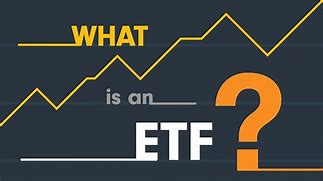
Thirty one years ago yesterday, the first exchange-traded fund (ETF) in the US launched. In the decades since, these once-niche investment products have become ubiquitous on Wall Street, disrupting the mutual fund industry and transforming people’s relationship with the stock market.

CITE: https://www.r2library.com/Resource/Title/0826102549

Exchange Traded Funds

On January 29th, 1993, a spider decoration hanging in the American Stock Exchange heralded the arrival of the first US ETF—what’s now called the SPDR S&P 500 ETF Trust. It had a measly $6.5 million in assets and no one really paid much attention to it. The first US ETF is now the world’s biggest, with $375 billion in assets, and the ETF sector in total had amassed $6.5 trillion in assets by the end of 2022. While mutual funds still have 3x the amount of assets that ETFs have, the tide is turning: Investors poured $600 billion into US ETFs on a net basis last year, but pulled out almost $1 trillion from mutual funds.

ETFs and Tax Efficiency

Definition: An ETF is simply a security that tracks the performance of a particular basket of investments, like stocks. The SPDR S&P 500 ETF, for example, tracks the performance of companies in the S&P 500. Many other ETFs also track indexes, allowing people to park their money in funds that follow the ebbs and flows of the broader market.

If that sounds like a mutual fund…it’s similar. But ETFs have a few advantages over its stuffy, older cousin.

  • ETFs generally have lower fees than mutual funds.
  • They have built-in tax benefits.
  • They’re accessible to anyone with a brokerage account—you can buy or sell them like you would a stock.

CITE: https://www.r2library.com/Resource/Title/0826102549

Finally, all these advantages aside, the rise of ETFs has been also fueled by the growing recognition that trying to invest in individual stocks is foolish. Passive index funds, which aren’t designed for frequent trading, have surged to represent almost half of US fund assets, compared to less than 2% in the early ’90s.

COMMENTS APPRECIATED

Thank You

***
ORDER: https://www.routledge.com/Comprehensive-Financial-Planning-Strategies-for-Doctors-and-Advisors-Best/Marcinko-Hetico/p/book/9781482240283

***

SPDRs vs. Index Mutual Funds

Understanding Vehicular Pros and Cons

By Dr. David Edward Marcinko MBA MEd CMP™

[Publisher-in-Chief]

It is possible to buy or sell during a trading day with SPDRs, just as one would with a common stock, and, accordingly, the trading price may be set anytime during the day. This could prove valuable in a sudden market downturn. Also, they may be traded using the same types of orders used for stocks (market, limit, at the close, and at the opening) and sold short, even on a downtick.

However, dividend reinvestment is provided by only a few brokers. Since SPDRs represent passive equity portfolios, they tend to be fully invested in the stock market, which removes a significant drag on performance; their expense ratios are significantly below that of stock mutual funds in general, and below many index mutual funds; and they have virtually no turnover and accordingly, minimal capital gains.

Index Mutual Funds

Index funds, on the other hand, may only be purchased or redeemed at the net asset value (NAV) at the end of the trading day. Short sales are not possible; however, dividend reinvestment is available.

The Disadvantages

On the down side, SPDRs are sold like common stocks and, therefore, incur brokerage commissions, but this can be minimized by using discount brokers. SPDRs have been so successful that both the American and New York Stock Exchanges launched internationally indexed products modeled after SPDRs in the spring of 1996. They are termed World Equity Benchmark Shares (WEBS) and Country Baskets.

Note: “Index Stocks: An Introduction to SPDRs—S&P 500 Depository Receipts,” Robert T. Kleiman, in his article, AAII Journal, January 1997, pp. 23–26, American Association of Individual Investors [312] 280-0170).

Conclusion

Your thoughts and comments on this ME-P are appreciated. Feel free to review our top-left column, and top-right sidebar materials, links, URLs and related websites, too. Then, subscribe to the ME-P. It is fast, free and secure.

Speaker: If you need a moderator or speaker for an upcoming event, Dr. David E. Marcinko; MBA – Publisher-in-Chief of the Medical Executive-Post – is available for seminar or speaking engagements. Contact: MarcinkoAdvisors@msn.com

OUR OTHER PRINT BOOKS AND RELATED INFORMATION SOURCES:

PRACTICES: www.BusinessofMedicalPractice.com
HOSPITALS: http://www.crcpress.com/product/isbn/9781466558731
CLINICS: http://www.crcpress.com/product/isbn/9781439879900
BLOG: www.MedicalExecutivePost.com
FINANCE: Financial Planning for Physicians and Advisors
INSURANCE: Risk Management and Insurance Strategies for Physicians and Advisors

Product DetailsProduct DetailsProduct Details

Product Details  Product Details

   Product Details 

What is an ADR / SPDR Receipt?

AMERICAN DEPOSITORY RECEIPTS AND S&P RECEIPTS

By Dr. David E. Marcinko MBA CMP®

CMP logo

SPONSOR: http://www.CertifiedMedicalPlanner.org

AMERICAN DEPOSITORY RECEIPT (ADR) = A receipt evidencing shares of a foreign corporation held on deposit or under the control of a U. S. banking institution; it is used to facilitate transactions and expedite transfer of beneficial ownership for a foreign security in the U.S. Everything is done in dollars and the ADR holder doesn’t have voting rights; essentially the same as an American Depository Share (ADS).

CITE: https://www.r2library.com/Resource/Title/0826102549

****

A Standard & Poor’s Depositary Receipt, or SPDR, is a type of exchange traded fund that began trading on the American Stock Exchange (AMEX) in 1993 when State Street Global Advisors’ investment management group first issued shares of the SPDR 500 Trust (SPY).

image-2

CITE: https://www.r2library.com/Resource/Title/0826102549

***

MORE: https://medicalexecutivepost.com/2008/02/15/about-american-depository-receipts/

S&P: https://medicalexecutivepost.com/2011/01/12/on-standard-poors-depository-receipts/

S&P Index: https://medicalexecutivepost.com/2011/01/15/spdrs-vs-index-mutual-funds/

S&P TAX: https://medicalexecutivepost.com/2011/01/30/do-spdrs-yield-tax-advantages/

YOUR COMMENTS ARE APPRECIATED.

Thank You

ORDER: https://www.amazon.com/Comprehensive-Financial-Planning-Strategies-Advisors/dp/1482240289/ref=sr_1_1?ie=UTF8&qid=1418580820&sr=8-1&keywords=david+marcinko

***

Do SPDRs Yield Tax Advantages?

How about Trading Efficiency?

By Dr. David Edward Marcinko; MBA CMP™

www.CertifiedMedicalPlanner.com

[Publisher-in-Chief]

The bull market generated large mutual fund capital gains distributions at the end of 2007; and maybe again for 2011. Accordingly, tax efficient mutual funds are getting more attention as a result. Also growing in popularity is Standard & Poor’s Depository Receipts (SPDRs), sponsored by and traded on the American Stock Exchange (AMEX). SPDRs are trusts that own stock positions that match a particular index, like the S&P 500. Investors then buy shares of the trust.

The Facts about SPDRs

Investors sell their shares of SPDRs on the Exchange rather than redeeming shares through the mutual fund. The trust does not sell stock to make cash redemptions. This avoids most of the capital gain distributions that annoy long-term investors. As a prospectus from the American Stock Exchange notes:

In-Kind Redemptions

While no unequivocal statement can be made as to the net tax impact on a conventional mutual fund resulting from the purchases and sales of its portfolio stocks over a period of time, conventional funds that have accumulated substantial unrealized capital gains, if they experience net redemptions and do not have sufficient available cash, may be required to make taxable capital gains distributions that are generated by changes in such fund’s portfolio. In contrast, the ‘in kind’ redemption mechanism of SPDRs may make them more tax efficient investments under most circumstances than comparable conventional mutual fund shares.

Fund Trading and AMEX Insight

The AMEX prospectus not only provides a detailed look at the in-kind redemption mechanism of the SPDRs, which is important to their tax efficiency, it also offers analysis of the economics of intraday SPDRs fund trading. Unlike mutual funds, for which prices are determined at the end of each trading day, SPDRs can be bought or sold at anytime during the day at the spot price. SPDRs trade like a stock, so the account does not need futures approval and shares can be sold short or margined. The SPDRs shares track the futures closely.

Assessment

The reservation that physicians and all investors, as well as we financial advisors, have is simply “Are the SPDRs expensive to trade?” The AMEX prospectus does not answer that question in so many words, but it provides the data needed to make a cost calculation. In 1996, the bid/asked spread on the SPDRs was 1/16 or less more than 62% of the time and 1/8 or less about 95% of the time. Each investor can make his or her own commission assumptions, but the range on the S&P 500 exceeded 0.5% more than 75% of the time and was greater than 1% approximately 25% of the time. With such a narrow bid/asked spread relative to the average move in the shares and a reasonable level of commissions, it is often easy to get in or out of the fund at a price appreciably better than closing NAV.

Assessment

What are these spreads today? Copies of the prospectus and other information on SPDRs are available by calling 1-800 THE AMEX

Conclusion

And so, your thoughts and comments on this ME-P are appreciated. Do you use SPDRs; why or why not? Feel free to review our top-left column, and top-right sidebar materials, links, URLs and related websites, too. Then, subscribe to the ME-P. It is fast, free and secure.

Speaker: If you need a moderator or speaker for an upcoming event, Dr. David E. Marcinko; MBA – Publisher-in-Chief of the Medical Executive-Post – is available for seminar or speaking engagements. Contact: MarcinkoAdvisors@msn.com and http://www.springerpub.com/Search/marcinko

Our Other Print Books and Related Information Sources:

Health Dictionary Series: http://www.springerpub.com/Search/marcinko

Practice Management: http://www.springerpub.com/product/9780826105752

Physician Financial Planning: http://www.jbpub.com/catalog/0763745790

Medical Risk Management: http://www.jbpub.com/catalog/9780763733421

Healthcare Organizations: www.HealthcareFinancials.com

Physician Advisors: www.CertifiedMedicalPlanner.com

Subscribe Now: Did you like this Medical Executive-Post, or find it helpful, interesting and informative? Want to get the latest ME-Ps delivered to your email box each morning? Just subscribe using the link below. You can unsubscribe at any time. Security is assured.

Link: http://feeds.feedburner.com/HealthcareFinancialsthePostForcxos

Sponsors Welcomed: And, credible sponsors and like-minded advertisers are always welcomed.

Link: https://healthcarefinancials.wordpress.com/2007/11/11/advertise

Product DetailsProduct DetailsProduct Details       

Product Details  Product Details