HOSPITALS: Understanding Different Types

By Dr. David Edward Marcinko MBA MEd CMP

SPONSOR: http://www.CertifiedMedicalPlanner.org

***

***

HOSPITAL TYPES DEFINED FOR MODERNITY

Acute Care Inpatient Hospital

An acute care inpatient hospital is a health care organization or “anchor hospital” in which a patient is treated for an acute (immediate and severe) episode of illness or the subsequent treatment of injuries related to an accident or trauma, or during recovery from surgery. Specialized personnel using complex and sophisticated technical equipment and materials usually render acute professional care in a hospital setting. Unlike chronic care, acute care is often necessary for only a short time. Measures of acute health care utilization are represented by three separate rates:

  1. Rate of admissions per 1000 patients.
  2. Average length of stay per admission.
  3. Total days of care per 1000 patients.

***

***

Psychiatric Hospital

A psychiatric hospital (behavioral health, mental hospital, or asylum) specializes in the treatment of patients with mental illness or drug-related illness or dependencies. Psychiatric wards differ only in that they are a unit of a larger hospital.

Specialty Hospital

A specialty hospital is a type of health care organization that has a limited focus to provide treatment for only certain illnesses such as cardiac care, orthopedic or plastic surgery, elder care, radiology / oncology services, neurological care, or pain management cases. These organizations are often owned by doctors who refer patients to them. In recent years, single-specialty hospitals have emerged in various locations in the United States. Instead of offering a full range of inpatient services, these hospitals focus on providing services relating to a single medical specialty or cluster of specialties.


Long-Term Care Hospital

A long-term care hospital is an entity that provides assistance and patient care for the activities of daily living (ADLs), including reminders and standby help for those with physical, mental, or emotional problems. This includes physical disability or other medical problems for 3 months or more (90 days). The criteria of five ADLs may also be used to determine the need for help with the following: meal preparation, shopping, light housework, money management, and telephoning. Other important considerations include taking medications, doing laundry, and getting around
outside.

Rural Hospital

The parameters of a rural hospital are determined based on distance. A rural hospital is defined as a hospital serving a geographic area 10 or more miles from the nexus of a population center of 30,000 or more.

More specifically, a rural hospital means an entity characterized by one of the following:

  1. Type A rural hospital—small and remote, has fewer than 50 beds, and is more than 30
    miles from the nearest hospital
  2. Type B rural hospital—small and rural, has fewer than 50 beds, and is 30 miles or less from
    the nearest hospital
  3. Type C rural hospital—considered rural and has 50 or more beds

COMMENTS APPRECIATED

EDUCATION: Books

SPEAKING: Dr. Marcinko will be speaking and lecturing, signing and opining, teaching and preaching, storming and performing at many locations throughout the USA this year! His tour of witty and serious pontifications may be scheduled on a planned or ad-hoc basis; for public or private meetings and gatherings; formally, informally, or over lunch or dinner. All medical societies, financial advisory firms or Broker-Dealers are encouraged to submit an RFP for speaking engagements: CONTACT: Ann Miller RN MHA at MarcinkoAdvisors@outlook.com -OR- http://www.MarcinkoAssociates.com

Like and Subscribe

***

***

HOSPITAL OPERATIONS: Organizations, Strategies, Techniques, Tools, Templates and Case Models

YOUR COMMENTS ARE APPRECIATED.

RELATED TEXTS: https://medicalexecutivepost.com/2021/04/29/why-are-certified-medical-planner-textbooks-so-darn-popular/

INVITE DR. MARCINKO: https://medicalexecutivepost.com/dr-david-marcinkos-

THANK YOU!

***

RURAL HOSPITALS: Defined?

By Calvin Wiese MBA CPA CMP ®

Dr. David Edward Marcinko MBA CMP®

CMP logo

SPONSOR: http://www.CertifiedMedicalPlanner.org

A Distance Definition

A rural hospital is defined as a hospital serving a geographic area ten or more miles from the nexus of a population center of 30,000 or more

More specifically, a rural hospital means an entity characterized by one of the following:

·Type A Rural Hospital — small and remote, has fewer than 50 beds, and is more than 30 miles from the nearest hospital.

·Type B Rural Hospital — small and rural, has fewer than 50 beds, and is 30 miles or less from the nearest hospital.

·Type C Rural Hospital — considered rural and has 50 or more beds.

Citation: https://www.r2library.com/Resource/Title/0826102549

As rural hospitals close, millions of Americas live ...

Your thoughts are appreciated.

INVITE DR. MARCINKO: https://medicalexecutivepost.com/dr-david-marcinkos-bookings/

THANK YOU

***

ON RURAL HEALTHCARE PROVIDERS

Executive Order Expands Tele-Medicine to Ease Burden

By Health Capital Consultants, LLC

On August 3, 2020, President Donald Trump signed an executive order aimed at expanding access to care through two avenues: telemedicine and eased financial burdens on rural providers.

Health Disparities Continue to Plague Rural Areas

And so, our colleagues for this Health Capital Topics article will discuss the executive rule and the subsequent agency actions on these fronts.

READ: https://www.healthcapital.com/hcc/newsletter/08_20/HTML/EXEC/convert_executive_telemedicine_access_expansion_8.20.20.php

ASSESSMENT: Your thoughts are appreciated.

THANK YOU

***

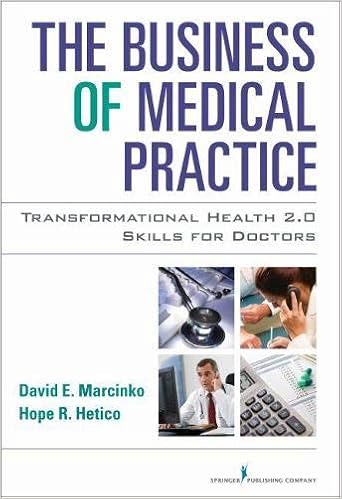
ORDER [3rd. edition] TEXTBOOK: https://www.amazon.com/Business-Medical-Practice-Transformational-Doctors/dp/0826105750/ref=sr_1_9?ie=UTF8&qid=1448163039&sr=8-9&keywords=david+marcinko

INVITE DR. MARCINKO: https://medicalexecutivepost.com/dr-david-marcinkos-bookings/

****

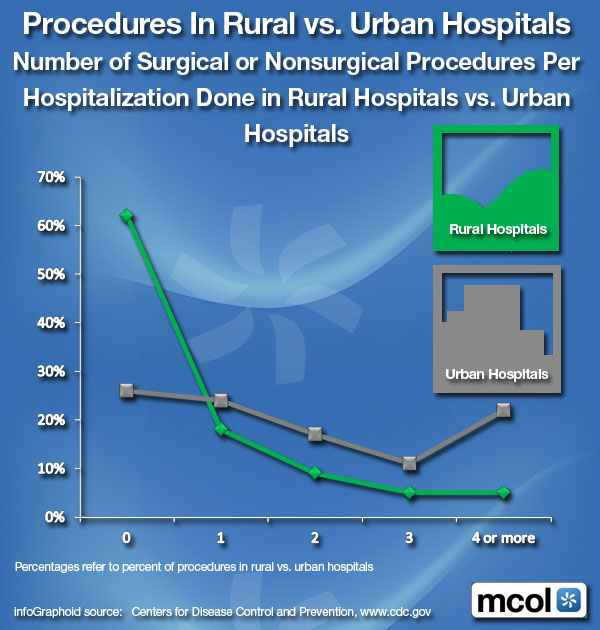
PROCEDURES: Rural v. Urban Hospitals

Appreciating the Number of Procedures Done per Hospitalization

By http://www.MCOL.com

JOURNAL RURAL HEALTH: Rural hospitals are not associated with worse postoperative outcomes for colon cancer surgery: https://onlinelibrary.wiley.com/doi/full/10.1111/jrh.12596

***

Hospitals

***

ASSESSMENT: Your thoughts are appreciated.

INVITE DR. MARCINKO: https://medicalexecutivepost.com/dr-david-marcinkos-bookings/

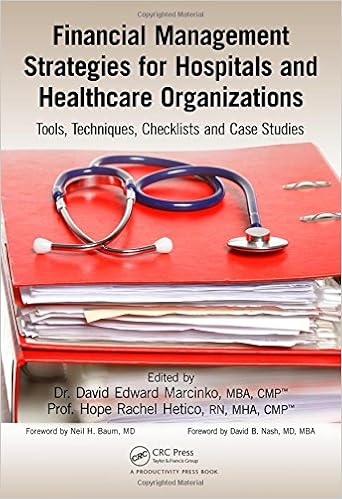
order textbook: https://www.amazon.com/Financial-Management-Strategies-Healthcare-Organizations/dp/1466558733/ref=sr_1_3?ie=UTF8&qid=1380743521&sr=8-3&keywords=david+marcinko

THANK YOU

***

Procedures in Rural v. Urban Hospitals

Join Our Mailing List

Appreciating the Number of Procedures Done per Hospitalization

By http://www.MCOL.com

Hospitals

Conclusion

Your thoughts and comments on this ME-P are appreciated. Feel free to review our top-left column, and top-right sidebar materials, links, URLs and related websites, too. Then, subscribe to the ME-P. It is fast, free and secure.

Speaker: If you need a moderator or speaker for an upcoming event, Dr. David E. Marcinko; MBA – Publisher-in-Chief of the Medical Executive-Post – is available for seminar or speaking engagements. Contact: MarcinkoAdvisors@msn.com

OUR OTHER PRINT BOOKS AND RELATED INFORMATION SOURCES:

Product DetailsProduct Details

About: Healthcare Organizations [Financial Management Strategies]

Our Print Mission Statement

[By Dr. David Edward Marcinko; MBA, CMP™]

Publisher-in-Chief

dem25As Editor-in-Chief of a two volume – 1,200 pages – premium quarterly print journal, I am often asked about our mission statement; or the journal’s raison d’etra.

A Two-Volume Guide

As so, Healthcare Organizations: [Financial Management Strategies], with its quarterly updates, will promote and integrate academic and applied research, and serve as a multi-disciplined communications forum for the dissemination of financial, managerial, business and related economic information to decision makers in hospitals, outpatient centers, clinics, medical practices and all mature and emerging healthcare organizations. 

Target Market and Ideal Reader

Healthcare Organizations [Financial Management Strategies] and its quarterly updates should be in the hands of all:

* CFOs, CEOs, COOs, CTOs, VPs and CIOs from every type of hospital and healthcare organization including: public, federal, state, Veteran’s Administration and Indian Health Services hospitals; district, rural, long-term care and community hospitals; specialty, children’s and rehabilitation hospitals; diagnostic imaging centers and laboratories; private, religious-sponsored, and psychiatric institutions.

*  Physician Hospital Organizations, Management Services Organizations (MSOs), Independent Practice Associations (IPAs), Group Practices Without Walls (GPWWs), Integrated Delivery Systems (IDSs) and their administrators, comptrollers, cost accountants, budget directors, cash managers, auditors, healthcare attorneys and consultants,  and actuaries, and all endowment fund directors, executives, consultants and strategic financial managers.

*  Ambulatory care centers, hospices, and outpatient clinics; skilled nursing facilities, integrated networks and group practices; academic medical centers, nurses and physician executives; business school and health administration students, and all economic decision-makers and directors of allopathic, dental, podiatric and osteopathic healthcare organizations.

Assessment

After publication, my suggestion is to read, study and act upon the guide in this way:

1. First, browse through the entire text.

2. Next, slowly read those chapters and sections that are of specific interest to your professional efforts.

3. Then, extrapolate portions that can be implemented in specific strategies helpful to your healthcare setting.

4. Finally, use its’ ME-P updates as a reference manual to return to time and time again; and enjoy!

Conclusion

Your thoughts and comments on this ME-P are appreciated. Feel free to review our top-left column, and top-right sidebar materials, links, URLs and related websites, too. Then, subscribe to the ME-P. It is fast, free and secure.

Speaker: If you need a moderator or speaker for an upcoming event, Dr. David E. Marcinko; MBA – Publisher-in-Chief of the Medical Executive-Post – is available for seminar or speaking engagements. Contact: MarcinkoAdvisors@msn.com

OUR OTHER PRINT BOOKS AND RELATED INFORMATION SOURCES:

Product DetailsProduct Details

A Physician by Any Other Name

Join Our Mailing List

Enter the Weekendalists and Laborists

[By Dr. David Edward Marcinko; MBA]

Publisher-in-Chief

dr-david-marcinko5More than a decade ago, in another career, I wrote a few articles for Richard L. Reece MD when he edited a print and emerging electronic trade publication for medical professionals. All very “fly”, at the time.

The Laborists

Now – according to Dr. Reece who cites the Boston Globe, in “The Birth of a Notion”, a Cape Cod and some other Massachusetts hospitals are hiring “laborists”; aka board-certified obstetricians to work regular shifts for the sole purpose of delivering babies.

www.MedicalBusinessAdvisors.com

New Causitive Drivers

What drives these new-wave specialists? The answer, of course, is the next-generation of physicians and their emerging new medical business and practice models. Much like my 12 year old daughter, it is a way of professionally breaking away from past generations, and asserting some independence and leadership. And, as Martha Stewart might say; “that’s a good thing.”

Many Reasonsbiz-book2

But, according to Reece, the real drivers are a combination of other things – the desire of doctors for regular hours, the shortage of specialists, physician burnout, the search for a safer hospital environment, the need for consistent, immediately available physician services, fear of dreaded malpractice suits, and consolidation of hospital-physicians services due to regulatory and economic pressures; etc.

Blended Generations

Dick is correct, of course, because it is not uncommon today to have three generations represented in healthcare. We have the Baby-boomers, Gen X and now, Gen Y. The Baby Boomer generation is saying with some sense of sadness that, “Medicine sure isn’t want it used to be!”, while Generation Xers are saying “It’s about time things changed!”, and the latest generation to enter the medical workforce, Gen Y’s, are saying “Ready or not, we’re here”.

http://www.BusinessofMedicalPractice.com

The Leadership Evolution

Each generation is extraordinarily complex, bringing various skills, expertise and expectations to the modern medical work environment. Determining the best method to unite such diverse thinking is one of the many challenges faced by physician executives and healthcare leaders. Is it any wonder that many medical leaders and executive in the Baby Boomer generation find themselves at a loss? The days of functional leadership are gone and suddenly, no one cares about the expertise of the Baby Boomers or how they climbed the corporate ladder, in medicine or elsewhere. Leadership in the era of Health 2.0 is no longer about command-control or dictating with intense focus on the bottom line; it is about collaboration, empowerment and communication. And, it is not about titles and nomenclature.

cmpLinguistic Evolution

As the linguistic evolution of terms progresses, the nomenclature of hospitalist was followed by that of intensivist, proceduralist, nocturalists, in-situ physician and even weekendalists. Think I’m kidding?

Link: http://medinnovationblog.blogspot.com/2009/02/hospital-based-doctorists.html

Assessment

I still like the causative analogy of my pre-teen daughter; it’s much simpler to understand. What do you think?  

References

1. Wachter, R and Goldman, R: “The Emerging Role of ‘Hospitalists’ in the American Health System’. In, New England Journal of Medicine; 335, 514-517, 1996

2. Kowalczyk, L: The Birth of a Notion: Hospitals Turning to Laborarists. Boston Globe, February 23, 2009

Conclusion

Your thoughts and comments on this ME-P are appreciated. Feel free to review our top-left column, and top-right sidebar materials, links, URLs and related websites, too. Then, subscribe to the ME-P. It is fast, free and secure.

Speaker: If you need a moderator or speaker for an upcoming event, Dr. David E. Marcinko; MBA – Publisher-in-Chief of the Medical Executive-Post – is available for seminar or speaking engagements. Contact: MarcinkoAdvisors@msn.com

OUR OTHER PRINT BOOKS AND RELATED INFORMATION SOURCES:

***

[PHYSICIAN FOCUSED FINANCIAL PLANNING AND RISK MANAGEMENT COMPANION TEXTBOOK SET]

  Risk Management, Liability Insurance, and Asset Protection Strategies for Doctors and Advisors: Best Practices from Leading Consultants and Certified Medical Planners™   Comprehensive Financial Planning Strategies for Doctors and Advisors: Best Practices from Leading Consultants and Certified Medical Planners™

[Dr. Cappiello PhD MBA] *** [Foreword Dr. Krieger MD MBA]

***

The Rural Hospital

Join Our Mailing List

Understanding Hospital Types

By Calvin W. Wiese; MBA, CPA

ho-journal8

According to Healthcare Organizations [Financial Management Strategies], the parameters of rural hospitals are determined based on distance

A Distance Definition

A rural hospital is defined as a hospital serving a geographic area ten or more miles from the nexus of a population center of 30,000 or more

More specifically, a rural hospital means an entity characterized by one of the following:

·Type A Rural Hospital — small and remote, has fewer than 50 beds, and is more than 30 miles from the nearest hospital.

·Type B Rural Hospital — small and rural, has fewer than 50 beds, and is 30 miles or less from the nearest hospital.

·Type C Rural Hospital — considered rural and has 50 or more beds.

Conclusion

Your thoughts and comments on this ME-P are appreciated. Feel free to review our top-left column, and top-right sidebar materials, links, URLs and related websites, too. Then, subscribe to the ME-P. It is fast, free and secure.

Link: http://feeds.feedburner.com/HealthcareFinancialsthePostForcxos

Speaker: If you need a moderator or speaker for an upcoming event, Dr. David E. Marcinko; MBA – Publisher-in-Chief of the Medical Executive-Post – is available for seminar or speaking engagements. Contact: MarcinkoAdvisors@msn.com

OUR OTHER PRINT BOOKS AND RELATED INFORMATION SOURCES:

Product DetailsProduct Details