BOARD CERTIFICATION EXAM STUDY GUIDES Lower Extremity Trauma
[Click on Image to Enlarge]
ME-P Free Advertising Consultation
The “Medical Executive-Post” is about connecting doctors, health care executives and modern consulting advisors. It’s about free-enterprise, business, practice, policy, personal financial planning and wealth building capitalism. We have an attitude that’s independent, outspoken, intelligent and so Next-Gen; often edgy, usually controversial. And, our consultants “got fly”, just like U. Read it! Write it! Post it! “Medical Executive-Post”. Call or email us for your FREE advertising and sales consultation TODAY [678.779.8597] Email: MarcinkoAdvisors@outlook.com
Medical & Surgical e-Consent Forms
ePodiatryConsentForms.com
iMBA Inc., OFFICES
Suite #5901 Wilbanks Drive, Norcross, Georgia, 30092 USA [1.678.779.8597]. Our location is real and we are now virtually enabled to assist new long distance clients and out-of-town colleagues.
ME-P Publishing
SEEKING INDUSTRY INFO PARTNERS?
If you want the opportunity to work with leading health care industry insiders, innovators and watchers, the “ME-P” may be right for you? We are unbiased and operate at the nexus of theoretical and applied R&D. Collaborate with us and you’ll put your brand in front of a smart & tightly focused demographic; one at the forefront of our emerging healthcare free marketplace of informed and professional “movers and shakers.” Our Ad Rate Card is available upon request [678-779-8597].
Posted on June 3, 2024 by Dr. David Edward Marcinko MBA MEd CMP™
By Staff Reporters
***
***
The “new normal” is characterized by fewer deals, smaller deal sizes, and fewer investors, Rock Health found in a recent study. And if funding in the second half of the year continues at its current pace, 2023 will be the lowest digital health funding year since 2019, according to the report, authored primarily by research associates Mihir Somaiya and Madelyn Knowles. For example, in the first half of 2023:
Digital health startups raised $6.1 billion in 244 deals. The average deal size was $24.8 million.
In Q1, startups raised $3.5 billion in 131 deals, and $2.5 billion over 113 deals in Q2.
555 investors were involved in fund raises, compared to 775 in the first half of 2022 and 832 in the first half of 2021. Of those investors, 71% had previously invested in digital health.
There were roughly 12 digital health startup acquisitions per month, compared to 15 monthly in 2022 and 14 each month for the past five years.
The lack of dollars flowing to companies is already reverberating: Some startups are closing down. Pear Therapeutics filed for bankruptcy in April and sold its assets to four buyers in May. Other digital health startups—SimpleHealth, The Pill Club, Hurdle, and Quil Health—also closed in the first half of 2023.
Assessment: There may be fewer investors overall, but those still investing in digital health are putting a lot of money down, according to Rock Health.
Posted on April 16, 2024 by Dr. David Edward Marcinko MBA MEd CMP™
MEDICAL EXECUTIVE-POST–TODAY’SNEWSLETTERBRIEFING
***
Essays, Opinions and Curated News in Health Economics, Investing, Business, Management and Financial Planning for Physician Entrepreneurs and their Savvy Advisors and Consultants
“Serving Almost One Million Doctors, Financial Advisors and Medical Management Consultants Daily“
A Partner of the Institute of Medical Business Advisors , Inc.
Here’s where the major stock market benchmarks ended:
The S&P 500 index fell 61.59 points (1.2%) to 5,061.82; the Dow Jones Industrial Average lost 248.13 points (0.7%) to 37,735.11; the NASDAQ Composite® ($COMP) dropped 290.08 points (1.8%) to 15,885.02.
The 10-year Treasury note yield (TNX) surged almost 12 basis points to 4.618%.
The CBOE Volatility Index® (VIX) rose 1.92 to 19.23.
Interest-rate-sensitive sectors like real estate and utilities were among the weakest performers Monday. Technology shares were also under pressure. The small-cap Russell 2000® Index (RUT) shed 1.4% and ended at a two-month low.
In other markets, the U.S. dollar index (DXY) strengthened for the fourth consecutive trading day and hit its highest level since early November, reflecting expectations rates will stay elevated. Volatility based on the VIX jumped near 19.50, its highest level since late October.
Monday’s session also produced technical damage on the charts of benchmarks like the S&P 500, which closed under its 50-day simple moving average, currently around 5,114, for the first time since early November. The S&P 500 has dropped almost 4% from a record intraday high posted March 28th.
And, after a tough funding year for digital health startups, the first quarter of 2024 saw a flurry of deals announced—a “positive signal” that the funding landscape is looking up, according to Adriana Krasniansky, head of research at digital health strategy group and venture fund Rock Health’s advisory arm. Overall, the number of digital health funding deals (133) that closed in Q1 was the highest in six quarters, though the average deal size ($20.6 million) was smaller, according to a Rock Health report. Total funding for digital health startups was $2.7 billion, the lowest level since 2019. An increase in the frequency of deals—even if they’re smaller—is a good sign, according to Krasniansky.
Dental startup Tend aims to simplify the patient billing process via a partnership with health tech startup Cedar, the companies announced on April 11th, 2024. The US spends roughly $165 billion per year on dental services as of 2022, according to professional organization the American Dental Association—but the payment experience can be “opaque” and “confusing,” Matthew Fitzgerald, chief marketing officer at Tend, told Healthcare Brew. “From the outset, Tend has sought to innovate the dental experience by leveraging technology and hospitality to build a company around the patient,” Tend CEO Troy Bage said in a statement. “By partnering with Cedar, we’ll be able to streamline and simplify the payment process for all our members—further enhancing their overall experience with Tend, while unlocking new ways for us to elevate engagement.”
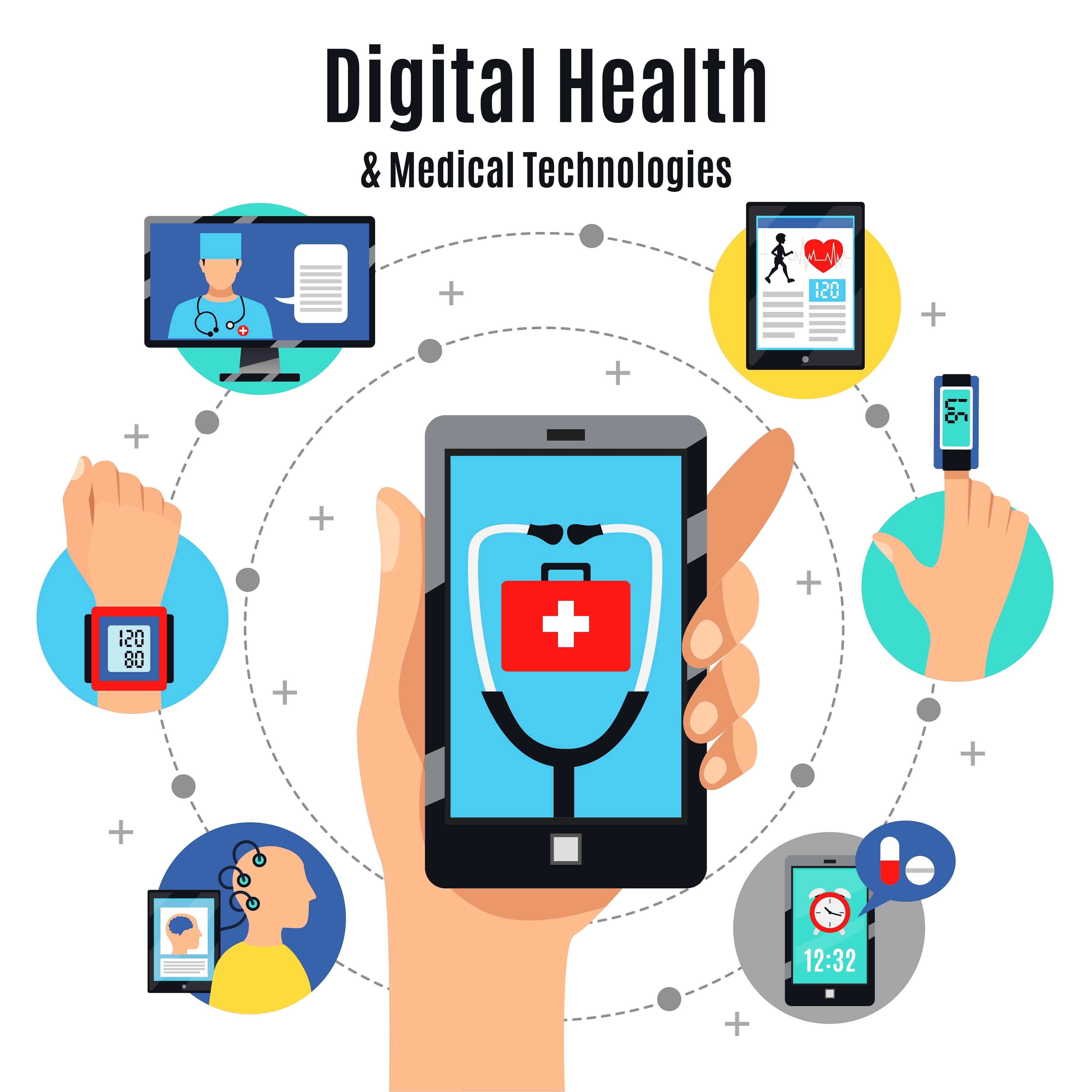
DEFINITION: According to the Food and Drug Administration [FDA], the broad scope of digital health includes categories such as mobile health (mHealth), health information technology (IT), wearable devices, tele-health and tele-medicine, and personalized medicine. From mobile medical apps and software that support the clinical decisions doctors make every day to artificial intelligence and machine learning, digital technology has been driving a revolution in health care. Digital health tools have the vast potential to improve our ability to accurately diagnose and treat disease and to enhance the delivery of health care for the individual. Digital health technologies use computing platforms, connectivity, software, and sensors for health care and related uses. These technologies span a wide range of uses, from applications in general wellness to applications as a medical device. They include technologies intended for use as a medical product, in a medical product, as companion diagnostics, or as an adjunct to other medical products (devices, drugs, and biologics). They may also be used to develop or study medical products.
As many investors predicted, digital health funding took a dive in 2023, according to Rock Health’s year-end funding report. Startups got creative to stay afloat but many digital health founders will have to “face the music” in 2024, the VC firm’s analysts say.
Editor’s Note: I am on the Advisory Board of Medblob™a start-up based in Boston, MA. The digital mission of Medblob™ is to improve community and national health by allowing patients to better manage their health, providers to better treat their patients, and researchers to have the best information to discover cures to the most prevalent and pernicious diseases.
Posted on April 27, 2023 by Dr. David Edward Marcinko MBA MEd CMP™
By Staff Reporters
***
***
Venture capital funding in the digital health space cooled significantly in 2022 following a red-hot 2021; according to Healthcare Brew. Overall, digital health companies raised $15.3 billion last year, down substantially from the $29.1 billion raised in 2021—but still above the $14.1 billion raised in 2020, according to research from Rock Health, a seed fund that supports digital health startups.
Analysts predict investors will still put a good amount of money into digital health in 2023, particularly in alternative care, drug development technology, and software that reduces physician workload. But investors will likely pull dollars away from a few specific sectors this year.
“There is definitely more diligence, a little bit more skepticism in the investments that are made. So you tend to see investments go slower because diligence is taking longer or investors are being a little bit more conservative,” Adriana Krasniansky, head of research at Rock Health, told Healthcare Brew.
Direct-to-consumer products. The first sector in which Krasniansky expects to see funding slow this year is direct-to-consumer (DTC) products. One reason is that with recession fears, “Consumer spend is not as readily available,” Krasniansky said.
But Apple’s new data privacy rules are also partially to blame. As of April 2021, apps sold through Apple’s App Store must ask users for permission to track activity, and users can opt out. That tracking data is crucial for advertisers to create personalized ads.
“Apple’s privacy measures have impacted customer acquisition costs, making the DTC channel more challenging for a lot of startups—and not just digital health startups,” said Krasniansky.







 Support our online development, and advance our onground research initiatives in free market economics, as we seek to showcase the brightest Next-Gen minds.
THE ME-P DISCLAIMER: Posts, comments and opinions do not necessarily represent iMBA, Inc., but become our property after submission. Copyright © 2006 to-date. iMBA, Inc allows colleges, universities, medical and financial professionals and related clinics, hospitals and non-profit healthcare organizations to distribute our proprietary essays, photos, videos, audios and other documents; etc. However, please review copyright and usage information for each individual asset before submission to us, and/or placement on your publication or web site. Attestation references, citations and/or back-links are required. All other assets are property of the individual copyright holder.
Support our online development, and advance our onground research initiatives in free market economics, as we seek to showcase the brightest Next-Gen minds.
THE ME-P DISCLAIMER: Posts, comments and opinions do not necessarily represent iMBA, Inc., but become our property after submission. Copyright © 2006 to-date. iMBA, Inc allows colleges, universities, medical and financial professionals and related clinics, hospitals and non-profit healthcare organizations to distribute our proprietary essays, photos, videos, audios and other documents; etc. However, please review copyright and usage information for each individual asset before submission to us, and/or placement on your publication or web site. Attestation references, citations and/or back-links are required. All other assets are property of the individual copyright holder.











 The Leading Business Education Network for Doctors, Financial Advisors and Health Industry Consultants