PROXY VOTE: Defined


This ME-P was developed with AI-powered tools and reviewed by Editors

SPONSOR: http://www.CertifiedMedicalPlanner.org

***

***

What is in a proxy statement? 

A proxy statement tells you a lot about a company’s management and board of directors, providing details about compensation, large shareholders, and the accounting firm that audits the company books. It also includes information about shareholder resolutions and the board’s responses to those proposals.

Each publicly traded company files a proxy statement with the Securities and Exchange Commission (SEC) every year, and it’s used by shareholders to help cast votes on their proxy ballots. The board may provide recommendations to vote for or against a proposal, but investors should do their best to collect the facts and make a decision on their own.

HOSTILE TAKEOVER: https://medicalexecutivepost.com/2025/03/24/hostile-company-takeover-definition-defense-pharmaceutical-company-example/

What is in a proxy Vote? 

According to Motley Fool, about once every year, for most companies, you will have the right to vote your shares on a variety of topics related to the companies you own in your portfolio. These are called proxy votes. Regular individual shareholders generally receive one vote per share owned. Some companies have multiple classes of shares, and management and other insiders will have a higher level of voting power (for example, 10 votes per share).

COMMON STOCK: https://medicalexecutivepost.com/2008/02/12/what-is-common-stock/

Every year, you will receive a proxy statement in the mail or electronically. This document gives you insight into a variety of important issues to consider and vote on using your proxy ballot.

COMMENTS APPRECIATED

EDUCATION: Books

Like and Refer

***

***

DAILY UPDATE: Ark Invest, Dell and “Buy Now-Pay Later”

MEDICAL EXECUTIVE-POST TODAY’S NEWSLETTER BRIEFING

***

Essays, Opinions and Curated News in Health Economics, Investing, Business, Management and Financial Planning for Physician Entrepreneurs and their Savvy Advisors and Consultants

Serving Almost One Million Doctors, Financial Advisors and Medical Management Consultants Daily

A Partner of the Institute of Medical Business Advisors , Inc.

http://www.MedicalBusinessAdvisors.com

SPONSORED BY: Marcinko & Associates, Inc.

***

http://www.MarcinkoAssociates.com

Daily Update Provided By Staff Reporters Since 2007.
How May We Serve You?
© Copyright Institute of Medical Business Advisors, Inc. All rights reserved, USA. 2024

REFER A COLLEAGUE: MarcinkoAdvisors@msn.com

SPONSORSHIPS AVAILABLE: https://medicalexecutivepost.com/sponsors/

ADVERTISE ON THE ME-P: https://tinyurl.com/ytb5955z

***

While Buy Now-Pay Later (BNPL) reduces friction when purchasing, it’s giving some economy watchers unease. As Americans’ budgets buckle under the weight of inflation and higher interest payments, some worry BNPL is more of an invisible burden than a boon, Bloomberg reports. Beware the “phantom debt,” a Wells Fargo economist recently warned, referring to the BNPL industry’s short-term loans, which go largely unaccounted for by those tracking Americans’ debt load. That’s because, unlike credit cards and auto loan providers, Afterpay, Affirm, Klarna, and other BNPL providers don’t usually report transactions to credit scoring agencies.

CITE: https://www.r2library.com/Resource

The Cathie Wood-led Ark Invest just made some significant trades. The most prominent among them were the increased stakes in Palantir Technologies Inc (NYSE: PLTR) and her reduced holdings in Coinbase Global Inc (NASDAQ: COIN).

CITE: https://tinyurl.com/2h47urt5

Dell has recently seen a decline in its revenue. In its most recent earnings report, it revealed that its net revenue shrunk by 11% year-over-year during its fiscal 2024 fourth quarter. For full year 2023, the company’s revenue was down by 14% to $88.4 billion. Partly that was due to a weak personal-computer market and the costs associated with more than 6,000 layoffs. But investors are excited by Dell’s growth potential for its server and computer businesses because of artificial intelligence, the Motley Fool reported.

CITE: https://tinyurl.com/tj8smmes

COMMENTS APPRECIATED

PLEASE SUBSCRIBE: MarcinkoAdvisors@msns.com

Thank You

***

***

***

***

EDUCATIONAL TEXTBOOKS: https://tinyurl.com/4zdxuuwf

***

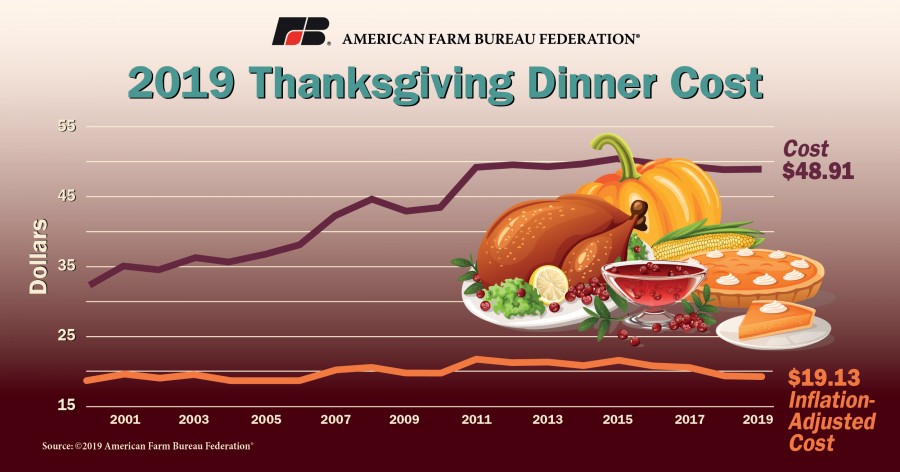
Giving Thanks for Thanksgiving Day Dinner Costs in 2019

Join Our Mailing List

Dear World … and ME-P Readers,

A PRE-Thanksgiving Day Tribute for 2019

The Rational Optimist

Matt Ridley, a journalist referring to himself as the rational optimist, recently focused on all the reasons we are luckier than those who lived before us.

Here are some of the highlights of his research (click here to see his article in its entirety):

  • The average person on the planet earns roughly three times as much as he or she did 50 years ago, adjusted for inflation. If anything, this understates the improvement in living standards because it fails to take into account many of the incredible improvements in the things you can buy with that money. However rich you were in 1964 you had no computer, no mobile phone, no budget airline, no Prozac, no search engine, no gluten-free food. The world economy is still growing every year at a furious lick — faster than Britain grew during the industrial revolution. 
  • As for inequality, the world as a whole is getting rapidly more equal in income, because people in poor countries are getting richer at a more rapid pace than people in rich countries. That has now been true for two decades, but it has accelerated since the great recession. The GDP per capita of Mozambique is 60 percent higher than it was in 2008; that of Italy is 6 percent lower. A country like Mozambique has been out of the headlines recently – is back in  – and now you know why: things are mostly going right/wrong there. 
  • The amount of food available per head has gone up steadily on every continent, despite a doubling of the population. Famine is now very rare. 
  • The death rate from malaria is down by nearly 30 percent since the start of the century. HIV-related deaths are falling. Measles, yellow fever, diphtheria, cholera, typhoid, typhus — they killed our ancestors in droves, but they are now rare diseases. 
  • We think we are getting ever more selfish, but it is not true. We give more of our earnings to charity than our grandparents did.  
  • Violent crimes of almost all kinds are on the decline — murder, rape, theft, domestic violence. So are capital and corporal punishment and animal cruelty. We are less prejudiced about gender, homosexuality and race. Paedophilia is no more prevalent, just hushed up less.Morgan Housel, columnist at Motley Fool, also recently wrote a column titled “50 Reasons We’re Living Through the Greatest Period in World History.” Mr. Housel notes that we tend to ignore progress, which is the really important news because it happens slowly, but we obsess over trivial news because it happens all day long.

Here are some of my favorite thoughts from the article (click here to view the entire piece).

***

Love Life

***

The Motley Fool

  • In 1900, 1% of American women giving birth died in labor. Today, the five-year mortality rate for localized breast cancer is 1.2%. Being pregnant 100 years ago was almost as dangerous as having breast cancer is today.
  • U.S. life expectancy at birth was 39 years in 1800, 49 years in 1900, 68 years in 1950, and 79 years today. The average newborn today can expect to live an entire generation longer than his great-grandparents could. The average American now retires at age 62. Enjoy your golden years — your ancestors didn’t get any of them. 
  • Infant mortality in America has dropped from 58 per 1,000 births in 1933 to less than six per 1,000 births in 2010, according to the World Health Organization. In 1952, 38,000 people contracted polio in America alone, according to the Centers for Disease Control. In 2012, there were fewer than 300 reported cases of polio in the entire world. The death rate from strokes has declined by 75% since the 1960s, according to the National Institutes of Health. Death from heart attacks has plunged too.
  • According to the Federal Reserve, the number of lifetime years spent in leisure — retirement plus time off during your working years — rose from 11 years in 1870 to 35 years by 1990. Given the rise in life expectancy, it’s probably close to 40 years today. Which is amazing: The average American spends nearly half his life in leisure. If you had told this to the average American 100 years ago, that person would have considered you wealthy beyond imagination.
  • Worldwide deaths from battle have plunged from 300 per 100,000 people during World War II, to the low teens during the 1970s, to less than 10 in the 1980s, to fewer than one in the 21st century, according to Harvard professor Steven Pinker. “War really is going out of style,” he says. 
  • According to the Census Bureau, only one in 10 American homes had air conditioning in 1960. That rose to 49% in 1973, and 89% today — the 11% that don’t are mostly in cold climates. Simple improvements like this have changed our lives in immeasurable ways. 
  • In 1900, African Americans had an illiteracy rate of nearly 45%, according to the Census Bureau. Today, it’s statistically close to zero. In 1940, less than 5% of the adult population held a bachelor’s degree or higher. By 2012, more than 30% did, according to the Census Bureau. 
  • The average American work week has declined from 66 hours in 1850, to 51 hours in 1909, to 34.8 hours today, according to the Federal Reserve. Enjoy your weekend. 
  • More than 40% of adults smoked in 1965, according to the Centers for Disease Control. By 2011, 19% did.
  •  The percentage of Americans age 65 and older who live in poverty has dropped from nearly 30% in 1966 to less than 10% by 2010. For the elderly, the war on poverty has pretty much been won. 
  • If you think Americans aren’t prepared for retirement today, you should have seen what it was like a century ago. In 1900, 65% of men over age 65 were still in the labor force. By 2010, that figure was down to 22%. The entire concept of retirement is unique to the past few decades. Half a century ago, most Americans worked until they died. 
  • No one has died from a new nuclear weapon attack since 1945. If you went back to 1950 and asked the world’s smartest political scientists, they would have told you the odds of seeing that happen would be close to 0%. You don’t have to be very imaginative to think that the most important news story of the past 70 years is what didn’t happen. Congratulations, world.
  • You need an annual income of $34,000 a year to be in the richest 1% of the world, according to World Bank economist Branko Milanovic’s 2010 book “The Haves and the Have-Nots.” To be in the top half of the globe you need to earn just $1,225 a year. For the top 20%, it’s $5,000 per year. Enter the top 10% with $12,000 a year. To be included in the top 0.1% requires an annual income of $70,000. America’s poorest are some of the world’s richest.
  • Only 4% of humans get to live in America. Odds are you’re one of them. We’ve got it made. Be thankful.

Conclusion

Your thoughts and comments on this ME-P are appreciated. Feel free to review our top-left column, and top-right sidebar materials, links, URLs and related websites, too. Then, subscribe to the ME-P. It is fast, free and secure.

Speaker: If you need a moderator or speaker for an upcoming event, Dr. David E. Marcinko; MBA – Publisher-in-Chief of the Medical Executive-Post – is available for seminar or speaking engagements. Contact: MarcinkoAdvisors@msn.com

OUR OTHER PRINT BOOKS AND RELATED INFORMATION SOURCES:

***

Product DetailsProduct Details

Product Details  Product Details

***

Knowing the Difference Between Stock Value and Price

Join Our Mailing List

A Motley Fool Interview

vitaly

ABOUT

Vitaliy N. Katsenelson CFA is Chief Investment Officer at Investment Management Associates in Denver, Colo. He is the author of Active Value Investing (Wiley 2007) and The Little Book of Sideways Markets (Wiley, 2010).  His books were translated into eight languages.  Forbes Magazine called him “The new Benjamin Graham”.  

The Motley Fool,

Our own Editor Dr. Dave Marcinko recently spoke with Vitaliy, as well as The Motley Fool’s James Early and Rana Pritanjali. Vitaliy explained how he helps investors see the difference between a stock’s value and its price, as well how he assesses macroeconomic trends when investing.

Assessment

Plus, Vitaliy predicted the next category Apple will disrupt: the automotive industry.

You can listen and read the full interview here.

PS: You can read Manifesto – The Values of Value Investing, here.

I hope you enjoy it  – Ann Miller RN MHA [Managing Editor]

Conclusion

Your thoughts and comments on this ME-P are appreciated. Feel free to review our top-left column, and top-right sidebar materials, links, URLs and related websites, too. Then, subscribe to the ME-P. It is fast, free and secure.

Speaker: If you need a moderator or speaker for an upcoming event, Dr. David E. Marcinko; MBA – Publisher-in-Chief of the Medical Executive-Post – is available for seminar or speaking engagements. Contact: MarcinkoAdvisors@msn.com

OUR OTHER PRINT BOOKS AND RELATED INFORMATION SOURCES:

Risk Management, Liability Insurance, and Asset Protection Strategies for Doctors and Advisors: Best Practices from Leading Consultants and Certified Medical Planners™                    Comprehensive Financial Planning Strategies for Doctors and Advisors: Best Practices from Leading Consultants and Certified Medical Planners™