PRIVATE EQUITY: Terms and Definitions

By Staff Reporters

SPONSOR: http://www.MarcinkoAssociates.com

***

***

Capital Call: Definition and Explanation

A capital call is a notice sent to investors requesting that they contribute additional capital to a private equity fund. Capital calls are made when the fund manager has identified a new investment opportunity that requires additional funds.

Investors must be prepared to respond to capital calls with the required funds in a timely manner, as failure to do so could result in penalties or even the loss of their investment.

Carried Interest: Understanding the Concept

Carried interest is a form of incentive fee paid to private equity fund managers. This fee is calculated as a percentage of the profits generated by the fund’s investments.

Carried interest is often criticized as a tax loophole, as it is treated as capital gains, which are taxed at a lower rate than ordinary income.

Deal Flow: What it Means for Investors

Deal flow refers to the number of potential investment opportunities that a private equity firm evaluates. A robust deal flow is important for private equity firms, as it provides a pipeline of potential investments to consider.

Investors may want to investigate a private equity firm’s deal flow as part of their due diligence process, as a strong deal flow can indicate the firm has a good track record of finding attractive investment opportunities.

Due Diligence: A Key Step in Private Equity Investing

Due diligence is the process of evaluating a potential investment opportunity to assess its viability. This process involves a thorough investigation of the company’s financials, operations, and management team.

Due diligence is a critical step in the private equity investment process, as it helps to identify potential risks associated with an investment opportunity. Investors who skip due diligence do so at their own risk.

Exit Strategy: How Private Equity Firms Make Money

Exit strategy refers to the plan that private equity firms have in place to cash out of their investments. Private equity firms typically exit investments through an initial public offering (IPO), a sale to another company, or a management buyout.

Exit strategy is critical to the private equity investment process, as it is how investors ultimately make returns on their investments.

Fund of Funds: An Overview

A fund of funds is a type of investment fund that invests in other investment funds. In the private equity space, fund of funds typically invest in a portfolio of private equity funds.

Fund of funds can be a good way for investors to gain exposure to a wider range of private equity investments with less risk than investing in individual funds.

General Partner vs Limited Partner: What’s the Difference?

The general partner is the party responsible for managing the private equity fund and making investment decisions. Limited partners, on the other hand, are typically passive investors who provide capital but have little involvement in the investment process.

The distinction between general partners and limited partners is important for investors to understand, as it can impact their level of involvement in the investment process.

Investment Horizon: A Crucial Factor in Private Equity Investments

Investment horizon refers to the length of time an investor plans to hold an investment. In the private equity space, investment horizons can be several years or even a decade.

Investment horizon is a critical factor for investors to consider, as it impacts the level of liquidity they will have and the returns they can expect to make on their investment.

Leveraged Buyout (LBO): Definition and Examples

A leveraged buyout is a type of acquisition where the acquiring company uses a significant amount of debt to finance the purchase. The idea is that the acquired company’s assets will be used as collateral to secure the debt.

Leveraged buyouts can be an effective way for private equity firms to acquire companies with minimal capital investment. However, the use of leverage also increases the risk associated with these types of acquisitions.

Management Fee vs Performance Fee: Understanding the Two

The management fee is the fee paid to the general partner for managing the private equity fund. The performance fee, or carried interest, is paid based on the fund’s performance and returns generated for investors.

The distinction between management fees and performance fees is important for investors to understand, as it affects the level of fees they will be responsible for paying.

Pitchbook: A Guide to Creating an Effective Pitchbook

A pitchbook is a presentation used by private equity firms to pitch their investment strategy to potential investors. An effective pitchbook should be clear, well-organized, and provide a compelling rationale for why investors should consider investing in the fund.

Investors reviewing a fund’s pitchbook should look for evidence of a well-thought-out investment strategy and a track record of successful investments.

Private Placement Memorandum (PPM): What it is and Why It Matters

A private placement memorandum is a legal document provided to potential investors that details the terms of the private equity fund. It includes information on the fund’s investment strategy, expected returns, fees, and risks associated with the investment.

Reviewing a fund’s private placement memorandum is a critical step in the due diligence process, as it provides investors with a comprehensive understanding of the investment opportunity.

Recapitalization: A Strategy for Restructuring a Company

Recapitalization is a strategy used by private equity firms to restructure a company’s capital structure. This can involve issuing debt to pay off equity holders or issuing equity to pay off debt holders.

Recapitalization is often used to improve a company’s financial position and increase its value, making it a key tool in the private equity arsenal.

Valuation Techniques Used in Private Equity Investing

Valuation techniques are used to determine the value of a private company. These techniques can include discounted cash flow analysis, market multiples analysis, and asset-based valuation.

Understanding valuation techniques is important for investors, as it allows them to evaluate the relative value of investment opportunities and make informed investment decisions.

COMMENTS APPRECIATED

Refer and Subscribe

***

***

SATISFICING: In Health Economics

A decision-making strategy 

[By staff reporters]

SPONSOR: http://www.MarcinkoAssociates.com

***

What is satisficing? Definition and meaning - Market Business News

***

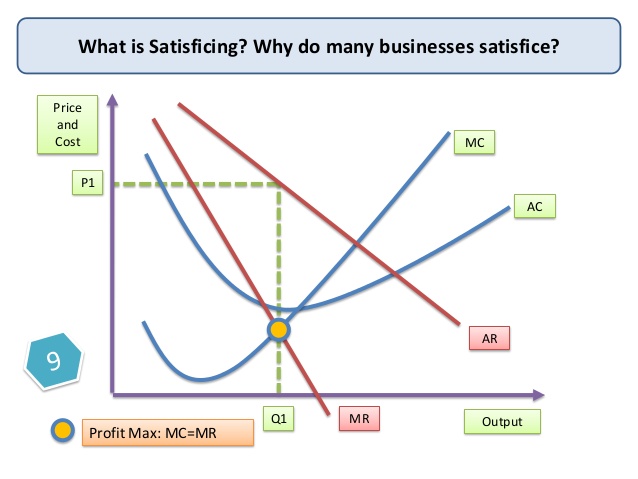
Satisficing is a business decision-making strategy or cognitive heuristic that entails searching through the available alternatives until an acceptability threshold is met.

The term economic satisficing, a portmanteau of satisfy and suffice, was introduced by Herbert A. Simon in 1956, although the concept was first posited in his 1947 book Administrative Behavior. Simon used satisficing to explain the behavior of decision makers under circumstances in which an optimal solution cannot be determined. He maintained that many natural problems are characterized by computational intractability or a lack of information, both of which preclude the use of mathematical optimization procedures.

CITE: https://www.r2library.com/Resource/Title/082610254

He observed in his Nobel Prize in Economics speech that “decision makers can satisfice either by finding optimum solutions for a simplified world, or by finding satisfactory solutions for a more realistic world. Neither approach, in general, dominates the other, and both have continued to co-exist in the world of management science”.

******
Assessment

“Satisficing” – a made-up word created by combining satisfactory and sufficient – indicates something good, but not great. Like the Canadian single-payer health system, like Medicare-for-All.

KEN ARROW PhD: https://medicalexecutivepost.com/2010/08/17/on-professor-kenneth-arrow-phd/

MORE: https://www.acsh.org/news/2018/09/18/canadas-single-payer-health-system-satisfices-13272

Conclusion: Your thoughts are appreciated.

***

***

INVESTING Psychology

By Dan Ariely PhD

THE IRRATIONAL ECONOMIST

***

*** 

Of course you don’t need a human financial advisor … until you do. Today, we’ve had unfettered internet access to a wide range of investments, opinions and models for at least two decades. So, why the bravado to go it alone; fifteen positive years for equities, since 2009! Yet, the DJIA, S&P 500 and NASDAQ just plunged and plummeted today!

The financial advisor’s role is to remove the human element and emotion from investing decisions for something as personal as your wealth. Emotion drives the retail investor to sell low (fear) and buy high (greed). This is the reason why the average equity returns for retail investors is less than half of the S&P 500’s returns.

No, of course you don’t need a human financial advisor … until you do.

And when you do, it may be too late.

COMMENTS APPRECIATED

Subscribe and Refer

***

***

HEALTH ECONOMICS: Who Should Study and Learn this Dismal Science?

DR. DAVID EDWARD MARCINKO MBA MEd CPHQ CMP™

By Staff Reporters

SPONSOR: http://www.MarcinkoAssociates.com

***

***

Who should study health economics?

Understanding how economic behavior factors into health and health care decisions can benefit anyone interested in this field. However, the following groups of individuals may benefit most from the study of health economics:

  • Medical providers: Doctors, nurses, and assistants can evaluate new treatments, technologies, and services to determine ways to deliver value-based care. Medical providers benefit from understanding the economics behind these developments [MD/DO, DPM, DDS/DMD, RN, PA, etc].
  • Administrators: Health care administrators process insurance co-payments and manage financial metrics for health care providers. Learning the intricacies of health care economics can provide the necessary context as they liaise with insurance providers and use new technologies to process payments.
  • Policymakers or public health officials: Those who are in charge of policy decisions at the local, state, federal, or international levels benefit from understanding the economic relationship between stakeholders and the general public.
  • Business leaders: Because many Americans receive private insurance, health care becomes a major expense for employers. Business leaders must understand the health economics outlook to appease their employees, shareholders, and even their customers.

EDUCATION: Books

SPEAKING: Dr. Marcinko will be speaking and lecturing, signing and opining, teaching and preaching, storming and performing at many locations throughout the USA this year! His tour of witty and serious pontifications may be scheduled on a planned or ad-hoc basis; for public or private meetings and gatherings; formally, informally, or over lunch or dinner. All medical societies, financial advisory firms or Broker-Dealers are encouraged to submit a RFP for speaking engagements: MarcinkoAdvisors@outlook.com 

COMMENTS APPRECIATED

Refer and Subscribe

***

***

DAILY UPDATE: Stock Markets Down

MEDICAL EXECUTIVE-POST TODAY’S NEWSLETTER BRIEFING

***

Essays, Opinions and Curated News in Health Economics, Investing, Business, Management and Financial Planning for Physician Entrepreneurs and their Savvy Advisors and Consultants

Serving Almost One Million Doctors, Financial Advisors and Medical Management Consultants Daily

A Partner of the Institute of Medical Business Advisors , Inc.

http://www.MedicalBusinessAdvisors.com

SPONSORED BY: Marcinko & Associates, Inc.

***

http://www.MarcinkoAssociates.com

Daily Update Provided By Staff Reporters Since 2007.
How May We Serve You?
© Copyright Institute of Medical Business Advisors, Inc. All rights reserved. 2025

REFER A COLLEAGUE: MarcinkoAdvisors@outlook.com

SPONSORSHIPS AVAILABLE: https://medicalexecutivepost.com/sponsors/

ADVERTISE ON THE ME-P: https://tinyurl.com/ytb5955z

Your Referral Count -0-

CITE: https://www.r2library.com/Resource

The Dow Jones Industrial Average (^DJI) fell roughly 450 points, or around 1%. The S&P 500 (^GSPC) dropped 0.5%, pulling back after its second record close in a row on Wednesday, while the tech-heavy NASDAQ Composite (^IXIC) also lost about 0.5%.

CITE: https://tinyurl.com/2h47urt5

Worries grew about coming headwinds for corporate America after Walmart beat on quarterly profit but issued cautious 2026 fiscal year guidance. Shares of the retail giant tumbled more than 6%. Walmart’s decline combined with more roughly 4% drops in Goldman Sachs (GS) and JPMorgan (JPM) weighed on the Dow.

CITE: https://tinyurl.com/tj8smmes

Visualize: How private equity tangled banks in a web of debt, from the Financial Times.

COMMENTS APPRECIATED

PLEASE SUBSCRIBE: MarcinkoAdvisors@outlook.com

Thank You

***

***

***

***

EDUCATIONAL TEXTBOOKS: https://tinyurl.com/4zdxuuwf

***