DOCTOR: What is Your Investment Philosophy for [Second-Half] 2024?

HERE IS MINE IN BRIEF

DR. DAVID EDWARD MARCINKO MBA MEd CMP

***

SPONSOR: https://marcinkoassociates.com/

***

We have produced Investment Policy Statements of a hundred pages or more for our esteemed physician clients and colleagues. Or, others were just a few pages or a conversation.

ISP: https://medicalexecutivepost.com/2023/03/02/selecting-money-managers/

But, before deciding on any investment direction and philosophy in brief, however, we typically first focus on how much medical clients need to live on. For the income part of a client’s portfolio, that entails locking in rates of at least 4-5%, whether through municipal and corporate bonds, certificates of deposits, Treasury ladders, utilities or conservative dividend producing equities or ETFs, etc.

CITE: https://www.r2library.com/Resource

Once income requirements are fulfilled, whatever money is left over gets diversified into a portfolio of growth and value stocks—with some alternative investments. We limit making tactical shifts like putting money into cash when markets fell last year, or more recently, buying CDs and Treasuries as rates went up.  But, we do re-direct cash income, rather than sell assets in real time, as our philosophy trends to a “Buy and Hold” strategy.

Currently, we’re sitting on the sidelines with cash, some of which we are getting ready to deploy into the market as we position for any pullbacks later this 2024 year.

So, what is your investing philosophy for today, and or, tomorrow?

COMMENTS APPRECIATED

Thank You

***

***

DAILY UPDATE: Moody, CME Fedwatch and Ever Rising Stock Markets

MEDICAL EXECUTIVE-POST TODAY’S NEWSLETTER BRIEFING

***

Essays, Opinions and Curated News in Health Economics, Investing, Business, Management and Financial Planning for Physician Entrepreneurs and their Savvy Advisors and Consultants

Serving Almost One Million Doctors, Financial Advisors and Medical Management Consultants Daily

A Partner of the Institute of Medical Business Advisors , Inc.

http://www.MedicalBusinessAdvisors.com

SPONSORED BY: Marcinko & Associates, Inc.

***

http://www.MarcinkoAssociates.com

Daily Update Provided By Staff Reporters Since 2007.
How May We Serve You?
© Copyright Institute of Medical Business Advisors, Inc. All rights reserved. 2024

REFER A COLLEAGUE: MarcinkoAdvisors@msn.com

SPONSORSHIPS AVAILABLE: https://medicalexecutivepost.com/sponsors/

ADVERTISE ON THE ME-P: https://tinyurl.com/ytb5955z

***

On Monday, private equity giant KKR jumped 12% after S&P Dow Jones Indices announced the company would be joining the index on Friday, along with CrowdStrike and GoDaddy, which saw their stocks jump 9% and 2%, respectively. The additions will be incorporated June 24.

CITE: https://www.r2library.com/Resource

Stat: 99.4%. That’s the likelihood that interest rates will stay the same after the Fed’s meeting, according to the CME Fedwatch Tool. So it looks to be more “hurry up and wait” for interest rates to start coming down. 🫤 (Business Insider)

Quote: “It’s hard to think of a time when the US economy has diverged so fundamentally from its peers.”—Mark Zandi, chief economist at Moody’s Analytics, on the strength of the US economy compared to the weakness of other major economies. The US economy is continuing to grow while economies like Germany, Japan, and Canada are falling into recession. (The Atlantic)

CITE: https://tinyurl.com/2h47urt5

Here’s where the major benchmarks ended:

  • The S&P 500 index rose 45.71 points (0.9%) to 5,421.03; the Dow Jones Industrial Average  lost 35.21 points (0.1%) to 38,712.21; the NASDAQ Composite gained 264.89 points (1.5%) to 17,608.44.
  • The 10-year Treasury note yield (TNX) fell more than 7 basis points to 4.326%.
  • The CBOE Volatility Index® (VIX) declined 0.81 to  12.04.

What’s up

What’s down

CITE: https://tinyurl.com/tj8smmes

COMMENTS APPRECIATED

PLEASE SUBSCRIBE: MarcinkoAdvisors@msn.com

Thank You

***

***

***

***

EDUCATIONAL TEXTBOOKS: https://tinyurl.com/4zdxuuwf

***

PODCAST: Corporate Practice of Medicine Laws

Private Equity Owning Doctor Practices

LEGALITY?

By Eric Bricker MD

***

PODCAST: https://www.youtube.com/watch?v=2epmk4_-kUI

These Laws Were Put Into Place So That Doctors Would Not Put Shareholders Before Patients and So That Corporations Would Not Interfere with Doctor Judgement.

Corporate Practice of Medicine Laws are at the State Level, NOT the Federal Level.

Each State Has Its Own Exceptions Such as 1) Doctors Can Work for Companies That Are Owned by Other Doctors and 2) Doctors Can Work for Hospitals.

Accordingly, Private Equity Firms Have Been on a Physician Practice Buying Binge.

Private Equity Firms Bought 355 Physician Practices from 2013 – 2016.

Two of the Largest Purchases Were KKR’s Purchase of Envision’s 25,000 Doctors for Almost $10 Billion and Blackstone’s Purchase of Team Health’s 20,000 Doctors for $6 Billion.

If Corporate Practice of Medicine Laws Say that Doctors Cannot Work for a Corporation, How are Private Equity Purchases of Physician Practices Legal?

CITE: https://www.r2library.com/Resource/Title/0826102549

PODCAST: https://www.youtube.com/watch?v=DgWEybUSiuo

***

***

ORDER: https://www.amazon.com/Business-Medical-Practice-Transformational-Doctors/dp/0826105750/ref=sr_1_9?ie=UTF8&qid=1448163039&sr=8-9&keywords=david+marcinko

***

COMMENTS APPRECIATED

Thank You

***

PODCAST: Blue Cross Health Insurance Companies Must Now Compete

Second BlueBid Explained

By Eric Bricker MD

***

***

COMMENTS APPRECIATED

Thank You

***

***

WHAT IS THE PURPOSE OF A “Modern” CORPORATION?

An Emerging New Definition?

By Dr. David Edward Marcinko MBA MEd CMP

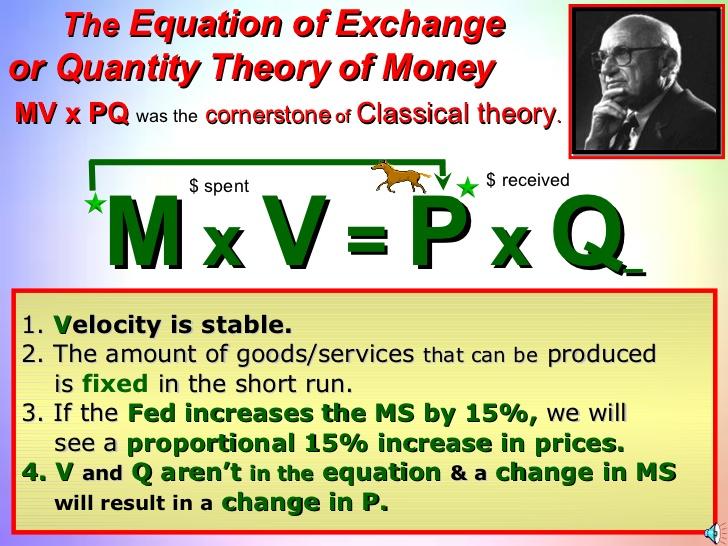
When I was in business school back-in-the day, I studied the late great economist Milton Friedman Ph.D who opined that the purpose of a corporation was to enhance shareholder value, in an ethical and legal manner; period? Shareholders could then do what they wished with profits; if any. Charitable giving or Selfish intent, etc!

***

***

Now, for those of you who haven’t had time to review the recent seismic tome from The Business Roundtable Announcement this week, let me review why this is as big a moment as the Larry Fink BlackRock letter.

  • The Business Roundtable, a group of chief executive officers of nearly 200 major U.S. corporations, issues a statement with a new definition of the “purpose of a corporation.” Seven [7] refused to sign.
  • The reimagined idea of a corporation drops the age-old notion that they function first and foremost to serve their shareholders and maximize profits.
  • Investing in employees, delivering value to customers, dealing ethically with suppliers and supporting outside communities are now at the forefront of American business goals; ie., community good.

MORE: https://www.forbes.com/sites/afdhelaziz/2019/08/23/the-power-of-purpose-milton-friedman-is-rolling-in-his-grave/#6ed8506f7532

DEFINITION: A shareholder or stockholder is an individual or institution (including a corporation) that legally owns a share of stock in a public or private corporation. Shareholders are the owners of a limited company. They buy shares which represent part ownership of a company.

DEFINITION: A stakeholder as defined in its first usage in a 1963 internal memorandum at the Stanford Research Institute, are “those groups without whose support the organization would cease to exist.” The theory was later developed and championed by R. Edward Freeman in the 1980s.

LINK: https://www.cnbc.com/2019/08/19/the-ceos-of-nearly-two-hundred-companies-say-shareholder-value-is-no-longer-their-main-objective.html

***

***

The Conundrum [real or perceived]

Shareholders are ever stakeholders in a corporation, but stakeholders are not always shareholders. A shareholder possesses part of a public company through shares of stock, while a stakeholder has a concern in the performance of a company for reasons other than stock performance or appreciation; ie., community good.

QUERY: So, exactly who will determine community good? And, who selects the stakeholders? Haven’t socially responsible companies, stocks, mutual funds and ETFs, etc., been in existence for decades? Is Professor Friedman rolling in his grave? OR, is this condundrum just linguistic gymnastics?

***

***

LINK: https://www.amazon.com/Dictionary-Health-Economics-Finance-Marcinko/dp/0826102549/ref=sr_1_6?ie=UTF8&s=books&qid=1254413315&sr=1-6

Your thoughts are appreciated.

***

Risk Management, Liability Insurance, and Asset Protection Strategies for Doctors and Advisors: Best Practices from Leading Consultants and Certified Medical Planners™8Comprehensive Financial Planning Strategies for Doctors and Advisors: Best Practices from Leading Consultants and Certified Medical Planners™

***

Invite Dr. Marcinko

***