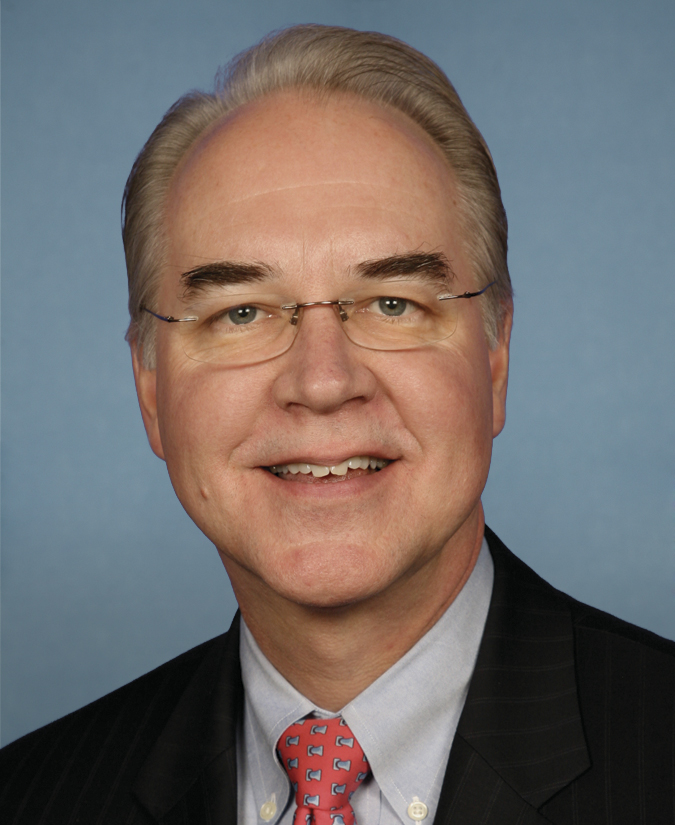
Tom Price for HHS Secretary & Seema Verma for CMMS

Join Our Mailing List

***

Obamacare critic for HHS 

***

112_price_ga06

***

Trump nominates Rep. Tom Price for HHS secretary

***

th

Trump picks Seema Verma to head Centers for Medicare and Medicaid Services

***

Product DetailsProduct Details

***

The Importance of Sensitivity, Specificity and Diagnostic Test Accuracy — Disrupted Physician

Join Our Mailing List

Sensitivity, Specificity and Diagnostic Test Accuracy

Langan MD

By Michael Lawrence Langan MD

***

The reliability, validity and accuracy of drug test results needs to be known prior to using a test. Specificity and sensitivity must be known prior to using a test on any population.

This should go without saying as to do anything else would be irresponsible and careless. Source: Diagnostic Testing 101.1: The Importance of Sensitivity, […]

***

Diagnostic Testing 101.1: The Importance of Sensitivity, Specificity and Diagnostic Test Accuracy — Disrupted Physician

***

Conclusion

Your thoughts and comments on this ME-P are appreciated. Feel free to review our top-left column, and top-right sidebar materials, links, URLs and related websites, too. Then, subscribe to the ME-P. It is fast, free and secure.

Speaker: If you need a moderator or speaker for an upcoming event, Dr. David E. Marcinko; MBA – Publisher-in-Chief of the Medical Executive-Post – is available for seminar or speaking engagements. Contact: MarcinkoAdvisors@msn.com

OUR OTHER PRINT BOOKS AND RELATED INFORMATION SOURCES:

Risk Management, Liability Insurance, and Asset Protection Strategies for Doctors and Advisors: Best Practices from Leading Consultants and Certified Medical Planners™

***

Join Us on Linked-In

INSTITUTE OF MEDICAL BUSINESS ADVISORS [iMBA] INC

[Capitalism, Health Care Enterprise and Entrepreneurship]

imba inc

David E. Marcinko MBBS DPM FACFAS MBA MEd BSc CMP®

DEM white shirt

[Chief Executive and Education Officer]

David E. Marcinko MBBS DPM FACFAS MBA MEd BSc

***

On Hospital Medical Staff Selection

Join Our Mailing List 

More On Risk Management

fentonBy Dr. Charles F. Fenton III; JD

The Joint Commission [TJC] Accreditation Manual for Hospitals has established basic guidelines for medical staff selection and monitoring.


Governing Body

The responsibility for selecting and monitoring the medical staff rests with the governing body of the hospital. The governing body may delegate the actual process of review to a medical staff committee, but it cannot delegate its responsibility for the decisions that committee makes.

The hospital will be liable for allowing an unqualified person to become a member of the medical staff if that person is improperly approved by the medical staff committee. The hospital governing body must ensure that the criteria used in evaluating staff members are sufficient and are followed. While the governing body may not be qualified to judge the professional competence of the potential staff member, it can verify the current status of the applicant’s license and determine whether the letters of reference are authentic.

These may seem to be simple matters, but they are often neglected, to the great legal detriment of the facility if an unlicensed or incompetent physician is admitted to the medical staff.

The application for staff membership should include:

  • applicant’s full name, date of birth, Social Security number, drivers license number, current address, and past addresses since a student or for five years
  • name of applicant’s medical school, its location, and the date of graduation
  • names, positions, addresses, and phone numbers of references who will vouch for the applicant’s professional competence and ethical character
  • type and location of all postgraduate training
  • board certifications or eligibilities
  • all places of licensure, whether in force or not, and the identification numbers of the licenses
  • all hospital privileges now in effect, those in effect within the past three years, and any facilities where privileges were terminated for disciplinary reasons
  • all malpractice suits in which the applicant was or is a defendant, including the docket number of the suit, the place of filing, a brief statement of the allegations against the applicant, and the ultimate disposition of inactive suits
  • any current of past challenges to medical or drug licenses
  • a statement of the applicant’s health

Specials

Any special qualifications or experience that are relevant to the applicant’s professional competence. In addition to these items, the applicant should sign a release that will enable the investigating committee to check the validity of the information in the application. There are certain items that must be validated.

***

ASSET_BARCODE: BCK-951-BS ## DESCRIPTION: Baltimore City Jail ## EXTENDED_DESCRIPTION: 3 | ## CAPTION: ## SUMMARY:

***

These include medical school graduation, status of all medical licenses (whether currently in force or not), all disciplinary actions, and personal references. It is especially useful to contact reference by telephone, if care is taken to make a record of any information obtained and its source. The most important aspect of the application is the history of past disciplinary actions and malpractice suits. Past successful disciplinary action, especially limitation or suspension of a state license is assumed to be a strong indication of incompetent or unethical practice. The hospital may choose to grant privileges after weighing the offense and the applicant’s subsequent behavior, but this is legally very different from granting privileges without exploring disciplinary proceedings. The committee reviewing the application must decide whether the application should be granted and must be able to defend that decision. If a questionable applicant is granted privileges, there should be a formal written statement detailing the investigation of the applicant and the factors relied upon in granting privileges. The history of past malpractice suits is more difficult to interpret. The loss of a single suit should be reviewed, but this will not usually be a bar to obtaining privileges (unless it turned on intentional or unethical actions). A series of lost lawsuits is a strong indication of both negligence and poor patient relations. The decision is more difficult when there are pending lawsuits or a long string of suits that was settled or won by the defendant.

From a legal point of view, a lawsuit won by the defendant should be treated as if it was unfounded. Practically, however, there are many areas of the country where it is almost impossible for a plaintiff to win a malpractice lawsuit. A physician who attracts litigation but prevail in court may become a threat in an area where plaintiffs’ verdicts are more common. If several suits are involved or the charges involve unethical practice, pending litigation should also be reviewed.

Assessment

While civil litigation does not affect licensure in many states, its existence can be used to question the hospital’s decision to extend staff privileges to an applicant. 

Conclusion

Your thoughts and comments on this ME-P are appreciated. Feel free to review our top-left column, and top-right sidebar materials, links, URLs and related websites, too. Then, subscribe to the ME-P. It is fast, free and secure.

Speaker: If you need a moderator or speaker for an upcoming event, Dr. David E. Marcinko; MBA – Publisher-in-Chief of the Medical Executive-Post – is available for seminar or speaking engagements. Contact: MarcinkoAdvisors@msn.com

OUR OTHER PRINT BOOKS AND RELATED INFORMATION SOURCES:

Risk Management, Liability Insurance, and Asset Protection Strategies for Doctors and Advisors: Best Practices from Leading Consultants and Certified Medical Planners™

***

HIPAA Cloud Solutions?

Join Our Mailing List 

On New-Wave Technology

Carol S. Miller

By Carol Miller RN MBA

To help hospitals and health systems comply with Health Insurance Portability and Accountability Act regulations, best practices are emerging for securing all electronic communication – cloud, wireless, and texting – of protected health information.

These new technologies will continually be evolving with hospitals, providers and patients move to new means of communication.  Below is a description of one.

Cloud Solutions

Cloud solutions are becoming a needed commodity in treating patients today but also present a risk to privacy and security violation.  Despite the advantages of cloud computing, organizations are often hesitant to use it because of concerns about security and compliance.

Specifically, they fear potential unauthorized access to patient data and the accompanying liability and reputation damage resulting from the need to report HIPAA breaches. While these concerns are understandable, a review of data on HIPAA breaches published by the HHS shows that these concerns are misplaced.

In fact, by using a cloud-based service with an appropriate security and compliance infrastructure, a facility can significantly reduce its compliance risk.

***

cloud-tech-1

***

Business-Associate Agreements

Because HIPAA compliance involves stringent privacy and security protections for electronic health information (PHI), many cloud providers are balking at signing new Business-Associate agreements.

Assessment

Most cloud-technology providers, such as Box and Dropbox, do not include the built-in privacy protections that guarantee HIPAA compliance. Because many cloud storage companies store plaintext data on their servers, PHI is especially vulnerable to breaches and compliance violations. 

Conclusion

Your thoughts and comments on this ME-P are appreciated. Feel free to review our top-left column, and top-right sidebar materials, links, URLs and related websites, too. Then, subscribe to the ME-P. It is fast, free and secure.

Speaker: If you need a moderator or speaker for an upcoming event, Dr. David E. Marcinko; MBA – Publisher-in-Chief of the Medical Executive-Post – is available for seminar or speaking engagements. Contact: MarcinkoAdvisors@msn.com

OUR OTHER PRINT BOOKS AND RELATED INFORMATION SOURCES:

Risk Management, Liability Insurance, and Asset Protection Strategies for Doctors and Advisors: Best Practices from Leading Consultants and Certified Medical Planners™

***

Non-Native Language Perils in Health Care

 Join Our Mailing List 

NON-NATIVE LANGUAGE PERILS

[Staff reporters]

Communication risk to immigrants with limited non-native language proficiency is a growing concern.

With today’s higher immigrant population in the United States, more medical practices are treating patients with limited English language proficiency.

All medical professionals and clinicians now run the risk of not properly communicating medical risk information to these populations.

***

th

***

Assessment

In fact, a recent study shows that materials that include visual aids are being used by medical practices to effectively communicate with the patient.

Source: Garcia-Retamero, Rocio, and Mandeep, K. Dhami. “Pictures Speak Louder Than Numbers: On Communicating Medical Risks To Immigrants With Limited Non-Native Language Proficiency.” Health Expectations 14.(2011): 46-57. CINAHL Plus with Full Text Web 27 Apr. 2012

Conclusion

Your thoughts and comments on this ME-P are appreciated. Feel free to review our top-left column, and top-right sidebar materials, links, URLs and related websites, too. Then, subscribe to the ME-P. It is fast, free and secure.

Speaker: If you need a moderator or speaker for an upcoming event, Dr. David E. Marcinko; MBA – Publisher-in-Chief of the Medical Executive-Post – is available for seminar or speaking engagements. Contact: MarcinkoAdvisors@msn.com

OUR OTHER PRINT BOOKS AND RELATED INFORMATION SOURCES:

Risk Management, Liability Insurance, and Asset Protection Strategies for Doctors and Advisors: Best Practices from Leading Consultants and Certified Medical Planners™

***

Racial Disparities in UnInsured Rates

Join Our Mailing List 

On Health Insurance [PP- ACA]

By http://www.MCOL.com

***

graphoid111616

***

Conclusion

Your thoughts and comments on this ME-P are appreciated. Feel free to review our top-left column, and top-right sidebar materials, links, URLs and related websites, too. Then, subscribe to the ME-P. It is fast, free and secure.

Speaker: If you need a moderator or speaker for an upcoming event, Dr. David E. Marcinko; MBA – Publisher-in-Chief of the Medical Executive-Post – is available for seminar or speaking engagements. Contact: MarcinkoAdvisors@msn.com

OUR OTHER PRINT BOOKS AND RELATED INFORMATION SOURCES:

Risk Management, Liability Insurance, and Asset Protection Strategies for Doctors and Advisors: Best Practices from Leading Consultants and Certified Medical Planners™8Comprehensive Financial Planning Strategies for Doctors and Advisors: Best Practices from Leading Consultants and Certified Medical Planners™

***

Why we cannot assume CFP® equals “Fiduciary”

Join Our Mailing List

Rick Kahler MS CFP

By Rick Kahler MS CFP®

One of the most important ways to find competent and trustworthy investment advisers is to be sure they owe you a fiduciary duty.

This means the advisers’ legal and ethical responsibility is to act in your best interests, not their own or their employer’s.

An ongoing legal case featured in an October 31 article by Ann Marsh in the online Financial Planning magazine highlights both the importance and the difficulty of finding a fiduciary adviser. (Disclosure: I am one of several advisers quoted in the article.)

The whistleblower case against J. P. Morgan involves an adviser and former J. P. Morgan employee, Johnny Burris, who says he was fired after refusing to give in to pressure to sell some of his employer’s high-priced products that he did not believe to be in his clients’ best interest.

Importance?

Here is why this case is important to anyone looking for financial advice: many advisers at investment firms like J. P. Morgan hold the Certified Financial Planner (CFP) designation. According to the website of the CFP Board of Standards, the organization that awards the certification, CFP’s are required “to put your interests ahead of their own at all times and to provide their financial planning services as a ‘fiduciary’—acting in the best interest of their financial planning clients.”

This sounds straightforward enough. Since 2008, the CFP Board has positioned the CFP designation as an indicator that an adviser will put clients’ interest first.

Unfortunately, that isn’t quite accurate.

Here is the tricky part: Advisers who sell financial products are allowed to “wear two hats” in their interaction with consumers. Any time they are giving financial advice and acting as financial planners (as defined by the CFP Board), they are expected to act in the best interest of the client/customer.

Yet if they don’t give any financial advice other than what is ancillary to the sale (a very confusing concept) of financial products to the same client/customer, that fiduciary requirement does not apply. The consumer is apparently expected to have the exceptional discernment and knowledge to know which hat is being worn at any given time.

As a consumer, you can assume that advisers holding the CFP® designation have completed many hours of education and passed tests to assess their professional competence.

However, because of the CFP Board’s hairsplitting, you cannot assume “CFP” equals “fiduciary.”

You still have to ask two essential questions:

The first is “In this engagement with me, who are you primarily responsible to, me or your company?” An adviser employed by a brokerage house or investment bank is very likely to be held most responsible to their company and expected to sell that firm’s financial products. This sets up a conflict of interest, in that the products with the highest fees will make the most money for the firm and the adviser, while those with lower fees may well be in the best interest of the clients.

A CFP® adviser who works for an independent financial planning firm may be less likely to be pressured to sell a given line of products. They also may do enough financial planning to be required to be a fiduciary.

However, you still need to ask the second question: “How do you get paid?” Any adviser who receives income from selling financial products cannot fully represent clients as a fiduciary without first overcoming an inherent conflict of interest.

***

stock market

***

Assessment

An adviser who doesn’t sell any products, who gives investment advice, and whose income comes solely from client fees is answerable and responsible to those clients as a fiduciary. You can trust that such a fee-only adviser will genuinely put your interests first. 

Conclusion

Your thoughts and comments on this ME-P are appreciated. Feel free to review our top-left column, and top-right sidebar materials, links, URLs and related websites, too. Then, subscribe to the ME-P. It is fast, free and secure.

Speaker: If you need a moderator or speaker for an upcoming event, Dr. David E. Marcinko; MBA – Publisher-in-Chief of the Medical Executive-Post – is available for seminar or speaking engagements. Contact: MarcinkoAdvisors@msn.com

OUR OTHER PRINT BOOKS AND RELATED INFORMATION SOURCES:

Risk Management, Liability Insurance, and Asset Protection Strategies for Doctors and Advisors: Best Practices from Leading Consultants and Certified Medical Planners™     Comprehensive Financial Planning Strategies for Doctors and Advisors: Best Practices from Leading Consultants and Certified Medical Planners™

***

How to find a competent investment advisor?

Join Our Mailing List

By Rick Kahler MSFS CFP®

Rick Kahler MS CFP

Is investing fun? Certainly—for some of us who think number-crunching is more exciting than, say, gardening or watching “Game of Thrones.” Yet, as crucial as investing is for creating financial independence, most people don’t enjoy it.

Fortunately, understanding the investment process in detail isn’t a requirement to successful investing, any more than being a physician is a requirement for good health.

The Research

Research suggests a correlation between good health and investing in one’s health by getting regular physicals. Similarly, research shows people who engage professional money management have a significantly higher chance of investment success than those who do it themselves or rely on financial salespeople for guidance.

Unfortunately, it’s easier to find a competent doctor than a competent investment adviser. You know those with M.D. after their names must have passed stringent education and licensing requirements. Yet almost anyone can put “investment adviser” on a business card.

Few Regulations

Despite the lack of legal requirements, there are many competent investment professionals with wide education and strong skills. You just need to look beyond the designations after their names to find them.

Some things to look for:

  • Education. Look for someone with a Chartered Financial Analyst (CFA) designation or a master’s degree in finance. The CFA designation is the gold standard for an investment professional, often requiring three years of education and four years of experience. As an alternative, look for education in finance or financial planning.
  • Experience. The less formal education an investment adviser has, the more experience I would look for. Someone with 40 years of experience and a solid track record may be a better choice than a new graduate with a master’s degree in finance. Look for a balance of education and experience.
  • Broadly diversified investments, both by asset class and globally. At a minimum, look for an adviser whose average or model portfolio includes a broad array of global stocks of very small to very large companies, a global assortment of high quality and high yield government and corporate bonds, a commodity index fund, and a global fund of real estate investment trusts (REITS). More sophisticated advisers may include a small percentage of the portfolio in various investment strategies, sometimes called alternative investments, with solid long-term track records.
  • A long-term track record that equals or exceeds popular benchmarks. Investing is one of the few professions where earning an “average” return over 20 years puts someone in the top 3% of all managers.
  • Uses low-cost mutual funds. The average equity mutual fund charges 1.35% annually. An equivalent index fund can charge as low as 0.10%. When it comes to investing, low fees are usually the best move.
  • Communication. Look for someone who doesn’t talk down to you, but who can make complex strategies easy to understand. Also, ask to see sample investment reports to be sure they are understandable and easy to follow.
  • Tailors portfolios to you. The best constructed portfolio in the world is no good if you panic in a downturn and instruct the adviser to sell out. It’s critical to find an investment adviser who will take time to understand your needs and your emotional tolerance for risk.
  • A fiduciary relationship to you. It’s essential to choose a financial adviser who represents you, with no conflict of interest from sales or commissions. The safest pick is someone who is compensated only by fees for their advice and services.

***

Stock_Market

***

Assessment

When you find a professional investment adviser who meets these qualifications, you have one thing left to do. Your biggest challenge may be to let go of any fears or need to control and trust the adviser to work for you. 

Conclusion

Your thoughts and comments on this ME-P are appreciated. Feel free to review our top-left column, and top-right sidebar materials, links, URLs and related websites, too. Then, subscribe to the ME-P. It is fast, free and secure.

Speaker: If you need a moderator or speaker for an upcoming event, Dr. David E. Marcinko; MBA – Publisher-in-Chief of the Medical Executive-Post – is available for seminar or speaking engagements. Contact: MarcinkoAdvisors@msn.com

OUR OTHER PRINT BOOKS AND RELATED INFORMATION SOURCES:

 Risk Management, Liability Insurance, and Asset Protection Strategies for Doctors and Advisors: Best Practices from Leading Consultants and Certified Medical Planners™8 Comprehensive Financial Planning Strategies for Doctors and Advisors: Best Practices from Leading Consultants and Certified Medical Planners™

***

The dangers facing healthcare privacy

Join Our Mailing List

The dangers facing healthcare privacy

Arxan recently surveyed trends and dangers threatening the privacy of healthcare data.

***

arxan_anatomy_of_med_device_attacks

***

Conclusion

Your thoughts and comments on this ME-P are appreciated. Feel free to review our top-left column, and top-right sidebar materials, links, URLs and related websites, too. Then, subscribe to the ME-P. It is fast, free and secure.

Speaker: If you need a moderator or speaker for an upcoming event, Dr. David E. Marcinko; MBA – Publisher-in-Chief of the Medical Executive-Post – is available for seminar or speaking engagements. Contact: MarcinkoAdvisors@msn.com

OUR OTHER PRINT BOOKS AND RELATED INFORMATION SOURCES:

Product DetailsProduct DetailsProduct Details

***

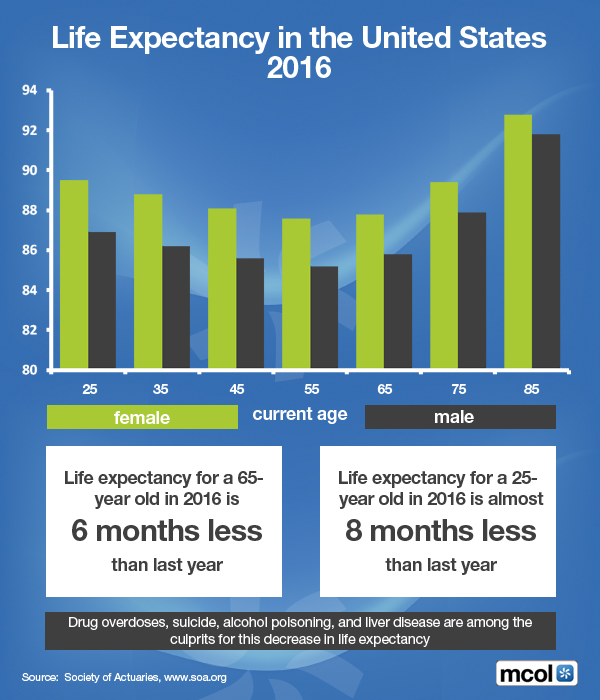
US Life Expectancy

Join Our Mailing List

In 2016

By http://www.MCOL.com

***

graphoid110916

***

Conclusion

Your thoughts and comments on this ME-P are appreciated. Feel free to review our top-left column, and top-right sidebar materials, links, URLs and related websites, too. Then, subscribe to the ME-P. It is fast, free and secure.

Speaker: If you need a moderator or speaker for an upcoming event, Dr. David E. Marcinko; MBA – Publisher-in-Chief of the Medical Executive-Post – is available for seminar or speaking engagements. Contact: MarcinkoAdvisors@msn.com

OUR OTHER PRINT BOOKS AND RELATED INFORMATION SOURCES:

Risk Management, Liability Insurance, and Asset Protection Strategies for Doctors and Advisors: Best Practices from Leading Consultants and Certified Medical Planners™8Comprehensive Financial Planning Strategies for Doctors and Advisors: Best Practices from Leading Consultants and Certified Medical Planners™

***

US Trauma Mortality

Join Our Mailing List

By http://www.MCOL.com

As the Cause of Death Under Age 45

***

graphoid110216

***

Ankle-Leg Trauma

[© David Edward Marcinko. All rights reserved. USA]

***

Conclusion

Your thoughts and comments on this ME-P are appreciated. Feel free to review our top-left column, and top-right sidebar materials, links, URLs and related websites, too. Then, subscribe to the ME-P. It is fast, free and secure.

Speaker: If you need a moderator or speaker for an upcoming event, Dr. David E. Marcinko; MBA – Publisher-in-Chief of the Medical Executive-Post – is available for seminar or speaking engagements. Contact: MarcinkoAdvisors@msn.com

OUR OTHER PRINT BOOKS AND RELATED INFORMATION SOURCES:

Product DetailsProduct DetailsProduct Details

***

Presidential Election Day 2016

election-2016

PLEASE VOTE

A MACRA Info-Graphic by CMS

Join Our Mailing List

By CMS

***

macra

***

6 Key Takeaways from MACRA Final Rule

  1. Flexibilities provided in the first transition year may continue in 2018.
  2. During the first year of MIPS, providers will not be evaluated on cost or resource use.
  3. Despite flexibilities allowed under the final rule, it is in providers’ best interest to participate as much as possible during the transition year — and not just for the practice.
  4. Quality measure benchmarks will be published this year.
  5. Vendors need to prepare, too.
  6. Small group providers and solo physicians could get squeezed out.

Source: Becker’s Hospital Review

Conclusion

Your thoughts and comments on this ME-P are appreciated. Feel free to review our top-left column, and top-right sidebar materials, links, URLs and related websites, too. Then, subscribe to the ME-P. It is fast, free and secure.

Speaker: If you need a moderator or speaker for an upcoming event, Dr. David E. Marcinko; MBA – Publisher-in-Chief of the Medical Executive-Post – is available for seminar or speaking engagements. Contact: MarcinkoAdvisors@msn.com

OUR OTHER PRINT BOOKS AND RELATED INFORMATION SOURCES:

Product DetailsProduct Details

***

Are Soaring Health-Care Costs Hurting the U.S. Economy?

Are Soaring Health-Care Costs Hurting the U.S. Economy?


Join Our Mailing List 

dan

By Dan Timotic CFA

About 8% of U.S. household spending went toward health care in 2015, up from 5.8% in 2007. Even though the growth of nationwide health-care spending has slowed, the cost burden is falling more heavily on consumers.1

More than 118 million people qualify for coverage through government programs such as Medicare, which serves individuals age 65 and older and the disabled, or Medicaid, which provides care for the poor. Still, more than 55% of the U.S. population rely on health insurance provided by an employer.2

The health-care landscape has changed over the last decade, but some economists believe uncontained costs still pose a threat to broader economic growth. Here’s a closer look at recent trends, and why it’s more important than ever to be an informed health-care consumer.

Public Spending

Growth in U.S. health-care spending has outpaced total economic growth over the past five decades. In 2014, health-care expenditures accounted for about 17.5% of GDP, up from 5.6% in 1965.3 Though major advances in medical technology have contributed to spending growth, they have also led to better health and well-being overall.4

Public-sector spending has grown more quickly than private spending, largely due to an aging population, rising Medicare enrollment, and the expansion of Medicaid. The share of total spending by Medicare and Medicaid increased from 6.8% in 1966 to 36.8% in 2014.5

ACA Under Way

The Affordable Care Act created state-based exchanges where self-employed individuals, part-time workers, and others without access to group coverage can buy private health insurance. Consumers can compare plans online, and families with incomes up to 400% of the federal poverty level may be eligible for tax credits that reduce premiums. As income rises, subsidies decrease. In 2016, about 85% of the 12.7 million individuals who purchased coverage from the Health Insurance Marketplace received a subsidy.6

Since 2014, all citizens and legal residents have been required to have “minimum essential” health coverage or pay a penalty. The health insurance mandate was intended to add healthy individuals to the insurance pool and counterbalance a provision that prohibits insurers from excluding people with pre-existing conditions. As a result, the uninsured rate has decreased from 13.3% in 2013 to 9.1% in 2015.7

division-of-population-health-logo_crop

Workplace Plans

Employers have been paying around 80% of individual health insurance premiums, but plan changes, including higher deductibles and coinsurance rates, have shifted costs to workers who use health-care services.8

For example, the average deductible for individual coverage in an employer-provided health plan was $1,318 in 2015, up from $917 in 2010. A deductible is the amount the patient must pay before the insurance payments kick in. Health insurance deductibles grew 67% between 2010 and 2015, almost three times as fast as premiums and about seven times as fast as wages and inflation.9

If health insurance premiums continue to rise, it is conceivable that employers could pass more of the costs on to workers by raising premiums and coinsurance or limiting wage increases.

Accounting for Costs

It’s estimated that total U.S. health- care spending increased 5.5% to reach $3.2 trillion in 2015, and growth is projected to average 5.8% annually through 2025. Cost increases have moderated after averaging nearly 8% annually over the previous two decades, but they are still increasing much more than overall inflation.10 Prescription drug prices have been rising at a faster pace. According to one drug-benefits manager, the average price of brand-name drugs rose 16.2% in 2015, surging 98.2% since 2011.11

The research and development of breakthrough medical technologies is undoubtedly a valuable endeavor. Even so, experts say newer and more expensive treatments are not always more effective than existing lower-cost options. It has also been suggested that the fee-for-service payment model — in which insurers reimburse providers based on the number and type of treatments — may drive inefficiency and unnecessary spending by rewarding the quantity rather than the quality of care.12

Economic Impact

Even with insurance coverage, an illness or injury can cause financial pain for a middle-class family with limited disposable income. The prospect of medical bills may cause some families to skip or postpone necessary care, and those who do seek treatment have less money available to spend on other basic needs. A Brookings Institution analysis found that middle-income household spending on health care increased nearly 25% between 2007 and 2014, while spending on restaurant meals and clothing dropped significantly (–13.4% and –18.8%, respectively).13

Health spending across the economy is expected to accelerate and reach 20% of GDP by 2025, which could put additional strain on consumers, employers, and the federal budget.14

Obama Care

Open Enrollment

This is the time of year when employers introduce changes to their benefit offerings, so choosing — and then using — your health plan carefully could help you save money. Before you sign up for a specific plan, consider the extent to which your prescription drugs are covered, estimate your potential out-of-pocket costs based on last year’s usage, and check to see whether your doctors are in the insurer’s network.

Citations:

1, 8, 11, 13) The Wall Street Journal, August 25, 2016 2, 7) U.S. Census Bureau, 2016 3, 5, 10, 14) Centers for Medicare and Medicaid Services, 2016 4, 12) The Brookings Institution, 2015 6) U.S. Department of Health and Human Services, 2016 9) Kaiser Family Foundation, 2015. 

Conclusion

Your thoughts and comments on this ME-P are appreciated. Feel free to review our top-left column, and top-right sidebar materials, links, URLs and related websites, too. Then, subscribe to the ME-P. It is fast, free and secure.

Speaker: If you need a moderator or speaker for an upcoming event, Dr. David E. Marcinko; MBA – Publisher-in-Chief of the Medical Executive-Post – is available for seminar or speaking engagements. Contact: MarcinkoAdvisors@msn.com

OUR OTHER PRINT BOOKS AND RELATED INFORMATION SOURCES:

Product DetailsProduct Details

***

Integrity and Accountability—The Declining State of Physician Health and the Urgent Need for Ethical and Evidence-Based Leadership

Join Our Mailing List

By Michael Lawrence Langan MD

***

***

Integrity and Accountability—The Declining State of Physician Health and the Urgent Need for Ethical and Evidence-Based Leadership — Disrupted Physician

Conclusion

Your thoughts and comments on this ME-P are appreciated. Feel free to review our top-left column, and top-right sidebar materials, links, URLs and related websites, too. Then, subscribe to the ME-P. It is fast, free and secure.

Speaker: If you need a moderator or speaker for an upcoming event, Dr. David E. Marcinko; MBA – Publisher-in-Chief of the Medical Executive-Post – is available for seminar or speaking engagements. Contact: MarcinkoAdvisors@msn.com

OUR OTHER PRINT BOOKS AND RELATED INFORMATION SOURCES:

Product DetailsProduct DetailsProduct Details

***

Wearable Technology as Medical Devices Revolutionize Healthcare

Join Our Mailing List

By Salisu Bala Bello

****

***

White Paper: Wearable Technology as Medical Devices Revolutionize healthcare

Conclusion

Your thoughts and comments on this ME-P are appreciated. Feel free to review our top-left column, and top-right sidebar materials, links, URLs and related websites, too. Then, subscribe to the ME-P. It is fast, free and secure.

Speaker: If you need a moderator or speaker for an upcoming event, Dr. David E. Marcinko; MBA – Publisher-in-Chief of the Medical Executive-Post – is available for seminar or speaking engagements. Contact: MarcinkoAdvisors@msn.com

OUR OTHER PRINT BOOKS AND RELATED INFORMATION SOURCES:

Product DetailsProduct DetailsProduct Details

***