BOARD CERTIFICATION EXAM STUDY GUIDES Lower Extremity Trauma
[Click on Image to Enlarge]
ME-P Free Advertising Consultation
The “Medical Executive-Post” is about connecting doctors, health care executives and modern consulting advisors. It’s about free-enterprise, business, practice, policy, personal financial planning and wealth building capitalism. We have an attitude that’s independent, outspoken, intelligent and so Next-Gen; often edgy, usually controversial. And, our consultants “got fly”, just like U. Read it! Write it! Post it! “Medical Executive-Post”. Call or email us for your FREE advertising and sales consultation TODAY [678.779.8597] Email: MarcinkoAdvisors@outlook.com
Medical & Surgical e-Consent Forms
ePodiatryConsentForms.com
iMBA Inc., OFFICES
Suite #5901 Wilbanks Drive, Norcross, Georgia, 30092 USA [1.678.779.8597]. Our location is real and we are now virtually enabled to assist new long distance clients and out-of-town colleagues.
ME-P Publishing
SEEKING INDUSTRY INFO PARTNERS?
If you want the opportunity to work with leading health care industry insiders, innovators and watchers, the “ME-P” may be right for you? We are unbiased and operate at the nexus of theoretical and applied R&D. Collaborate with us and you’ll put your brand in front of a smart & tightly focused demographic; one at the forefront of our emerging healthcare free marketplace of informed and professional “movers and shakers.” Our Ad Rate Card is available upon request [678-779-8597].
Recently, New York Community Bancorp (NYCB) shares took an 11% tumble—on top of a 38% plunge on Wednesday—after the bank said it’s dealing with surging losses from office buildings and multifamily apartment buildings. It’s a sign that commercial real estate (CRE) lenders are reckoning with the fact that they might not get their money back as commercial landlords struggle with high vacancies and interest rates:
More than $2.2 trillion in US commercial property loans will come due by 2027, according to the Wall Street Journal.
The default risk is worse for regional banks, where CRE loans make up nearly 29% of all assets, versus 6.5% at big national banks.
The KBW Regional Banking Index also dropped 9.2% since Wednesday, the most since Silicon Valley Bank’s collapse last year. (Coincidentally, most of the assets of Signature Bank, which failed shortly after SVB, were bought by NYCB.)
DEFINITION: Venture capital (VC) is a form of private equity and a type of financing that investors provide to start-up companies and small businesses that are believed to have long term growth potential. Venture capital generally comes from well-off investors, investment banks, and any other financial institutions. Venture capital doesn’t always have to be money. In fact, it often comes as technical or managerial expertise. VC is typically allocated to small companies with exceptional growth potential or to those that grow quickly and appear poised to continue to expand.
DEFINITION:Disruptive innovation is a business that creates a new market or value network, or enters at the bottom of an existing market and eventually displaces established market-leading firms, products, and alliances. The term, “disruptive innovation” was popularized by the American academic Clayton Christensen and his collaborators beginning in 1995, but the concept had been previously described in Richard N. Foster‘s book “Innovation: The Attacker’s Advantage” and in the paper Strategic Responses to Technological Threats.
Start-Ups and industry disruptors: Here are just a few of the recent collapses, as per the New York Times:
WeWork, which raised over $11 billion as a private startup, went bankrupt earlier this fall.
Hopin, the virtual events startup that rode a Covid Virus wave to a $7.6 billion valuation, sold its primary business units for $15 million.
The e-scooter company Bird, which became the fastest startup ever to land a $1 billion valuation, was de-listed from the NYSE and is now worth $7 million.
Overall, more than 3,200 private venture-capital backed US startups that have collectively raised $27.2 billion have gone out of business this year, according to the New York Times and PitchBook. So, why are the disruptors doing down?
Well, the Federal Reserve raised interest rates to a 22-year high. The cost of capital has become far more expensive, and investments that are less risky have gotten more attractive. This year has been particularly bad.
It’s a sad and instantaneous end to the golden Venture Capital years fueled by low interest rates and the growth of the mobile interne. Investment in US startups jumped by 8x between 2012 and 2022 to $344 billion dollars.
Posted on November 7, 2023 by Dr. David Edward Marcinko MBA MEd CMP™
WeWork = Did Not Work!
By Staff Reporters
***
***
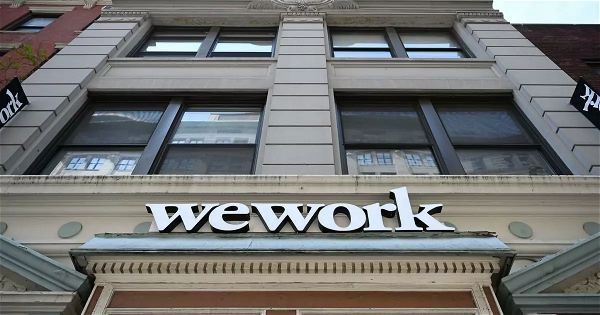
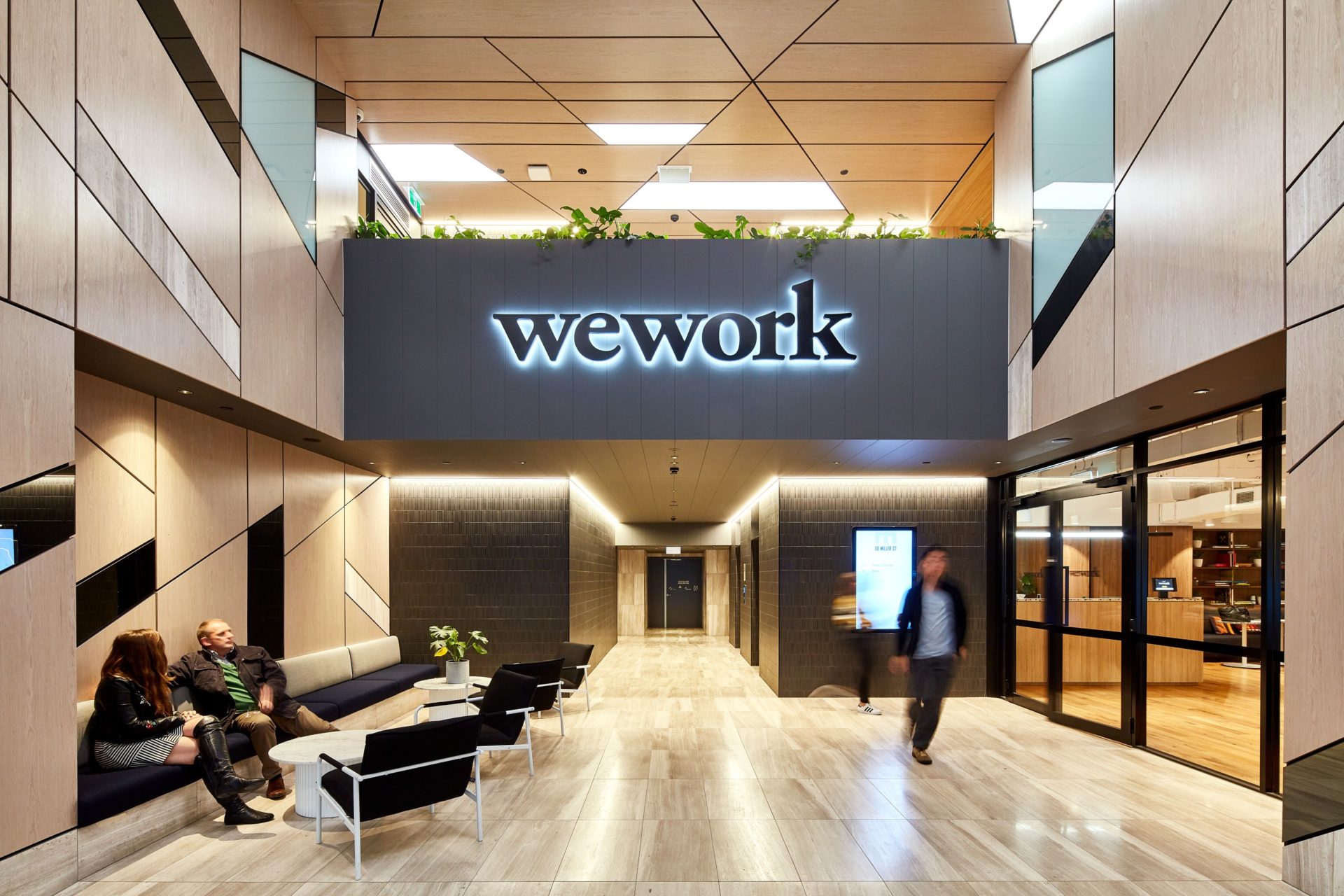
WeWork, the coworking company just filed for Chapter 11 bankruptcy protection in New Jersey after years of struggles that began with a failed IPO in 2019. It aborted the IPO after investors got a look at its finances and just how much power WeWork’s eccentric founder Adam Neumann possessed.
In 2019, the company was valued at $47 billion, but it has since fallen steadily, and this year, its stock has plunged by 98%, giving it a ~$45 million value as of last week.
Posted on August 21, 2023 by Dr. David Edward Marcinko MBA MEd CMP™
By Staff Reporters
***
***
Markets: AI leader Nvidia’s earnings will be out on Wednesday, and Fed Chair Jerome Powell’s annual speech will be at the Fed conference in Jackson Hole on Friday.
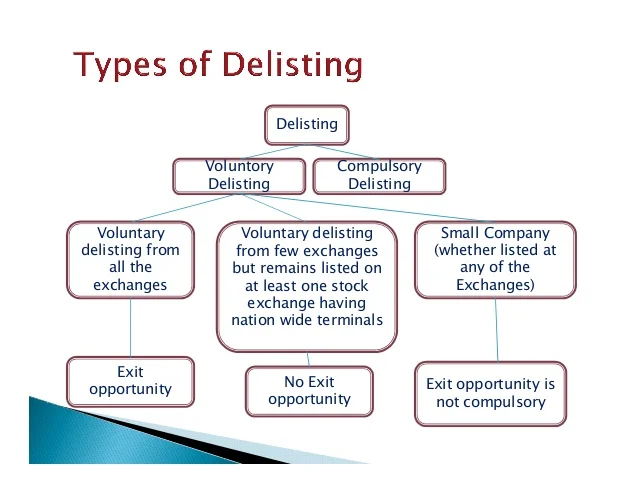
Stock spotlight: WeWork, the co-working company just announced a 1-for-40 reverse stock split in an attempt to avoid getting de-listed from the New York Stock Exchange.
Posted on August 13, 2023 by Dr. David Edward Marcinko MBA MEd CMP™
By Staff Reporters
***
***
WeWork, the co-working company that was valued at $47 billion four years ago just warned that there was “substantial doubt about our ability to continue as a going concern,” which means it could soon file for bankruptcy.
The We Company filed its Form S-1 for the IPO in August 2019. The following month, facing mounting pressure from investors based on disclosures in the S-1, company co-founder Adam Neumann resigned from his position as CEO and gave up majority voting control. Amid growing investor concerns over its corporate governance, valuation, and outlook for the business, the company formally withdrew its S-1 filing and announced the postponing of its IPO. At that time, the reported public valuation of the company was US $10 billion, a reduction from the $47 billion valuation it had achieved in January and less than the $12.8 billion it had raised since 2010.
The gradual return-to-work movement has not benefited WeWork as much as it anticipated: Memberships declined last quarter, and the company posted a net loss of $397 million.







 Support our online development, and advance our onground research initiatives in free market economics, as we seek to showcase the brightest Next-Gen minds.
THE ME-P DISCLAIMER: Posts, comments and opinions do not necessarily represent iMBA, Inc., but become our property after submission. Copyright © 2006 to-date. iMBA, Inc allows colleges, universities, medical and financial professionals and related clinics, hospitals and non-profit healthcare organizations to distribute our proprietary essays, photos, videos, audios and other documents; etc. However, please review copyright and usage information for each individual asset before submission to us, and/or placement on your publication or web site. Attestation references, citations and/or back-links are required. All other assets are property of the individual copyright holder.
Support our online development, and advance our onground research initiatives in free market economics, as we seek to showcase the brightest Next-Gen minds.
THE ME-P DISCLAIMER: Posts, comments and opinions do not necessarily represent iMBA, Inc., but become our property after submission. Copyright © 2006 to-date. iMBA, Inc allows colleges, universities, medical and financial professionals and related clinics, hospitals and non-profit healthcare organizations to distribute our proprietary essays, photos, videos, audios and other documents; etc. However, please review copyright and usage information for each individual asset before submission to us, and/or placement on your publication or web site. Attestation references, citations and/or back-links are required. All other assets are property of the individual copyright holder.





 The Leading Business Education Network for Doctors, Financial Advisors and Health Industry Consultants