BOARD CERTIFICATION EXAM STUDY GUIDES Lower Extremity Trauma
[Click on Image to Enlarge]
ME-P Free Advertising Consultation
The “Medical Executive-Post” is about connecting doctors, health care executives and modern consulting advisors. It’s about free-enterprise, business, practice, policy, personal financial planning and wealth building capitalism. We have an attitude that’s independent, outspoken, intelligent and so Next-Gen; often edgy, usually controversial. And, our consultants “got fly”, just like U. Read it! Write it! Post it! “Medical Executive-Post”. Call or email us for your FREE advertising and sales consultation TODAY [678.779.8597] Email: MarcinkoAdvisors@outlook.com
Medical & Surgical e-Consent Forms
ePodiatryConsentForms.com
iMBA Inc., OFFICES
Suite #5901 Wilbanks Drive, Norcross, Georgia, 30092 USA [1.678.779.8597]. Our location is real and we are now virtually enabled to assist new long distance clients and out-of-town colleagues.
ME-P Publishing
SEEKING INDUSTRY INFO PARTNERS?
If you want the opportunity to work with leading health care industry insiders, innovators and watchers, the “ME-P” may be right for you? We are unbiased and operate at the nexus of theoretical and applied R&D. Collaborate with us and you’ll put your brand in front of a smart & tightly focused demographic; one at the forefront of our emerging healthcare free marketplace of informed and professional “movers and shakers.” Our Ad Rate Card is available upon request [678-779-8597].
Posted on January 2, 2025 by Dr. David Edward Marcinko MBA MEd CMP™
By Staff Reporters
***
***
Anthem Blue Cross and Scripps Health will part ways impacting thousands of patients.
Scripps Health and Anthem Blue Cross officially just parted ways on January 1st, 2025, leaving about 125,000 patients uncertain of what their healthcare and insurance will look like in 2025.
Posted on October 28, 2023 by Dr. David Edward Marcinko MBA MEd CMP™
By Staff Reporters
Today, October 28th, has been the best day of the entire year for stocks since 1950, according to Dr. David Edward Marcinko MBA of http://www.MarcinkoAssociates.com. Black Monday (also known as Black Tuesday in some parts of the world due to timezone differences) was the global, severe and largely unexpected stock market crash on Monday, October 19th, 1987. Worldwide losses were estimated at US$1.71 trillion. The severity of the crash sparked fears of extended economic instability or even a reprise of the Great Depression.
Of course it’s a Saturday this year; today.
***
***
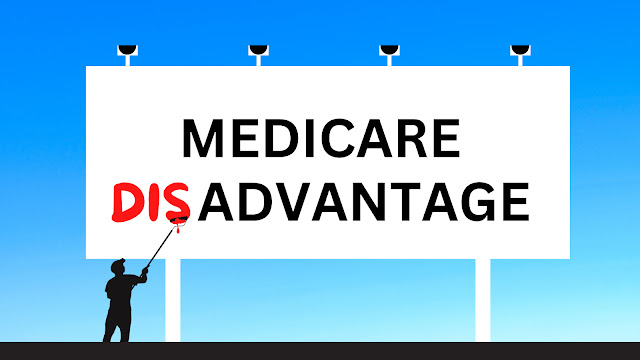
One large health system with hospitals in Virginia and Ohio this year cut off in-network access to consumers enrolled in some Anthem Blue Cross Blue Shield Medicare and Medicaid health insurance plans. Two doctors groups with Scripps Health in San Diego are terminating contracts with private Medicare plans over concerns about payments and routine denials.
Inflation’s summer decline slowed last month. Still, inflation has improved enough recently for Federal Reserve officials to hold interest rates steady at their meeting next week.
The personal-consumption expenditures price index, the Fed’s preferred inflation gauge, rose 0.4% in September from the prior month, the same pace as in August, the Commerce Department said Friday. But so-called core prices, which exclude volatile food and energy categories, increased 0.3% in September from the prior month, compared with a 0.1% rise in August. Higher prices for services drove the increase.
***
Here is where the major benchmarks ended:
The S&P 500 Index was down 19.86 points (0.5%) at 4,117.37, down 2.5% for the week and down 10.6% from a July peak; the Dow Jones Industrial Average (DJI) was down 366.71 points (1.1%) at 32,417.59, down 2.1% for the week; the NASDAQ Composite was up 47.41 points (0.4%) at 12,643.01, down 2.6% for the week.
The 10-year Treasury note yield (TNX) was down about 1 basis point at 4.835%.
CBOE’s Volatility Index (VIX) was up 0.61 at 21.29.
Banking and energy were among the weakest sectors Friday, with the latter under pressure despite strength in crude oil futures. Another leg down in small-cap stocks suggested investors are growing increasingly concerned about the economy, as the Russell 2000 Index (RUT) closed at its lowest level in nearly three years and dropped 2.6% for the week.







 Support our online development, and advance our onground research initiatives in free market economics, as we seek to showcase the brightest Next-Gen minds.
THE ME-P DISCLAIMER: Posts, comments and opinions do not necessarily represent iMBA, Inc., but become our property after submission. Copyright © 2006 to-date. iMBA, Inc allows colleges, universities, medical and financial professionals and related clinics, hospitals and non-profit healthcare organizations to distribute our proprietary essays, photos, videos, audios and other documents; etc. However, please review copyright and usage information for each individual asset before submission to us, and/or placement on your publication or web site. Attestation references, citations and/or back-links are required. All other assets are property of the individual copyright holder.
Support our online development, and advance our onground research initiatives in free market economics, as we seek to showcase the brightest Next-Gen minds.
THE ME-P DISCLAIMER: Posts, comments and opinions do not necessarily represent iMBA, Inc., but become our property after submission. Copyright © 2006 to-date. iMBA, Inc allows colleges, universities, medical and financial professionals and related clinics, hospitals and non-profit healthcare organizations to distribute our proprietary essays, photos, videos, audios and other documents; etc. However, please review copyright and usage information for each individual asset before submission to us, and/or placement on your publication or web site. Attestation references, citations and/or back-links are required. All other assets are property of the individual copyright holder.





 The Leading Business Education Network for Doctors, Financial Advisors and Health Industry Consultants