BUTTERFLY SPREAD INVESTING

By Dr. David Edward Marcinko MBA MEd

***
***

Investing in Butterfly Spreads

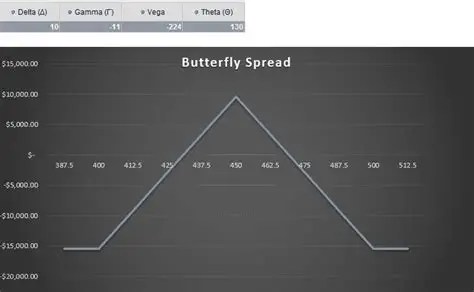
Options trading provides investors with a wide range of strategies to suit different market conditions. One of the more refined approaches is the butterfly spread, a strategy designed to profit from stability in the price of an underlying asset. It combines multiple option contracts at different strike prices to create a position with limited risk and limited reward. The name comes from the shape of its profit-and-loss diagram, which resembles the wings of a butterfly.

Structure of the Strategy

A typical butterfly spread involves four options contracts with three strike prices. In a long call butterfly spread, the investor buys one call at a lower strike, sells two calls at a middle strike, and buys one call at a higher strike. This creates a payoff that peaks if the underlying asset closes at the middle strike price. Losses are capped at the initial premium paid, while profits are capped at the difference between the strikes minus the premium.

Variations of Butterfly Spreads

Butterfly spreads can be built with calls, puts, or a mix of both:

  • Long Call Butterfly: Profits if the asset stays near the middle strike.
  • Long Put Butterfly: Similar structure but using puts.
  • Iron Butterfly: Combines calls and puts, selling an at-the-money straddle and buying protective wings.
  • Reverse Iron Butterfly: Designed to benefit from sharp price movements and volatility.

Each variation adapts to different market expectations, but all share the principle of balancing risk and reward.

Benefits of Butterfly Spreads

  • Defined Risk: The maximum loss is known upfront.
  • Cost Efficiency: Requires less capital than outright buying options.
  • Neutral Outlook: Works best when the investor expects little price movement.
  • Flexibility: Can be tailored to different market conditions with calls, puts, or combinations.

Drawbacks and Risks

  • Limited Profit Potential: Gains are capped, which may not appeal to aggressive traders.
  • Dependence on Timing: The strategy works only if the asset closes near the middle strike at expiration.
  • Complexity: Requires careful planning of strike prices and expiration dates.

Example in Practice

Suppose a stock trades at $100, and the investor expects it to remain near that level. They could set up a butterfly spread with strikes at $95, $100, and $105. If the stock closes at $100, the strategy delivers maximum profit. If the stock moves significantly away from $100, the investor’s loss is limited to the premium paid. This makes the butterfly spread particularly useful in calm, low-volatility markets.

Conclusion

The butterfly spread is a disciplined options strategy that thrives in stable markets. It offers a balance between risk control and profit potential, making it attractive to traders who prefer structured outcomes. While the rewards are capped, the defined risk and cost efficiency make butterfly spreads a valuable tool for investors who anticipate minimal price movement and want to manage their exposure carefully.

COMMENTS APPRECIATED

EDUCATION: Books

SPEAKING: Dr. Marcinko will be speaking and lecturing, signing and opining, teaching and preaching, storming and performing at many locations throughout the USA this year! His tour of witty and serious pontifications may be scheduled on a planned or ad-hoc basis; for public or private meetings and gatherings; formally, informally, or over lunch or dinner. All medical societies, financial advisory firms or Broker-Dealers are encouraged to submit an RFP for speaking engagements: CONTACT: Ann Miller RN MHA at MarcinkoAdvisors@outlook.com -OR- http://www.MarcinkoAssociates.com

Like, Refer and Subscribe

***

***

STOCK MARKET INDEX OPTIONS: Puts and Calls

By Dr. David Edward Marcinko MBA MEd

SPONSOR: http://www.MarcinkoAssociates.com

***

***

Understanding Stock Market Options: A Strategic Investment Tool

Stock market options are financial instruments that offer investors a versatile way to participate in the equity markets. Unlike traditional stock trading, options provide the right—but not the obligation—to buy or sell an underlying asset at a predetermined price within a specified time frame. This flexibility makes options a powerful tool for hedging, speculation, and income generation.

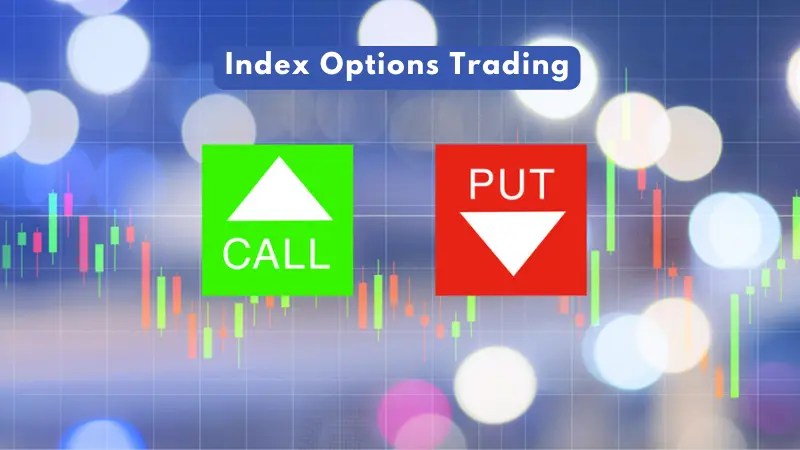
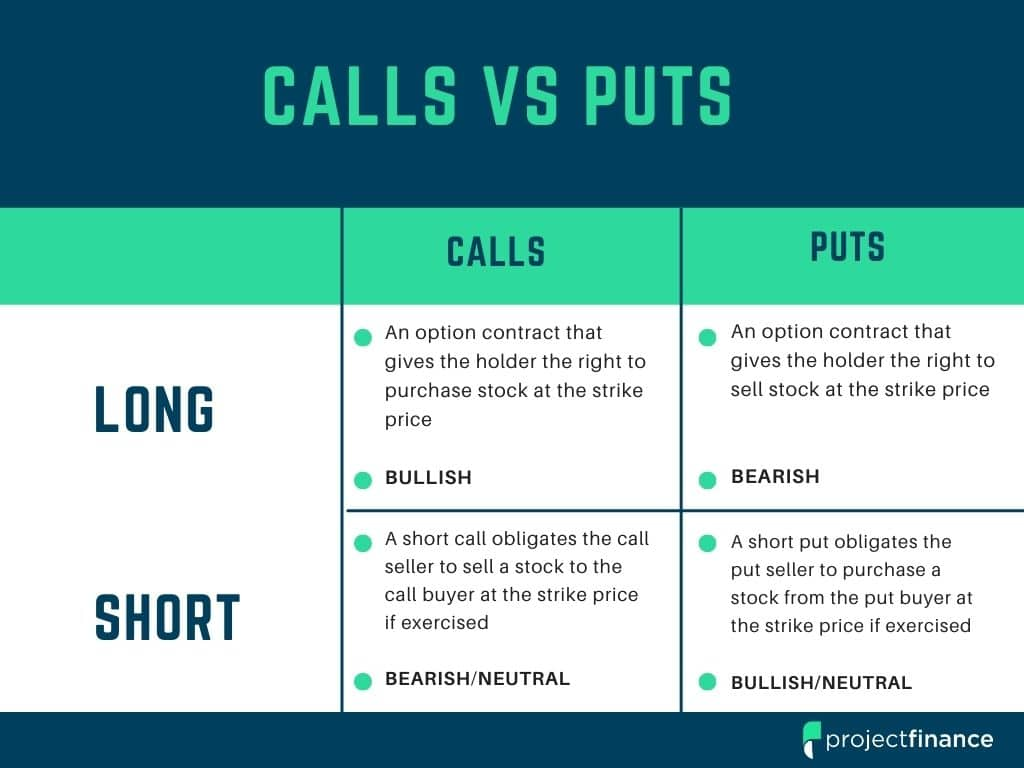
There are two primary types of options: calls and puts. A call option gives the holder the right to buy a stock at a specific price, known as the strike price, before the option expires. Investors typically purchase call options when they anticipate a rise in the stock’s price. Conversely, a put option grants the right to sell a stock at the strike price, and is used when an investor expects the stock to decline. Each option contract typically represents 100 shares of the underlying stock.

Options are traded on regulated exchanges such as the Chicago Board Options Exchange (CBOE), and their prices are influenced by several factors. These include the underlying stock’s price, the strike price, time until expiration, volatility, and prevailing interest rates. The premium, or cost of the option, reflects these variables and represents the maximum loss for the buyer.

***

***

One of the most compelling uses of options is hedging. Investors can use options to protect their portfolios against adverse price movements. For example, owning put options on a stock can offset potential losses if the stock’s value drops. This strategy is akin to purchasing insurance and is especially valuable during periods of market uncertainty.

Options also enable speculative strategies with limited capital. Traders can leverage options to bet on price movements without owning the underlying asset. While this can lead to significant gains, it also carries substantial risk, particularly if the market moves against the position. Therefore, understanding the mechanics and risks of options is crucial before engaging in such trades.

Another popular strategy involves writing options, or selling them to collect premiums. Covered call writing, for instance, involves holding a stock and selling call options against it. This generates income but caps potential upside if the stock surges beyond the strike price. Similarly, cash-secured puts allow investors to earn premiums while potentially acquiring stocks at a discount.

Despite their advantages, options are not suitable for all investors. Their complexity and potential for rapid loss require a solid grasp of financial concepts and disciplined risk management. Regulatory bodies and brokerages often require investors to pass suitability assessments before granting access to options trading.

In conclusion, stock market options are dynamic instruments that offer a range of strategic possibilities. Whether used for hedging, speculation, or income, they provide flexibility that traditional stock trading cannot match. However, their effective use demands education, experience, and a clear understanding of market behavior. For informed investors, options can be a valuable addition to a diversified financial toolkit.

COMMENTS APPRECIATED

EDUCATION: Books

SPEAKING: Dr. Marcinko will be speaking and lecturing, signing and opining, teaching and preaching, storming and performing at many locations throughout the USA this year! His tour of witty and serious pontifications may be scheduled on a planned or ad-hoc basis; for public or private meetings and gatherings; formally, informally, or over lunch or dinner. All medical societies, financial advisory firms or Broker-Dealers are encouraged to submit an RFP for speaking engagements: CONTACT: Ann Miller RN MHA at MarcinkoAdvisors@outlook.com -OR- http://www.MarcinkoAssociates.com

Like, Refer and Subscribe

***

***

ALTERNATIVE INVESTMENTS: Asset Classes Defined

By A. I. and Staff Reporters

SPONSOR: http://www.MarcinkoAssociates.com

***

***

Here is a broad menu of asset classes and alternative investments to consider:

Real Assets

  • Real Estate: Rental properties, REITs (Real Estate Investment Trusts), land, commercial buildings.
  • Commodities: Gold, silver, oil, natural gas, agricultural products.
  • Collectibles: Art, vintage cars, rare coins, wine, sports memorabilia.

Private Market Investments

  • Private Equity: Investing in private companies, often through venture capital or buyout funds.
  • Venture Capital: Early-stage investments in startups with high growth potential.
  • Angel Investing: Direct investment in startups, usually by individuals.

Intellectual Property & Royalties

  • Music Royalties: Buying rights to songs and earning income from plays or licensing.
  • Patents & Trademarks: Licensing intellectual property for recurring revenue.

Structured Products & Alternatives

  • Hedge Funds: Pooled funds using advanced strategies like short selling, derivatives, and leverage.
  • Structured Notes: Debt securities with embedded derivatives for customized risk-return profiles.
  • Options & Futures: Derivatives for speculation or hedging.

Impact & Sustainable Investing

  • ESG Funds: Focused on environmental, social, and governance criteria.
  • Green Bonds: Bonds that fund environmentally friendly projects.
  • Social Impact Funds: Investments aimed at generating positive societal outcomes.

Tangible Assets

  • Precious Metals: Physical gold, silver, platinum.
  • Farmland & Timberland: Income from agriculture or forestry.
  • Infrastructure: Toll roads, airports, energy grids—often via specialized funds.

Income-Producing Alternatives

  • Peer-to-Peer Lending: Lending money via platforms like LendingClub or Prosper.
  • Annuities: Insurance products that provide guaranteed income streams.
  • Royalties from Books or Software: Passive income from intellectual property.

COMMENTS APPRECIATED

EDUCATION: Books

Like, Refer and Subscribe

***

***

STOCK: Common V. Preferred V. Hybrid Securities

BY DR. DAVID EDWARD MARCINKO; MBA MEd CMP™

SPONSOR: http://www.MarcinkoAssociates.com

***

***

Common Stock versus Preferred Stock

A common stock is the least senior of securities issued by a company.  A preferred stock, in contrast, is slightly more senior to common stock, since dividends owed to the preferred stockholders should be paid before distributions are made to common stockholders. 

However, distributions to preferred stockholders are limited to the level outlined in the preferred stock agreement (i.e., the stated dividend payments).  Like a fixed income security, preferred stocks have a specific periodic payment that is either a fixed dollar amount or an amount adjusted based upon short-term market interest rates.  However, unlike fixed income securities, preferred stocks typically do not have a specific maturity date and preferred stock dividend payments are made from the corporation’s after tax income rather than its pre-tax income.  Likewise, dividends paid to preferred stockholders are considered income distributions to the company’s equity owners rather than creditors, so the issuing corporation does not have the same requirement to make dividend distributions to preferred stockholders. 

Preferred Stock

Thus, preferred stock is generally referred to as a “hybrid” security, since it has elements similar to both fixed income securities (i.e., a stated periodic payments) and equity securities (i.e., shareholders are considered owners of the issuing company rather than creditors). 

Hybrid Securities

Convertible preferred stocks (and convertible corporate bonds) are also considered hybrid securities since they have both equity and fixed income characteristics.   A convertible security whether a preferred stock or a corporate bond, generally includes a provision that allow the security to be exchanged for a given number of common stock shares in the issuing corporation. The holder of a convertible security essentially owns both the preferred stock (or the corporate bond) and an option to exchange the preferred stock (or corporate bond) for shares of common stock in the company. 

Thus, at times the convertible security may behave more like the issuing company’s common stock than it does the issuing company’s preferred stock (or corporate bonds), depending upon how close the common stock’s market price is to the designated conversion price of the convertible security.

EDUCATION: Books

SPEAKING: Dr. Marcinko will be speaking and lecturing, signing and opining, teaching and preaching, storming and performing at many locations throughout the USA this year! His tour of witty and serious pontifications may be scheduled on a planned or ad-hoc basis; for public or private meetings and gatherings; formally, informally, or over lunch or dinner. All medical societies, financial advisory firms or Broker-Dealers are encouraged to submit a RFP for speaking engagements:

COMMENTS APPRECIATED

Refer, Like and Subscribe

***

***

INVESTING: Absolute Return Fund

DEFINITION

SPONSOR: http://www.MarcinkoAssociates.com

By Staff Reporters

***

***

As an investment vehicle, an absolute return fund seeks to make positive returns by employing investment management techniques that differ from traditional mutual funds.

Absolute return investment techniques include using short selling, futures, options, derivatives, arbitrage, leverage and unconventional assets.

COMMENTS APPRECIATED

Subscribe Today

***

***

FINANCIAL Derivatives

By Dr. David Edward Marcinko MBA MEd

SPONSOR: http://www.MarcinkoAssociates.com

***

***

Derivatives are securities whose performance and/or structure is derived from the performance and/or structure of other assets, interest rates, or indexes. If used moderately and in appropriate situations, derivatives can help stabilize portfolios and/or enhance returns. However, if used in excess and/or in inappropriate circumstances, they can be harmful, potentially causing portfolio instability and/or losses. Derivatives are similar to medicine in their behavior–usually safe when used as directed, potentially toxic when abused.

There are many different types of derivative securities and many different ways to use them. Some derivative securities, such as mortgage-related and other asset-backed securities, are in many respects like any other investment, although they may be more volatile or less liquid than more traditional debt securities.

Futures and options are commonly used for traditional hedging purposes to attempt to protect portfolios from exposure to changing interest rates, securities prices or currency exchange rates, and for cash management purposes as a low-cost method of gaining exposure to a particular securities market without investing directly in those securities.

Certain other derivative securities may be described as structured investments. A structured investment is a security whose value or performance is linked to an underlying index or other security or asset class. Structured investments include collateralized mortgage obligations (CMOs). Structured investments also include securities backed by other types of collateral.

CITE: https://www.r2library.com/Resource/Title/0826102549

COMMENTS APPRECIATED

Subscribe Today!

***

***

Keep your Investing Options Open – Doctor

OR – Hedge your Bets

By Dr. David Edward Marcinko MBA MEd CMP™

http://www.CertifiedMedicalPlanner.org

[Publisher-in-Chief]

As a physician executive or investor, if you don’t ordinarily deal in options or other financial derivatives, you may need to brush up on puts and calls, straddles, strangles (or combinations), forwards, futures, swaps, spreads, and non-equity options such as stock index options. Options and other financial derivatives can be used by astute physicians, financial advisors and investment managers not only as a tool to better manage the investment risks potentially affecting portfolio returns, but to craft truly value-added investment strategies customized to meet investors’ needs. The three main types of risk of equity securities (individual company, industry, and market) can be mitigated with options.

Individual Company Risk

Individual company risk can be addressed with equity options in that company’s stock. Industry risk can be reduced through the use of narrow-based index options, while market risk can be mitigated with broad-based index options. Sophisticated hedging and risk management strategies can be designed using both equity and stock index options.

Exotic Stock Options?

Some doctors feel that options have been generally thought of as too risky or exotic or requiring too much capital, resulting in a general lack of comfort. A decade ago, these opinions have no doubt been shaped by the collapse of Bearings and the resulting bitter litigation by Proctor & Gamble and Gibson Greetings against Bankers Trust. Last decade, it was Enron, Tyco, WorldCom, Lehman Brothers, AIG, BA, Fannie, Freddie and all those involved in the “flash-crash” of 2008-09; etc.

Assessment

Generally, premiums paid in buying puts or calls are nondeductible capital expenditures and may produce a capital gain or loss depending upon whether the option is sold prior to exercise, the call expires unexercised, or, if the option is exercised, it is added to the basis of the stock (call) or deducted from it (put). Premiums received for writing puts or calls are not included in income upon receipt but are deferred until the option expires, is exercised, or a closing transaction is entered into. Non-equity options (index options) are marked to market at year end (same as for futures) with 60% considered long-term capital gain and 40% considered short-term.

Note: “An Introduction to Options and Other Financial Derivative Strategies,” by Thomas J. Boczar, Trust & Estates, February 1997, pp. 43–68, INTERTEC/K-III Publishing.

The primary objectives in using derivatives are:

1. Risk management and hedging (reducing or eliminating downside risk, monetizing a position, deferring and possibly avoiding capital gains taxes)

2. Leveraging investment capital

3. Enhancing after-tax returns

4. Creating customized risk/return profiles

Channel Surfing the ME-P

Have you visited our other topic channels? Established to facilitate idea exchange and link our community together, the value of these topics is dependent upon your input. Please take a minute to visit. And, to prevent that annoying spam, we ask that you register. It is fast, free and secure.

Conclusion

Your thoughts and comments on this ME-P are appreciated. Feel free to review our top-left column, and top-right sidebar materials, links, URLs and related websites, too. Then, subscribe to the ME-P. It is fast, free and secure.

Speaker: If you need a moderator or speaker for an upcoming event, Dr. David E. Marcinko; MBA – Publisher-in-Chief of the Medical Executive-Post – is available for seminar or speaking engagements. Contact: MarcinkoAdvisors@msn.com

OUR OTHER PRINT BOOKS AND RELATED INFORMATION SOURCES:

Product DetailsProduct DetailsProduct Details

     Product Details 

Put and Call OPTIONS RATIO?

By Staff Reporters

***

***

Options are contracts that give investors the right to buy or sell stocks, indexes or other financial securities at an agreed upon price and date. Puts are the option to sell while calls are the option to buy.

Specifically – A Call Option gives the buyer the right, but not the obligation to buy the underlying security at the exercise price, at or within a specified time. A Put Option gives the buyer the right, but not the obligation to sell the underlying security at the exercise price, at or within a specified time.

Ratio – When the ratio of puts to calls is rising, it is usually a sign investors are growing more nervous. A ratio above 1 is considered bearish. The Fear & Greed Index uses a bearish options ratio as a signal for Fear.

CITE: https://www.r2library.com/Resource/Title/0826102549

***

COMMENTS APPRECIATED

Thank You

***

***

On “Covered Call” Overlays

Buy / Writes

RB

By Ross Barnett Terry

www.TradersExclusive.com

There are many benefits that come with the ownership of stock. They range from prestige to the opportunity to be invested and, through dividends and other corporate actions, share in the prosperity of the company in question. At times we are even awarded shares of stock from companies we are affiliated. The overall goal should always be wealth accumulation. After all, why stay invested in or even work for a company that you truly do not believe in?

The benefits, as stated, all afford the chance at wealth accumulation. Once we start to look at that rate we can even better understand the fact that stocks are truly an investment vehicle similar to bonds, real estate, commodities, etc.

 What is a Call Option?

In its simplest definition, a call option is a contract that specifies that: 1) for a specified price; 2) for a specified amount in time; 3) for a specified price; 4) on a specifically identified or predetermined underlying, in this case, an exchange listed company stock. The contract gives the owner the right to take delivery of shares at the strike price.

CITE: https://www.r2library.com/Resource/Title/0826102549

Example:

In early February, if a physician or other investor wanted to take a position in shares of Pfizer (NYSE: PFE) which are say trading around $31.00. He would be invest $3,100.00 for every 100 shares. Buying a  calls on the $32.00 strike at say .68 and with an expiration date of April 2015 affords the investor the chance at appreciation on 100 shares out to the 3rd week in April  after the strike price (32.00) + the price of the option (.68) (in this case 32.68) is surpassed. That’s less than a penny a day to have the chance at participating in an up move, while being afforded that chance at a greatly reduced risk. So the trade of is foregoing a 5.41% appreciation for a 97.81% reduction in risk. The owner of the option can only lose the price they pay for the contract where as the owner of shares stands to risk any and all of the share value in question.

***

***

We can now see certain benefits that favor owning calls in lieu of owning shares of stock. But why write calls. First understand that, when you enter into a short call position, the seller is guaranteeing that, at any point during the life of the contract the buyer can exercise his right to take possession of those shares and the seller must deliver the shares upon assignment of the short contract.

The benefit of writing a call is that it enhances the rate of return. Normally; but not always, stocks move up or down in reaction to earnings calls or specific event news possibly even industry related. That said once investors react and stocks stabilize, call premiums tend to settle down. This presents the opportunity to enhance the rate of return on shares owned.

Example:

A physician corporate executive owns 1,000 shares of xyz stock and is restricted from selling those shares. Same as renting a condominium that we own for investing, selling options on a monthly basis provides a similar income stream that the rent from the condominium provides.

The executive, physician or investor owns the shares which using the above example of PFE trading at $31.00 is a cash value equivalent $31,000.00. Selling the February 32.5 call on the 1st trading day of the month for say .10 affords the owner of the shares a chance to gain a .03% rate of return in around 21 days’ time, while being afforded the luxury of the stock being able to appreciate to $32.60 which is the predetermined sale price via the sale of the call. If the owner of the shares does this each month they can gain another 3.87% return which, in addition offers a little downside protection should shares fall under pressure for whatever reason.

Professional Management?

Professional management allows for strategic points when stocks react to news or simple market weighting. “The determination to exercise or not must be weighed with all the benefits and costs taken into account; this will require additional homework by the investor” (Grigoletto, 2008). The most important aspect of call writing is active management. The reality is that only approximately 17% of options get exercised. Many expire worthless, some are traded out of before expiration, and some, such as the ones that end up in the money, just slightly above the strike do not warrant being exercised. With the returns investors face today, every possible avenue must be, at the very least, addressed and understood so they can make careful choices based on educated decisions. Considering a separately managed account by industry professionals may be an excellent alternative for many.

More:

Selling

As always in selling options, just as in any type of investment, careful analysis of the underlying investment vehicle in question is key. Additionally, in selling monthly options, the risk of assignment is greatly reduces and the seller can essentially determine how close to the price the owner wants to overlay. Fundamental analysis can help to reduce the chance at assignment. Before seeking advice, the best thing to do is contact an accountant, as well as using due diligence in researching which Registered Investment Advisor [RIA] may best suits your needs.

Assessment

But that said, always remember; the overall goal should is wealth accumulation, capital appreciation and overall enhancement of return on capital. As for the reason to own stocks, again after all, why stay invested in or even work for a company that you truly do not believe in?

Channel Surfing the ME-P

Have you visited our other topic channels? Established to facilitate idea exchange and link our community together, the value of these topics is dependent upon your input. Please take a minute to visit. And, to prevent that annoying spam, we ask that you register. It is fast, free and secure.

About the Author

  • Present: Capital Wealth Planning, LLC
  • Illinois Indiana Regional Business Development Officer
  • Previous: Think Or Swim, LLC
  • Registered Securities Representative
  • Market Maker Chicago Board of Options Exchange (CBOE) 1985 – 2004

Reference

Conclusion

Your thoughts and comments on this ME-P are appreciated. Feel free to review our top-left column, and top-right sidebar materials, links, URLs and related websites, too. Then, subscribe to the ME-P. It is fast, free and secure.

Speaker: If you need a moderator or speaker for an upcoming event, Dr. David E. Marcinko; MBA – Publisher-in-Chief of the Medical Executive-Post – is available for seminar or speaking engagements. Contact: MarcinkoAdvisors@msn.com

OUR OTHER PRINT BOOKS AND RELATED INFORMATION SOURCES:

Comprehensive Financial Planning Strategies for Doctors and Advisors: Best Practices from Leading Consultants and Certified Medical Planners(TM)

ACCOUNTING: Mark to Market [MTM] Fair Value

***

***

By Staff Reporters

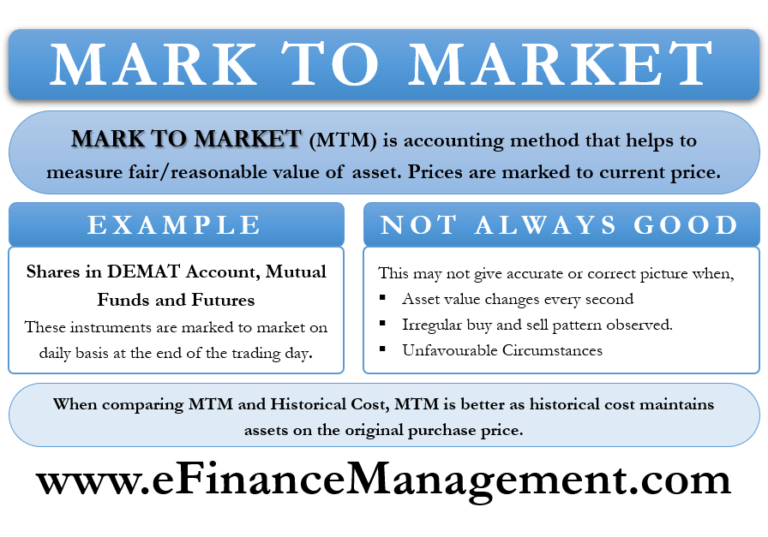
According to Wikipeida, Mark-to-market (MTM or M2M) or fair value accounting is accounting for the “fair value” of an asset or liability based on the current market price, or the price for similar assets and liabilities, or based on another objectively assessed “fair” value.[1] Fair value accounting has been a part of Generally Accepted Accounting Principles (GAAP) in the United States since the early 1990s. Failure to use it is viewed as the cause of the Orange County Bankruptcy,[2][3] even though its use is considered to be one of the reasons for the Enron scandal and the eventual bankruptcy of the company, as well as the closure of the accounting firm Arthur Andersen.[4]

Mark-to-market accounting can change values on the balance sheet as market conditions change. In contrast, historical cost accounting, based on the past transactions, is simpler, more stable, and easier to perform, but does not represent current market value. It summarizes past transactions instead. Mark-to-market accounting can become volatile if market prices fluctuate greatly or change unpredictably. Buyers and sellers may claim a number of specific instances when this is the case, including inability to value the future income and expenses both accurately and collectively, often due to unreliable information, or over-optimistic or over-pessimistic expectations of cash flow and earnings.[5]

Stock brokers allow their clients to access credit via margin accounts. These accounts allow clients to borrow funds to buy securities. Therefore, the amount of funds available is more than the value of cash (or equivalents). The credit is provided by charging a rate of interest and requiring a certain amount of collateral, in a similar way that banks provide loans. Even though the value of securities (stocks or other financial instruments such as options) fluctuates in the market, the value of accounts is not computed in real time. Marking-to-market is performed typically at the end of the trading day, and if the account value decreases below a given threshold (typically a ratio predefined by the broker), the broker issues a margin call that requires the client to deposit more funds or liquidate the account.

COMMENTS APPRECIATE

Thank You

***

***

The Vicious Cycle of Options Trading, Short Squeezes and Hedge Fund Positioning!

By JP Morgan

***

***

Exercising Healthcare Employee Options

Join Our Mailing List

Vital Information for Medical Professionals and Heathcare Workers

[By Staff Reporters]dhimc-book9

To a large degree the decision to exercise a stock option will depend on whether the medical professional, hospital or other healthcare services employee is going to hold the stock following the exercise or is going to sell the stock immediately.

A Bifurcated Decision Point

1. If the employee intends to sell the stock, then he or she should try to time the exercise so that the stock is at its highest value.

2. If the employee is going to hold the acquired stock for future investment, then he or she should exercise the option as late as possible under the terms of the option agreement; the employee thus enjoys all upside potential without any investment and has nothing at risk.

Exceptions

There are two exceptions to the general rule:

1. First, if the rate of dividends is sufficient to cover the financing cost, or is at least equal to other investment returns, then exercise of the options makes sense.

2. Second, if the option is an Incentive Stock Option [ISO], the potential application of the alternative minimum tax (AMT) rules may force the employee to stagger the exercise.

Assessment

For more terminology information, please refer to the Dictionary of Health Economics and Finance.

Conclusion

And so, your thoughts and comments on this Medical Executive-Post are appreciated?

Link: http://feeds.feedburner.com/HealthcareFinancialsthePostForcxos

Speaker: If you need a moderator or speaker for an upcoming event, Dr. David E. Marcinko; MBA – Publisher-in-Chief of the Medical Executive-Post – is available for seminar or speaking engagements. Contact: MarcinkoAdvisors@msn.com 

Our Other Print Books and Related Information Sources:

Practice Management: http://www.springerpub.com/prod.aspx?prod_id=23759

Physician Financial Planning: http://www.jbpub.com/catalog/0763745790

Medical Risk Management: http://www.jbpub.com/catalog/9780763733421

Subscribe Now:Did you like this Medical Executive-Post, or find it helpful, interesting and informative? Want to get the latest ME-Ps delivered to your email box each morning? Just subscribe using the link below. You can unsubscribe at any time. Security is assured.

Link: http://feeds.feedburner.com/HealthcareFinancialsthePostForcxos

Product DetailsProduct DetailsProduct Details

Fiduciary Burden of Participant-Directed Investment Plans

Join Our Mailing List

An Emerging Issue for Physician-Executives

[By Jeffery S. Coons; PhD, CFP]

Managing Principal-Manning & Napier Advisors, Inc

fp-book1

The goal of designing a participant-directed investment menu should be to provide enough diversification of roles to allow participants to make an appropriate trade-off between risk and return, without having so many roles as to create participant confusion. 

Medical Administrative Burden

Ultimately, the burden on plan administrators and physician executives is to adequately educate employees and is largely driven by the investment decisions we require them to make in the plan, with more choices necessitating a greater understanding of the fundamental differences between and appropriate role for each choice.  The logical questions that arise when selecting options on a menu are:

  • Are there clear differences among the options?
  • Are these differentiating characteristics inherent to the option or potentially fleeting?
  • Are the differences among options easily communicated to and understood by the typical plan participant?
  • Most importantly, if participants are given choice among these different options, can the decisions they make reasonably be expected to result in an appropriate long-term investment program?

Fiduciary Concerns and Liabilities

All this adds up to additional fiduciary concerns for the health care entity and plan sponsor. 

For example, can the typical participant understand growth and value as concepts when even the experts can not agree on their definitions? The use of style based menus for self-directed plans bring this issue to the forefront. What about investment strategy?  What choices are we expecting the participant to make when offering growth and value styles for one basic asset class role? 

Finally, beyond the responsibility to provide effective education, what other fiduciary issues are associated with style categorization for a participant-directed investment menu?

Effective Style Communications

Consider whether the differences among manager styles can be effectively communicated to the average participant.  Because the general style categories of “growth” and “value” are not well defined, we are expecting the participant to understand how the manager is making investments in a fundamental manner and the differences in risk/return characteristics of these alternative approaches.  This exercise is difficult for investment professionals and trustees, so it will be even more unlikely to be properly understood by an average participant.

Given Assumptions

Let’s assume for the moment that there is an effective means for understanding the different risk and return characteristics of two managers investing in what is ultimately the same basic asset class.  When allowing the choice of these two differing approaches, what decision can the participant make?  There are four possibilities:

  1. Select the single manager whose investment philosophy makes the most sense overall to the participant;
  2. Time the decision of when to move from one management philosophy to another;
  3. Split the allocation between the two managers; or,
  4. Give up from confusion and do not participate in the plan.

We have already discussed the difficulty of the first choice, so let’s consider the second possibility.  This decision is an extremely risky choice that typically leads to poor or even catastrophic performance. 

Why?  Timing decisions such as this are typically based upon recent past performance, which is cyclical in nature.  In essence, investors generally chase after yesterday’s returns and invest in funds after their period of strong relative performance.  The strong flows into S&P 500 Index funds and growth/momentum firms of today were preceded by flows into value/fundamentally-oriented investment firms a few years ago. 

In fact, a Journal of Investing academic article in the Summer of 1998 (“Mutual Fund Performance: A Question of Style”) found that mutual funds changing their investment style had the worst performance of any style individually.

Allocation Choices

The next choice is to split the allocation between growth and value.  While this approach may mean that the participant will not under-perform significantly when any one style is out-of-favor, it also means that the participant will generally never out-perform either.

Nevertheless, by combining two halves of the same basic universe within an asset class, it is likely that the basic performance of the asset class will result (i.e., index-like returns).  Since the participant is paying the higher expenses of active, value-added mutual funds, the end result is likely to be index-like returns less the significantly greater fees and consistent under-performance over the long-term.

Assessment

While there may be participants who can handle the investment process, the previous discussion illustrates why it remains an open question whether educational efforts and typical menu choices provided by plan fiduciaries will be adequate from a regulatory and legal standpoint.

However, while it is unreasonable for participants to select the single best manager, it is reasonable for trustees to choose managers by defining investment policy and objectives that focus on characteristics like broad asset classes. 

And; do you think that by creating an investment menu that removes soft, overlapping, and largely qualitative distinctions such as style; plan sponsors can take a significant step toward mitigating the potential for participant confusion that inevitably could lead to litigation?

Conclusion

Your thoughts and comments on this ME-P are appreciated. Feel free to review our top-left column, and top-right sidebar materials, links, URLs and related websites, too. Then, subscribe to the ME-P. It is fast, free and secure.

Link: http://feeds.feedburner.com/HealthcareFinancialsthePostForcxos

Speaker: If you need a moderator or speaker for an upcoming event, Dr. David E. Marcinko; MBA – Publisher-in-Chief of the Medical Executive-Post – is available for seminar or speaking engagements. Contact: MarcinkoAdvisors@msn.com

OUR OTHER PRINT BOOKS AND RELATED INFORMATION SOURCES:

DICTIONARIES: http://www.springerpub.com/Search/marcinko
PHYSICIANS: www.MedicalBusinessAdvisors.com
PRACTICES: www.BusinessofMedicalPractice.com
HOSPITALS: http://www.crcpress.com/product/isbn/9781466558731
CLINICS: http://www.crcpress.com/product/isbn/9781439879900
BLOG: www.MedicalExecutivePost.com
FINANCE: Financial Planning for Physicians and Advisors
INSURANCE: Risk Management and Insurance Strategies for Physicians and Advisors


Product Details  Product Details

Investing in Options

 Join Our Mailing List

An Appropriateness Summary

[By William H. Mears; CPA, JD]

Options trading involve a high degree of risk in that the physician or other investor may lose their entire investment when the option expires. As a result, options trading may not be suitable for all doctors or investors.

Suitability

All trading firms must have a procedure in place that requires a customer’s account to be approved for options trading prior to the execution of any options orders. The following steps must be taken before an option trade can be completed:

1. Completion of an Options Agreement. The Options Agreement attests to the client’s receipt of the Risk Disclosure Book, sent out by the broker.

2. Approval of the Options Agreement by a Registered Options Principal. The Registered Options Principal will ensure that the Risk Disclosure Form is sent and approves the client for options trading based on the client’s application.

3. Return of the Options Agreement to the broker/dealer within 15 days.

4. Receipt of Risk Disclosure Form by the customer. The most important step in the options account opening process is the client’s receipt and review of the Risk Disclosure Book.

Assessment

Generally, brokers send out the Risk Disclosure Form first, get approval for options trading by a Registered Options Principal (ROP), do the trade, and get a signed Options Agreement from a client within 15 days of the account approval.

So, have you ever invested in options; why and what were your results?

Channel Surfing the ME-P

Have you visited our other topic channels? Established to facilitate idea exchange and link our community together, the value of these topics is dependent upon your input. Please take a minute to visit. And, to prevent that annoying spam, we ask that you register. It is fast, free and secure.

Conclusion

Your thoughts and comments on this ME-P are appreciated. Feel free to review our top-left column, and top-right sidebar materials, links, URLs and related websites, too. Then, subscribe to the ME-P. It is fast, free and secure.

Speaker: If you need a moderator or speaker for an upcoming event, Dr. David E. Marcinko; MBA – Publisher-in-Chief of the Medical Executive-Post – is available for seminar or speaking engagements. Contact: MarcinkoAdvisors@msn.com

OUR OTHER PRINT BOOKS AND RELATED INFORMATION SOURCES:

Comprehensive Financial Planning Strategies for Doctors and Advisors: Best Practices from Leading Consultants and Certified Medical Planners(TM)