DAILY UPDATE: UnitedHealth Group Alert as Stocks End Slightly Mixed

MEDICAL EXECUTIVE-POST TODAY’S NEWSLETTER BRIEFING

***

Essays, Opinions and Curated News in Health Economics, Investing, Business, Management and Financial Planning for Physician Entrepreneurs and their Savvy Advisors and Consultants

Serving Almost One Million Doctors, Financial Advisors and Medical Management Consultants Daily

A Partner of the Institute of Medical Business Advisors , Inc.

http://www.MedicalBusinessAdvisors.com

SPONSORED BY: Marcinko & Associates, Inc.

***

http://www.MarcinkoAssociates.com

Daily Update Provided By Staff Reporters Since 2007.
How May We Serve You?
© Copyright Institute of Medical Business Advisors, Inc. All rights reserved. 2025

REFER A COLLEAGUE: MarcinkoAdvisors@outlook.com

SPONSORSHIPS AVAILABLE: https://medicalexecutivepost.com/sponsors/

ADVERTISE ON THE ME-P: https://tinyurl.com/ytb5955z

Your Referral Count -0-

CITE: https://www.r2library.com/Resource

The Justice Department is investigating UnitedHealth Group for possible criminal Medicare fraud, the WSJ reported. The healthcare-fraud unit of the Justice Department’s criminal division is overseeing the investigation and it has been an active probe since at least last summer. Apparently the federal investigation is focusing on the company’s Medicare Advantage business practices. UnitedHealth said in a statement it hadn’t been notified by the Justice Department of the criminal investigation. The statement said the company stands “by the integrity of the Medicare Advantage program.”

CITE: https://tinyurl.com/2h47urt5

🟢 What’s up

  • Foot Locker exploded 85.70% on the news that Dick’s Sporting Goods will acquire the footwear retailer for $2.4 billion. Dick’s shares sank 14.58%.
  • Speaking of shoes, Boot Barn soared 16.66% thanks to the Western footwear seller’s record revenue last quarter.
  • And in more shoe news, Birkenstock gained 5.89% after the purveyor of the world’s ugliest sandals missed revenue estimates but beat on profits.
  • Under Armour rose 4.47% after the sportswear retailer issued a “meh” earnings report and pulled its fiscal forecast.
  • Cisco climbed 4.85% after the networking company beat Wall Street analysts’ expectations and also issued better-than-expected fiscal guidance.
  • Hopefully you botta ’da stock: Ibotta rocketed 20.01% higher on strong earnings for the cash-back app.

What’s down

  • Apple fell 0.41% on news that President Trump scolded Tim Cook for trying to build iPhones in India.
  • Meta Platforms dropped 2.35% thanks to a Wall Street Journal report that the social media giant has delayed the debut of its flagship AI model.
  • UnitedHealth Group plummeted 10.93% on a Wall Street Journal report that the health insurer is being investigated for criminal Medicare fraud.
  • Ubisoft plunged 13.28% after the video game studio reported a 20.5% decline in net bookings last quarter.
  • Coinbase crumbled 7.20% on news that hackers bribed employees to steal customer information and that it will take $400 million to fix the mess.
  • DXC Technology sank 3.26% thanks to shockingly low fiscal guidance from the IT company.
  • Fiserv’s CFO said that the fintech’s retail payment system will see similar volume next quarter. Shareholders hoping for stronger growth were disappointed and pushed shares down 16.19%.

CITE: https://tinyurl.com/tj8smmes

Visualize: How private equity tangled banks in a web of debt, from the Financial Times.

COMMENTS APPRECIATED

PLEASE SUBSCRIBE: MarcinkoAdvisors@outlook.com

Thank You

***

***

***

***

EDUCATIONAL TEXTBOOKS: https://tinyurl.com/4zdxuuwf

***

PODCAST: Medicare Advantage [Part C] Fraud?

By Eric Bricker MD

***

CITE: https://www.r2library.com/Resource

***

COMMENTS APPRECIATED

Thank You

***

***

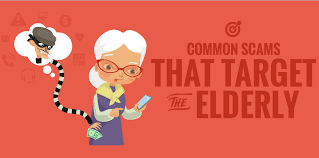
HEALTHCARE FRAUD: Predatory Senior Medicare Scams

By Staff Reporters

***

***

As you likely know, the US spends much on healthcare ($4.3 trillion in 2021, to be exact). But did you also know that healthcare fraud makes up a not-so-small piece of that pie?

The National Health Care Anti-Fraud Association (NHCAA), a national organization that works to prevent health insurance fraud, conservatively estimates that 3% of the US’s total annual healthcare spend—a hearty $129 billion—is lost to healthcare fraud. Some government agencies estimate that percentage to be as high as 10% (that’s $430 billion), according to the NHCAA.

Overall, Medicare fraud costs the US about $60 billion each year, Nicole Liebau, national resource center director for Senior Medicare Patrol, a government-funded organization designed to help prevent Medicare fraud, told Healthcare Brew, though she added that “the exact figure is impossible to measure.”

CITE: https://www.r2library.com/Resource/Title/082610254

While Medicare fraud isn’t new, the US saw a rise in one particular tactic during the pandemic: a durable medical equipment (DME) scheme.

How the schemes work.

In a DME scheme, scammers target Medicare patients—often after a procedure or an injury—and cold-call them to offer free equipment, said Jennifer Stewart, senior associate general counsel and senior director of fraud prevention and investigation at Blue Cross Blue Shield of Massachusetts. The scammers offer consumers items like lidocaine, wheelchairs, walkers, or braces.

The scammers have roped in doctors—who are often unaware they’re working with scammers instead of legitimate medical companies—to sign off on prescriptions that are then used to bill Medicare for the equipment, Stewart said. Sometimes patients actually receive the products, and sometimes they don’t.

“It’s really dangerous because [a prescription like lidocaine] could have reactions with other medications. The durable medical equipment isn’t sized for them, and certainly the doctor who treated their injury didn’t prescribe it […] There is a lot of patient harm involved,” Stewart said. Keep reading here.

***

COMMENTS APPRECIATED

Thank You

***

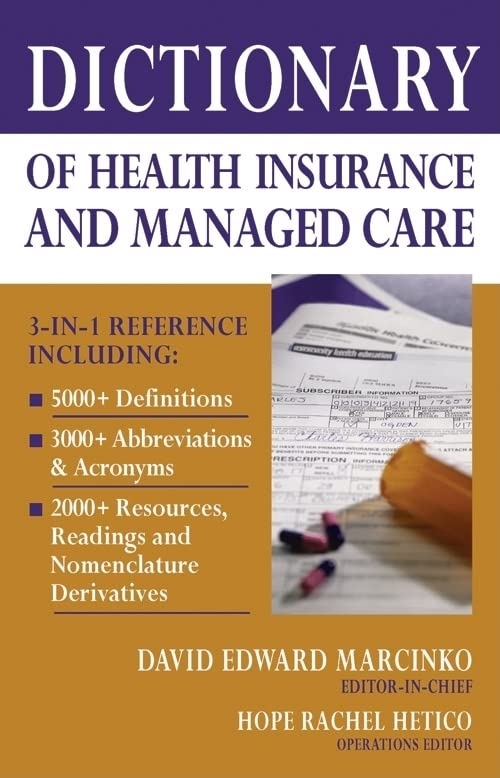
ORDER: https://www.amazon.com/Dictionary-Health-Insurance-Managed-Care/dp/0826149944/ref=sr_1_4?ie=UTF8&s=books&qid=1275315485&sr=1-4

***

MEDICARE: Safe Harbor Regulations

Medicare “Safe Harbor” Regulations

Invite Dr. Marcinko | The Leading Business Education ...

The Medicare Safe Harbor rules were passed in an effort to identify areas of practice that would not lead to a conviction under the anti-fraud statute.  The Safe Harbor regulations provide for eleven areas where providers may practice without violating the anti-fraud statute. 

CITE: https://www.amazon.com/Dictionary-Health-Insurance-Managed-Care/dp/0826149944/ref=sr_1_4?ie=UTF8&s=books&qid=1275315485&sr=1-4

Areas of safe practice under these regulations are briefly highlighted below:

  • Large Entity Investments – Investment in entities with assets over $50 million. The entity must be registered and traded on national exchanges.
  • Small Entity Investments – Small entity investment entities must abide by the 40-40 rule.  No more than 40% of the investment interests may be held by investors in a position to make referrals. Additionally, no more than 40% of revenues can come through referrals by these investors.
  • Space and Equipment Rentals – Such lease agreements must be in writing and must be for at least a one year term. Furthermore, the terms must be at fair market value.
  • Personal Services and Management Contracts – These contracts are allowable as long as certain rules are followed. Like lease agreements, these personal service and management contracts must be in writing for at least a one-year term, and the services must be valued at fair market value.
  • Sale of a medical practice – There are restrictions if the selling practitioner is in a position to refer patients to the purchasing practitioner.
  • Referral services– Referral services (such as hospital referral services) are allowed. However, such referral services may not discriminate between practitioners who do or do not refer patients.
  • Warranties – There is certain requirements if any item of value is received under a warranty.
  • Discounts – Certain requirements must be met if a buyer receives a discount on the purchase of goods or services that are to be paid for by Medicare or Medicaid.
  • Payments to Bona Fide Employees – Payments made to bona fide employees do not constitute fraud under the Safe Harbor Regulations.
  • Group Purchasing Organizations – Organizations that purchase goods and services for a group of entities or individuals are allowed; provided certain requirements are met.
  • Waiver of Beneficiary Co-Insurance and Deductible – Routine waiver would not come under the safe harbor.

A physician’s actions that come under the Safe Harbor Regulations will not violate the Medicare Fraud and Abuse Statutes.  However, the provider must still abide by the Stark amendments and must also abide by applicable state law.

STARK UPDATE: https://medicalexecutivepost.com/2018/08/03/cms-to-review-stark-law-relevance-once-again/

Your thoughts are appreciated.

THANK YOU

***

ORDER TEXTBOOK [3rd]: https://www.amazon.com/Business-Medical-Practice-Transformational-Doctors/dp/0826105750/ref=sr_1_9?ie=UTF8&qid=1448163039&sr=8-9&keywords=david+marcinko

***

The PRIME Act

Join Our Mailing List 

Preventing and Reducing Improper Medicare and Medicaid Expenditures Act

demBy Dr. David Edward Marcinko MBA

http://www.CertifiedMedicalPlanner.org

This Act was introduced into congress in 2013 and contains a number of provisions that would increase rewards and incentives for those who uncover healthcare fraud, as well as heighten penalties for those who commit it.

The PRIME Act

The PRIME Act would enact stronger penalties for Medicare and Medicaid fraud; curb improper or mistaken payments made by Medicare and Medicaid; establish stronger fraud and waste prevention strategies with Medicare and Medicaid to help phase out the practice of “pay and chase” (i.e., recouping monies already erroneously paid to providers instead of detecting problems on the front end); curb the theft of physician identities; expand the fraud identification and reporting work of the Senior Medicare patrol; take steps to help states identify and prevent Medicaid overpayments; and improve the sharing of fraud data across state and federal agencies and programs.

fraud

Assessment

The law directs the Secretary to develop a plan to revise the incentive program under HIPAA for the reporting of fraud and abuse to encourage greater participation by individuals reporting Medicare fraud and abuse.

And, it also requires the plan to include certain recommendations for ways to enhance rewards for individuals reporting and an extension of the incentive program to the Medicaid program.

MORE: Ten Ways to Prevent Fraud [Consumer]

Conclusion

Your thoughts and comments on this ME-P are appreciated. Feel free to review our top-left column, and top-right sidebar materials, links, URLs and related websites, too. Then, subscribe to the ME-P. It is fast, free and secure.

Speaker: If you need a moderator or speaker for an upcoming event, Dr. David E. Marcinko; MBA – Publisher-in-Chief of the Medical Executive-Post – is available for seminar or speaking engagements. Contact: MarcinkoAdvisors@msn.com

OUR OTHER PRINT BOOKS AND RELATED INFORMATION SOURCES:

Risk Management, Liability Insurance, and Asset Protection Strategies for Doctors and Advisors: Best Practices from Leading Consultants and Certified Medical Planners™   Risk Management, Liability Insurance, and Asset Protection Strategies for Doctors and Advisors: Best Practices from Leading Consultants and Certified Medical Planners™

***