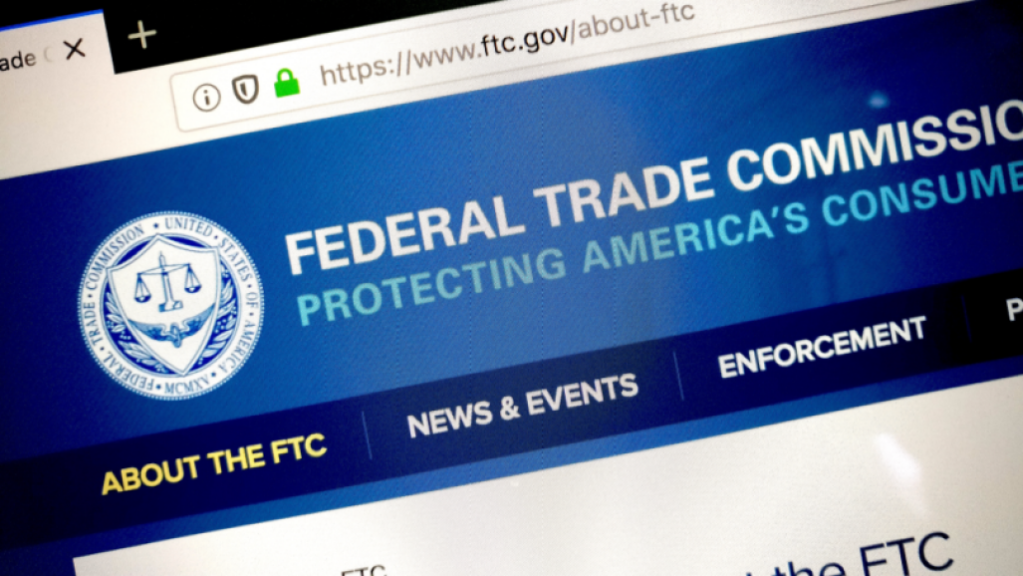
SURVEILLANCE: Pricing and Gouging

DEFINITION

By Staff Reporters and FTC

***

***

Surveillance pricing is a broad term to describe the practice of linking pricing to individualized consumer data.

Companies employing it might use algorithms, personal information, and AI to set a price for their goods based on everything from where you live to your age to your browsing or credit history. The practice, sometimes called dynamic pricing or personalized pricing, is growing increasingly common, but isn’t completely new.

In 2012, the travel website Orbitz began directing people on Macs to higher hotels after realizing they often had more purchasing power. It stopped the practice after the Wall Street Journal reported on it.

Is surveillance pricing the same thing as surge pricing? Yes and no.

You might know about surge pricing from the last time you tried to call an Uber during a rainstorm. As demand skyrockets for a ride share, so does the price. This is one kind of surveillance pricing, but what the FTC is targeting appears more specific. The FTC said its probe concerns “when the pricing is based on surveillance of an individual’s personal characteristics and behavior.”

Is surveillance pricing bad?

The FTC opened its probe into companies using surveillance pricing because it’s worried about the risks it might pose to consumers

“Firms that harvest Americans’ personal data can put people’s privacy at risk. Now firms could be exploiting this vast trove of personal information to charge people higher prices,” FTC Chair Lina M. Khan said in a statement. “Americans deserve to know whether businesses are using detailed consumer data to deploy surveillance pricing, and the FTC’s inquiry will shed light on this shadowy ecosystem of pricing middlemen.”

The FTC is looking into four major areas of the practice: types of products being offered, data collection, customer and sales information, and impacts on consumers and prices.

Many Americans, it fears, don’t know when their data is being harvested and how it is affecting what they pay. “Consumers may now be subjected to surveillance pricing when they shop for anything, big or small, online or in person: a house, a car, even their weekly groceries,” the FTC said.

The FTC sent the orders for more information to Accenture, Bloomreach, Chase, Mastercard, McKinsey & Co., Pros, Revionics, and Task.

“Advancements in machine learning make it cheaper for these systems to collect and process large volumes of personal data, which can open the door for price changes based on information like your precise location, your shopping habits, or your web browsing history,” the FTC wrote.

FTC: https://www.ftc.gov/news-events/features/surveillance-pricing

EDUCATION: Books

COMMENTS APPRECIATED

Refer and Subscribe

***

***

Novant/CHS Deal Scrapped after FTC Intervenes

By Health Capital Consultants LLC

In February 2023, Novant Health, a 19-hospital, non-profit health system operating throughout the Carolinas, agreed to acquire two North Carolina hospitals – Davis Regional Medical Center and Lake Norman Regional Medical Center – from Community Health System (CHS), a publicly-traded mega-system operating in 15 states.

After the $320 million deal was announced, the Federal Trade Commission (FTC) began an extensive review of the acquisition, and concluded that: (1) the transaction may substantially reduce competition; (2) create a monopoly; and (3) constitute an unfair method of competition. (Read more…)

***

***

COMMENTS APPRECIATED

Thank You

***

***

FTC: Finalizes Ban on Non-Compete Agreements

By Health Capital Consultants, LLC

***

***

On April 23rd, 2024, the Federal Trade Commission (FTC) issued a final rule that would ban employers from imposing non-competes on their employees. The FTC asserts that this exploitative practice keeps wages low, and suppresses new ideas. Notably, while the final rule will affect all industries, not just healthcare, this proposal comes at a time when healthcare employers across the U.S. are struggling with staffing shortages. 

CITE: https://www.r2library.com/Resource

This Health Capital Topics article will discuss the final rule, reactions from healthcare industry stakeholders, and potential implications for healthcare valuations (both business and compensation valuations). (Read more…)

COMMENTS APPRECIATED

Thank You
***

***

HEALTHCARE PRIVATE EQUITY: Federal Regulators Launch Inquiry

By Health Capital Consultants, LLC

On March 5th, 2024, the Department of Justice’s (DOJ’s) Antitrust Division, the Federal Trade Commission (FTC), and the Department of Health and Human Services (HHS), announced the launch of a multi-agency inquiry – in the form of a request for information (RFI) and public workshop – focusing on the increasing control of private equity (PE) and other corporations over the healthcare industry.

This Health Capital Topics article discusses the agencies recent actions and how it appears to be in line with the government’s recent moves to crack down on anti-competitive actions in healthcare. (Read more…)

COMMENTS APPRECIATED

Thank You

***

***

FTC & DOJ Announce Revised Merger Guideline

By Health Capital Consultants, LLC

***

FTC & DOJ Announce Revised Merger Guidelines

On July 19, 2023, the Federal Trade Commission (FTC) and the Department of Justice (DOJ) released a draft update of its Merger Guidelines, which guides the regulatory agencies in their review of both mergers and acquisitions in evaluating compliance with federal antitrust laws.

The new Guidelines replace, amend, and consolidate the Vertical Merger Guidelines and Horizontal Merger Guidelines, which were published in 2020 and 2010, respectively.

This Health Capital Topics article will discuss the new Guidelines and the proposed changes to antitrust laws that may affect the future of healthcare. (Read more…) 

***

COMMENTS APPRECIATED

Thank You

***

***

FTC: Proposes Banning [Healthcare] Non-Compete Employment Contract Clauses

By Health Capital Consultants, LLC

***

***

FTC Proposes Banning Non-Compete Clauses

On January 5, 2023, the Federal Trade Commission (FTC) published a proposed rule that would ban employers from imposing non-competes on their employees. The FTC asserted that this practice is widespread and often exploitative, and such actions can suppress wages, hamper innovation, and block entrepreneurs from starting their own businesses. Notably, while the proposed rule will affect all industries, not just healthcare, this proposal comes at a time when healthcare employers across the U.S. are struggling with staffing shortages.

CITE: https://www.r2library.com/Resource/Title/0826102549

This Health Capital Topics article will discuss the proposed rule, reactions from healthcare industry stakeholders, and potential implications. (Read more…)

***

ORDER: https://www.routledge.com/Risk-Management-Liability-Insurance-and-Asset-Protection-Strategies-for/Marcinko-Hetico/p/book/9781498725989

***

COMMENTS APPRECIATED

Thank You

***

FTC Scrutiny Results in Several Scrapped Hospital Deals

***

***

By Health Capital Consultants, LLC

FTC Scrutiny Results in Several Scrapped Hospital Deals

A series of Federal Trade Commission (FTC) challenges to hospital mergers and acquisitions in 2022 indicates heightened regulatory scrutiny of hospital deals. Perhaps emboldened by the July 2021 executive order that focused attention on antitrust enforcement of hospital consolidation, the agency has voted to challenge a number of transactions, which has lead hospitals to call off the deals rather than challenge the government.

This Health Capital Topics article reviews three of the largest transactions called off this year, two of which were announced in June. (Read more…) 

***

COMMENTS APPRECIATED

Thank You

***

***

Understanding Medical Practice Anti-Trust Risks

Join Our Mailing List 

Medical Risk Management

By Dr. Charles F. Fenton III JD

fenton* Monopolistic risks are reduced when more than a few networks or contracts are available in the local area for excluded medical providers to join.

  • * Fee schedule MCO contracts, per se, are not generally considered price fixing, provided the doctor providers have not conspired with one another to set those prices. Moreover, network pricing schedule should not spill over into the non-network patients.

Some Issues:

  • Individual providers may be excluded from a network if there is a rational reason to do so. It is much more difficult to exclude a class of providers, than it is to exclude an individual provider.
  • A safety zone can be created if networks or other contractual plans require a substantial amount of financial risk-sharing among plan participants, since Stark II laws have been relaxed. Such zones have been created by the Department of Justice (DOJ) and Federal Trade Commission (FTC), in recent policy statements.
  • The FTC and DOJ are not likely to challenge an exclusive provider IPA that includes no more than 20-25% of the doctors within the panel, who share financial risk. Such panels are likely to fall within a Safe Harbor.
  • Tying arrangements (e.g.: the requirement to buy one item/service in order to buy another item/service) are suspect if not reasonably justified. For example, a patient should not be required to obtain a brace prescription from a specific provider, in order to purchase the device from a laboratory that the doctor owns.
  • Non-exclusive provider panels will not usually be challenged if no more than 30% of the providers are included (another Safe Harbor provision). Physician networks are often analyzed according to four criteria: (1) anti-competitive effects, (2) relevant local markets, (3) pro-competitive effects, and (4) collateral agreements.Further anti-trust considerations consist of analyzing
  • Market Power. This consists of two factors: (1) Geographic Power and (2) Product Power.

###

Flag MOney

###

  • Geographic Power is difficult to define in today’s environment. In the past, the geography that was analyzed when medical practices merged was the immediate neighborhood. Currently, the geographical area could consist of an entire metropolitan area. In the past, individual patients would often seek a physician whose office was close to work or home. Now they seek a physician based on inclusion in a health plan. Now, health plans choose physicians based on needs within an entire metropolitan area.
  • Product Power relates to the specific service being performed. There are two products in today’s environment: (1) Primary Care and (2) Specialty Care. Since there are so many primary care physicians in practice, it would be difficult for all but the largest group to acquire product power.

Assessment

It is easier for medical specialists to develop product power. However, certain specialists may never be able to obtain product power.

For example, foot care is provider by many types of physicians. Primary care physicians, emergency physicians, chiropractors, physical therapists, orthopedic surgeons, nurse practitioners, and podiatrists all provide foot care. Therefore, it would be difficult, even for a large group of podiatrists to obtain significant product power.

Conclusion

Your thoughts and comments on this ME-P are appreciated. Feel free to review our top-left column, and top-right sidebar materials, links, URLs and related websites, too. Then, subscribe to the ME-P. It is fast, free and secure.

Link: http://feeds.feedburner.com/HealthcareFinancialsthePostForcxos

Speaker: If you need a moderator or speaker for an upcoming event, Dr. David E. Marcinko; MBA – Publisher-in-Chief of the Medical Executive-Post – is available for seminar or speaking engagements. Contact: MarcinkoAdvisors@msn.com

OUR OTHER PRINT BOOKS AND RELATED INFORMATION SOURCES:

Product Details  Product Details

Product DetailsProduct Details