







 Support our online development, and advance our onground research initiatives in free market economics, as we seek to showcase the brightest Next-Gen minds.
THE ME-P DISCLAIMER: Posts, comments and opinions do not necessarily represent iMBA, Inc., but become our property after submission. Copyright © 2006 to-date. iMBA, Inc allows colleges, universities, medical and financial professionals and related clinics, hospitals and non-profit healthcare organizations to distribute our proprietary essays, photos, videos, audios and other documents; etc. However, please review copyright and usage information for each individual asset before submission to us, and/or placement on your publication or web site. Attestation references, citations and/or back-links are required. All other assets are property of the individual copyright holder.
Support our online development, and advance our onground research initiatives in free market economics, as we seek to showcase the brightest Next-Gen minds.
THE ME-P DISCLAIMER: Posts, comments and opinions do not necessarily represent iMBA, Inc., but become our property after submission. Copyright © 2006 to-date. iMBA, Inc allows colleges, universities, medical and financial professionals and related clinics, hospitals and non-profit healthcare organizations to distribute our proprietary essays, photos, videos, audios and other documents; etc. However, please review copyright and usage information for each individual asset before submission to us, and/or placement on your publication or web site. Attestation references, citations and/or back-links are required. All other assets are property of the individual copyright holder.


By Staff Reporters
SPONSOR: http://www.MarcinkoAssociates.com
***
***
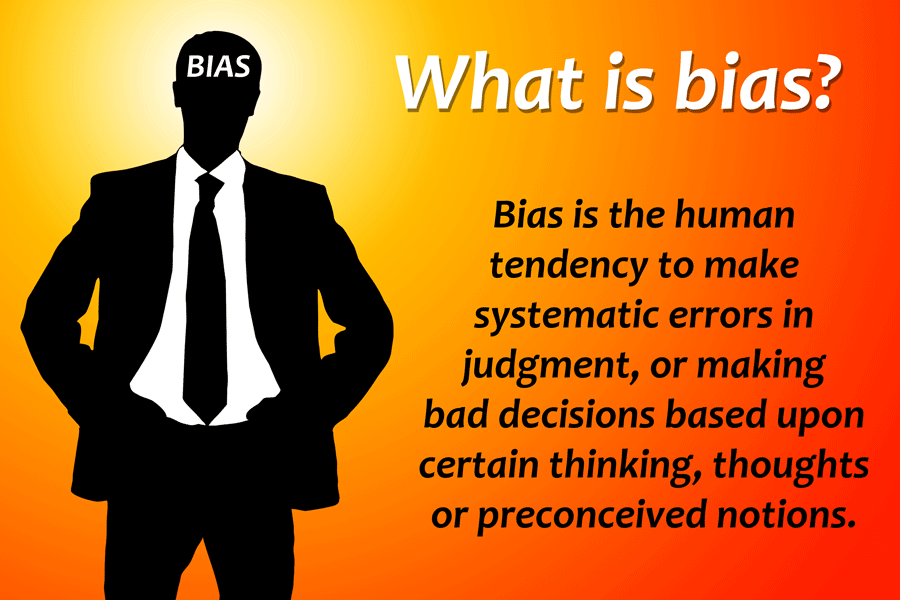
The following are 4 common financial psychological biases. Some are learned while others are genetically determined (and often socially reinforced). While this essay focuses on the financial and investing implications of these biases, they are prevalent in most areas in life.
STOCK MARKET: https://medicalexecutivepost.com/2024/10/13/stock-market-a-zero-sum-bias/
Loss aversion affected many investors during the stock market crash of 2007-08 or the flash crash of May 6, 2010 also known as the crash of 2:45. During the crash, many people decided they couldn’t afford to lose more and sold their investments.
Of course, this caused the investors to sell at market troughs and miss the quick, dramatic recovery.
Overconfident investing happens when we believe we can out-smart other investors via market timing or through quick, frequent trading.
Data convincingly shows that people who trade most often under-perform the market by a significant margin over time.
Mental accounting takes place when we assign different values to money depending on where we got it.
For instance, even though we may have an aggressive saving goal for the year, it is likely easier for us to save money that we worked for than money that was given to us as a gift.
Herd mentality makes it very hard for humans to not take action when everyone around us does.
For example, we may hear stories of people making significant profits buying, fixing up, and flipping homes and have the desire to get in on the action, even though we have no experience in real estate.
CITE: https://www.r2library.com/Resource/Title/0826102549
COMMENTS APPRECIATED
Thank You
***
***
Share this:

Filed under: "Ask-an-Advisor", "Doctors Only", Accounting, Alternative Investments, Career Development, Ethics, Glossary Terms, Investing, Marcinko Associates | Tagged: biases, Cognitive Biases, finance, Flash Crash, herd mentality, Investing, investment, loss aversion, Marcinko, mental accounting, over confident investing, real estate, real-estate, S&P 500 | Leave a comment »






 The Leading Business Education Network for Doctors, Financial Advisors and Health Industry Consultants