







 Support our online development, and advance our onground research initiatives in free market economics, as we seek to showcase the brightest Next-Gen minds.
THE ME-P DISCLAIMER: Posts, comments and opinions do not necessarily represent iMBA, Inc., but become our property after submission. Copyright © 2006 to-date. iMBA, Inc allows colleges, universities, medical and financial professionals and related clinics, hospitals and non-profit healthcare organizations to distribute our proprietary essays, photos, videos, audios and other documents; etc. However, please review copyright and usage information for each individual asset before submission to us, and/or placement on your publication or web site. Attestation references, citations and/or back-links are required. All other assets are property of the individual copyright holder.
Support our online development, and advance our onground research initiatives in free market economics, as we seek to showcase the brightest Next-Gen minds.
THE ME-P DISCLAIMER: Posts, comments and opinions do not necessarily represent iMBA, Inc., but become our property after submission. Copyright © 2006 to-date. iMBA, Inc allows colleges, universities, medical and financial professionals and related clinics, hospitals and non-profit healthcare organizations to distribute our proprietary essays, photos, videos, audios and other documents; etc. However, please review copyright and usage information for each individual asset before submission to us, and/or placement on your publication or web site. Attestation references, citations and/or back-links are required. All other assets are property of the individual copyright holder.


By Dr. David Edward Marcinko; MBA MEd
SPONSOR: http://www.MarcinkoAssociates.com
***
***
Possibility, Challenges and Accommodations
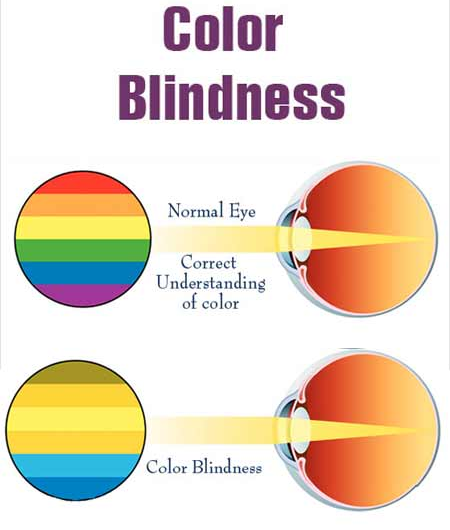
Yes — a person can be a physician with color vision deficiency (color blindness), but the type and severity of the deficiency, along with the medical specialty, will determine the level of challenge and the need for accommodations.
Types and Impact of Color Vision Deficiency
- Most common: Red–green deficiency (protanopia, deuteranopia, protanomaly, deuteranomaly)
- Rare: Blue–yellow deficiency (tritanopia, tritanomaly).
- Severe cases (e.g., achromatopsia) may struggle with tasks requiring precise color discrimination, while mild cases may have minimal impact.
Medical Specialties Where Color Vision Matters
- High reliance: Dermatology, pathology, histopathology, biochemistry, ophthalmology, and some surgical specialties (e.g., plastic surgery).
- Lower reliance: Internal medicine, pediatrics, surgery (non-visual aspects), emergency medicine, psychiatry, and many subspecialties.
Challenges
- Misinterpreting certain lab results, stains, or imaging if color cues are critical.
- Potential safety concerns in specialties involving color-coded equipment or diagnostics.
Accommodations and Strategies
- Assistive technology: Apps and devices that convert color information into text or sound for medical images, lab results, and medication labels.
- Alternative diagnostic skills: Relying on touch, smell, sound, and collaboration with colleagues to confirm diagnoses. Training and collaboration: Working with specialists who can verify color-based findings.
- Adaptive tools: Color-correcting glasses (limited effectiveness) and standardized color codes in labs.
Legal and Ethical Considerations
- In the U.S., there is no federal ban on colorblind physicians, but some specialties or institutions may have internal screening or require disclosure.
- Ethical practice includes disclosing color vision limitations to patients when relevant to diagnosis or treatment.
Success Stories
Many colorblind physicians have built successful careers, especially in specialties where color vision is not essential. Their adaptability, strong diagnostic skills, and use of technology compensate for visual limitations.
Bottom line: Color blindness does not automatically disqualify someone from being a physician. With awareness of the specialty’s requirements, appropriate accommodations, and strong clinical skills, colorblind individuals can excel in medicine.
SPEAKING: Dr. Marcinko will be speaking and lecturing, signing and opining, teaching and preaching, storming and performing at many locations throughout the USA this year! His tour of witty and serious pontifications may be scheduled on a planned or ad-hoc basis; for public or private meetings and gatherings; formally, informally, or over lunch or dinner. All medical societies, financial advisory firms or Broker-Dealers are encouraged to submit an RFP for speaking engagements: CONTACT: Ann Miller RN MHA at MarcinkoAdvisors1738@outlook.com -OR- http://www.MarcinkoAssociates.com
Like, Refer and Subscribe
HOSPITALS: http://www.crcpress.com/product/isbn/9781466558731
CLINICS: http://www.crcpress.com/product/isbn/9781439879900
ADVISORS: www.CertifiedMedicalPlanner.org
FINANCE:Financial Planning for Physicians and Advisors
INSURANCE:Risk Management and Insurance Strategies for Physicians and Advisors
Dictionary of Health Economics and Finance
Dictionary of Health Information Technology and Security
Dictionary of Health Insurance and Managed Care
***
Share this:

Filed under: iMBA, Inc. | Leave a comment »

