







 Support our online development, and advance our onground research initiatives in free market economics, as we seek to showcase the brightest Next-Gen minds.
THE ME-P DISCLAIMER: Posts, comments and opinions do not necessarily represent iMBA, Inc., but become our property after submission. Copyright © 2006 to-date. iMBA, Inc allows colleges, universities, medical and financial professionals and related clinics, hospitals and non-profit healthcare organizations to distribute our proprietary essays, photos, videos, audios and other documents; etc. However, please review copyright and usage information for each individual asset before submission to us, and/or placement on your publication or web site. Attestation references, citations and/or back-links are required. All other assets are property of the individual copyright holder.
Support our online development, and advance our onground research initiatives in free market economics, as we seek to showcase the brightest Next-Gen minds.
THE ME-P DISCLAIMER: Posts, comments and opinions do not necessarily represent iMBA, Inc., but become our property after submission. Copyright © 2006 to-date. iMBA, Inc allows colleges, universities, medical and financial professionals and related clinics, hospitals and non-profit healthcare organizations to distribute our proprietary essays, photos, videos, audios and other documents; etc. However, please review copyright and usage information for each individual asset before submission to us, and/or placement on your publication or web site. Attestation references, citations and/or back-links are required. All other assets are property of the individual copyright holder.


By Dr. David Edward Marcinko; MBA MEd
SPONSOR: http://www.MarcinkoAssociates.com
****
****
The Hidden Value of Extremes
Every organization has them: the salesperson who closes deals no one else can touch, the engineer who ships in half the expected time, the manager whose team never seems to burn out. These are outliers—individuals or teams whose performance, behavior, or results sit far outside the normal distribution. Management theory has traditionally treated outliers with suspicion, viewing them as noise to be smoothed over in pursuit of consistency and predictability. But this instinct, while understandable, often costs organizations their most valuable sources of insight and competitive advantage.
Why Managers Distrust Outliers
Management as a discipline grew up alongside statistical process control and industrial engineering, fields built on the assumption that variation is the enemy. Six Sigma, standardized operating procedures, and performance calibration systems all share a common goal: shrink the spread of outcomes so that results become predictable. Within this paradigm, an outlier is a defect. If one factory worker outperforms peers by 300%, the instinct is not to celebrate but to investigate—perhaps the metric is flawed, the conditions were unusual, or the result won’t replicate.
This skepticism isn’t irrational. Regression to the mean is real, and many apparent outliers are simply statistical noise that will fade over time. A single quarter of extraordinary sales performance might reflect a lucky territory assignment rather than genuine skill. Averaging and normalizing protect organizations from overreacting to randomness. The danger arises when this protective instinct hardens into a blanket policy that treats all deviation as suspect, regardless of whether it stems from noise or from something real and repeatable
The Cost of Managing to the Middle
When organizations design policies, incentives, and cultures around the median employee, they inadvertently suppress the very people capable of disproportionate contribution. Consider how many companies structure compensation, promotion timelines, and evaluation criteria around consistency and tenure rather than exceptional output. A brilliant but unconventional performer who doesn’t fit neatly into a nine-box grid often gets flagged as “difficult to manage” rather than recognized as a source of asymmetric value.
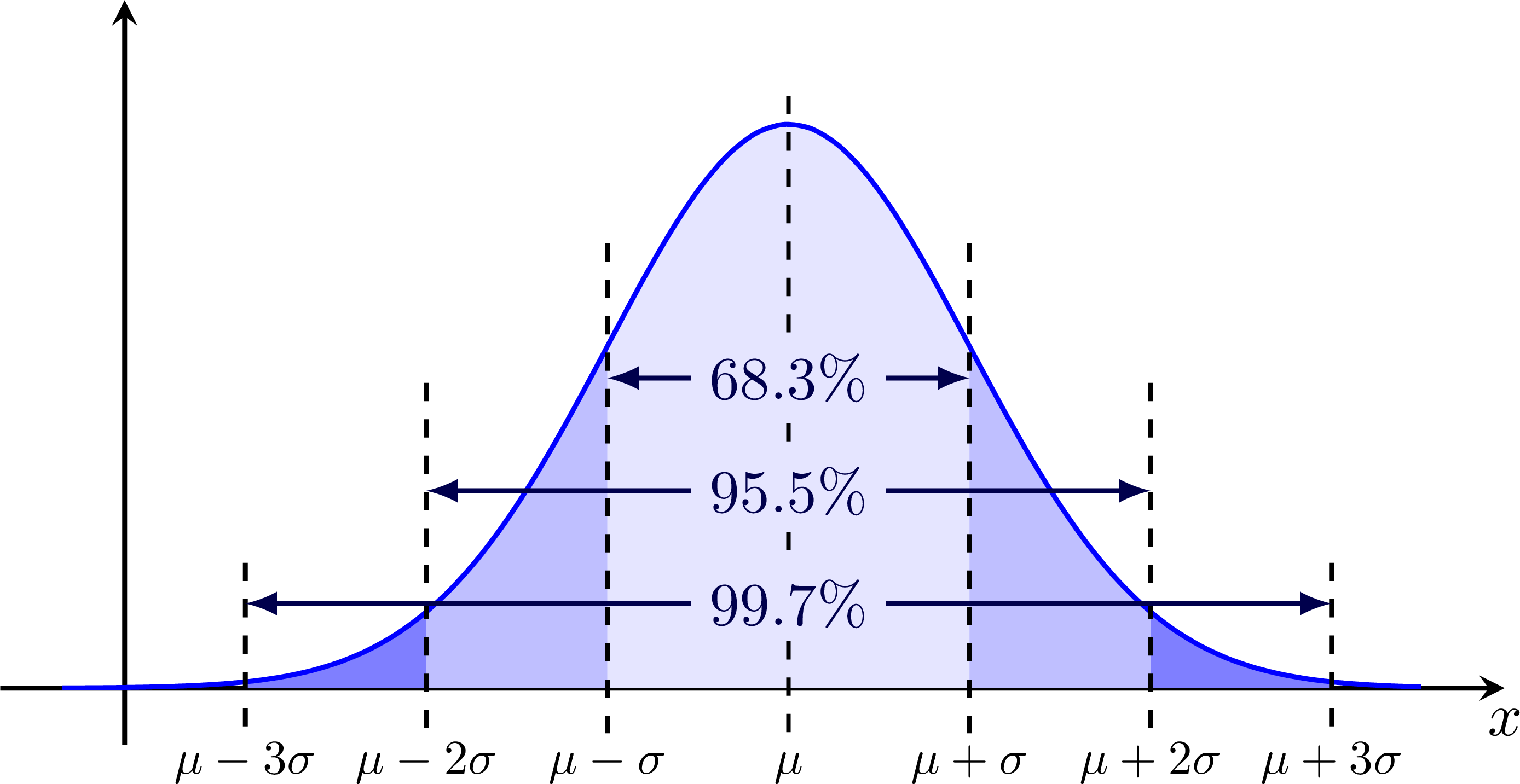
This matters because performance in most knowledge-based and creative fields doesn’t follow a neat bell curve. Research on productivity across fields—from scientific output to software engineering to venture investing—consistently shows power-law distributions rather than normal ones. A small percentage of contributors generate a disproportionate share of the results. If management systems are calibrated for a normal distribution when the underlying reality is a power law, they will systematically misallocate attention, resources, and rewards. Worse, standardized management practices can actively drive high-variance performers out of the organization, since the systems designed to control variance often frustrate exactly the autonomy and unconventional methods such people rely on.
Two Kinds of Outliers
Effective management requires distinguishing between two very different phenomena that get lumped together under the same label. The first is noise: temporary, non-repeatable variation caused by luck, timing, or measurement error. The second is signal: a genuine, durable difference in capability, method, or judgment that produces consistently superior results.
Confusing the two leads to costly errors in both directions. Treating noise as signal causes organizations to over-invest in flukes, promoting people or copying practices that won’t replicate. Treating signal as noise causes them to ignore or suppress genuinely superior approaches simply because they fall outside institutional norms. The practical challenge for managers is building enough contact with the work itself—not just the metrics—to tell which kind of outlier they’re looking at. This usually requires longitudinal observation rather than single-period snapshots, since durable skill tends to show up as elevated performance across varying conditions, while luck tends to be inconsistent and context-dependent.
Designing for Positive Deviance
Some organizations have moved beyond mere tolerance of outliers toward actively studying them. The positive deviance approach, developed originally in public health and later adapted to organizational contexts, starts from a simple premise: within any population facing the same constraints, some individuals or units achieve dramatically better outcomes using resources already available to everyone else. Rather than importing best practices from outside, this approach identifies and studies the internal outliers already succeeding, then works to understand and diffuse whatever they’re doing differently.
This reframes the outlier from an anomaly to be normalized into a resource to be mined. A manager who notices that one team consistently ships features faster without sacrificing quality has a choice: dismiss it as an unrepeatable fluke, or treat it as a natural experiment worth studying closely. The latter approach requires humility, since it means the standard process the organization has invested in might be suboptimal, and genuine curiosity, since the answer is rarely obvious from dashboards alone.
Building Room for Extremes
Practically, this means management systems need slack built in for exploration and deviation, rather than optimizing purely for compliance and consistency. It means evaluation processes that ask not just “did this match the plan” but “what did this person or team figure out that others haven’t.” It means resisting the urge to force high performers into standardized career tracks or management structures that assume everyone needs the same level of oversight.
None of this argues for abandoning process or standards altogether—most work still benefits from consistency, and most apparent outliers really are noise. But the organizations that thrive tend to be the ones that build the judgment to tell the difference, and the flexibility to let genuine outliers operate on their own terms rather than forcing them back toward the mean.
SPEAKING: Dr. Marcinko will be speaking and lecturing, signing and opining, teaching and preaching, storming and performing at many locations throughout the USA this year! His tour of witty and serious pontifications may be scheduled on a planned or ad-hoc basis; for public or private meetings and gatherings; formally, informally, or over lunch or dinner. All medical societies, financial advisory firms or Broker-Dealers are encouraged to submit an RFP for speaking engagements: CONTACT: Ann Miller RN MHA at MarcinkoAdvisors1738@outlook.com -OR- http://www.MarcinkoAssociates.com
Like, Refer and Subscribe
HOSPITALS: http://www.crcpress.com/product/isbn/9781466558731
CLINICS: http://www.crcpress.com/product/isbn/9781439879900
ADVISORS: www.CertifiedMedicalPlanner.org
FINANCE:Financial Planning for Physicians and Advisors
INSURANCE:Risk Management and Insurance Strategies for Physicians and Advisors
Dictionary of Health Economics and Finance
Dictionary of Health Information Technology and Security
Dictionary of Health Insurance and Managed Care
***
Share this:

Filed under: iMBA, Inc. | Leave a comment »
 The Leading Business Education Network for Doctors, Financial Advisors and Health Industry Consultants