BOARD CERTIFICATION EXAM STUDY GUIDES Lower Extremity Trauma
[Click on Image to Enlarge]
ME-P Free Advertising Consultation
The “Medical Executive-Post” is about connecting doctors, health care executives and modern consulting advisors. It’s about free-enterprise, business, practice, policy, personal financial planning and wealth building capitalism. We have an attitude that’s independent, outspoken, intelligent and so Next-Gen; often edgy, usually controversial. And, our consultants “got fly”, just like U. Read it! Write it! Post it! “Medical Executive-Post”. Call or email us for your FREE advertising and sales consultation TODAY [678.779.8597] Email: MarcinkoAdvisors@outlook.com
Medical & Surgical e-Consent Forms
ePodiatryConsentForms.com
iMBA Inc., OFFICES
Suite #5901 Wilbanks Drive, Norcross, Georgia, 30092 USA [1.678.779.8597]. Our location is real and we are now virtually enabled to assist new long distance clients and out-of-town colleagues.
ME-P Publishing
SEEKING INDUSTRY INFO PARTNERS?
If you want the opportunity to work with leading health care industry insiders, innovators and watchers, the “ME-P” may be right for you? We are unbiased and operate at the nexus of theoretical and applied R&D. Collaborate with us and you’ll put your brand in front of a smart & tightly focused demographic; one at the forefront of our emerging healthcare free marketplace of informed and professional “movers and shakers.” Our Ad Rate Card is available upon request [678-779-8597].
Posted on November 14, 2024 by Dr. David Edward Marcinko MBA MEd CMP™
***
***
November is Lung Cancer Awareness Month, which according to the CDC, is the third most common cancer in the US. There are about one in five lung cancer deaths each year across the country, and November is dedicated to increasing screening, reducing smoking, and finding new treatments.
Posted on November 14, 2024 by Dr. David Edward Marcinko MBA MEd CMP™
By Staff Reporters
***
***
According to BC Smith and Hilary Davidson,generosity is paradoxical. Those who give, receive back in turn. By spending ourselves for others’ well-being, we enhance our own standing. In letting go of some of what we own, we better secure our own lives. By giving ourselves away, we ourselves move toward flourishing. This is not only a philosophical or religious teaching; it is a sociological fact.
The the generosity paradox can also be stated in the negative.
By grasping on to what we currently have, we lose out on better goods that we might have gained. In holding onto what we possess, we diminish its long-term value to us. And, by always protecting ourselves against future uncertainties and misfortunes, we are affected in ways that make us more anxious about uncertainties and vulnerable to future misfortunes.
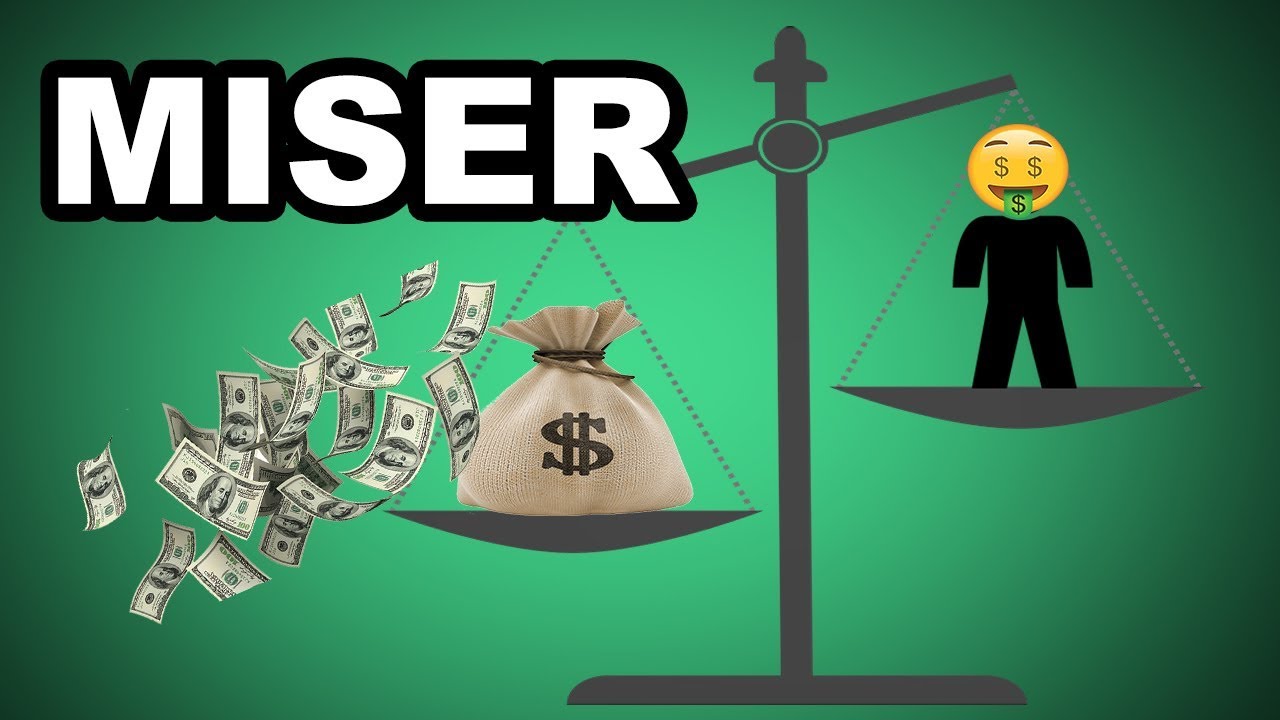
In short, by failing to care for others, we do not properly take care of ourselves. It is no coincidence that the word “miser” is etymologically related to the word “miserable.”
Equity market neutral strategies seek to eliminate the risks of the equity market by holding up to 100% of net assets in long equity positions and up to 100% of net assets in short equity positions. These strategies attempt to exploit differences in stock prices by being long and short in stocks within the same sector, industry, market capitalization, etc. If successful, these strategies should generate returns independent of the equity market.
Equity market neutral portfolios have two key sources of return: 1) the Treasury Bill return (the interest on proceeds from short sales held in cash as collateral), and 2) the difference (the “spread”) between the return on the long positions and the return on the short positions. Stock picking, rather than broad market moves, should drive most of a market-neutral strategy’s total return (save for any return from the 100% cash position).
Extended Equity Strategies attempt to provide better returns than possible with long-only investments
An example of an extended equity strategy is a 130/30 portfolio, which gets its designation from taking a 130% long position and a 30% short position. In practice, this would mean $100mm invested in stocks that are viewed as attractive.
Next, the manager would borrow and sell short $30mm of unattractive stocks. Then the manager uses the proceeds from the short sale to buy an additional $30mm of attractive stocks. This results in a portfolio that has 130% long and 30% short exposure to stocks, or “extended” exposure to equities relative to a long-only, 100% stock portfolio.
Note: It’s important to point out that here is the risk of theoretical unlimited amount of loss with short selling, (i.e. the price of the short-sold stocks increases; the long position can only go down to $0).
Posted on November 14, 2024 by Dr. David Edward Marcinko MBA MEd CMP™
MEDICAL EXECUTIVE-POST–TODAY’SNEWSLETTERBRIEFING
***
Essays, Opinions and Curated News in Health Economics, Investing, Business, Management and Financial Planning for Physician Entrepreneurs and their Savvy Advisors and Consultants
“Serving Almost One Million Doctors, Financial Advisors and Medical Management Consultants Daily“
A Partner of the Institute of Medical Business Advisors , Inc.
UnitedHealth Group posted nearly $6.1 billion in profit last quarter, edging out Elevance Health with $5.6 billion. Paige Minemyer has more takeaways from third quarter earnings results.
Cigna told investors the company is no longer pursuing a merger with Humana, opting to avoid tricky questions from federal regulators.
EV startup Rivian popped 13.71% after announcing a new $5.8 billion joint venture with Volkswagen to collaborate on a new line of vehicles that will begin rolling off the assembly line in 2027.
Rocket Lab…rocketed 28.44% to a new all-time high after increasing revenue 55% last quarter and announcing the first launch deal for its new Neutron rocket.
CharterCommunications will purchase LibertyBroadband in an all-stock deal. Charter shares rose 3.63% on the news, while Liberty shares sank 5.05%.
Cava reported strong earnings today, including impressive same-store sales growth of 18%. Shares soared on the open, though ended the day up just 1.57%.
Flutter Entertainment, parent company of sports betting app FanDuel, rose 6.89% to hit an all-time high thanks to incredibly strong betting on the NFL last quarter.
STOCKS DOWN
The problems continue at Super Micro Computer, which announced it will need EVEN MORE time to submit its quarterly 10-Q form to the SEC. That’s on top of the delayed filing of its annual 10-K filing from back in June—and if it doesn’t file that by November 16, the stock will be delisted from the Nasdaq. Shares sank 6.31%.
Spirit Airlinesreally may go bankrupt this time. The beleaguered airline has lost hope of merging with FrontierAirlines, so shares plunged 59.32%.
Maplebear, which is the parent company of Instacart, delivered bad news for shareholders: Next quarter will be worse than expected. Shares fell 11.01%.
SoundHoundAI reported record revenue last quarter, but shares plummeted 17.06% after the voice recognition stock also revealed much lower margins.
The S&P 500® index (SPX) rose 1.39 points (0.02%) to 5,985.38; the Dow Jones Industrial Average® ($DJI) added 47.21 points (0.11%) to 43,958.19; and the NASDAQ Composite®($COMP) fell 50.66 points (–0.26%) to 19,230.74.
The 10-year Treasury note yield added two basis points to 4.45%, just below last week’s four-month high.
The CBOE Volatility Index® (VIX) slid to 14.03, down sharply from above 20 early last week.
The Labor Department on Wednesday reported that consumer prices in October rose 2.6% from a year earlier. That marks a pickup in the pace of inflation from September, when prices were up 2.4% on the year.
A digital token inspired by a Shiba Inu dog meme is now worth more than the company that pioneered the assembly line. Yesterday, dogecoin continued its post-election surge to become more valuable than 121-year-old Ford.
Visualize: How private equity tangled banks in a web of debt, from the Financial Times.







 Support our online development, and advance our onground research initiatives in free market economics, as we seek to showcase the brightest Next-Gen minds.
THE ME-P DISCLAIMER: Posts, comments and opinions do not necessarily represent iMBA, Inc., but become our property after submission. Copyright © 2006 to-date. iMBA, Inc allows colleges, universities, medical and financial professionals and related clinics, hospitals and non-profit healthcare organizations to distribute our proprietary essays, photos, videos, audios and other documents; etc. However, please review copyright and usage information for each individual asset before submission to us, and/or placement on your publication or web site. Attestation references, citations and/or back-links are required. All other assets are property of the individual copyright holder.
Support our online development, and advance our onground research initiatives in free market economics, as we seek to showcase the brightest Next-Gen minds.
THE ME-P DISCLAIMER: Posts, comments and opinions do not necessarily represent iMBA, Inc., but become our property after submission. Copyright © 2006 to-date. iMBA, Inc allows colleges, universities, medical and financial professionals and related clinics, hospitals and non-profit healthcare organizations to distribute our proprietary essays, photos, videos, audios and other documents; etc. However, please review copyright and usage information for each individual asset before submission to us, and/or placement on your publication or web site. Attestation references, citations and/or back-links are required. All other assets are property of the individual copyright holder.










 The Leading Business Education Network for Doctors, Financial Advisors and Health Industry Consultants