3 FINANCIAL SLANG “T” Terms

DEFINITIONS Physician-Investors Need to Know

By. Dr. David E. Marcinko MBA MEd CMP®

CMP logo


SPONSOR: http://www.CertifiedMedicalPlanner.org

***

Trading AheadUnethical and illegal trading by specialists or market makers.
A specialist may buy a stock for themselves from Dr. John Q. Public even though a better price is available from another seller. The specialist can view bid and ask prices and then manually mis-match them, or see ahead to a less favorable price. It happens in this editor’s experience, by observing how long it takes for a stop order to execute after the stop price was reached.
This practice is a form of shimming.
***
Trading ImbalanceA situation where a large block of stock is put up for sale, but not enough buyers are available for purchase, and a market maker is unable to buy the imbalance. Lightly traded and tightly held stocks are considered temporarily illiquid during such imbalances.
On occasion, a trading halt is put into place until enough buyers are available to purchase the deficit. On rare occasion, a handful of buyers can buy the stock at a huge discount if the stock was not halted during the imbalance.
On the New York Stock Exchange, large stocks usually have a “delayed open” for such imbalances, as a trading specialist will fill the order by lining up buyers for the block, and then open trading for the stock for the day.
***
Triple Witching HourThe final hour of trading on a Friday when stock index futures, stock index options, and stock options all expire. This happens on the third Friday in March, June, September, and December. See Quadruple Witching Hour.
***

CITE: https://www.r2library.com/Resource/Title/0826102549

***

YOUR COMMENTS ARE APPRECIATED.

Thank You

***

What is “Shelf Registration” for Securities?

What is “Shelf Registration” for Securities?

Dr. David E. Marcinko MBA CMP

http://www.MARCINKOASSOCIATES.com

SPONSOR: http://www.CertifiedMedicalPlanner.org

A relatively new method of registration under the Act of ’33 is known as shelf registration.

Under this rule, an issuer may register any amount of securities that, at the time the registration statement becomes effective, is reasonably expected to be offered and sold within two years of the initial effective date of the registration.

Once registered, the securities may be sold continuously or periodically within 2 years without any waiting period for a registration to clear issuers generally like shelf registration because of the flexibility it gives them to take advantage of changing market conditions.

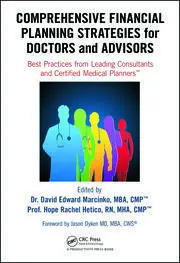
LINK: https://www.crcpress.com/Comprehensive-Financial-Planning-Strategies-for-Doctors-and-Advisors-Best/Marcinko-Hetico/p/book/9781482240283

In addition, the legal, accounting, and printing costs involved in issuance are reduced, since a single registration statement suffices for multiple offerings within the 2 year period. In effect, what the issuer does is register securities that will meet its financing needs for the next 2 years.

It issues what it needs at the current time, and puts the balance on the “shelf” to be taken off the shelf as needed.

Conclusion:

Your thoughts and comments on this ME-P are appreciated. Feel free to review our top-left column, and top-right sidebar materials, links, urls and related websites, too. Then, subscribe to the ME-P. It is fast, free and secure.

Speaker: If you need a moderator or speaker for an upcoming event, Dr. David E. Marcinko; MBA – Publisher-in-Chief of the Medical Executive-Post – is available for seminar or speaking engagements.

Contact: MarcinkoAdvisors@msn.com

Subscribe: MEDICAL EXECUTIVE POST for curated news, essays, opinions and analysis from the public health, economics, finance, marketing, I.T, business and policy management ecosystem.

**

Risk Management, Liability Insurance, and Asset Protection Strategies for Doctors and Advisors: Best Practices from Leading Consultants and Certified Medical Planners™8Comprehensive Financial Planning Strategies for Doctors and Advisors: Best Practices from Leading Consultants and Certified Medical Planners™

Invite Dr. Marcinko

***

DAILY UPDATE: Tele-Health, Fortune 500, Companies and the Stocks Markets

MEDICAL EXECUTIVE-POST TODAY’S NEWSLETTER BRIEFING

***

Essays, Opinions and Curated News in Health Economics, Investing, Business, Management and Financial Planning for Physician Entrepreneurs and their Savvy Advisors and Consultants

Serving Almost One Million Doctors, Financial Advisors and Medical Management Consultants Daily

A Partner of the Institute of Medical Business Advisors , Inc.

http://www.MedicalBusinessAdvisors.com

SPONSORED BY: Marcinko & Associates, Inc.

***

http://www.MarcinkoAssociates.com

Daily Update Provided By Staff Reporters Since 2007.
How May We Serve You?
© Copyright Institute of Medical Business Advisors, Inc. All rights reserved. 2024

REFER A COLLEAGUE: MarcinkoAdvisors@msn.com

SPONSORSHIPS AVAILABLE: https://medicalexecutivepost.com/sponsors/

ADVERTISE ON THE ME-P: https://tinyurl.com/ytb5955z

***

The end has come for the Covid-19-era federal Affordable Connectivity Program, which some critics say will make telehealth access challenging for millions in rural and tribal areas. (NPR/KFF Health News)

CITE: https://www.r2library.com/Resource

Here’s where the major benchmarks ended yesterday:

  • The S&P 500 index rose 13.80 points (0.3%) to 5,360.79; the Dow Jones Industrial Average® ($DJI) gained 69.05 points (0.2%) to 38,868.04; the NASDAQ Composite added 59.40 points (0.4%) to 17,192.53.
  • The 10-year Treasury note yield (TNX) rose almost 4 basis points to 4.467%.
  • The CBOE Volatility Index® (VIX) rose 0.52 to 12.74.

What’s up

  • Diamond Offshore Drilling rose 10.91% after fellow offshore drilling company Noble Corp. announced it would acquire Diamond in a cash and stock deal worth $1.6 billion total. Noble shares rose 6.08% on the news as well.
  • Crowdstrike, GoDaddy, and KKR will be added to the S&P 500 when the index rebalances at the end of the quarter. Crowdstrike rose 7.29%, GoDaddy rose 1.94%, and KKR was up 11.22% on the news.
  • Texas Pacific Land Corporation shares also rose 24.57% on the news that the company will be inducted into the S&P MidCap 400.

What’s down

CITE: https://tinyurl.com/2h47urt5

Stat: 42. That’s how many healthcare industry companies were named on the latest Fortune 500, which lists the largest corporations in the US based on revenue for fiscal year 2023. (Advisory Board)

CITE: https://tinyurl.com/tj8smmes

COMMENTS APPRECIATED

PLEASE SUBSCRIBE: MarcinkoAdvisors@msns.com

Thank You

***

***

***

***

EDUCATIONAL TEXTBOOKS: https://tinyurl.com/4zdxuuwf

***

The Private Placement (Regulation D) Securities Exemption

What it is – How it works?

dem-2

By Dr. David Edward Marcinko MBA MEd CMP

http://www.CertifiedMedicalPlanner.org

Since the Securities Act of 1933 requires disclosure of all public offerings (other than the exemptions just described), it should make sense that any securities offering not offered to the public would also be exempt. The Act provides a registration exemption for private placements, know as Regulation D.

Since one of the stated purposes of the Act of 1933 is to prevent fraud on the sale of new public issues, an issue which has only a limited possibility of injuring the public may be granted an exemption from registration. The SEC just doesn’t have the time to look at everything so they exempt offerings which do not constitute a “public offering”. Strict adherence to the provisions of the law, however, is expected and is scrutinized by the SEC. This exemption provision of the Act of ’33 lies within Regulation D.

Regulation D describes the type and number of investors who may purchase the issue, the dollar limitations on the issue, the manner of sale, and the limited disclosure requirements. Bear in mind at all times that from the issuer’s viewpoint, the principal justification for doing a private, rather than public offering, is to save time and money, not to evade the law.

NOTE: Remember, it is just as illegal to use fraud to sell a Regulation D issue as it is in a public issue. However, if done correctly, a Regulation D can save time and money, and six separate rules (501-506).

***

334_1

***

The Rules

Rule 501: Accredited investors are defined as: corporations and partnerships with net worth of $5,000,000 not formed for the purpose of making the investment; corporate or partnership “insiders”; individuals and medical professionals with a net worth (individual or joint) in excess of $1,000,000; individuals with income in excess of $200,000 (or joint income of $300,000) in each of the last two years, with a reasonable expectation of having income in excess of $200,000 (joint income of $300,000) in the year of purchase; and any entity 100% owned by accredited investors. 

Rule 502: The violations of aggregation and integration are defined:

Aggregation: Sales of securities in violation of the dollar limitations imposed under Rules 504 and 505 (506 has no dollar limitations).

Integration: Sales of securities to a large number of non-accredited investors, in violation of the “purchaser limitations” set forth in Rules 505 and 506 (504 has no “purchaser limitations”). 

Rule 503: Sets forth notification requirements. An issuer will be considered in violation of Regulation D, and therefore subject to Federal penalties, if a Form D is not filed within 15 days after the Regulation D offering commences. 

Rule 504: Enables a non-reporting company to raise up to $1,000,000 in a 12-month period without undergoing the time land expense of an SEC registration. Any number of accredited and non-accredited investors may purchase a 504 issue. 

Rule 505: Enables corporations to raise up to $5,000,000 in a 12-month period without a registration. The “purchaser limitation” rule does apply here. It states that the number of non-accredited investors cannot exceed 35. Obviously, we would have few problems if only medical investors in private placements were accredited investors, but that is not always the case. Since we are limited to a maximum of 35 non-accredited investors, how we count the purchasers becomes an important consideration. The SEC states that if a husband and wife each purchase securities in a private placement for their own accounts, they count as one non- accredited investor, not two. It would also be true that if these securities were purchased in UGMA accounts for their dependent children, we would still be counting only one non- accredited investor. In the case of a partnership, it depends upon the purpose of the partnership. If the partnership was formed solely to make this investment, then each of the partners counts as an individual accredited or non-accredited investor based upon their own personal status, but if the partnership served some other purpose, such as a law firm, then it would only count as one purchaser.

Rule 506: Differs from 505 in two significant ways. The dollar limit is waived and the issuer must take steps to assure itself that, if sales are to be made to non-accredited investors, those investors meet tests of investment “sophistication”.

Generally speaking, this means that either the individual non-accredited investor has investment savvy and experience with this kind of offering, or he is represented by someone who has the requisite sophistication. This representative, normally a financial professional, such as an investment advisor, accountant, or attorney, is referred to in the securities business as a Purchaser Representative.

Regulation D further states that no public advertising or solicitation of any kind is permitted. A tombstone ad may be used to advertise the completion of a private placement, not to announce the availability of the issue. As a practical matter, however, whether required by the SEC or not, a Private Offering Memorandum for a limited partnership, for example, is normally prepared and furnished so that all investors receive disclosure upon which to base an investment judgment.

If any of the provisions of the Securities Act of 1933 are violated by an issuer, underwriter, or investor, this is known as “statutory underwriting” of underwriting securities in violation of statute. One who violates the ’33 Act is known as a statutory underwriter. One all too common example of this occurs when a purchaser of a Regulation D offering offers his unregistered securities for re-sale in violation of SEC Rule 144, an explanation of which is given below.

In simple English, SEC Rule 144 was created so that certain re-sales of already-existing securities could be made without having to file a complete registration statement with the SEC. The time and money involved in having to file such a registration is usually so prohibitive as to make it uneconomical for the individual seller. What kinds of re-sales are covered by Rule 144 and are important to the medical investor? Let’s first define a few terms. 

Restricted Securities: Are unregistered Securities purchased by an investor in a private placement. It is also called Letter Securities or Legend Securities referring to the fact that purchasers must sign an “Investment Letter” attesting to their understanding of the restrictions upon re-sale and to the “Legend” placed upon the certificates indicating restriction upon resale. 

Control Person: A corporate director, officer, greater than 10% voting Stockholder, or the spouse of any of the preceding, are loosely referred to as Insiders or Affiliates due to their unique status within the issuer. 

Control Stock: Stock held by a control person. What makes it control stock is who owns it, not so much how they acquired it. 

Non-Affiliate: An investor who is not a control person and has no other affiliation with the issuer other than as an owner of securities.

Rule 144 says that restricted securities cannot be offered for re-sale by any owner without first filing a registration statement with the SEC:

  1. unless the securities have been held in a fully paid-for status for at least two years;
  2. unless a notice of Sale is filed with the SEC at the time of sale and demonstrating compliance with Rule 144
  3. unless small certain quantity apply: 

***

fsu_campus_1

***

Assessment

  • Rule 500 – Use of Regulation D
  • Rule 501 – Definitions and terms used in Regulation D
  • Rule 502 – General conditions to be met
  • Rule 503 – Filing of notice of sales
  • Rule 504 – Exemption for offerings not exceeding $5,000,000
  • Rule 505 – No longer availible effective May 22, 2017
  • Rule 506 – Exemption for unlimited offering
  • Rule 507 – Disqualifying provision relating to exemptions 504, 505 and 506
  • Rule 508– Insignificant deviations from a term, condition or requirement of Regulation D

Conclusion

Your thoughts and comments on this ME-P are appreciated. Feel free to review our top-left column, and top-right sidebar materials, links, URLs and related websites, too. Then, subscribe to the ME-P. It is fast, free and secure.

Speaker: If you need a moderator or speaker for an upcoming event, Dr. David E. Marcinko; MBA – Publisher-in-Chief of the Medical Executive-Post – is available for seminar or speaking engagements. Contact: MarcinkoAdvisors@msn.com

OUR OTHER PRINT BOOKS AND RELATED INFORMATION SOURCES:

Comprehensive Financial Planning Strategies for Doctors and Advisors: Best Practices from Leading Consultants and Certified Medical Planners™

***

What is an Unregistered Security?

By Staff Reporters

***

***

A security, most simply, is a financial instrument traded for profit. They form the basis of investment contracts for thinks like equities, debt, and derivatives.

CITE: https://www.r2library.com/Resource/Title/0826102549

The SEC points to the Howey Test to determine if an asset can be classed as a security. This test has four prongs, all of which need to be passed to be determined a security: [1] An investment of money [2] in a common enterprise [3] with expectations of a profit [4] to be derived from the efforts of others.

In the US, if an asset is deemed to be a security it needs to be registered with the SEC. For example, an initial public offering (IPO) of a stock newly listed on the stock exchange represents the first offering of its freshly registered securities. Securities need to be registered as it gives the issuing company the relevant shareholder information to pay dividends and provide relevant stock-related information. It also helps reduce fraud by keeping on record the legitimate owner of the security.

According to the SEC, an unregistered security is simply one that hasn’t been rubber-stamped by the regulator. 

Unregistered securities have been the subject of several scams, with the SEC saying their hallmarks include the promise of high yields with no risk, aggressive sales tactics, and are backed by unqualified investment professionals. As such, their use is limited.

Only accredited investors, defined as those with a net worth higher than $1 million or an annual income exceeding $200,000, can trade unregistered securities, essentially locking out most retail investors. The threshold is seen as a gauge of financial sophistication and suggests a buffer for eligible investors against potential losses.

RELATED: https://medicalexecutivepost.com/2022/01/14/the-private-placement-regulation-d-securities-exemption/

***

COMMENTS APPRECIATED

Thank You

***

ORDER: https://www.routledge.com/Comprehensive-Financial-Planning-Strategies-for-Doctors-and-Advisors-Best/Marcinko-Hetico/p/book/9781482240283

***

MUTUAL FUNDS: Terms and Definitions for Physicians

A “Need-to-Know” Glossary for all Medical Professionals

http://www.HealthDictionarySeries.org

HDS

[ME-P Staff Writers] 

ADV: A two-part form filed by investment advisors who register with the Securities and Exchange Commission (SEC), as required under the Investment Advisers Act. ADV Part II information must be provided to potential investors and made available to current investors.

Alpha: A measure of the amount of a portfolio’s expected return that is not related to the portfolio’s sensitivity to market volatility. A benchmark that uses beta as a measure of risk, a benchmark and a risk free rate of return (usually T-bills) to compare actual performance with expected performance.

For example, a fund with a beta of .80 in a market that rises 10% is expected to rise 8%.

If the risk-free return is 3%, the alpha would be –.6%, calculated as follows: (Fund return – Risk-free return) – (Beta x Excess return) = Alpha   (8% – 3%) – [.8 × (10% – 3%)] = (–) .6%   

Note: A positive alpha indicates out-performance while a negative alpha means underperformance. 

Asset allocation: Strategic asset allocation refers to the long-term targets for allocation of a percentage of a portfolio among different asset classes. In contrast, tactical asset allocation refers to short-term targets.

Average maturity: The average weighted maturity of the bonds in a portfolio providing an indication of interest rate risk.

Benchmark: An index, managed portfolio, or fund used to compare performance characteristics with the targeted portfolio or fund.

Beta: A statistically computed measure of the portfolio’s relationship to changes in market value. If, compared to the S&P 500, a fund has a beta of .80; it is expected to under perform a rising market by 20% and outperform a falling market by 20%. 

Bond: Publicly traded debt instruments that are issued by governments and corporations. The issuer agrees to pay a fixed amount of interest over a specified time period and to repay the principal at maturity.

Closed-end mutual fund: An investment company that registers shares in accordance with SEC regulations and is traded in securities markets at prices determined by investments. 

Diversification: Buying a number of different investment vehicles to protect against default of a single vehicle, thereby reducing the risk of the portfolio.

Duration: A more technical calculation of interest rate risk exposure that uses the present value of expected cash flows to be returned to the bond holder over the term of the bond. 

Fundamental analysis: An analysis of a company’s stock that focuses on the economic environment, the industry the company is in, and the company’s financial situation and operating results.

Mutual fund: A regulated investment company that manages a portfolio of securities for its shareholders.

Net asset value (NAV): The value of fund assets fewer liabilities divided by outstanding shares. 

Open-end mutual fund: An investment company that invests money in accordance with specific objectives on behalf of investors. Fund assets expand or contract based on investment performance, new investments and redemptions.

Portfolio manager: The person(s) who is/are responsible for managing the portfolio in accordance with the objectives dictated by an investor or a fund’s prospectus.

Prospectus: A disclosure document filed with the SEC and made available to prospective and current investors. The prospectus covers sales charges, expenses, investment objectives and restrictions, management fees, financial highlights, and other information. 

R-squared (R2): Relationship of a fund or portfolio’s performance to a benchmark index.

For example, a fund R-squared of .5 means only 50% of its return is explained by the index. Other factors are responsible for the balance of performance. 

SEC yield: A standardized calculation of yield over a 30-day period, sometimes quoted as the “30-day yield.” It takes into account yield-to-maturity rather than current dividends. 

Standard deviation: A statistic that looks at a series of returns and expresses the average deviation from the mean return.

Statement of additional information: A disclosure document filed with the SEC that supplements the prospectus. It is made available to investors upon request. 

Technical analysis: An analysis that focuses on trends in financial markets generally.

For example, a technical analyst may view an entire industry’s group of stocks to be declining. Although the analyst may be correct about the group of stocks as a whole, there may be exceptions represented by specific, individual companies.

Total return: The combination of investment return from income, such as dividends and interest, and appreciation or depreciation in the value of the investment (Income returns plus capital return.) 

Turnover: Under SEC rules, a figure computed that indicates how often securities in the portfolio are bought and sold. For example, if turnover is 100% over a one-year period, the securities (on average) were replaced once. 

12b-1 fee: The maximum annual fee payable from fund assets for distribution and sales costs as allowed by the SEC. 

CITE: https://www.r2library.com/Resource

MORE: Glossary Terms Ap 3

Library

***

***