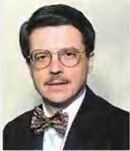
Richard J. Mata; MD, MS, MS-CIS, CMP™ (Hon)

Join Our Mailing List

Dr. Mata

About: Dictionary of Health Information Technology and Security?

Whither the Dictionary of Health Information Technology and Security?  A simple query that demands a cogent answer! 

There is a myth that all stakeholders in the healthcare space understand the meaning of basic information technology jargon.

In truth, the vernacular of contemporary medical information systems is unique, and often misused or misunderstood. It is sometimes altogether confounding.

Terms such as, “RSS”, “DRAM”, “ROM”, “USB”, “PDA”, and “DNS” are common acronyms, but is their functionality truly understood? 

Computer technology and online security is also changing, and with its rapid growth comes an internal “lingo” that demands still more attention from the healthcare sector.

Legislation, such as the Health Insurance Portability and Accountability Act (HIPAA) of 1996, the Wired for Health Care Quality Act (WHCQA) of the Senate in 2005, the Health Information Technology Promotion Act (HITPA) of the House in 2006, and the National ePrescribing Patient Safety Initiative (NEPSI) of 2007 has brought a plethora of new phrases like “electronic data interchange,” “EDI translator,” “ANSI X-12” and “X12 277 Claim Status Notification Transactions” etc., to the profession.  

Hence, healthcare informatics is now being taught in medical, dental, graduate and business schools as its importance is finally recognized. 

Moreover, an emerging national Heath Information Technology (HIT) architecture; in the guise of terms, definitions, acronyms, abbreviations and standards; often puts the non-expert medical, nursing, public policy administrator or paraprofessional in a position of maximum uncertainty and minimum productivity.

Unfortunately, this opinion stems from the under appreciation of HIT as a prima-fascia resource that needs to be managed by others.

The Dictionary of Health Information Technology and Security will therefore help define, clarify and explain. 

So too, embryonic corporate positions like Chief Medical Information Officer (CMIO) or Chief Medical Technology Officer (CMTO) continue to grow as hospitals, clinics and health systems become more committed to IT projects that demand technology savvy physician-executives.

Many medical errors can be prevented, and guesswork eliminated when the Dictionary of Health Information Technology and Security is used by informed cognoscenti as well as the masses.

The work contains more than 10,000 entries and code-names, with extensive bibliographic references that increase its utility as a useful tool and illustrated compendium. 

Of course, authoritative linguistic sources like the Dictionary serve a vast niche. Electronic Health Records (EHRs) and e-prescribing has languished, and more than nine in ten hospitals have not yet implemented Computerized Physician Order Entry systems (CPOEs)*. And, HIT lags far behind other sectors in ease-of-use.

As an educator, my task is to help students, late-adopters and adult-learners understand key medical information concepts.

This daunting task is aided by the Dictionary as my charges use it, become more conscientious in their studies, and recognize its value as a tool for virtually every healthcare worker. 

My suggestion is to use the Dictionary of Health Information Technology and Security frequently. You will refer to it daily.  

I also recommend the entire Health Dictionary Series© by Dr. David Edward Marcinko and his colleagues from the Institute of Medical Business Advisors, Inc. 

*Healthcare Informatics and The Leapfrog Group, Top Hospital List, January 2007, Volume 24, No 1, page 64, Skokie, Ill.  

Richard J. Mata; MD, MS, MS-CIS

Certified Medical Planner™ (Hon) 

Chief Medical Information Officer [CMIO]

Ricktelmed Information Systems

Assistant Professor Texas State University-San Marcos, Texas USA

Speaker: If you need a moderator or a speaker for an upcoming event, Dr. David Edward Marcinko; MBA – Editor and Publisher-in-Chief – is available for speaking engagements. Contact him at: MarcinkoAdvisors@msn.com

***

Dictionary of Health Information Technology and Security [Paperback]

Dictionary of Health Information Technology and Security

 ***

Job_Index_Inforgraphic

***


Michael J. Stahl; PhD

FOREWORD

Dictionary of Health Insurance and Managed Care

dhimc-book2

Q: Why do we need the Dictionary of Health Insurance and Managed Care?

And, why do payers, providers, benefits managers, consultants and consumers need a credible and unbiased source of explanations for their health insurance needs and managed care products?

The answer is clear!  Healthcare is the most rapidly changing domestic industry. The revolution occurring in health insurance and managed care delivery is particularly fast. Some might even suggest these machinations were malignant, as many industry segments, professionals and patients suffer because of them. And so, since knowledge is power in times of great flux, codified information protects us all from physical, as well as economic harm.

For example, federal government forecasts reveal that total expenditures on health services will surpass $2 Trillion in 2007, and account for 17% of Gross Domestic Product. As a country, we spend dramatically more total dollars on healthcare, and more as a percent of the economy, than we did two decades ago. Along with these growing expenditures, the government is assuming greater control.

Currently, almost 50% of healthcare costs are under Federal and/or State mandates through Medicare and Medicaid entitlement programs. The recent prescription drug program and implementation of the Health Insurance Portability and Accountability Act adds more confusion to medical providers and facilities, insurance agents, health plans and patients.

This tumult occurred so rapidly that we can no longer assume operative definitional stability. The resulting chaos is as expected.  Fortunately, the Dictionary of Health Insurance and Managed Care provides desperately needed nomenclature stability to health insurance policy issues and managed care procedural concerns.

With almost 10,000 definitions, abbreviations, acronyms, and references, the Dictionary is the most comprehensive and authoritarian compendium of its kind, to date. 

Healthcare economist Dr. David Edward Marcinko, and his colleagues at the Institute of Medical Business Advisors, Inc., should be complimented for conceiving and completing this laudable project.

The Dictionary of Health Insurance and Managed Care lifts the fog of confusion surrounding the most contentious topic in the healthcare industrial complex, today.  

My suggestion therefore, is to “read it, refer to it, recommend it, and reap”. 

Michael J. Stahl; PhD
Director, Physician Executive MBA Program
William B. Stokely Distinguished Professor of Business
The University of Tennessee
College of Business Administration
609 Stokely Management Center
Knoxville, TN 37996-0570 USA


Product DetailsProduct DetailsProduct Details

Ahmad Hashem; MD, PhD

FOREWORD

[PRIVATE MEDICAL PRACTICE BUSINESS MANAGEMENT TEXTBOOK

– 3rd.  Edition]

Product Details

  [Foreword Dr. Hashem MD PhD] *** [Foreword Dr. Silva MD MBA]

It’s never been easy to be a physician, and in many ways the pressures on practitioners are only getting worse. This is why I’ve been a longtime admirer of what David Edward Marcinko does with his writing and knowledge of medicine and medical practice.

Dr. Marcinko’s books provide guidance for physicians – helping them to survive organizationally, administratively, and financially so that they can continue to serve their patients. 

Helping fellow physicians in one way or another often figures into the motivations of those who have left the joys of a medical practice to pursue healthcare from a different vector. Some are called into research, giving up the rewards of helping individuals with the hope that they might contribute insights that can lead to the helping of many. 

After medical school, my own path took me to the University of Pittsburgh and a doctorate in medical informatics, with visions of helping physicians help their patients through better management of data. 

Fortunately, I see that vision coming true, especially as I work with my colleagues at Microsoft to create a secure informational infrastructure that gives physicians the information they need at any time, and at any place – including over a wireless device as they attend to a patient at bed side. We call this initiative to provide seamless, yet secure, access to data on an anytime, anywhere, basis Healthcare Without Boundaries.  

Though we are proud of our proud of our work, the great wonders come from what we see after we release our products, as physicians do things with our software that we never envisioned.

Physicians, by nature – or through selection and training – have a scientific mind and a driving curiosity. Over and again my colleagues and I are dazzled by what physicians are creating by using our technology in unexpected ways.

And often the work is done by private practitioners looking for ways to create their own solution because they either couldn’t afford a pre-packaged one, or couldn’t find a solution that answered their creative visions.  

Physicians, especially those in private or small group practice, are under great stress today. But they are buoyed by a passion for their work and dedication to their patients, and they are extremely resourceful with the brilliance and ingenuity that comes from the curiosity of the scientific mind. 

Medical Economics magazine recently ran a story about Robert Novich, a New Rochelle, New York internist who needed an electronic medical records system for his solo practice. Suffering from sticker shock and the inflexibility of the commercial EMRs he looked at, he decided to create his own – using Microsoftâ Word and a fax machine. Lab reports and other documents received by fax are directly imported into the computer for digital storage.  

Working with his son Jeff, who was a college student at the time, Dr. Novich created a system that uses Word templates to simplify creation of medical records; and Explorer to provide instant file access; slashing time from pulling information out of file cabinets. The system also creates and manages electronic prescriptions.  The results? Dr. Novich said, “I feel like a brand new doctor.” 

This book [The Advanced Business of Medical Practice, 2nd edition] is filled with a wealth of information on how to survive the financial, administrative, and regulatory pressures that could otherwise draw down on the time you want to spend with your patients.  Dr. Marcinko and his contributors cover the spectrum from developing a medical office business plan for the new practitioner, to placing a value on a practice for the retiring physician preparing to sell.  

A sampling of topics includes: human resource management and physician recruitment, marketing, insurance coding and health-law compliance, process improvement and medical care outcomes tracking, cash flow analysis, office expense modeling, cost accounting, practice benchmarking, financial and ratio analysis, ROI calculations, CRM, six sigma initiatives, concierge medicine and medical ethics.  Throughout this book a common denominator is the need for acquiring and managing information.

Fortunately we live in a time when information technology is providing ever more benefits with an ever lower threshold – both financially and technically. 

For less than $500 you can buy a computer today that has a more powerful central processing unit and more memory than the multi-million dollar mainframes and super computers that were enshrined in regional banks and university research centers in the 1980s.

And, the advent of point-and-click interfaces and drag-and-drop development environments mean that everyday doctors can do extraordinary things. 

Microsoft recently sponsored a contest looking for innovative ways in which our Office suite of applications had been used by healthcare workers. The response was overwhelming — not because of the technology, but because of the innovative ways it was being deployed to solve real-world problems.  For example:

  • Cecil Lynch, an M.D. and medical informaticist who teaches at the University of California at Davis is using Microsoft Access to help the U.S. Center for Disease Control (CDC) enhance the efficiency of its disease surveillance system. 
  • Dr. Duke Cameron of the Division of Cardiac Surgery, Johns Hopkins Hospital, came up with the idea of using the Outlook Calendar to schedule operating rooms, to help assure the OR is properly setup with specific implant devices and other special equipment or supplies before the surgical team arrives.  
  • Nick Hoda, a psychologist-in-training at Mississippi State University, uses Microsoft Excel charts and graphs to show his elementary school clients coping with learning and behavioral problems – that their behavior really is getting better. He uses the same charts with teachers and administrators to win his young clients another chance at the classroom. 

My favorite story came from Dr. Thomas Schwieterman, a fourth-generation physician working in the same medical office his great grandfather established in 1896 in the town of Mariastein, Ohio. From those same historic environs, Schwieterman has used Microsoft Access to create his own physician assistant application.  The Schwieterman Family Physicians practice kept him so busy that he was wondering how he could keep up with his patient caseload. Schwieterman wanted a faster way to handle prescriptions, provide medical information, and record data for his patient records.  

He walked into a MacDonald’s restaurant one day and had an idea. “I ordered a cheeseburger and fries and watched the person at the counter touch the screen of the cash register a few times, and realized the order was getting transferred back to the food preparation area, and that by the time I paid, my order was ready,” he said. “I thought to myself: ‘That’s what I need!’” 

He searched for commercially available solutions, but when he couldn’t find an exact match for his needs, and when he found prices steep for a small private practice, he decided to create his own – using Access. He also called upon a friend with a Master’s Degree in electrical engineering to help on the coding. His creation boosted his income by 20 percent – “Which was important because we pay more than $60,000 a year for malpractice insurance even though our clinic has never been sued since it was founded 107 years ago.” 

What my friends at Microsoft especially like about this story is that when Dr. Schwieterman’s colleagues tried his program, liked it, and suggested he try to sell it, he put together a PowerPoint presentation – and landed a partnership agreement with a major healthcare supply and services corporation to market his ChartScribe solution. 

So, the pressures facing physicians are great, but so are their resources. Information technology is one resource, this book is another, but the greatest of all is the innate curiosity and drive to discover and create that seems to be so much a part of those who are drawn to this noble profession. 

-From the Foreword

http://www.springerpub.com/prod.aspx?prod_id=23759 

Ahmad Hashem; MD, PhD:

[Former] Global Healthcare Productivity Manager

Microsoft Healthcare Industry Solutions Group

Microsoft Corporation

Speaker: If you need a moderator or a speaker for an upcoming event, Dr. David Edward Marcinko; MBA – Editor and Publisher-in-Chief – is available for speaking engagements. Contact him at: MarcinkoAdvisors@msn.com

Product Details

[Third edition – circa 2012]

Investing and Interest Rate Risks [IRR]

Understanding Inverse Relationships

By Julia O’Neal; MA, CPA  


Interest Rate Risk [IRR] refers to the tendency of all investments to rise as interest rates decline and fall as interest rates rise. This inverse relationship is common among all investments, although not to the same degree.  

Pure Interest Rate Movements 

A U.S. Treasury security best demonstrates the pure interest rate move. 

The risk is present with other investments as well, since the discount rate—the required rate of return used to place a value on an asset—in part consists of the return available from a default-free investment. 

History shows that when the average level of interest rates rises, absolute volatility also rises. 

Assessment 

When looking at interest rate risk and other investments, it becomes important for physician-investors to look at the other component of the discount rate or the required risk premium over and above the risk-free rate.  

For example, in the case of high-grade bonds or utility equities, the default rate dominates the total discount rate, making interest rate risk more influential.  

For other investments, such as junk bonds or growth equities, the risk premium required has a much greater influence, somewhat reducing pure interest rate risk. 

Conclusion 

Are you willing to accept interest rate risk in your investing portfolio; how much IRR and for how long? 

More info: http://www.springerpub.com/prod.aspx?prod_id=23759 

Individual: http://www.jbpub.com/catalog/0763745790/

Institutional: www.HealthcareFinancials.com 

Terms: www.HealthDictionarySeries.com

Healthcare Tourism

Join Our Mailing List

Status Report for Thailand

[By Staff Writers] 

cruises

[The Clear State Report]

thailand_healthcare_toursim.pdf

Medical Tourism and Values Based Health Insurance

Assessment

Feel free to comment and opine on the above report? 

Channel Surfing the ME-P

Have you visited our other topic channels? Established to facilitate idea exchange and link our community together, the value of these topics is dependent upon your input. Please take a minute to visit. And, to prevent that annoying spam, we ask that you register. It is fast, free and secure.

Conclusion

Your thoughts and comments on this ME-P are appreciated. Feel free to review our top-left column, and top-right sidebar materials, links, URLs and related websites, too. Then, subscribe to the ME-P. It is fast, free and secure.

Speaker: If you need a moderator or speaker for an upcoming event, Dr. David E. Marcinko; MBA – Publisher-in-Chief of the Medical Executive-Post – is available for seminar or speaking engagements. Contact: MarcinkoAdvisors@msn.com

OUR OTHER PRINT BOOKS AND RELATED INFORMATION SOURCES:

Product DetailsProduct DetailsProduct Details


Pervasive Investing Risks

Join Our Mailing List

Understanding Pandemic Risks

[By Julia O’Neal; MA, CPA]

Pervasive risks are those perils associated with all investments, such as purchasing power risk.  

In other words, this is the risk that because of the influence of price inflation or deflation, the investment return achieved is worse or better than expected.  

Another pervasive and hard-to-control risk is political risk. Typical political risks include the prohibition against exchanging domestic currency for foreign currency, failure to meet debt service, expropriation of assets, differences in taxes, and restriction on expatriating funds. 

Conclusion

Your thoughts and comments on this ME-P are appreciated. Feel free to review our top-left column, and top-right sidebar materials, links, URLs and related websites, too. Then, subscribe to the ME-P. It is fast, free and secure.

Link: http://feeds.feedburner.com/HealthcareFinancialsthePostForcxos

Speaker: If you need a moderator or speaker for an upcoming event, Dr. David E. Marcinko; MBA – Publisher-in-Chief of the Medical Executive-Post – is available for seminar or speaking engagements. Contact: MarcinkoAdvisors@msn.com

OUR OTHER PRINT BOOKS AND RELATED INFORMATION SOURCES:

DICTIONARIES: http://www.springerpub.com/Search/marcinko
PHYSICIANS: www.MedicalBusinessAdvisors.com
PRACTICES: www.BusinessofMedicalPractice.com
HOSPITALS: http://www.crcpress.com/product/isbn/9781466558731
CLINICS: http://www.crcpress.com/product/isbn/9781439879900
BLOG: www.MedicalExecutivePost.com
FINANCE: Financial Planning for Physicians and Advisors
INSURANCE: Risk Management and Insurance Strategies for Physicians and Advisors

Product Details  Product Details

HD-HCPs Gaining Ground


Popularity of Consumer Driven Plans Increasing

Staff Writers 

Join Our Mailing List 


Product DetailsProduct DetailsProduct Details

Product Details  Product Details

   Product Details 

Medicare Costs to Double by 2017

Join Our Mailing List

New CMS Report for 2008

[By Staff Writers]

According to a new CMS report, national health spending grew 6.7% last year, reaching $2.2 trillion overall. But, it is expected to hold steady over the next 10 years. 

Nevertheless, healthcare spending will account for 20% of GDP by 2017; if left unchecked.

Of course, more than a few health economists note that eliminating some Medicaid payment restrictions spiked hospital spending, but the sector is expected to see more growth in later years. 

Fueling Medicare growth dramatically will be baby boomers as they become eligible. Medicare spending is expected to reach $427.3 billion in 2007, ballooning to more than twice that amount, or $884 billion, in 2017, according to some CMS estimates [about 7.2% annually]. 

***

stack_of_file_12

***

Assessment

And so, what are your thoughts on this new report? Is this increase in GDP such a bad thing?

Conclusion

Your thoughts and comments on this ME-P are appreciated. Feel free to review our top-left column, and top-right sidebar materials, links, URLs and related websites, too. Then, subscribe to the ME-P. It is fast, free and secure.

Speaker: If you need a moderator or speaker for an upcoming event, Dr. David E. Marcinko; MBA – Publisher-in-Chief of the Medical Executive-Post – is available for seminar or speaking engagements. Contact: MarcinkoAdvisors@msn.com

OUR OTHER PRINT BOOKS AND RELATED INFORMATION SOURCES:

Product DetailsProduct DetailsProduct Details

Real Estate Investments

Join Our Mailing List

Doctors Must Understand the Unique Risks

[By Julia O’Neal; MA, CPA]

Real Estate [RE] requires a separate discussion of unique risks relative to other financial asset classes. 

Macro Economic and Other Risks 

RE investments possess not only the macro-economic risks found in all financial assets, but other unique risks, as well.

For example, these risks include illiquidity, lack of a continuous auction trading market, and quoted prices that may or may not represent intrinsic value.  

Lack of Diversification 

Given the large size of many real estate projects, it may also be difficult to diversify adequately and reduce total portfolio risk.

And, because of the chance of segmented markets, the risk of imperfect information is also present.  

Assessment

Remember, real estate is not easily divisible and is nonhomogeneous; such risks cannot be fully negated through diversification. 

paint room

Conclusion

Your thoughts and comments on this ME-P are appreciated. Feel free to review our top-left column, and top-right sidebar materials, links, URLs and related websites, too. Then, subscribe to the ME-P. It is fast, free and secure.

Link: http://feeds.feedburner.com/HealthcareFinancialsthePostForcxos

Speaker: If you need a moderator or speaker for an upcoming event, Dr. David E. Marcinko; MBA – Publisher-in-Chief of the Medical Executive-Post – is available for seminar or speaking engagements. Contact: MarcinkoAdvisors@msn.com

OUR OTHER PRINT BOOKS AND RELATED INFORMATION SOURCES:

DICTIONARIES: http://www.springerpub.com/Search/marcinko
PHYSICIANS: www.MedicalBusinessAdvisors.com
PRACTICES: www.BusinessofMedicalPractice.com
HOSPITALS: http://www.crcpress.com/product/isbn/9781466558731
CLINICS: http://www.crcpress.com/product/isbn/9781439879900
BLOG: www.MedicalExecutivePost.com
FINANCE: Financial Planning for Physicians and Advisors
INSURANCE: Risk Management and Insurance Strategies for Physicians and Advisors

Product Details  Product Details

On Physician Hospital Organizations [PHOs]

Join Our Mailing List

Understanding PHOs

[By Dr. David Edward Marcinko; MBA CMP™]

[Publisher-in-Chief] 

A Physician Hospital Organization, or PHO, is a blend of private doctors and hospitals, maintaining its concentration and control of surgical, rather than medical care.

Ownership may be divided by a governing board, according to a pro-rata basis with the larger partner having most organizational strength and bargaining power in the corporate structure. Typically, this favors the hospital. 

From a strategic standpoint, most MD’s are still not currently aligned with many PHO’s, since surgical care is increasing being delivered in private offices, Surgical Specialty Hospitals (SSHs) or Ambulatory Care Centers (ACCs).  

Additionally, PHOs may become potential MD competitors, and may often lack managed care contracting experience, have inflexible provider networks and may require MD exclusivity in their organization. 

PHO Functions 

Nevertheless, the function of a PHO is to:

  • Negotiate managed care contracts
  • Negotiate on all health insurance contracts
  • Establish insurance product(s)
  • Employ doctors and support staff
  • Consolidate and acquire physician practices
  • Acquire alternative medical practices. 

Assessment 

Many believe the “p” in PHO should be lower-case; while an upper-case “H” is a sign of relative strength [i.e., pHO].  And so, what do you think? 

Conclusion

Your thoughts and comments on this ME-P are appreciated. Feel free to review our top-left column, and top-right sidebar materials, links, URLs and related websites, too. Then, subscribe to the ME-P. It is fast, free and secure.

Speaker: If you need a moderator or speaker for an upcoming event, Dr. David E. Marcinko; MBA – Publisher-in-Chief of the Medical Executive-Post – is available for seminar or speaking engagements. Contact: MarcinkoAdvisors@msn.com

OUR OTHER PRINT BOOKS AND RELATED INFORMATION SOURCES:

Product DetailsProduct DetailsProduct Details

Product DetailsProduct Details

Dental Economics Business Report

EXCLUSIVE MARCH SPECIAL REPORT!

Released February 29th, 2008biz-book

A very special report on dentists – their professional practice career and economic life cycle – by a leading national dental management corporate executive.

AUTHOR: Thomas A. Knox MBA was senior vice-president for provider partnerships at Delta Dental Plan of Minnesota, which owns a major interest in a privately held dental practice management corporation [DPMC].

POSITION: Mr. Knox held senior leadership positions in several health care organizations for more than twenty-five years. He implemented various joint ventures, partnerships and business alliances in a variety of medical organizations. He is recently retired.

TOPIC: “Practice Management and Financial Planning: It’s [NOT] for Dentist’s Only”

EXERPT: “The challenge is that for many dentists their practice is too big and too profitable to sell to new dentists who have been, traditionally, the practice buyers. Almost fifty percent of present day dentists are baby boomers pushing 50-55 years of age. And unfortunately, they cannot afford to retire at this point and still maintain the lifestyle they have created. But, the temptation is there – the thought is occurring more frequently – and it is very compelling and very frustrating.”

Don’t miss it!

REQUEST IT NOW: Complimentary by email.

https://medicalexecutivepost.com/wp-content/uploads/2008/03/ddspracticelifecyclefinplanning.pdf

Investing Sector Risks

Understanding Industry Risk

 By Julia O’Neal; MA, CPA

fp-book3

Often also called industry risk, sector risk is the risk of doing better or worse than expected as a result of investment in one sector of the economy instead of another.

Economic Classifications 

A typical economic classification includes capital goods, consumer durables, consumer nondurables, financial, energy, utility, basic materials, technology, retail, and service. There are many more; of course.

Conclusion 

Which sectors do you invest in, and do you appreciate the associated industry risks? 

More info: http://www.springerpub.com/prod.aspx?prod_id=23759 

Individual: http://www.jbpub.com/catalog/0763745790/ 

Institutional: www.HealthcareFinancials.com 

Terms: www.HealthDictionarySeries.com

Investing Terms and Portfolio Design Definitions

A “Need-to-Know “ Glossary for all Medical Professionals

Staff Writers

nyse

Absolute volatility: The true volatility of an investment. 

Accumulation phase: A phase in an investor’s life when he or she is trying to accumulate an estate; usually characterized by growth-oriented investments.

Alpha factor: Measures the residual non-market influences that contribute to a securities risk unique to each security. 

Arithmetic mean: The sum of a set of numbers divided by the number of numbers in the set. 

Capital appreciation: The growth of an investment’s principal. 

Capital asset pricing model (CAPM): A model that uses beta and market return to help investors evaluate risk return trade-offs in investment decisions. 

Capital Market Line: Represents a spectrum of two-asset portfolios, moving from a portfolio invested in 100% of the least risky asset to a portfolio invested in 100% of the most risky one. The Capital Market Line is plotted on a graph with % return plotted on the Y-axis and risk (standard deviation) plotted on the X-axis. 

Co-movement: The degree to which an asset moves with other assets. 

Consolidation phase: A phase in an investor’s life when he or she generally shifts assets to more conservative or stable investments with the hope of preventing any major losses to accumulated assets. The investor is still interested in the growth of the investments. 

Covariance: The volatility of investments in relation to other investments. 

Current income: Income received from investments. 

Discount rate: The annual rate of return that could be earned currently on a similar investment; used when finding present value or opportunity cost. 

Earnings momentum investing: A style of investing that looks for companies that are on growth trends similar to a growth style. Two nuances differentiate these two styles: (1) the earnings momentum style focuses mainly on the growth of the earnings of the company and (2) the earnings momentum style looks for an accelerating increase in the growth of earnings. 

Efficient frontier: A line that represents the highest return for each particular mix of assets in a portfolio. 

Geometric mean: The Nth root of the product of “n” numbers. 

Growth investing: A style of investing that tries to outperform the market by investing in companies that are experiencing growth patterns in earnings, cash flows, sales, capitalization, etc. 

Market timing: Trying to predict the gains and declines of the market and then buying at market lows and selling at market highs. 

Mean rate of return: The return that is between two extreme returns. 

Modern portfolio theory: An approach to portfolio management that uses statistical measures to develop a portfolio plan. 

Negatively correlated: Two securities that move in opposite directions.

Nominal return: The return that an investment produces.

Periodic re-balancing: The act of shifting capital from asset classes that performed well to those that did not, in order to maintain a set ratio between asset classes. 

Positively correlated: Two securities that move in the same direction.

Probability distribution: A statistical tool used to show the dispersion around an expected result. 

Real return: The actual return after factors such as inflation and taxes are taken into consideration. 

Realized gain or loss: Gain or loss experienced by an investor during a period.

Regression analysis: A statistical tool used to measure the relationship between two or more variables. 

Relative efficiency: The belief that the markets reflect current information in their prices. 

Risk-averse: Describes a physician investor who requires greater return in exchange for taking on greater risk.

Sector rotation investing: A style of investing in which the goal is to out-perform the market by investing more heavily in the sectors that are forecasted to perform better than the market in expected economic scenarios.

Spending phase: The phase in an investor’s life when he or she is living on accumulated assets; generally characterized by a portfolio invested mainly in income-oriented investments, although a portion of growth is usually maintained.

Standard deviation: A statistical method used to measure the dispersion around an asset’s average or expected return and the most common single indicator of an asset’s risk. 

Unrealized gain or loss: A gain or loss on paper that is not realized until the investment is sold. 

Value investing: A style of investing that searches for undervalued companies and buys their stock in hopes of sharing in the future gain when other analysts discover the company.

Yield curve: A graph that represents the relationship between a bond’s term to maturity and its yield at a given point in time.

Yield to maturity: The fully compounded rate of return earned by an investor over the life of a bond, including interest income and price appreciation. 

Institutional info: www.HealthcareFinancials.com 

More terms: www.HealthDictionarySeries.com 

Note: Feel free to send in your own related terms and definitions so that this section may be updated continually in modern Wiki-like fashion.


Credit Risk

Understanding Company Specific Risk

By Julia O’Neal; MA, CPA  


There are several kinds of investing risk, for example:

  • Credit or company specific risk refers to the firm’s business and financial risks.
  • Business risk is the risk inherent in the nature of the business.
  • Financial risks are those in addition to business risk that arise from financial leverage [credit or debt].  

Business Risk Example 

An example of high business risk would be a computer component manufacturer whose product demand is highly sensitive to macroeconomic activity and who has small profit margins.  

Assessment 

A company’s unique business risk would be increased by adding debt to an already unpredictable business. 

Conclusion 

Can you appreciate that credit risk is associated with a firm’s ability to meet financial obligations on the securities [bonds, notes and obligations, etc.] it issues?

More importantly, do you invest with this risk in mind? 

More info: http://www.springerpub.com/prod.aspx?prod_id=23759 

Individual: http://www.jbpub.com/catalog/0763745790/ 

Institutionalwww.HealthcareFinancials.com 

Terms: www.HealthDictionarySeries.com

Explaining MS-DRGs

New CMS Healthcare Finance Rules for Fiscal 2008

By Dr. David Edward Marcinko; MBA, CMP™

Publisher-in-Chiefdr-david-marcinko

The Centers for Medicare & Medicaid Services (CMS) just released the final Inpatient Prospective Payment System [IPPS] rules for fiscal year 2008. The lengthy official version was published in the Federal Register on August 22, 2007.

The good news is that overall Medicare payments to hospitals should increase by an average of 3.5%. The bad news is a plethora of additional compliance regulations. 

A Brief Review 

And so, since it has been said that brevity is the surest route to perusal, the most important of these new payment and policy provisions include: 

  • A 3.3% market basket increase
  • Additional hospital quality measure reporting requirements in 2008 in order to qualify for the full market basket update in FY 2009
  • Final implementation of phase-in changes begun in FY 2007 to base DRG relative weights on estimated hospital costs rather than hospital charges
  • A high cost outlier threshold of $22,650, down from $24,485 in FY 2007
  • The launch of 745 new Medicare-Severity DRGs (MS-DRGs) which replace the current 538 DRGs over a two-year period; and “behavioral-offsets” reduce payments by 1.2% to account for expected coding change practices
  • Require hospitals to report on eight preventable admission conditions that would not be paid at a higher rate unless present on admission in 2009
  • New ownership disclosure requirements for physician-owned specialty hospitals (Stark III)
  • New hospital disclosures requirements on how to handle emergency medical situations when no physician is present. 

Enter the MS-DRGs 

Perhaps the biggest changes relate to the revisions of certain long-term care hospital policies, including the transition to the MS-DRG system over two years, refinements to the relative weights for the DRGs, and application of a budget neutrality factor to the annual rate update (but not the “behavioral- offset” that will apply to acute hospital payments). 

Assessment 

Therefore, let all related information in our two-volume print subscription publication Healthcare Organizations: [Financial Management Strategies] guide your leadership decisions with alacrity. 

Conclusion 

How will the above new rules and regulations affect you and/or your healthcare institution? Your cogent thoughts, and informed opinions, are always appreciated.

Speaker: If you need a moderator or a speaker for an upcoming event, Dr. David Edward Marcinko; MBA – Editor and Publisher-in-Chief – is available for speaking engagements.

Contact him at: MarcinkoAdvisors@msn.com

Bio: http://www.stpub.com/pubs/authors/MARCINKO.htm

Order the Premium Print Guide: http://www.stpub.com/pubs/ho.htmThe subscription print guide includes up to four annual quarterly updates. Now, enjoy a 30-day risk-free trial as a two-volume guide in a unique loose-leaf binder format. Special introductory price: $525/yr. Call 1-800-251-0381. More information:  www.stpub.com/pubs/ho.htmTo email purchase: email: orders@stpub.com 

Physician Business Owners

Medical Accounting News for 2008

Staff Writers 


By now, most physician business-owners understand the general rules regarding the filing requirements for Form 1099-MISC. 

IRS Form 1099-MISC in Review 

Nevertheless, in review, Forms 1099-MISC should be issued to independent entities performing services for your medical practice or business entity. 1099s should be sent to individuals with annual earnings exceeding $600.  There is no requirement to file Forms 1099-MISC to corporations.  

The Forms should be mailed to the recipients no later than January 31st, and no later than February 28th 2008, to the IRS.  

Your Vendors 

The starting point in this process is your attempt to learn more about a vendor, subcontractor, janitor, accountant, attorney, software and medical practice management consultants, etc. 

This is accomplished by requesting the entity to complete a Form W-9, which will reveal the legal status of the vendor, i.e.  LLC taxed as a sole proprietor, an LLC taxed as a partnership, a corporation, a sole proprietor, etc. 

Assessment 

Always request and maintain a Form W-9.  Why? Protection from the IRS!  Failure to obtain and maintain Form W-9 can lead to the Federal backup withholding tax of 25% to 28%.  

Forms W-9 are available from the IRS Website. 

Conclusion: 

And so, are you familiar with these medical accounting risk management principles for Form 1099-MISC? 

Related info: http://www.jbpub.com/catalog/0763745790/

Terms: www.HealthDictionarySeries.com 

Institutional: www.HealthcareFinancials.com


The “Desperate” Doctors!

Why Medical Providers are Dis-enfranchised

Dr. David Edward Marcinko; MBA CMP™

[Publisher-in-Chief]

Despite the purported benefits of managed care, anecdotal evidence suggests that MD’s are less happy about managed care, compensation and their profession than ever before. Some might say they are even “desperate.”  

There are other reasons for despair, as well: 

  • Fewer fee-for-service patients and more discounted patients
  • More paperwork and scrutiny of medical decisions
  • Lost independence and medical morale 
  • Healthcare providers are making less money, as Medicare reimbursement was cut 5.4% for 2002, and 4.4% in 2003. Much more may be in store for late 2008.

Furthermore, such cuts also stand to hurt physicians with private payers since commercial insurers often tie their reimbursement schedules to Medicare’s resources.

Of course, many doctors feel that the profession of medicine is no longer satisfying or ego enhancing since almost 40% are now merely corporate employees.

And in the past few years, the following has occurred: 

  • The Health Care Financing Administration (HCFA) became known as the Centers for Medicare and Medicaid Services (CMS). Formerly administered by Thomas Scully, it was re-organized into three parts: 1] The Center for Medical Management runs the traditional fee-for-service program. 2] The Center for Beneficiary Choices expands the number of Medicare beneficiaries belonging to private plans. 3] The Center for Medicaid and State Operations shares responsibility with state governments.
  • Certain administrative requirements for the Health Insurance Portability and Accountability Act (HIPAA) went into effect in April and October 2003. And, for many doctors, their biggest liability may be a single unfortunate event that could result in a lawsuit, an HHS investigation, and/or bad publicity. 
  • The executive committee of the Pharmaceutical Research and Manufacturers of America (PhRMA) adopted a new marketing code to govern big pharma’s relationships with physicians. Although now voluntary, DHH is urging compliance as critics charge that Direct to Consumer (DTC) advertising results in appropriate prescription patterns, frustrated patients and increased costs.    

Assessment: And so, do you believe the above is more true than not; and are doctors really getting desperate? 

Conclusion: Your thoughts are appreciated.

Speaker: If you need a moderator or a speaker for an upcoming event, Dr. David Edward Marcinko; MBA – Editor and Publisher-in-Chief – is available for speaking engagements. Contact him at: MarcinkoAdvisors@msn.com

***

Product DetailsProduct Details

***

FDA Liability Immunity Ruling

Join Our Mailing List

The US Supreme Court Rules

[By Staff Reporters]

Did you know that the US Supreme Court just ruled that makers of medical devices – like implantable defibrillators or breast implants – are immune from liability for personal injuries as long as the Food and Drug Administration [FDA] approved the device before it was marketed and it meets the agency’s specifications? 

Background

In 2004, the administration reversed longstanding federal policy and began arguing that “premarket approval” of a new medical device by the FDA overrides most claims for damages under state law, but because federal law makes no provision for damage suits against device makers, injured patients have turned to state law and have won substantial awards, according to the New York Times 

The Ruling

The decision does not foreclose lawsuits claiming that a device was made improperly, in violation of Food and Drug Administration [FDA] specifications, while cases may also be brought under state laws that mirror federal rules, as opposed to supplementing them. 

Devices subject to the premarket approval process, and thus affected by the court’s opinion, tend to be more technologically advanced and expensive, while examples of devices that have been the subjects of recent lawsuits include an implantable defibrillator, a heart pump, a spinal cord stimulator, a drug-coated stent, an artificial heart valve, and prosthetic hips and knees. 

***

matrix pills

***

Assessment

The Bush administration plans to continue its push for pre-emption from personal injury suits in another FDA case that the court has accepted for its next term, on whether the agency’s approval of a drug, as opposed to a device, pre-empts personal injury suits.

And so, is this ruling a boon for trial lawyers or patients; both or neither?

Conclusion

Your thoughts and comments on this ME-P are appreciated. Feel free to review our top-left column, and top-right sidebar materials, links, URLs and related websites, too. Then, subscribe to the ME-P. It is fast, free and secure.

Speaker: If you need a moderator or speaker for an upcoming event, Dr. David E. Marcinko; MBA – Publisher-in-Chief of the Medical Executive-Post – is available for seminar or speaking engagements. Contact: MarcinkoAdvisors@msn.com

OUR OTHER PRINT BOOKS AND RELATED INFORMATION SOURCES:

Product DetailsProduct Details


The Federal False Claims Act

Join Our Mailing List

Understanding Qui Tam

[By Dr. Charles F. Fenton III; Esqfenton]  

A civil war era law, titled the False Claims Act (qui tam [in the name of the king]), is increasingly popular with prosecutors who pursue inappropriate billing mishaps by physicians.  

Why the False Claims Act? 

The FCA rose to prominence because in 1990, the healthcare industry accounted for about 10% of all false claims penalties recovered the federal government. By 1998, the healthcare share was almost 40%. Today, it may be even more. 

The “Act”  

The False Claims Act allows a private citizen such as your patient, your employee, or a competing doctor to bring a health care fraud claim against you, on behalf of and in the name of the United States of America. The “relator” who initiates the claim is rewarded by sharing in a percentage of the recovery from the health care provider. 

Essentially, the “Act” allows an informant to receive up to 30% of any judgment recovered against government contractors (Medicare, Medicaid, CHAMPUS, prison systems, American Indian reservations or the VA systems, etc).   

With a low burden of proof, triple damages, and penalties up to $10,000 for each wrongful claims submission, these suits are the enforcement tools of choice for zealous prosecutors pursuing health fraud.   

Assessment  

All that must be proven is that improper claims were submitted with a reckless disregard of the truth. Intentional fraud is irrelevant to these cases, even if submitted by a third party, such as a billing company. 

It is imperative that the attending physicians review all bills before they are submitted to any state of federal agency. The Federal False Claims Act is a federal law that has been on the books since the days of the civil war and which recently has become a tool to battle health care fraud.  

So, what do you think about the Federal FCA?

Conclusion

Your thoughts and comments on this ME-P are appreciated. Feel free to review our top-left column, and top-right sidebar materials, links, URLs and related websites, too. Then, subscribe to the ME-P. It is fast, free and secure.

Speaker: If you need a moderator or speaker for an upcoming event, Dr. David E. Marcinko; MBA – Publisher-in-Chief of the Medical Executive-Post – is available for seminar or speaking engagements. Contact: MarcinkoAdvisors@msn.com

OUR OTHER PRINT BOOKS AND RELATED INFORMATION SOURCES:


Product DetailsProduct DetailsProduct Details      

Understanding Managed Care

Join Our Mailing List

It’s Insurance Carriers versus Medical Providers

Dr. David Edward Marcinko; MBA CMP™

[Publisher-in-Chief]

Some of the benefits for corporate America (payers), who supply the majority of health insurance to employees (insureds) through managed care organizations [MCOs] are listed below. 

MCO Carrier Benefits 

  • Known medical expenses (fixed; not variable costs) to companies
  • MD/provider’s bear the risk and benefits of patient compliance, not corporations
  • Less administrative staff needs since medical claims are no longer reviewed
  • Costs are reduced through economies of scale 
  • Patients are controlled and MD’s carefully managed. 

Medical Provider Benefits 

The following is a brief list of the benefits physicians supposedly may derive by participating in managed care plans: 

  • Stable patient load and predictable cash flows
  • Potential referrals and community visibility
  • Reduced office expenses, liability and utilization review
  • Reputation equivalency (i.e., all doctors in the plan are good). 

Assessment

Conclusion

Your thoughts and comments on this ME-P are appreciated. Feel free to review our top-left column, and top-right sidebar materials, links, URLs and related websites, too. Then, subscribe to the ME-P. It is fast, free and secure.

Speaker: If you need a moderator or speaker for an upcoming event, Dr. David E. Marcinko; MBA – Publisher-in-Chief of the Medical Executive-Post – is available for seminar or speaking engagements. Contact: MarcinkoAdvisors@msn.com

OUR OTHER PRINT BOOKS AND RELATED INFORMATION SOURCES:

Product DetailsProduct Details


Doubting Doctor AUM Model

Join Our Mailing List

Dear Medical Executive-Post

This is an excellent communications forum and blog; I tell all my friends about it. So, here is my dilemma. 

The Problem?

My financial planner charges me a percentage of assets-under-management. He explained that in this way we are both on the “same side of the economic table”, with aligned interests. It all sounded good at first; but now I am wondering after doing some research and readings?  

For example: 

  1. Doesn’t this produce an “equity bias”, as he earns more income with equities than cash or bonds? This seems especially problematic with automated DRIP programs that don’t produce cash for purchases during market price downturns, but seem to constantly buy-up; at least 2/3 of the time according to my readings.
  2. Why can’t I pay a percentage of the assets he “grows” for me, rather than on the assets I have already amassed myself – without his help, or brought in from elsewhere?  And, why pay if he looses money?
  3. Is it true that my account is just bundled and outsourced with many other similar accounts, and is not really specific for me at all? Of course, this probably does reduce his risk by remaining within the “standard of care” for his industry. But, common industry practice doesn’t mean it’s good for me. And, why do I have to sign a brokerage arbitration agreement? Why is he not a fiduciary like my CPA and attorney?
  4. What is the deal with all these meetings and client engagements that don’t seem to add any value? And, he doesn’t seem interested in financial planning at all, despite being a “financial planner.” My other concerns are glossed-over, and then he just recommends I see an “expert”, when pressed.

Assessment

Is it time for me to “do-it-myself”; and go to a passive investment management style, use index funds or ETFs, and be done with it all? This strategy sure seems a lot cheaper. Of course, I fear my “doubts” will affect our relationship.

Conclusion

Am I wrong, or right? The more I investigate and learn about all these industry practices, the more concerned I have become. Any thoughts are appreciated?  Yet, maybe I don’t really have a problem at all! 

Nevertheless, where does a doctor (or anyone else for that matter) go for “honest advice”?  

PS: Your books are excellent sources, but I still need some help with execution.

Thank you. 

Dr. Mark-Me Anonymous

[Washington, DC]   

***

Comprehensive Financial Planning Strategies for Doctors and Advisors: Best Practices from Leading Consultants and Certified Medical Planners™

***

About CLIA

Join Our Mailing List

Clinical Laboratory Improvement Amendments

 By Patricia A. Trites; PhD, MPA, CHBC, CMP™ (Hon)

trites

The Clinical Laboratory Improvement Amendment (CLIA) was passed in 1988 and pertains to any healthcare provider or entity that performs any laboratory test.   

A Series of Acts 

This legislation is actually a series of acts that established quality standards for laboratory testing in order to ensure the accuracy, reliability and timeliness of patient test results regardless of where the test was performed.   

Certification Types 

Providers must register with the Centers for Medicare and Medicaid Services (CMS) by filling out an application and paying the required fees. These fees vary upon the type or complexity of certificate requested. After completing all of the requirements, the provider will receive a CLIA Certificate.   

The four types of CLIA certificates are:  

  1. Waived Complexity
  2. Provider Performed Microscopy [sub-group of moderate complexity]
  3. Moderate Complexity
  4. High Complexity 

Revised Regulations 

In 1997 CMS enacted a new regulation that requires providers to include their CLIA number on all claim forms (ex: HCFA/CMS 1500) that contain requests for payment for clinical laboratory services.  

This is to insure that: (1) the provider has a current CLIA certificate and, (2) that the provider is performing only the laboratory tests that are allowed for the particular level of certificate. There are specific regulations and documentation requirements for the different levels of service.

Compliance Issues 

A recent study in 2001 found that a large percentage of clinical laboratories were not in compliance.  It has been recommended that increased inspection, both announced and unannounced, be instituted to better insure the quality of laboratory services.  

The CLIA requirements can be found at: http://www.cms.gov/clia. 

Assessment 

What has been your experience with CLIA?

Conclusion

Your thoughts and comments on this ME-P are appreciated. Feel free to review our top-left column, and top-right sidebar materials, links, URLs and related websites, too. Then, subscribe to the ME-P. It is fast, free and secure.

Link: http://feeds.feedburner.com/HealthcareFinancialsthePostForcxos

Speaker: If you need a moderator or speaker for an upcoming event, Dr. David E. Marcinko; MBA – Publisher-in-Chief of the Medical Executive-Post – is available for seminar or speaking engagements. Contact: MarcinkoAdvisors@msn.com

OUR OTHER PRINT BOOKS AND RELATED INFORMATION SOURCES:

DICTIONARIES: http://www.springerpub.com/Search/marcinko
PHYSICIANS: www.MedicalBusinessAdvisors.com
PRACTICES: www.BusinessofMedicalPractice.com
HOSPITALS: http://www.crcpress.com/product/isbn/9781466558731
CLINICS: http://www.crcpress.com/product/isbn/9781439879900
BLOG: www.MedicalExecutivePost.com
FINANCE: Financial Planning for Physicians and Advisors
INSURANCE: Risk Management and Insurance Strategies for Physicians and Advisors

Product DetailsProduct DetailsProduct Details

Physician Sales and Service Survey by CHG

Corporate Health Group Seeks Best Practice Trends in Physician Relations

Staff Writers 

Participate in the 2008 Physician Relations Sales and Service Survey, by Corporate Health Group [CHG], and receive a complimentary executive summary of the national practices and models to help benefit your program for future success!

Physicians still direct the vast majority of healthcare in the marketplace – as many as 80% of patients enter the doors of hospitals and facilities at the direction of physicians.

And, regardless of the movement toward a consumer-driven market, many hospitals, health systems and large specialty practices have turned to physician sales or referral development programs to grow their business. Unfortunately, motivating physicians to change referral patterns is a daunting task under the best of circumstances and the lack of industry “best practices” complicates the situation even further. 

In October 2005, Strategic Health Care Marketing [SHCM] teamed with Corporate Health Group [CHG] to conduct a National Survey with the desire to gain insight into healthcare provider’s physician sales efforts. There was an overwhelming response to the online survey and requests for the white paper with data summary results.

Now, Corporate Health Group is once again conducting a survey to capture the best practices for 2008. The 2008 Physician Sales and Service Survey has been expanded to be even more comprehensive.

From the completed survey responses a white paper will be created with detailed management and benchmarking data for physician sales managers and healthcare executives.

A complimentary copy will be given to those that complete the survey and request to receive the results. The survery is now CLOSED.

Additional info: www.HealthCareGroup.com

Corporate Health Group
7 Brayton Meadow,
East
Greenwich, Rhode Island 02818
USA

Thank you.

Executive-Post

www.HealthcareFinancials.com


Does Professional Courtesy Still Exist?

Understanding the Waiver of Co-pays and Deductibles

By Patricia A. Trites; PhD, MPA, CHBC, CMP™ (Hon) 

biz-book3

Professional medical courtesy and the waiver of co-pays and deductibles is a very controversial subject to healthcare practitioners.  

It appears to most people that it should be up to each physician to decide if he/she wants to waive payment for their services or to discount the service.  Unfortunately, this practice may be illegal in most instances.  

And, there are only a few instances when this “tradition” is legally allowable, such as in the case of indigence of the patient or when the practitioner provides services to an immediate relative or household member. 

DHHS Definition 

According to the Department of Health and Human Services [DHHS], the “routine waiver of deductibles and co-payments by charge-based providers, practitioners or suppliers is unlawful because it results in: 

  • false claims,
  • violations of the anti-kickback statutes, and
  • excessive utilization of items and services paid for by Medicare.”

When the patient has insurance other than Medicare, waiving the co-payment, deductible or the entire charge is violating both the insured’s contract with their insurance company and the physician’s or other provider’s contract or participation agreement. 

Exceptions 

Financial or medical indigence is an exception. The provider may reduce or waive his/her fee, if the rules are followed. But, a simple statement by the patient that they are unable to pay their share of the service is not enough. 

Medicare requires that the provider ask and document the answers to these specific questions.  

Does the patient have any other source that may be legally responsible for his/her medical bills?   

Examples: Medicaid or Legal Guardian 

Can the patient provide information for the practice to perform an analysis of total resources?   

Examples:

Assets (only those convertible to cash and unnecessary for the patient’s daily living), Liabilities, and Income and Expenses. 

Assessment 

Such patient information should be reviewed annually and documented in the financial file.

Conclusion 

And so, have you ever run afoul of the law by granting a patient professional courtesy? Do you still grant PC at all? 

More info: http://www.springerpub.com/prod.aspx?prod_id=23759

Institutional: www.HealthcareFinancials.com 

Product Details 

FFS versus Capitated Payments

Understanding Changes in Medical Payment Delivery Models

 Dr. David Edward Marcinko; MBA CMP™

[Publisher-in-Chiefbiz-book2]

As healthcare insurance payments have shifted from the older fee for service model, to the newer managed care capitation models, the following characteristics may be observed  

Shifting from Retail to Wholesale Medical Models 

  • Full fee for service rendered as medical payment
  • Illnesses and diseases treated retroactively
  • Individual patients were treated
  • Active and acute diagnoses were made
  • Medical care rendered in the office or hospital setting
  • Referrals to specialist were made in difficult cases. 

Contemporary (Managed Care-Capitation) Methodology 

A Per Member/Per Month medical capitation model requires the payment of a fixed sum of money to a medical provider to cover a defined set of health care services for an individual enrollee, over a defined period of time.

Under PM/PM capitation, the doctor assumes the risk for the incidence (utilization rate) of medical conditions requiring procedures specified in the MCO contract. 

PM/PM Characteristics: 

  • Discounted payment from HMO’s and MCO’s
  • Illnesses are prevented proactively
  • Population cohorts are treated collectively, not individually
  • Chronic diseases are intervened before acute disease exacerbates
  • Care rendered in networks, the home or other sub-acute care facility
  • Outcomes are evaluated based on results, not specialty care.

Assessment 

Under PM/PM capitation, the MD is at risk for: (a) utilization and acuity (b) actuarial accuracy (c) cost of delivering medical care, and (d) adverse patient selection. 

Conclusion 

Do you participate in any capitated health insurance plans which have been making a comeback, of late? What has been your experience with them? 

More info: http://www.springerpub.com/prod.aspx?prod_id=23759 

Terms: www.HealthDictionarySeries.com  

Speaker: If you need a moderator or a speaker for an upcoming event, Dr. David Edward Marcinko; MBA – Editor and Publisher-in-Chief – is available for speaking engagements. Contact him at: MarcinkoAdvisors@msn.com

Product DetailsProduct DetailsProduct Details       

Traditional Methods of Healthcare Finance

A Brief Historical Review of Delivery

Dr. David Edward Marcinko; MBA CMP™

[Publisher-in-Chief]

Dr. Marcinko

Prior to 1970s, the healthcare reimbursement system was not a monolithic complex and most Americans received their healthcare through one of five third-party organizations:  (1) Blue Cross/Blue Shield (pre-paids), (2) Commercial insurance (private) companies, (3) Medicare (federal-elderly), (4) Medicaid (state-poor) and (5) CHAMPUS (military).  

Four Fragmented Participants 

The four participants in this fragmented system were; the patient (consumer), the physician (provider), the employer (buyer or payer) and one of these third-party intermediaries (TPIs).  

Moreover, the doctor-patient relationship was often muddled by the third parties who became brokers between MD and patient; both who merely sought to understand: (a) who was responsible for payment; (b) how the MD would assist the patient obtain reimbursement, and, (c) how to establish the ultimately responsible party? 

Commercial Insurance and the CPI 

In the meantime, commercial insurance medical costs were accelerating at a rate greater than three times the Consumer Price Index [CPI], a measure of goods and services in a market basket intended to be representative of a typical patient’s purchases.  

There was no single reason for medical cost escalation, but many economists believed the following circumstances conjoined at one point in time to increase health care costs dramatically. Important factors include the following: 

1. Law of Supply and Demand (increasingly too many doctors chasing too few patients). 

For example, Milliman & Robertson, the actuarial firm, estimated that only about 70% of physicians actively practicing medicine in the United States are necessary; a decade ago. The same situation is true for other healthcare employees. Mergers, acquisitions, outsourcing, closings and consolidations have only exacerbated the situation. 

2. The US Federal Budget Deficit is about 3.5 trillion dollars, since income is 1.5 Trillion Dollars and outflow is 5 Trillion Dollars.

On the other hand, the budget surplus that existed several years ago was dissipated by 2005, thanks to the flagging economy and War with Iraq.  

Additionally, the federal budget further demonstrates the severity of the healthcare cost problem as a percentage of the national budget:  

  • Social Security = 21%
  • National Debt Interest = 20%
  • Medicare and /Medicaid = 16%
  • Defense Spending = 15%
  • Domestic Spending = 15%
  • Miscellaneous Spending = 11%
  • International Spending = 2% 3. 

Increased administrative costs and advancements in health information technology. The primary use of new technology has been in the areas of diagnosis and treatment.  

However, HMOs also use technology to increase operational efficiency and reduce costs. The price paid is in the loss of jobs or reduction in the skill level needed to perform certain tasks, formerly done by trained technicians, nurses or physicians. 

4. Malpractice phobia, misinformed patients, hungry trial lawyers and class action lawsuits. 

The median malpractice award for all medical negligence claims increased by 14% since 2000, and in childbirth cases was $1.3 million, more than double the median for any other type of medical malpractice verdict.

Assessment  

According to some industry pundits, even seemingly small healthcare premium amounts matter.  

For example, the difference between a high and lost cost health care plan is about $20-25 per member/per month. Nevertheless, low cost provider groups gained enrollment, as high cost providers lost enrollment at this level; in one study.

Conclusion

Your thoughts and comments on this ME-P are appreciated. Feel free to review our top-left column, and top-right sidebar materials, links, URLs and related websites, too. Then, subscribe to the ME-P. It is fast, free and secure.

Link: http://feeds.feedburner.com/HealthcareFinancialsthePostForcxos

Speaker: If you need a moderator or speaker for an upcoming event, Dr. David E. Marcinko; MBA – Publisher-in-Chief of the Medical Executive-Post – is available for seminar or speaking engagements. Contact:

MarcinkoAdvisors@msn.com

OUR OTHER PRINT BOOKS AND RELATED INFORMATION SOURCES:

DICTIONARIES: http://www.springerpub.com/Search/marcinko
PHYSICIANS: www.MedicalBusinessAdvisors.com
PRACTICES: www.BusinessofMedicalPractice.com
HOSPITALS: http://www.crcpress.com/product/isbn/9781466558731
CLINICS: http://www.crcpress.com/product/isbn/9781439879900
BLOG: www.MedicalExecutivePost.com
FINANCE: Financial Planning for Physicians and Advisors
INSURANCE: Risk Management and Insurance Strategies for Physicians and Advisors

Product DetailsProduct Details

Product Details

Medical Practice Profit Maximization

Moving Toward a More Perfectly Competitive Marketplace

Dr. David Edward Marcinko; MBA, CMP™

Publisher-in-Chiefbiz-book1

Some believe it is now time to consider how medical marketplace externalities can be applied to achieve a profit maximizing medical practice.  Realize that the imperfect fee-for-service marketplace is moving to become more perfectly competitive in the managed care environment. 

Medical Economic Scenarios 

For example, consider the following health economic scenarios.  

1. A glut of good physicians causes them to become “price takers”, selling a homogenous(commoditized) service. An appendectomy is an appendectomy; or is it? 

Financially, many doctors are “taking what they’re given (by MCOs), because they’re working for a living”. Younger doctors under 40 are especially inclined to work for less since they have had little exposure to fee-for-service compensation.  Perhaps providers need to “differentiate” themselves from the competition?  Ponder the MD vs. DO controversy, since one of the fastest growing areas of specialization is osteopathic family medicine.

Or, consider the potential economic impact of any willing provider laws? 

2. Physicians have an increasing smaller share of the medical marketplace because of extended care providers. Does this help or hinder them?

Price information is freely available to all MCO’s because of computerization; and increasingly to consumers and HD-HCPs. 

3. Doctors have been defeated in their ability to influence the marketplace by selling a quality, but nevertheless standardized, service. Consider the economic effects of practice guidelines in this light? 

4. As medical care becomes efficient, each doctor becomes a perfect substitute for the other. This may either be an accolade, or a curse since patient demand becomes perfectly elastic at the HMO’s capitated set price.  

This being the case, there is no incentive to lower fees in an attempt to attract more patients, since doctors would not be able treat any more patients than they would otherwise. The price decrease just lowers income, but has no effect number of patients treated.  It simply decreases profits. 

5. Since marginal revenue is the fee obtained from seeing one extra patient, marginal revenue becomes equal to HMO price, and marginal profit is zero when marginal revenue just equals marginal cost.

Will the MD still want to wait another hour just to see that last late HMO or Medicaid patient? 

6. A profit maximizing office will operate at a short-term loss as long as its minimum average cost is less than its minimum possible average variable cost.  But, just how long is “short term”, anyway? 

7. Efficiency prevails when medical services are made available just up to the point that marginal benefits equal marginal costs. When efficiency is achieved, it is not possible to make more money without decreasing another doctor’s income in a risk pool situation.  Voila – managed competition, anyone?

It is estimated that more than a quarter of all physicians may leave practice by the year 2015. 

Assessment 

Regardless of the technical nature of the above health economic arguments, practical attention must be directed toward the possibility of governmental (national healthcare) intervention or marketplace (HMO) intercession, relative to two other concepts – not discussed here – that directly affect medical practices; price ceilings and price floors.  

Conclusion 

Recall all the fee schedule surveys popular several years ago?  How does this knowledge impact medical care today?  

Can you comment on any other economic scenarios that might encourage medical practice profit maximization? 

More info:  http://www.springerpub.com/prod.aspx?prod_id=23759 

Institutional: www.HealthcareFinancials.com 

Terms: www.HealthDictionarySeries.com 

Speaker: If you need a moderator or a speaker for an upcoming event, Dr. David Edward Marcinko; MBA – Editor and Publisher-in-Chief – is available for speaking engagements. Contact him at: MarcinkoAdvisors@msn.com

Product Details

The Preferred Provider Organization

Understanding PPO’s

Dr. David Edward Marcinko; MBA CMP™

Publisher-in-Chief 

A preferred Provider Organization (PPO) is a bridge between traditional indemnity insurance and an HMO, and consists of several different types. It attempts to feature the provider choices seen in indemnity insurance, with the non-risk cost reductions seen in HMOs.  

PPO Variations 

Two similar entities, known as the Exclusive Provider Organization (EPO), and the Point of Service or Swing Out Plan (POS or SOP), consists of an exclusive provider panel who have agreed to accept a deep discount in their medical fees in return for the volume of patients the plans can provide to them.  

Assessment 

A combination of the above type models has been very successful for many employers, and this model is not as restricted by the HMO Act. 

A payment time-line for a typical PPO may look something like the following: 

Healthcare Provider bills PPO —> PPO bills company –> Company pays PPO —> PPO pays Provider 

Conclusion 

Which plan type above do you favor? 

More info: http://www.springerpub.com/prod.aspx?prod_id=23759 

Terms: www.HealthDictionarySeries.com 

Speaker: If you need a moderator or a speaker for an upcoming event, Dr. David Edward Marcinko; MBA – Editor and Publisher-in-Chief – is available for speaking engagements. Contact him at: MarcinkoAdvisors@msn.com


About American Depository Receipts

Join Our Mailing List

Physician Investing Basics

[By Julia O’Neal; MA, CPA]

caution

American Depository Receipts [ADRs] are shares of foreign stocks held by U.S. banks abroad that are sold on exchanges in the United States.

Often, foreign governments do not allow stocks to be sold to non-citizens, and ADRs allow U.S. investors to purchase foreign securities.  

ADRs usually exist on only the largest foreign publicly held companies, but their numbers are rapidly growing. They are traded in dollars, and dividends are paid in dollars. (Morningstar, Inc., in Chicago, publishes regular research reports on ADRs.) 

Assessment

Do you own ADRs, and why or why not? 

Conclusion

Your thoughts and comments on this ME-P are appreciated. Feel free to review our top-left column, and top-right sidebar materials, links, URLs and related websites, too. Then, subscribe to the ME-P. It is fast, free and secure.

Link: http://feeds.feedburner.com/HealthcareFinancialsthePostForcxos

Speaker: If you need a moderator or speaker for an upcoming event, Dr. David E. Marcinko; MBA – Publisher-in-Chief of the Medical Executive-Post – is available for seminar or speaking engagements. Contact: MarcinkoAdvisors@msn.com

Product Details  Product Details

Reversed “Out-Sourced” Primary Care Docs

Medical Talent, Supply-Demand and Global Economics

Staff Writers

A new study from the General Accountability Office [GAO] indicates that the number of US doctors specializing in primary care is falling. 

Now, that’s the bad news, and one wonders if this is a result of the income-gap disparity between generalists and specialists? 

Statistics 

The good news is that the numerical gap is being covered by doctors who move here from other countries.

The report states that there were 22,146 American doctors in residency programs for primary care practice, down from 23,801 in 1995. Meanwhile, the number of international medical graduates training in primary care climbed from 13,025 in 1995 to 15,565 in 2006.  

Ugh!  Did we say “good news?”

Assessment 

The presence of foreign-born physicians goes well beyond primary care. 

For example, one in four new physicians is currently an international medical graduate, according to Sen. Bernie Sanders (I-VT), who spoke at a Senate Health, Education, Labor and Pensions Committee meeting where the report was presented.

Conclusion

And so, is this an example of basic economics 101 in-play, and a modern type of reverse in-sourcing of medical talent? Worker unions, take note.

Institutional info: www.HealthcareFinancials.com

The Jarvik Affair

“What’s up with That?”

By Patrick C. Cox, Jr 

Join Our Mailing List 

How many times have you viewed the Lipitor® “educational” commercial featuring Dr. Robert Jarvik?  

If you are like me, probably often since Pfizer appears set on getting their money’s worth from the production. The spot pops up everywhere it seems. Pretty impressive with the rowing, the lake, and natural beauty along with a heartfelt pitch from Jarvik on what a difference Lipitor® has made in his life.

He shares his thoughts that Lipitor® is one of the most researched drugs and he’s glad that he takes it as a doctor, and a dad. 

Well, the commercial may have run one time too many.  Questions have been raised by consumers and now congressional figures as to Jarvik’s credibility and his Lipitor® endorsement.

For example, he never pursued a medical internship, is not licensed to practice and can’t legally prescribe.   

Of course, Jarvik has been recently defending his status as a scientist and his role in simply educating the public in the ad.  But, his revelation as a past Lipitor® patient, with implied personal endorsement, could certainly make patients feel they’re missing something if they too aren’t taking the compound. 

heart

Assessment 

Of course, we all know the real reason behind the ad.  Pfizer has invested millions hoping Jarvis’s personal endorsement will get patients saying to themselves, “Hey, Dr. Jarvik prescribes it for his patients and takes it himself, how come I’m not on it?”  

The next step they’re hoping for is for them to ask their “prescribing” physician the same thing.  

Assessment

Well that’s the problem, isn’t it? Lipitor® is a good drug, but it’s not for everyone.  And, only doctors should know what’s best for their own patient’s; right?  

So, should drug companies be held accountable for these ads and/or provide more disclosure to the public?  

In other word’s, should Pfizer have told us that Jarvik isn’t really a doctor, can’t and isn’t prescribing anything to anyone – and wait a second – did he really even take Lipitor® at all?  

Guess only his “prescribing” physician would know, for sure! 

Conclusion

Your thoughts and comments on this ME-P are appreciated. Feel free to review our top-left column, and top-right sidebar materials, links, URLs and related websites, too. Then, subscribe to the ME-P. It is fast, free and secure.

Speaker: If you need a moderator or speaker for an upcoming event, Dr. David E. Marcinko; MBA – Publisher-in-Chief of the Medical Executive-Post – is available for seminar or speaking engagements. Contact: MarcinkoAdvisors@msn.com

OUR OTHER PRINT BOOKS AND RELATED INFORMATION SOURCES:

Product Details  Product Details

Product Details


More on Captain Cecelia T. Perez RN

Join Our Mailing List

Army Bronze Star Medal Interview

[By ME-P Staff Writers]ME-P Logo.2

Recently, Medical Executive-Post writers caught up with Captain Cecelia T. Perez for more information on the exact circumstances surrounding her Bronze Star Medal Award.

Interview Synopsis

Self-effacing and humble, Cecelia simply stated in her email interview that the medal was “basically for saving lives” while in Iraq. 

Only when pressed for more details, did Cecelia explain – “My friend Bill and I set up trauma sites separate from the rest of our company. First, in Talafar, Iraq for five months and then at COP Gabe in Baquoba, Iraq during our brigade’s retaking of that city.” 

She noted that “we had some serious trauma to deal with as we responded to Iraqi Army mass casualty events at their aide station which was also located near us.” 

Unfortunately, “they did not have a PA or doctor like we did, so Bill and I, along with our medics, responded to their requests for help.”

Of course, Cecelia mentioned several times that it was a medical team group effort.

But, “they obviously appreciated our efforts as gender, racial, and cultural barriers disappear in the midst of the bleeding and the wounded.”  

Assessment

We say: A real American Army Hero would have it no other way!

Conclusion

Your thoughts and comments on this ME-P are appreciated. Feel free to review our top-left column, and top-right sidebar materials, links, URLs and related websites, too. Then, subscribe to the ME-P. It is fast, free and secure.

Speaker: If you need a moderator or speaker for an upcoming event, Dr. David E. Marcinko; MBA – Publisher-in-Chief of the Medical Executive-Post – is available for seminar or speaking engagements. Contact: MarcinkoAdvisors@msn.com

OUR OTHER PRINT BOOKS AND RELATED INFORMATION SOURCES:

Product DetailsProduct DetailsProduct Details

Externalities of Medical Supply and Demand

Join Our Mailing List

Defying Traditional Economic Principles

By Dr. David Edward Marcinko; MBA CMP™

[Publisher-in-Chiefdem-new]

It is well known that traditional medical marketplace supply and demand structures are not necessarily efficient or timely.  This is particularly true in healthcare delivery and is attributed to various “externalities” that seemingly deter competition. 

Defining Economic Externalities 

Formally, externalities are defined as the cost or benefits of market transactions that are not directly reflected in the price buyers (patients) or sellers (doctors) use to make their decisions. They represent defects or inefficiencies in the pricing system and can be either positive or negative. 

Medical Externalities 

Pertinent externalities for the physician, and healthcare practitioner, include but are not limited, to the following: 

1. Barriers to Entry: Physicians and other “learned healthcare professionals”, receive an extended formal education. This not only ensures competence and protects the public, but it also reduces competition. 

2. Competitive Advantage: Once school is over, a medical degree is an effective strategic advantage over a non-degreed practitioner.

3. Monopsony and Oligopsony: Occur when discounts are extracted from healthcare providers because of supply and demand size inequalities, and may run afoul of anti-trust laws.

4. Barriers to Exit: The increased cost of “doing business”, effectively precludes many physicians from terminating practice unit all fiscal investments are recouped. Observe that few doctors can practice “part time” and still afford their overhead. 

5. Mortal turpitude: Since physicians take the “Hippocratic Oath”, they are expected to place patient welfare above their own. This is not necessarily true with business entities that must adhere to legalities only.

6. Moral Hazards: All know that cigarettes, dietary indiscretions, drinking, drug use and promiscuous behavior are unhealthy. Yet, many pursue this life‑style that drive up healthcare costs for society as a whole. 

Other Externalities Exist 

Other externalities that drive up the cost of healthcare are well known but not easily changed.  

First, most Americans have group insurance through their employment. They do not “purchase” it on the open market, making them fairly indifferent to the costs or needs of individual health care purchases.  

Second, acquiring health insurance is not like buying a commodity, and it is difficult for a layman to know what purchases make sense and at what price? 

Third, most health insurance purchasing decisions are made by the doctor (i.e., refer to a specialist or have surgery), not the patient consumer, and hence has a vested interest in increasing service demand. This is changing with the consumer directed healthcare plan movement. 

Lastly, what well informed person would be a tough bargainer when their health is at stake? Who is going to negotiate with a neuro-surgeon? Nevertheless, some patients are doing just that with HD-HCPs! 

The Golden Age of Medical Reimbursement 

During the so called “Golden Age of Medicine“, 1965-1990, Medicare, Medicaid and all these factors worked to isolate American medicine from financial reality.

In the last decade, however, the private sector has demanded cost containment by negotiate prices for medical services. 

Conclusion

Join Our Mailing List

Can you comment on other externalities that seem to defy traditional healthcare supply and demand economics? 

More info: http://www.springerpub.com/prod.aspx?prod_id=23759 

Terms: www.HealthDictionarySeries.com 

Institutional: www.HealthCareFinancials.com

Speaker: If you need a moderator or a speaker for an upcoming event, Dr. David Edward Marcinko; MBA – Editor and Publisher-in-Chief – is available for speaking engagements. Contact him at: MarcinkoAdvisors@msn.com

Product DetailsProduct DetailsProduct Details

Product Details  Product Details

   Product Details 

Types of Common Stock

Physician Investing Basics

 [By Julia O’Neal; MA, CPA]

fp-book1There are several different types of common stock listed below, and more. 

Utilities: Utilities are companies in public-service businesses, such as electric utilities, natural gas delivery, or telephones, which pay high dividends and are often used by investors for income. 

Blue chips: These are high-quality, well-known, large-capitalization, dividend-paying companies with long track records of steady, secure earnings.  

Capitalization: Market price × Number of shares outstanding. Usually market cap of less than $500 million is considered “small capitalization,” but in recent years, companies between $500 million and $1 billion are also being considered “small caps.” 

Growth: Companies with earnings growth in excess of industry or market averages. Although these companies have strong earnings, they usually reinvest them into research or expansion rather than pay them out as dividends. 

Emerging growth: Smaller capitalization companies with even stronger earnings potential. Smaller companies are on the early part of the growth curve. While the start-up phase is the riskiest, the expansion phase follows, where growth is the fastest. Small companies may be in new businesses or new markets, and they often have the advantage of being able to react quickly to change. Some investors look especially for smaller companies that are “under-owned by institutions”—that have not been discovered by the big professional investors. 

Cyclical: Companies in businesses providing basic materials or products that are subject to the economic cycle; profits are based on increased consumer demand for high-cost items that can be deferred in tough economic times. Some examples are steel, autos, and building materials. These may be big, strong, mature companies that pay dividends, but they are not blue chips because the possibility exists that earnings may slump drastically and dividends may disappear during economic downturns. 

Defensive: Companies that continue to produce earnings in all economic cycles because they provide a necessary product or service (for example utilities, healthcare and food companies). 

Assessment 

Of course, stocks are further subdivided by industry type, from retailing (department stores and other direct sellers to consumers) to restaurants to technology to steel. The list is long, and sectors are often classified differently.

New areas, such as bio and nano-technology and networking software, are constantly being added. 

Conclusion 

And so, do you prefer common stocks, mutual funds, index funds or ETFs, and why?

Your thoughts and comments on this ME-P are appreciated. Feel free to review our top-left column, and top-right sidebar materials, links, URLs and related websites, too. Then, subscribe to the ME-P. It is fast, free and secure.

Link: http://feeds.feedburner.com/HealthcareFinancialsthePostForcxos

Speaker: If you need a moderator or speaker for an upcoming event, Dr. David E. Marcinko; MBA – Publisher-in-Chief of the Medical Executive-Post – is available for seminar or speaking engagements. Contact: MarcinkoAdvisors@msn.com

OUR OTHER PRINT BOOKS AND RELATED INFORMATION SOURCES:

DICTIONARIES: http://www.springerpub.com/Search/marcinko
PHYSICIANS: www.MedicalBusinessAdvisors.com
PRACTICES: www.BusinessofMedicalPractice.com
HOSPITALS: http://www.crcpress.com/product/isbn/9781466558731
CLINICS: http://www.crcpress.com/product/isbn/9781439879900
BLOG: www.MedicalExecutivePost.com
FINANCE: Financial Planning for Physicians and Advisors
INSURANCE: Risk Management and Insurance Strategies for Physicians and Advisors

Product DetailsProduct DetailsProduct Details

Product Details  Product Details

What is Common Stock?

Physician Investing Basics

By Julia O’Neal; MA, CPAfp-book1

Common stock is fractional company ownership and does not have to pay a specified dividend. It is assigned a par value only for bookkeeping purposes on the balance sheet. (Additional value of book equity is called paid-in capital or capital surplus.) 

Par Value not Market Value

Par value has no relation to market value. Some types of preferred stock do not carry voting privileges, but common stockholders must vote on certain corporate matters, such as the election of the board of directors.

Classes  

Moreover, there are some companies that offer two, three or more different classes of stocks under Common Stocks. They often call these as Class A, Class B and Class C, etc. Class A stock holders have literally more voting rights than Class B stock holders, and so forth.

Company stocks that have more than one class is not a common stock and most physicians and investors refrain from buying company stocks with more than one class; unless carefully evaluated.

Stockholders are invited to attend the annual meeting to vote, but may also vote by mail, in a proxy vote.  

Conclusion

And so, how much common stock do you own?


Medical Price Ceilings and Floors

Understanding Basic Health Economic Concepts

[By Dr. David Edward Marcinko; MBA CMP™]

biz-book3Healthcare price ceilings and floors benefit certain groups but impair the distribution of medical goods and services by the price system in free competitive markets. 

And, government intervention interferes in the functioning of competitive markets and is likely to result in “resource allocation” problems. 

Health Economics Definitions

“Price ceilings” are maximum legally charges and always result in shortages when set below market equilibrium prices. How long is the wait at a local charitable hospital vs. a local for-profit medical center? Price ceilings often result in an underground black market economy that exceeds legal limits.  

Non-price rationing (i.e., free medical care) on the other hand, distributes available services to patients on a basis other than ability to pay. The most common non-price rationing device is, “first-come, first-served”. 

“Price floors” establish minimum prices, which often result in surpluses when they exceed equilibrium price levels. The minimum wage is a good example of a price floor.

Assessment 

Remember, Keynesian macro-economic philosophy.  In evaluating managed care price controls, the gains to beneficiaries of price ceilings and floors must be weighed against the resulting allocation problems.

Alternative methods that will make the gainers just as well off without impairing the rationing function of medical prices, can be considered as ways to increase efficiency in the medical economy. 

Conclusion

Your thoughts and comments on this ME-P are appreciated. Feel free to review our top-left column, and top-right sidebar materials, links, URLs and related websites, too. Then, subscribe to the ME-P. It is fast, free and secure.

Link: http://feeds.feedburner.com/HealthcareFinancialsthePostForcxos

Speaker: If you need a moderator or speaker for an upcoming event, Dr. David E. Marcinko; MBA – Publisher-in-Chief of the Medical Executive-Post – is available for seminar or speaking engagements. Contact: MarcinkoAdvisors@msn.com

OUR OTHER PRINT BOOKS AND RELATED INFORMATION SOURCES:

DICTIONARIES: http://www.springerpub.com/Search/marcinko
PHYSICIANS: www.MedicalBusinessAdvisors.com
PRACTICES: www.BusinessofMedicalPractice.com
HOSPITALS: http://www.crcpress.com/product/isbn/9781466558731
CLINICS: http://www.crcpress.com/product/isbn/9781439879900
BLOG: www.MedicalExecutivePost.com
FINANCE: Financial Planning for Physicians and Advisors
INSURANCE: Risk Management and Insurance Strategies for Physicians and Advisors

Product DetailsProduct DetailsProduct Details     

Product Details

What is Preferred Stock?

Physician Investing Basics

By Julia O’Neal; MA, CPA 

fp-book3

Preferred stock is designed to resemble bonds and usually has a par value of $100. Dividends are stated as a percentage of par—6% preferred would pay $6 annually. The stated dividend is the minimum that the company will pay out. If there are not enough earnings to pay the dividend, the company will pay out whatever is available for dividends. 

Preferred Stock Differences 

There are different types of preferred stock, which are based on the method of dividend payment. 

Cumulative preferred carries a provision that all prior dividends due on preferred stock must be paid before dividends can be paid on common stock.  

Participating preferred may earn dividends in excess of the stated percentage if they are available after dividends are paid on common.  

Convertible preferred is also issued at $100 par. The stock may be converted into (exchanged for) a designated number of common shares. The conversion ratio and conversion price are determined at the time the stock is issued. 

Conversion ratio = Par value / Conversion price

When the stock reaches its conversion price, the cumulative preferred stock is said to be “at parity” with the common stock.  

Cumulative preferred stock usually sells “at a premium to” (above) its par value because of the added value attached to the conversion feature. Most of the time, cumulative preferred stock is callable, which means the corporation has the right to “call” or buy back the preferred stock at a specified price, sometimes after a set date. 

Cumulative convertible preferred stock is popular. Investors appreciate the ability to combine the attributes of both stock and bond ownership in one vehicle and, because they are so popular, corporations can market these securities easily, often with a lower coupon than a straight bond would require. 

MORE: C v P

Assessment: Is preferred stock best for personal or corporate portfolios?

Conclusion: Your thoughts are appreciated.

***

Risk Management, Liability Insurance, and Asset Protection Strategies for Doctors and Advisors: Best Practices from Leading Consultants and Certified Medical Planners™8Comprehensive Financial Planning Strategies for Doctors and Advisors: Best Practices from Leading Consultants and Certified Medical Planners™

The Bonze Star Medal Confirmed

Join Our Mailing List

Bonze Star Medal for Captain Cecelia T. Perez; RN

Breaking News Washington, DC

***  

THE UNITED STATES OF AMERICA 

TO ALL WHO SHALL SEE THESE PRESENTS, GREETING: THIS IS TO CERTIFY THAT THE PRESIDENT OF THE UNITED STATES OF AMERICA AUTHORIZED BY EXECUTIVE ORDER, 24 AUGUST 1962 HAS AWARDED 

THE BRONZE STAR MEDAL  

To: CAPTAIN CECELIA T. PEREZ

CHARLIE COMPANY, 296th BSB, 3rd BRIGADE, 2nd INFANTRY DIVISION 

For: Exceptionally meritorious service while assigned as the Brigade nurse during Operation Iraqi Freedom. Captain Perez’ exceptional dedication to mission accomplishment, tactile competence and unparalleled professionalism contributed immeasurably to the Unit’s success during combat operations. Her actions reflected distinct credit on her, the multinational Division-Baghdad, and the United State Army.  

– 5 July 2006 to 5 October 2007 –

GIVEN UNDER MY HAND IN THE CITY OF WASHINGTON, DC

Joseph F. File, Jr. Major General, USA

Commanding: PO #259-100

16 September 2007

Conclusion

Your thoughts and comments on this ME-P are appreciated. Feel free to review our top-left column, and top-right sidebar materials, links, URLs and related websites, too. Then, subscribe to the ME-P. It is fast, free and secure.

Speaker: If you need a moderator or speaker for an upcoming event, Dr. David E. Marcinko; MBA – Publisher-in-Chief of the Medical Executive-Post – is available for seminar or speaking engagements. Contact: MarcinkoAdvisors@msn.com

OUR OTHER PRINT BOOKS AND RELATED INFORMATION SOURCES:

Product DetailsProduct Details


What is an Initial Public Offering [IPO]?

Join Our Mailing List

Physician Investing Basics

[By Julia O’Neal MA, CPA]

When companies first go public they issue stock in an initial public offering (IPO). Most of the time these stocks are sold in large blocks to institutional investors and it is only after they begin trading on the exchanges that individuals, like physicians, can buy them. Sometimes these issues are very desirable—they may rise significantly even on the day of issuance. 

However, over the longer term the excitement tends to dissipate, and it is much easier to evaluate a company once it has settled into a “trading range.” 

Outstanding Stock 

Once stock is sold to the public it is called outstanding.  

Primary Offerings 

A company’s corporate charter usually has authorized more stock for future issuance. When this stock is issued it is called a primary offering (as distinguished from the IPO).  

Secondary Offerings 

A secondary offering is the re-issue to the public of a large block of shares that has been previously held by a large investor. A primary offering is issued by the company itself and a secondary offering is handled for an outside investor by investment bankers. 

Rights Offerings 

More shares of stock in a company with the same assets dilute the value of the currently outstanding shares. When more stock is offered to the public, existing common shareholders have a right to buy enough shares to maintain their proportionate share in the company—they are offered the opportunity in a “rights offering,” and usually the shares to be purchased with preemptive rights are offered at a subscription price below current market price. 

Rights, like warrants, allow an investor to buy a certain number of shares or portions of shares at a certain price and may be traded.  Unlike warrants, rights expire after a certain period of time. When offered rights, an investor should examine the offering prospectus to determine what the newly raised capital will be used for. 

Stock Buy-Backs and Treasury Stocks 

Outstanding shares are attributed their pro rata portion of earnings. When companies buy back their own stock in a “stock buyback,” it is called “treasury stock” and does not participate in earnings or dividends.  This action reduces the number of shares and makes existing shares more valuable while allowing them to receive a larger portion of earnings.

It is positive for a company to buy back stock and negative for it to issue more stock—more outstanding stock is dilutive to earnings and to the value of existing stock.  It is also positive when management of a company (“insiders”) buys stock—it usually means that those closest to the company believe it is undervalued.

Warrants 

Warrants are attached to bonds in order to allow the bond issuer to make the securities attractive with a lower-than-market coupon. Warrants also have a subscription price that is usually lower than the market price of the stock, so once they are separated from the bonds they have an intrinsic value. Warrants may remain effective for several years or in perpetuity. Dividends are not paid on warrants.

Channel Surfing the ME-P

Have you visited our other topic channels? Established to facilitate idea exchange and link our community together, the value of these topics is dependent upon your input. Please take a minute to visit. And, to prevent that annoying spam, we ask that you register. It is fast, free and secure.

Conclusion

Your thoughts and comments on this ME-P are appreciated. Feel free to review our top-left column, and top-right sidebar materials, links, URLs and related websites, too. Then, subscribe to the ME-P. It is fast, free and secure.

Speaker: If you need a moderator or speaker for an upcoming event, Dr. David E. Marcinko; MBA – Publisher-in-Chief of the Medical Executive-Post – is available for seminar or speaking engagements. Contact: MarcinkoAdvisors@msn.com

OUR OTHER PRINT BOOKS AND RELATED INFORMATION SOURCES:

Financial Planning MDs 2015

Comprehensive Financial Planning Strategies for Doctors and Advisors: Best Practices from Leading Consultants

The 2008 MEDMARX Report

United States Pharmacopeia [USP]

Staff Reporters 


After examining records submitted by 870 hospitals to MEDMARX, a database run by the United States Pharmacopeia (USP), a new report finds that 1.4 percent of mistakes resulted in patient harm, including seven errors that may have caused or contributed to death.  The study implicated 1,470 different drugs in errors associated with brand or generic names that looked or sounded similar. The USP compiled an even longer list of 3,170 name-pairs that looked or sounded alike.  

Assessment 

Medication mix-ups doubled since 2004 driven largely by a troubling proliferation of prescription drugs with confusingly similar names. The 2008 total is nearly double the 1,750 pairs that USP identified in the 2004 study. 

Conclusion

And so, how is this possible with bar-coding, RFID tags, eMRs, CPOEs and related modern inventory management technologies? 

Related info: www.HealthcareFinancials.com 

Terms: www.HealthDictionarySeries.com 


Advance Beneficiary Notices [ABNs]

Understanding “Medical Necessity” Billing

By Patricia A. Trites; PhD, MPA, CHBC, CMP™ (Hon)

Join Our Mailing List 

Some doctors, healthcare executives and/or their insurance or billing advisors do not realize that just because an item or service is not “medically necessary” for billing purposes (in other words, a payable diagnosis); that same item or service may be perfectly necessary for the health or welfare of the patient. 

This is where Advance Beneficiary Notices (ABNs) can save the medical practice or healthcare organization much time and money in the billing process. 

Defining the ABN

Advance Beneficiary Notices [ABNs] are statements that are given to the patient to read and sign whenever a provider believes that the item or service may not be covered (paid) by Medicare.

Reasons for Use

This may occur when there are a limited number of services that can be performed in a specific time frame, such as, mammography, PSA, colonoscopy, etc.

It can also be used when a patient insists on a specific treatment or test, even when the physician believes the service is unwarranted or unnecessary, but understands that failing to provide the service may put him/her at risk under professional liability standards.

Risk Transfer Mechanism 

When an Advance Beneficiary Notice has been signed by the patient, it removes the risk of non-payment from the provider.But, Advance Beneficiary Notices cannot be given to every patient or for all procedures or services. 

Assessment 

There must be a reasonable expectation that payment will be denied because there is a lack of medical necessity (for billing/ payment).   To access complete instructions for the use of ABNs and copies of the specific form that must be used for Medicare patients, go to https://www.cms.gov/

Conclusion:

What has been your experience with ABNs, as a medical provider and/or healthcare executive? 

  Risk Management, Liability Insurance, and Asset Protection Strategies for Doctors and Advisors: Best Practices from Leading Consultants and Certified Medical Planners™

***

Invite Dr. Marcinko

***

About Medical Malpractice Depositions

Join Our Mailing List

Understanding the Legal Process

[By Dr. Jay S. Grife JD MA]

[By Dr. David E.Marcinko MBA]

Depositions are a legal discovery method that deserves specific discussion because the deposition, or oral statement under oath, is such a vital piece of the puzzle.

In general, either party may depose any other person but in general, a deponent has some relevance to the case, whether it be as a fact witness, an expert witness, or a before and after witness (a person who can testify as to the state of affairs of a person before and after the incident in question).  

Gaining Insight 

Depositions are taken to gain an insight into what information will be necessary in order to prosecute or defend a case. Even more important is that the oral deposition provides the respective lawyer with a chance to evaluate that person’s reactions to stress, to personally see for the temperament of the witness, to view the witness’ demeanor, and to analyze how that person responds to spontaneous events. 

Deposition Format 

The format is typically oral and in person question and answer dialogue although recent technology has permitted depositions via telephone conference, video-conference, and various internet medium exchanges. Depositions can be taken via written question format but often this type has limited value because the deponent will not be asked any follow-up questions and a statement cannot be investigated further.  

Do’s and Don’ts for Doctors 

There are many lists of do’s and don’ts that lawyers often provide their clients, but the fundamental character of the deposition is for the deponent to tell the truth. While it is rare that a trial sees the Perry Mason moment, these do in fact happen and when it does, the result is often exactly what viewers of that classical television series see.  

law

Skeletons in the Closet 

As a rule, in light of the attorney client privilege, I insist upon knowing whatever skeletons are in my client’s closet, past or present. It is of ultimate importance that a client confides the truth to their lawyer so that the any adverse issue can be addressed through cognizant decision, rather than surprise.

In a recent case, my client was being deposed and admitted to me that she was a lesbian. Her sexual preferences did not matter but the fact that she disclosed a misdemeanor arrest for marijuana did. I advised her to tell the truth about both issues and explained why this was important.  During her deposition, when the homophobic defense counsel abrasively probed her sexuality, she readily admitted her own sexual preference. That was fine but the defense lawyer continued to “push her buttons’ until she finally screamed at him to “shut the f… up”.  

The die was cast because the next line of questioning involved her arrest record as to the marijuana. When my client denied any other arrests but for the drugs, it was simple for the defense counsel to show her documentation of four earlier felony arrests including one for fraud, which ultimately cost her the case.   

The important fact to remember is that we all have a past and that being truthful as to its content can often dictate a successful outcome of a case. 

Conclusion

Your thoughts and comments on this ME-P are appreciated. Feel free to review our top-left column, and top-right sidebar materials, links, URLs and related websites, too. Then, subscribe to the ME-P. It is fast, free and secure.

Speaker: If you need a moderator or speaker for an upcoming event, Dr. David E. Marcinko; MBA – Publisher-in-Chief of the Medical Executive-Post – is available for seminar or speaking engagements. Contact: MarcinkoAdvisors@msn.com

OUR OTHER PRINT BOOKS AND RELATED INFORMATION SOURCES:

Product DetailsProduct Details

  Risk Management, Liability Insurance, and Asset Protection Strategies for Doctors and Advisors: Best Practices from Leading Consultants and Certified Medical Planners™

***

Five Cardinal Compliance Rules

Proper Use / Billing of CPT® and Diagnosis Codes

The health care industry operates in a heavily regulated environment with a variety of identifiable risk areas. An effective compliance program helps mitigate these risks.

-Corporate Responsibility and Corporate Compliance  [A Resource for Health Care Boards of Directors] 

The Five Cardinal Compliance Rules to Follow

 By Patricia A. Trites; PhD, MPA, CBC, CMP™ [Hon]

After completing and documenting a medical service, the next step is to “code” the procedure and the diagnosis for payment.

The Rationale

CPT® codes are updated annually and each healthcare organization should be sure to use current codes.

And, it is also important to make sure that these codes are not contingent upon whether payment will be made for the service, but should reflect the service(s) and the reason for the service(s) provided. 

Much has been written on selecting the correct procedure codes and the associated documentation that is required for each level of service. There are also rules associated with selecting the correct diagnosis code. The key issue in determining if a provider can be paid for their services is to show that there was a medically justifiable reason for performing the procedure or service.

Justifiability Requirements

Justifiability is established primarily by looking at the CPT® or procedure code that was billed in relation to the ICD-9 or diagnosis code that was given as the reason for the encounter or procedure. If medical necessity can be shown, the likelihood is that the bill will be paid.

The Cardinal Rules 

The basic requirement is that the diagnosis must justify the procedure.  If the following five rules are followed, there is a much better chance that the claim(s) will be paid.


  1. Code all diagnoses to the ultimate specificity
  2. Use additional code(s) and code any underlying diseases when necessary
  3. Code all the conditions encountered during the service to fully describe the encounter
  4. Choose the appropriate principal diagnosis and sequence all secondary codes correctly
  5. Avoid using .8 And .9 “catch-all” codes.

Conclusion 

As a provider or medical executive – do you code yourself or use an ancillary coder; in-house or out-sourced and why?  Please opine and comment. 

More info: http://www.springerpub.com/prod.aspx?prod_id=23759

Institutional: www.HealthCareFinancials.com

Terms: www.HealthDictionarySeries.com

The Medical Malpractice Discovery Process

Understanding the Legal System

 By Dr. Jay S. Grife; JD, MAinsurance-book

Since most medical negligence cases are fact driven, the topic of discovery demands a specific and integral role in the trial process.  Discovery simply is the methodology used in American jurisprudence for each side to discover all of the evidence that is available in the case and to have that documentation analyzed. While specific states have rules that may limit discovery, the purpose is to prevent trial by ambush.  

Federal Rules of Civil Procedure 

According to the Federal Rules of Civil Procedure [FRCP], discovery can include written interrogatories or questions, requests for production, deposition, either oral or through written statements, request for examination, request for inspection of evidence, requests for admission, and finally independent, or as Plaintiffs’ lawyers commonly label them, compulsory medical examinations. 

Definition and Scope 

The scope discovery methods are generally a book onto itself. So, suffice it to say, discovery is the process where each party exchanges information so the merit of their respective cases can be evaluated.  Lawyers will use this evidence in developing the theory of their case and the order in which that evidence will be presented to the trier of fact.

Conclusion 

While discovery is often viewed as a mundane part of the litigation process, in reality it is the very topic that often proves dispositive in the ultimate outcome of a medical malpractice case; whether it is tried, settled, or rejected.

And so, your comments are appreciated? 

More info: http://www.jbpub.com/catalog/9780763733421/ 

Terms: www.HealthDictionarySeries.com

Product DetailsProduct DetailsProduct Details       

Financial Planning & Plan Construction for Physicians

On Crafting a Personal Financial Plan [A Fundamental Overview]

By Dr. David Edward Marcinko; MBA CMP

Editor-in-Chief [Executive-Post]

For a review of financial planning and financial plan construction for physicians, and all medical professionals, please read this important white-paper:

Fundamentals of Financial Planning and Plan Construction for Physicians

http://209.85.165.104/search?q=cache:ci42C7BBGiIJ:www.medicalbusinessadvisors.com/financial%2520planning1.doc+david+marcinko+mba&hl=en&ct=clnk&cd=77&gl=us

Conclusion

And so, after review, is this a DIY project or is it time to call in a professional? Of course, execution and continuous monitoring is the next step.

Financial planning info: www.jbpub.com/catalog/0763745790/

Risk management info: www.jbpub.com/catalog/9780763733421/

Practice management info: www.springerpub.com/prod.aspx?prod_id=23759

Fiduciary Advisors: www.CertifiedMedicalPlanner.com

Institutional info: www.HealthcareFinancials.com 

Additional terms: www.HealthDictionarySeries.com

Speaker: If you need a moderator or a speaker for an upcoming event, Dr. David Edward Marcinko; MBA – Editor and Publisher-in-Chief – is available for speaking engagements. Contact him at: MarcinkoAdvisors@msn.com

The Point-of-Service Health Plan

Join Our Mailing List

Understanding PSHPs

By Dr. David Edward Marcinko; MBA CMP™

[Publisher-in-Chief]

DEM blueCapitation or Per Member / Per Month [PM/PM] fixed medical reimbursement models offer some of the same advantages to Point of Service Health Plans [PSHPs] as they do to HMOs. But, they are often more risky for the doctor or healthcare provider.  

The main reason for the discrepancy is medical risk acceptance without considering the PSHP peculiarities. 

For example, these plans, unlike HMOs, may allow out-of-network services and PSHP managers and providers must then pay the unmanaged outside contractors in addition to the discounted in-service physicians.  This care therefore is an unknown future liability. 

Of course, re-insurance is useful, but these plans tend to be chronically short of capital and, as a result, should expect higher operating costs than traditional HMOs. 

Assessment

And so, what has been your experience with PSHPs; as either patient or provide?

Channel Surfing the ME-P

Have you visited our other topic channels? Established to facilitate idea exchange and link our community together, the value of these topics is dependent upon your input. Please take a minute to visit. And, to prevent that annoying spam, we ask that you register. It is fast, free and secure.

Conclusion

Your thoughts and comments on this ME-P are appreciated. Feel free to review our top-left column, and top-right sidebar materials, links, URLs and related websites, too. Then, subscribe to the ME-P. It is fast, free and secure.

Speaker: If you need a moderator or speaker for an upcoming event, Dr. David E. Marcinko; MBA – Publisher-in-Chief of the Medical Executive-Post – is available for seminar or speaking engagements. Contact: MarcinkoAdvisors@msn.com

OUR OTHER PRINT BOOKS AND RELATED INFORMATION SOURCES:

Product DetailsProduct DetailsProduct Details

Medical Practice Buy-Sell Agreements

fp-bookDifferent Structures – Varying Methods

[By Lawrence E. Howes; CFP™]

[By Joel B. Javer; CFP™]

All medical practice and other business agreements that dictate what happens to a physician’s property should be addressed in what is called a buy-sell agreement.  

Definition 

A buy-sell agreement stipulates what would happen to your practice should you die, become disabled, leave, or wish to retire.  The agreement states that your partner or partners will buy your interest upon your death and stipulates that your estate will sell your interest.  It is a binding agreement to both parties. 

The agreement will have a valuation method, which might be a stated fixed price, or a formula.   If a fixed price is selected, then a procedure should be in place to assure at least an annual revaluation of the practice. Economic formulas provide a better ongoing representation of the value of the practice.   

However, the dynamic healthcare environment might warrant a review of the validity of your existing formula. If the practice is valued highly – then having sufficient cash to buy out a deceased partner might be a difficult – and possibly an overwhelming financial burden.   

Varying Buy-Sell Structures 

Life insurance is commonly considered the best vehicle to provide the cash when it is needed the most, and there are a number of keys to creating a successful buy-sell agreement: 

  • It must be decided who will buy the practice from the disabled proprietor or partner, or his or her heirs upon death.  It may be the remaining partner(s), or the practice entity itself, or, in the case of a sole doctor proprietor, a key physician employee.  
  • The buy/sell agreement must be stipulated as mandatory.  According to the IRS, if the agreement is not mandatory, the value of the practice is not considered fixed.  As a result, the IRS might not consider the agreement binding in determining the value of the practice for estate tax purposes.
  • The most important key is determining the correct value for the practice or share in question.  The IRS will rarely challenge a value for being set too high, but will challenge those deemed valued too low.   

Varying Buy-Sell Model Forms  

There are also a number of different forms of buy/sell agreements. The following is a quick overview of four different variations.

[1] Sole Proprietor Buy/Sell Agreement: 

Since a sole medical proprietor does not have a partner, other than a spouse, they usually must look elsewhere for a buyer.  Therefore, the sole proprietor is likely to turn either to a valued physician employee, a competitor to continue the business.  In this case, a life insurance policy is purchased on the life of the proprietor, and the agreement is signed between the current and the future owners providing the guidelines for the future practice transfer.  In addition to being the owner of the policy, the future doctor owner typically names him/herself beneficiary, as well.

[2] Cross Purchase Buy/Sell Agreement:

This type of buy/sell is normally used for any practice with multiple owners, although it is best used for agreements with only two owners.  In this arrangement, each owner purchases insurance on each of the others lives.  Again, the owner of each policy names him/herself beneficiary as well. Upon the death or disability of one partner, the remaining partner(s) are provided the funds to purchase a pro rata share of the deceased or disabled individual’s practice interest. 

[3] Entity Purchase Buy/Sell Agreement: 

This form is used for multiple owners, and/or when the owner(s) of the practice wants to use the assets of the business to fund the insurance policies.   In this arrangement, the practice owns the policies on each partner or shareholder, and is also listed as the beneficiary of each policy.  Upon the death or disability of the physician partner, the business would be able to purchase the shares from the disabled partner, or the deceased’s heirs. 

[4] Optional Purchase/Wait and See Buy/Sell Agreement: 

This type of agreement allows either the practice or the individual partner(s) the option of purchasing the deceased or disabled partner’s interest in the practice. Normally, if the practice does not initially exercise its option to buy within a set period, the remaining partner(s) would then have a period in which to exercise their option.  If they do not buy the outstanding interest, the practice would then be forced to purchase the shares. 

Assessment 

Often, a trusteed agreement is advisable.  It is not unusual to find situations where the practice partners work together smoothly and efficiently.  Their spouses, however, are another story.  So, in order to remove personalities from the transfer of ownership interests for money, especially at a very stressful point in their lives, it is often a good idea to let a disinterested third party (a trustee) conduct the transfer.

Example:

Dr. May has been the sole owner of The Family Physician Group, which includes six other physicians and twelve other employees, for over ten years.  He has often thought about who will continue this successful practice.  In the past month he has decided that Dr. Roy is the best candidate for the job.  She has also expressed an interest in becoming the successor to Dr. May.

As a result, they have decided to set up a trusteed sole proprietor buy/sell agreement that would provide for the smooth, mandatory, transfer of the practice in the case of the death or disability of Dr. May.  Once the practice is correctly valued, she plans to purchase a life insurance policy on the life of Dr. May, which will be owned by a third party trust, who will also be the beneficiary.  Upon the death or disability of Dr. May, the agreement is executed by the trustee and Dr. Roy becomes sole owner of The Family Physician Group.  

Join Our Mailing List

Conclusion

Your thoughts and comments on this ME-P are appreciated. Feel free to review our top-left column, and top-right sidebar materials, links, URLs and related websites, too. Then, subscribe to the ME-P. It is fast, free and secure.

Speaker: If you need a moderator or speaker for an upcoming event, Dr. David E. Marcinko; MBA – Publisher-in-Chief of the Medical Executive-Post – is available for seminar or speaking engagements. Contact: MarcinkoAdvisors@msn.com

OUR OTHER PRINT BOOKS AND RELATED INFORMATION SOURCES:

Product Details  Product Details

Risk Management, Liability Insurance, and Asset Protection Strategies for Doctors and Advisors: Best Practices from Leading Consultants and Certified Medical Planners™8Comprehensive Financial Planning Strategies for Doctors and Advisors: Best Practices from Leading Consultants and Certified Medical Planners™

Malpractice Trial Types for Doctors

Join Our Mailing List

Understanding Different Trial Types

[By Dr. Jay S. Grife; JD, MA]insurance-book2

There are two types of malpractice trials available to doctors involved in litigation; by jury or a bench trial exclusively by the judge. 

Jury Trial

In a trial by jury, the judge determines the law and the jury determines the facts.

Bench Trial 

In a bench trial, the judge wears both the hats of being the trier of law, and the trier of fact.  The U.S. Constitution guarantees a trial by jury.  If a party does not request a jury trial that right may be deemed forfeit and by the same token, both sides must agree to waive a jury trial. 

Which Trial Type is Best? 

So, which trial type is best, and why would anyone choose to have a case heard by a judge as opposed to a jury, or vice versa? The reasons are mainly based on preconceived notions about judge and juror biases.

Generally, most litigants favor a jury over a judge because the decision is put into the hands of many rather than in the hands of one. Plaintiff patients usually like juries because lay individuals are believed to be more sympathetic, and a Plaintiff can appeal to the emotions of a jury.

Conversely, Defendant doctors usually prefer bench trials because a judge is thought to be more objective in deciding a case. Requesting a bench trial can also result in a much quicker trial date. Since court dockets in most large cities are becoming increasingly congested, the time difference between a jury trial date and a bench trial date can be literally years.

Assessment 

None of the perceptions about the benefits of a jury trial or a bench trial apply to all situations—every case is different.  And, there is at least some empirical evidence that some of the commonly held conceptions about bench and jury trials are actually misconceptions. 

For example, while it is almost universally believed that juries tend to favor Plaintiffs and award much higher monetary amounts, a recent study by the Department of Justice suggests that judges favor Plaintiffs and return higher verdicts.

Still, jury trials outnumber bench trials by about two to one. 

Conclusion 

Your thoughts and comments on this ME-P are appreciated. Feel free to review our top-left column, and top-right sidebar materials, links, URLs and related websites, too. Then, subscribe to the ME-P. It is fast, free and secure.

Speaker: If you need a moderator or speaker for an upcoming event, Dr. David E. Marcinko; MBA – Publisher-in-Chief of the Medical Executive-Post – is available for seminar or speaking engagements. Contact: MarcinkoAdvisors@msn.com

OUR OTHER PRINT BOOKS AND RELATED INFORMATION SOURCES:

 Product Details  Product Details

Doctors and the Uniform Transfer/Gift to Minors Act

Dual Estate Planning and Educational Vehicles

By Lawrence E. Howes; CFP™

By Joel B. Javer; CFP™ 


The Uniform Transfer to Minors Act (UTMA), or Uniform Gift to Minors Act (UGMA), provides for an account established by a checkmark on most mutual fund applications and/or brokerage accounts.

The account is primarily used by medical professionals as a tool for accumulating assets to pay for a child’s college education; however money may be used for most any purpose that benefits the child. 

No trust documents have to be prepared.  A uniform trust has been adopted by each state.  A custodian, normally a physician-parent or grandparent is named as the party responsible for making investment decisions and distributing assets for the benefit of the child. 

Example 1: 

For example, reading classes, computer camp, ballet classes, etc.  Money gifted to the trust qualifies under the annual gift tax exclusion [$12,000.00].  This money is a gift to the child and, depending upon state law, the child has control of it at age 18 or 21.  The assets are removed from the physician donor’s estate, unless the giver dies while still the custodian of the account.  In that case, the assets are taxed at the giver’s bracket until the child reaches age 14, at which time they are taxed directly to the child.  Investments can be selected to minimize or eliminate taxation. 

Example 2: 

For example, individual stocks with no dividend might provide the appreciation without generating a taxable event until the stock is sold after the child reaches age 14.   Alternatively, low turnover, growth-oriented, ETFs or tax-efficient mutual funds offer account growth with little or no taxable distributions.  

Conclusion

What are the positives and negatives of UTMAs and UGMAs relative to college tuition; please comment? 

More info: http://www.jbpub.com/catalog/0763745790/

Linguistics: www.HealthDictionarySeries.com


Theoretical Medical Marketplace Competition

A Conceptual Review of Four Traditional Healthcare Models

By Dr. David E. Marcinko; MBA, CMP™

By Hope Rachel Hetico; RN, MHA, CMP™

In any discussion of theoretical competitive medical practice models – as a surrogate for more pragmatic real world competition – assumptions are made that include normal demand quantities, many fully informed patients, and the fact that physicians cannot directly influence demand for care (debatable). 

These assumptions, although fluid, also negate that patient buyers are large enough have any influence over price. 

Competitive Structures 

A result of the above assumptions, four structures or models of competition emerge.

  1. In a “pure monopoly”, there is only one provider with a unique service. The doctor is a “price maker” and charges whatever he wishes. 
  2. In an “oligopoly”, there are a few physicians who provide similar services. For example, when it becomes clear to local competitors – Dr. Smith and Dr. Jones – that neither can win a price war, oligopolists return prices to prior, but still inflated levels. 
  3. In “monopolistic competition“, there are many providers with differentiated services. For example, should Dr. Jones decide to have evening hours, she may charge a premium for her fees if Dr. Jones doe not follow suit. 
  4. Finally – when “pure competition” occurs – there are many physicians, providing similar and substitutable services. Marketing and advertising does not affect fees, and prices are determined by supply and demand. The doctors become “price takers” by accepting fees arrived at by practicing competitively. 

Conclusion 

And so, what kind of competitive medical provider or physician executive are you; and is you competitive model based on locale, supply-demand, provider specialty or some other factors? Or, do these philosophical economic models offer any real world applications, at all?

Speaker: If you need a moderator or a speaker for an upcoming event, Dr. David Edward Marcinko; MBA – Editor and Publisher-in-Chief – is available for speaking engagements. Contact him at: MarcinkoAdvisors@msn.com

Product DetailsProduct Details

***