CORRELATION: Diversification in Finance and Investments

By Staff Reporters

SPONSOR: http://www.MarcinkoAssociates.com

DEFINITION

***

***

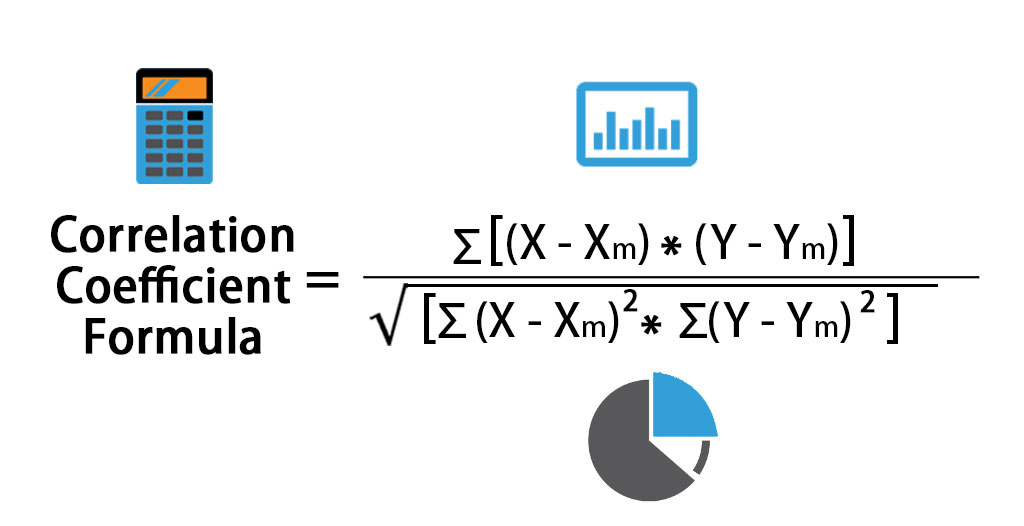
Correlation measures the relationship between two investments–the higher the correlation, the more likely they are to move in the same direction for a given set of economic or market events. Correlation, in the finance and investment industries, is a statistic that measures the degree to which two securities move in relation to each other. Correlations are used in advanced portfolio management, computed as the correlation coefficient which has a value that must fall between -1.0 and +1.0.

So if two securities are highly positively correlated, they will move in the same direction the vast majority of the time. Negatively correlated investments do the opposite–as one security rises, the other falls, and vice versa. No correlation means there is no relationship between the movement of two securities–the performance of one security has no bearing on the performance of the other.

CAUSATION: https://medicalexecutivepost.com/2024/06/05/correlation-is-not-causation/

Correlation is an important concept for portfolio diversification--combining assets with low or negative correlations can improve risk-adjusted performance over time by providing a diversity of payouts under the same financial conditions.

COMMENTS APPRECIATED

Thank You

***

***

META ANALYSIS: In Medicine

DEFINITION

By Staff Reporters

***

***

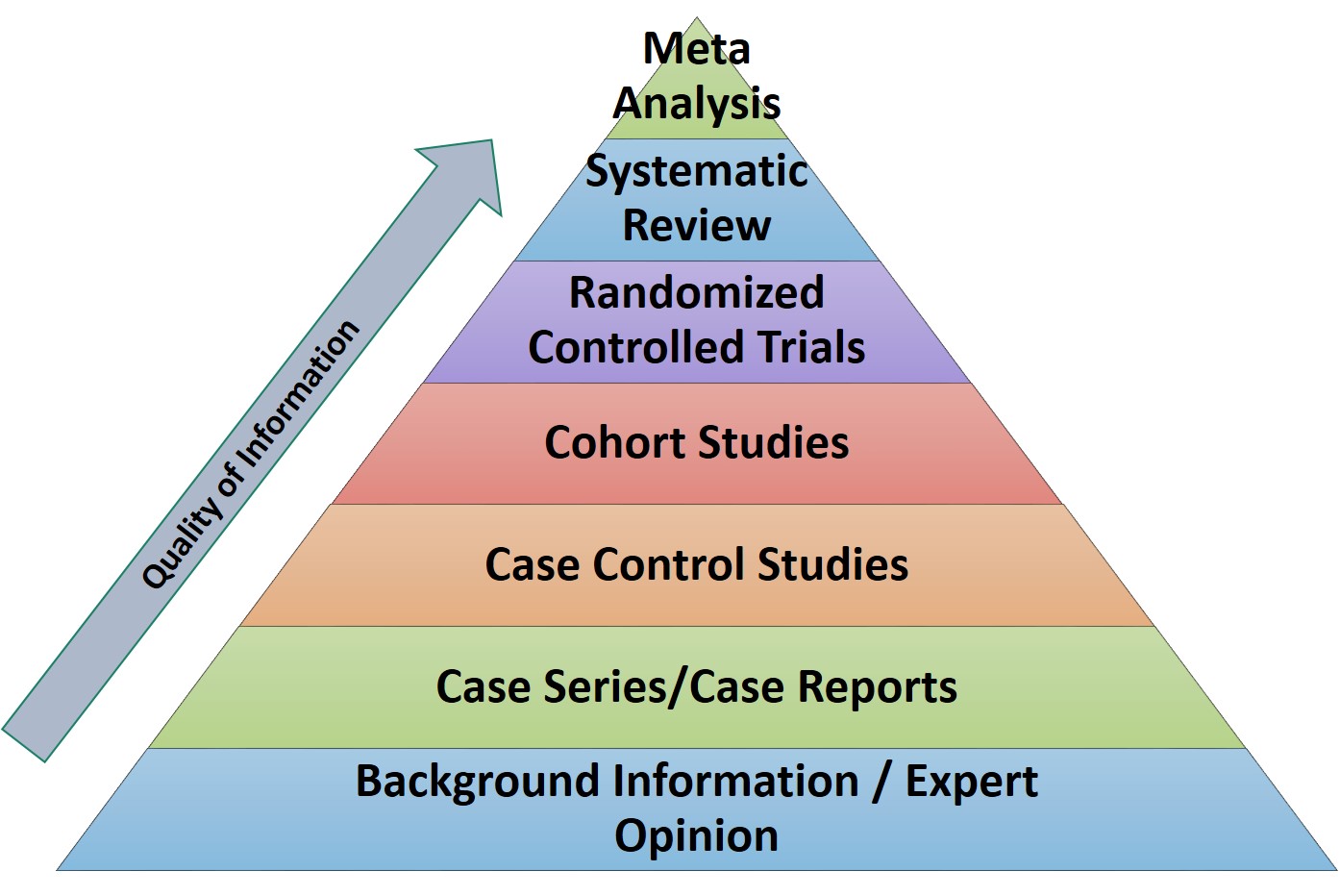
Meta-analysis is a quantitative, formal, epidemiological study design used to systematically assess previous research studies to derive conclusions about that body of research. Outcomes from a meta-analysis may include a more precise estimate of the effect of treatment or risk factor for disease, or other outcomes, than any individual study contributing to the pooled analysis. The examination of variability or heterogeneity in study results is also a critical outcome.

Statistics: https://medicalexecutivepost.com/2025/03/14/statistics-physicians-beware/

The benefits of meta-analysis include a consolidated and quantitative review of a large, and often complex, sometimes apparently conflicting, body of literature. The specification of the outcome and hypotheses that are tested is critical to the conduct of meta-analyses, as is a sensitive literature search. A failure to identify the majority of existing studies can lead to erroneous conclusions; however, there are methods of examining data to identify the potential for studies to be missing; for example, by the use of funnel plots.

Evidence Based Medicine: https://medicalexecutivepost.com/2016/05/18/an-fa-hayekian-defense-of-evidence-based-medicine/

Rigorously conducted meta-analyses are useful tools in evidence-based medicine. The need to integrate findings from many studies ensures that meta-analytic research is desirable and the large body of research now generated makes the conduct of this research feasible.

Evidence Based Dentistry: https://medicalexecutivepost.com/2009/03/23/reflections-on-evidence-based-dentistry/

Meta Analysis in Medical Research: https://pmc.ncbi.nlm.nih.gov/articles/PMC3049418/

EDUCATION: Books

COMMENTS APPRECIATED

Like and Subscribe

***

***

STATISTICS: Physicians Beware

Over Heard in the Doctor’s Lounge

By Staff Reporters

***

***

Statistics is a discipline that deals with data, facts, and figures from which meaningful information is inferred. It involves gathering, summarizing, and analyzing data to understand trends and patterns. Statistics can be divided into two main types: descriptive statistics, which summarize data, and inferential statistics, which make predictions or inferences about a population based on a sample

But, reading statistical income information can be full of pitfalls. One needs to look at the mean and median. Both give useful information. By comparing the two, one can ascertain if there are outliers that affect the results.

Example:

If a sample of 10 physicians has one earning $1,000,000 and the other nine earning $100,000, the average (mean) income is $190,000; but the median income is $100,000.

Just using this information alone, one can tell there are some outliers that could affect the results.

Dr. Edmond F. Mertzenich, DPM MBA [Rockford, IL]

***

***

Example:

Lies, damned lies, and statistics” is a phrase describing the persuasive power of statistics to bolster weak arguments, “one of the best, and best-known” critiques of applied statistics. It is also sometimes colloquially used to doubt statistics used to prove an opponent’s point.

-Benjamin Disraeli [1st Earl of Beaconsfield]

COMMENTS APPRECIATED

Refer, Read and Subscribe

EDUCATION: Books

***

***

PODCAST: About the Mathematical WOLFRAM ALPHA Computational Knowledge Engine

What it is – How it works

SMART CONTRACTS

[By Staff Reporters]

Wolfram Alpha is an online mathematical search engine launched in March 2009 and developed by Stephen Wolfram. It seeks to answer factual queries directly by computing the answer from structured data, rather than providing a list of web pages that might contain the answer.

In this way, WA differs from traditional semantic search engines, which index a large number of answers and then try to match the question to one. Wolfram Alpha has many parallels with Cyc, a project aimed since the 1980s at developing a common-sense inference engine. Wolfram Alpha is built on Wolfram’s earlier flagship product, Mathematica, which encompasses computer algebra, symbolic and numerical computation, visualization, and statistics capabilities.

With Mathematica running in the background, WA is suited to answer mathematical questions. The answer usually presents a human-readable solution.

Link: http://www.wolframalpha.com/

Technology

Wolfram Alpha is written in about 5 million lines of Mathematica (using webMathematica and gridMathematica) code and runs on 10,000 CPUs. As well as being a web site, Wolfram Alpha provides an API (for a fee) that delivers computational answers to other applications. One such application is the Bing search engine.

Capabilities

As an example, one can input the name of a website, and it will return relevant information about the site, including its location, site rank, number of visitors and more. The database currently includes hundreds of datasets, including current and historical weather, drug data, star charts, currency conversion, and many others. The datasets have been accumulated over approximately two years, and are expected to continue to grow. The range of questions that can be answered is also expected to grow with the expansion of the datasets.

Audio: http://www.wolframalpha.com/screencast/introducingwolframalpha.html

Utility and Usefulness

Wolfram Alpha is ideal for use by all readers and subscribers of the ME-P. It may be used by doctors, nurses, financial advisors and insurance agents, economists, mathematicians, editors, and publishers, teachers and students of all academic levels. The graphical nature of output is particularly helpful.

Assessment

Wolfram Alpha has received mixed reviews, to date. Advocates point to its potential, some even stating that how it determines output result is more important than current usefulness.

Note: Info courtesy wikipedia.org

PODCAST: https://www.bing.com/videos/search?q=stephen+wolfram&docid=608027542444182789&mid=7432EA16AEF1CDF4FCDD7432EA16AEF1CDF4FCDD&view=detail&FORM=VIRE

Conclusion

And so, your thoughts and comments on this ME-P are appreciated. Give Wolfram Alpha a click, listen to the audio-cast, and tell us what you think. Your thoughts and comments on this ME-P are appreciated. Feel free to review our top-left column, and top-right sidebar materials, links, URLs and related websites, too. Then, subscribe to the ME-P. It is fast, free and secure.

Speaker: If you need a moderator or speaker for an upcoming event, Dr. David E. Marcinko; MBA – Publisher-in-Chief of the Medical Executive-Post – is available for seminar or speaking engagements. Contact: MarcinkoAdvisors@msn.com

OUR OTHER PRINT BOOKS AND RELATED INFORMATION SOURCES:
HOSPITALS: http://www.crcpress.com/product/isbn/9781466558731
CLINICS: http://www.crcpress.com/product/isbn/9781439879900
BLOG: www.MedicalExecutivePost.com
FINANCE: Financial Planning for Physicians and Advisors
INSURANCE: Risk Management and Insurance Strategies for Physicians and Advisors

Product DetailsProduct DetailsProduct Details

PODCAST: Simpson’s Paradox in Medicine

 EXPLAINED

Courtesy: www.CertifiedMedicalPlanner.org

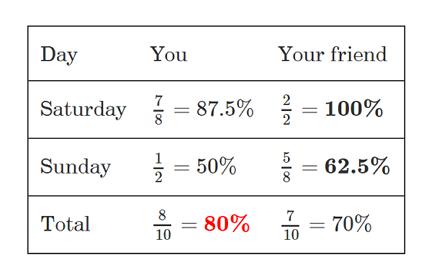
Simpson’s paradox (or Simpson’s reversal, Yule–Simpson effect, amalgamation paradox, or reversal paradox) is a phenomenon in probability and statistics, in which a trend appears in several different groups of data but disappears or reverses when these groups are combined.

This result is often encountered in social-science and medical-science statistics and is particularly problematic when frequency data is unduly given causal interpretations. The paradox can be resolved when causal relations are appropriately addressed in the statistical modeling.

Simpson’s paradox has been used as an exemplar to illustrate to the non-specialist or public audience the kind of misleading results misapplied statistics can generate. Martin Gardner wrote a popular account of Simpson’s paradox in his March 1976 Mathematical Games column in Scientific American.

Edward H. Simpson first described this phenomenon in a technical paper in 1951, but the statisticians Karl Pearson et al., in 1899, and Udny Yule, in 1903, had mentioned similar effects earlier. The name Simpson’s paradox was introduced by Colin R. Blyth in 1972.

PODCAST: https://tinyurl.com/5hycyjv6

Your thoughts are appreciated.

***

THANK YOU

What is OBSERVATIONAL BIAS?

EVIDENCE BASED MEDICINE

By Staff Reporters

***

Observer bias occurs in research when the beliefs or expectations of an observer (or investigator) can influence the data that’s collected in a study.

Cite: https://www.amazon.com/Dictionary-Health-Information-Technology-Security/dp/0826149952/ref=sr_1_5?ie=UTF8&s=books&qid=1254413315&sr=1-5

***

Supporting Teachers: Reducing Observational Bias - TeacherToolkit

This causes the results of a study to be unreliable and hard to reproduce in other research settings.

READ HERE IN MEDICINE: https://www.ebmconsult.com/articles/observational-bias-statistical-analysis

***

***

RISK MANAGEMENT: https://www.routledge.com/Risk-Management-Liability-Insurance-and-Asset-Protection-Strategies-for/Marcinko-Hetico/p/book/9781498725989

***

YOUR COMMENTS ARE APPRECIATED

BUSINESS MEDICINE: https://www.amazon.com/Business-Medical-Practice-Transformational-Doctors/dp/0826105750/ref=sr_1_9?ie=UTF8&qid=1448163039&sr=8-9&keywords=david+marcinko

Thank You

***

PODCAST: Statistics in Health Care Finance

By Eric Bricker MD

***

***

COMMENTS APPRECIATED

Thank You

Subscribe to the Medical Executive-Post

Specificity versus Sensitivity: https://medicalexecutivepost.com/2020/03/20/medical-laboratory-sensitivity-versus-specificity/

Correlation versus Causation: https://medicalexecutivepost.com/2021/02/05/correlation-is-not-causation/?preview_id=239347&preview_nonce=a2cdc51424&preview=true

False Positives and Negatives: https://medicalexecutivepost.com/2019/09/14/what-are-false-positive-and-false-negative-tests/

***

Risk Management, Liability Insurance, and Asset Protection Strategies for Doctors and Advisors: Best Practices from Leading Consultants and Certified Medical Planners™

ORDER: https://www.routledge.com/Risk-Management-Liability-Insurance-and-Asset-Protection-Strategies-for/Marcinko-Hetico/p/book/9781498725989

RELATED: https://www.amazon.com/Business-Medical-Practice-Transformational-Doctors/dp/0826105750/ref=sr_1_9?ie=UTF8&qid=1448163039&sr=8-9&keywords=david+marcinko

***