THANKSGIVING: Donor Advised Funds

DONATION: In “Name” Only?

Staff Reporters

***

Proponents of DAFs say that their structure encourages giving: The tax deduction encourages wealthy patrons to dedicate money for charity even before they’ve decided which cause to support. “Donors may have good reasons to postpone grants,” a Stanford Law School article says..

In one hypothetical, a tech founder who “sells a startup for millions of dollars” may want to donate her takings but is too busy to immediately decide how to direct the funds; a DAF is a good choice for this person, the law article notes.

However, while DAFs could in theory grow the charitable pie, in practice, they too often allow the donor the illusion of charity while letting them keep control of their funds, critics say. 

While a gift to a DAF is treated the same as an outright gift to the Red Cross or United Way, in practice, it “effectively allows the donor to retain ongoing control over the charitable disposition and investment of the donated assets,” tax scholars Roger Colinvaux and Ray Madoff wrote in 2019. What’s more, “donors are under no obligation, and have no incentive, ever to release their advisory privileges to make the funds available for charitable use.”

And ultra wealthy donors get a substantially larger tax break than a middle-class worker. As much as 74 cents of every dollar given to charity comes back to the donor in the form of tax breaks, according to calculations by Colinvaux and Madoff, with the highest-earning donors getting the biggest benefits A person in the top tax bracket would save 37% of their federal income tax for every dollar they contribute with a charitable donation; a similar amount of state income tax; and, depending on what they donate and when, they can also avoid capital gains tax and estate tax. (By contrast, a typical worker who makes about $60,000 and doesn’t own stocks would save 22% from their cash contribution, in addition to any state tax savings.) 

What’s more, because there’s no way to track donations from particular DAF accounts, they act as a form of “dark money,” allowing donors to give vast sums, essentially anonymously, to a range of potentially unsavory organizations, including nonprofits that advocate for specific political causes or organizations classified as hate groups, IPS says. 

“This allows DAFs to be used to hide transfers — similar to the way the ultra-wealthy use multiple shell companies to hide the movement of money among offshore accounts,” IPS writes. 

All of these strategies are completely legal, the IPS notes, as are other potentially questionable tactics used by family foundations—such as paying family members to serve as foundation trustees or act as executives of foundations, sometimes at salaries in the hundreds of thousands of dollars a year. However, the IPS argues, they erode public trust in charities and the tax system overall.

“The fact that billionaires opt out of paying taxes, have these closely held family foundations and get to play God about where the money goes, that’s private power — unaccountable private power,” Collins said. 

“At this point philanthropy is at risk of becoming taxpayer-subsidized private power.”

COMMENTS APPRECIATED

Refer a Colleague: MarcinkoAdvisors@msn.com

Your Referral Count: 0

***

***

BLOOD DRIVE: First Ever Blood Crisis?

THIS IS NOT A POST-HALLOWEEN TRICK!

By Staff Reporters

***

***

Most hospitals seem to have enough blood in their inventory to meet the immediate needs of patients. That’s no small feat given that just this past January, the American Red Cross declared the “first-ever blood crisis,” indicating the country was experiencing “its worst blood shortage in over a decade” amid the omicron surge.

While blood centers and hospitals aim to have at least a five-day supply of blood—enough to treat trauma patients, surgical cases, blood disorders, and other issues—facilities nearly reached blood insolvency during the crisis. The Red Cross said it saw donor turnout dip after the delta variant became dominant in summer 2021, which continued as omicron took over, until blood supplies reached crisis levels in January.

“We went down to many blood centers having only a one-day supply on their shelf,” said Claudia Cohn, chief medical officer at the Association for the Advancement of Blood and Biotherapies (AABB), a nonprofit that develops standards for the industry and accredits blood centers. “Which means one significant event—like a big car crash or a natural disaster or a human-made disaster—could have wiped out the blood supply for that particular metropolitan area.”

Closing up shop: Covid lockdowns shuttered traditional venues for blood drives, including businesses and schools. Even after workers returned to the office and students to classrooms, many organizations were hesitant to allow in-person events to occur in their facilities, including blood drives.

Paying the price: Another dagger undermining the stability of the nation’s blood supply has been a drop in the price paid for blood. Changes in medical practice, like the introduction of minimally invasive procedures, have decreased demand for blood, and hospitals have been able to pay less for it.

MORE: Keep reading here.

***

COMMENTS APPRECIATED

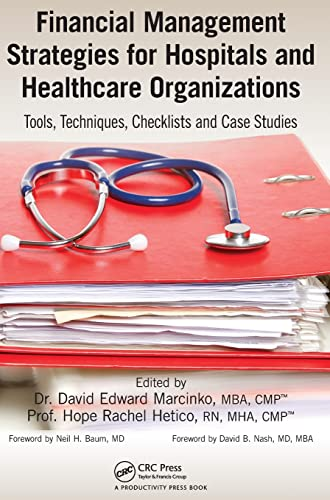
ORDER: https://www.amazon.com/Financial-Management-Strategies-Healthcare-Organizations/dp/1466558733/ref=sr_1_3?ie=UTF8&qid=1380743521&sr=8-3&keywords=david+marcinko

Thank You

***

RED CROSS Day History

RED CROSS DAY

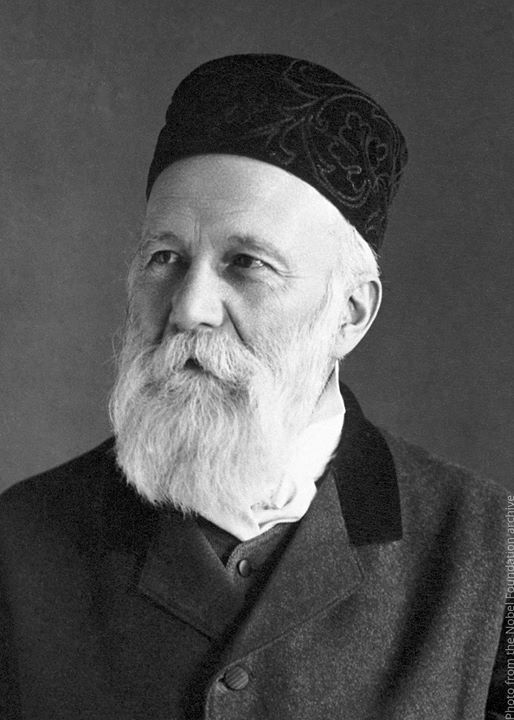
On this day in 1863, Henry Dunant founded the Red Cross, which would go onto receive the Nobel Peace Prize three times.

During the Battle of Solferino in the Franco-Austrian war, Swiss businessman Dunant was shocked to witness tens of thousands dead or wounded left on the field after just one day of fighting.

After this experience, on 17 February 1863, he decided to form the International Committee of the Red Cross in Geneva Switzerland with four other Swiss businessmen to take care of casualties and prisoners of war. In the following year, the first Geneva Convention was adopted, “for the Amelioration of the Condition of the Wounded and Sick in Armed Forces in the Field.”

The First World War was an enormous challenge for the organisation. At the outbreak of the war in 1914 medical staff from all over the world gathered to take care of the many wounded. One of them was the young Ernest Hemingway (awarded the Nobel Prize in Literature 1954), employed as an ambulance driver on the Austrian-Italian front. The experience later inspired him to write the novel ‘Farewell to Arms’.

***

Henry Dunant was awarded the first ever Nobel Peace Prize in 1901 for his humanitarian work.

The organization he founded received the prize three times.

Learn more: https://bit.ly/2LgtfQY

***

Helping Sandy’s Victims

Join Our Mailing List

How Readers of the ME-P Can Assist

By Ann Miller RN MHA

[Executive Director]

If you want to help those hurt by hurricane Sandy, you may donate to the American Red Cross via text message, as well as by phone or online.

AMERICAN RED CROSS

The Red Cross is providing shelter, clothes, supplies, food and blood, as needed, for the victims of Sandy. You can donate blood, but in terms of items, you’ll be doing more for those in need by donating money instead of physical goods.

Text message: Text the word REDCROSS to 90999 to donate $10 to American Red Cross Disaster Relief. As in the case with other donations via mobile, the donation will show up on your wireless bill, or be deducted from your balance if you have a prepaid phone. You need to be 18 or older, or have parental permission, to donate this way. (If you change your mind, text the word STOP to 90999).

Phone: 800-RED CROSS (1-800-733-2767); for Spanish speakers, 800-257-7575; for TDD,  800-220-4095.

To donate blood: Visit this Red Cross Web page.

Online: American Red Cross

Medical Endowment Fund Contingency Planning

Understanding Stock Market Volatility?

Source: www.HealthcareFinancials.com

Join Our Mailing List 

According to Wayne Firebaugh CPA, CFP®, CMP™ the many quantitative methods of stock, bond, derivatives, alternative assets and mutual fund investing would have suggested that the October 1987 crash was impossible; yet the flash-crash of 2008 still occurred.

The Improbable Happens

For example, Mark Rubenstein, a professor at University of California at Berkeley, noted that if annualized stock market volatility was assumed to be approximately 20% “(the historical average since 1928), the probability that the stock market could fall 29% in a single day is 10–160. So improbable is such an event that it would not be anticipated to occur even if the stock market were to last for 20 billion years. Indeed, such an event should not occur even if the stock market were to enjoy a rebirth for 20 billion years in each of 20 billion big bangs.”

Statistically Impossible

Although it was statistically impossible for it to happen, it did happen in 1987 and again 2008. The nature of crises is such that many will be unanticipated events with unexpected precipitators. As such, a medical endowment or physician’s portfolio contingency plan cannot address every conceivable event. What a contingency plan should address is the process for confronting these events. Most importantly, the plan should assign responsibility for actions and contain provisions to limit the ability of panic to impair long-term decisions.

Donor Trust is Core

Healthcare and all endowments have at their core donor trust. As such, it is important for an endowment’s contingency plan to include provisions for communicating promptly and forthrightly with the public. One only has to look at the Red Cross’ performance during the aftermath of the 9/11 tragedy to receive a lesson on an inappropriate approach. After donating more than $550 million to the Liberty Fund, donors learned that less than $175 million had been spent on direct aid for victims and that the Red Cross was allocating a large portion of the funds to other programs. After public outcry and congressional hearings, the Red Cross announced that all donations would be spent on direct victim relief.

Unfortunately, Dr. Bernadine Healy, the president of the Red Cross, resigned at least in part because of this controversy. These alleged violations of public confidence can have long-term impacts on an endowment’s donor base. Consider also the United Way whose national leader, William V. Aramony, was accused of fraud, embezzlement, and other charges in 1992. Even a decade later, inflation-adjusted contributions are lower than they were before the scandal even though charitable giving in general has doubled.

Assessment

The very nature of crises is such that pre-determined contingency plans generally allow more rapid and appropriate reaction. For an endowment, a well-considered contingency plan will include both an action (or standstill) plan and a public relations plan.

Note: Red Cross defends handling of September 11 donations on November 6, 2001: see: www.cnn.com

Conclusion

And so, your thoughts and comments on this ME-P are appreciated. Feel free to review our top-left column, and top-right sidebar materials, links, URLs and related websites, too. Then, subscribe to the ME-P. It is fast, free and secure.

Speaker: If you need a moderator or speaker for an upcoming event, Dr. David E. Marcinko; MBA – Publisher-in-Chief of the Medical Executive-Post – is available for seminar or speaking engagements. Contact: MarcinkoAdvisors@msn.com

Get our Widget: Get this widget!

Our Other Print Books and Related Information Sources:

Practice Management: http://www.springerpub.com/prod.aspx?prod_id=23759

Physician Financial Planning: http://www.jbpub.com/catalog/0763745790

Medical Risk Management: http://www.jbpub.com/catalog/9780763733421

Healthcare Organizations: www.HealthcareFinancials.com

Health Administration Terms: www.HealthDictionarySeries.com

Physician Advisors: www.CertifiedMedicalPlanner.com

Subscribe Now: Did you like this Medical Executive-Post, or find it helpful, interesting and informative? Want to get the latest ME-Ps delivered to your email box each morning? Just subscribe using the link below. You can unsubscribe at any time. Security is assured.

Link: http://feeds.feedburner.com/HealthcareFinancialsthePostForcxos

Sponsors Welcomed: And, credible sponsors and like-minded advertisers are always welcomed.

Link: https://healthcarefinancials.wordpress.com/2007/11/11/advertise

Meet Shahid N. Shah MS [Our Newest IT Thought-Leader]

Join Our Mailing List

And Textbook Contributor, Too!

By Ann Miller; RN, MHA

[Executive Director]

Shahid N. Shah is an internationally recognized healthcare thought-leader across the Internet. He is a consultant to various federal agencies on technology matters and winner of Federal Computer Week’s coveted “Fed 100” Award, in 2009.

Professional Career

Over a twenty year career, Shahid built multiple clinical solutions and helped design-deploy an electronic health record solution for the American Red Cross and two web-based eMRs used by hundreds of physicians with many large groupware and collaboration sites. As ex-CTO for a billion dollar division of CardinalHealth, he helped design advanced clinical interfaces for medical devices and hospitals. Mr. Shah is senior technology strategy advisor to NIH’s SBIR/STTR program helping small businesses commercialize healthcare applications.

He runs four successful blogs: At http://shahid.shah.org he writes about architecture issues; at http://www.healthcareguy.com he provides valuable insights on applying technology in health care; at http://www.federalarchitect.com he advises senior federal technologists; and at http://www.hitsphere.com he gives a glimpse of HIT as an aggregator.

Industry Awards

Mr. Shah is a Microsoft MVP (Solutions Architect) Award Winner for 2007, and a Microsoft MVP (Solutions Architect) Award Winner for 2006. He also served as a HIMSS Enterprise IT Committee Member. Mr. Shah received a BS in computer science from the Pennsylvania State University and MS in Technology Management from the University of Maryland.

Assessment

Shahid is also contributing the chapter on HIT in the third edition of our book “Business of Medical Practice” [Transformational Health 2.0 Profit Maximization for Savvy Doctors], now in-progress www.BusinessofMedicalPractice.com

Channel Surfing

Have you visited our other topic channels? Established to facilitate idea exchange and link our community together, the value of these topics is dependent upon your input. Please take a minute to visit. And, to prevent that annoying spam, we ask that you register.

Link: http://feeds.feedburner.com/HealthcareFinancialsthePostForcxos

Conclusion

Your thoughts and comments on this ME-P are appreciated. Feel free to review our top-left column, and top-right sidebar materials, links, URLs and related websites, too. Then, subscribe to the ME-P. It is fast, free and secure.

Speaker: If you need a moderator or speaker for an upcoming event, Dr. David E. Marcinko; MBA – Publisher-in-Chief of the Medical Executive-Post – is available for seminar or speaking engagements. Contact: MarcinkoAdvisors@msn.com

OUR OTHER PRINT BOOKS AND RELATED INFORMATION SOURCES:

Product Details