







 Support our online development, and advance our onground research initiatives in free market economics, as we seek to showcase the brightest Next-Gen minds.
THE ME-P DISCLAIMER: Posts, comments and opinions do not necessarily represent iMBA, Inc., but become our property after submission. Copyright © 2006 to-date. iMBA, Inc allows colleges, universities, medical and financial professionals and related clinics, hospitals and non-profit healthcare organizations to distribute our proprietary essays, photos, videos, audios and other documents; etc. However, please review copyright and usage information for each individual asset before submission to us, and/or placement on your publication or web site. Attestation references, citations and/or back-links are required. All other assets are property of the individual copyright holder.
Support our online development, and advance our onground research initiatives in free market economics, as we seek to showcase the brightest Next-Gen minds.
THE ME-P DISCLAIMER: Posts, comments and opinions do not necessarily represent iMBA, Inc., but become our property after submission. Copyright © 2006 to-date. iMBA, Inc allows colleges, universities, medical and financial professionals and related clinics, hospitals and non-profit healthcare organizations to distribute our proprietary essays, photos, videos, audios and other documents; etc. However, please review copyright and usage information for each individual asset before submission to us, and/or placement on your publication or web site. Attestation references, citations and/or back-links are required. All other assets are property of the individual copyright holder.


A BALANCED APPROACH NEEDED
By Dr. David Edward Marcinko; MBA MEd
***
***
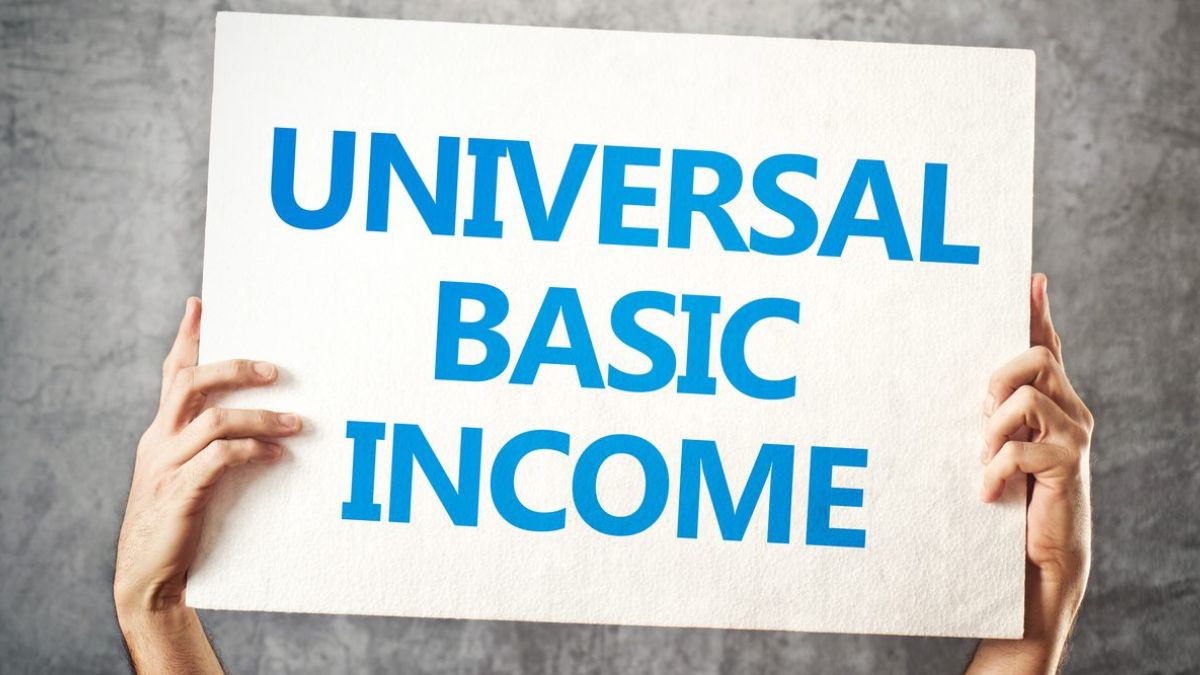
Universal Basic Income (UBI) is a transformative economic policy that proposes providing all citizens with a regular, unconditional sum of money, regardless of employment status or income level.
Universal Basic Income (UBI) is a concept rooted in the idea of economic security and social equity. It suggests that every individual should receive a fixed, periodic payment from the government without any conditions attached. This income is meant to cover basic living expenses, ensuring that no one falls below a minimum standard of living. The idea has gained traction in recent years due to rising concerns about automation, job displacement, and widening income inequality.
One of the primary arguments in favor of UBI is its potential to reduce poverty and provide a safety net for all citizens. By guaranteeing a baseline income, individuals can pursue education, caregiving, entrepreneurship, or part-time work without the fear of financial ruin. It also simplifies welfare systems by replacing complex and often stigmatizing benefit programs with a universal approach.
Critics, however, argue that UBI could discourage work and strain public finances. They question its feasibility and worry about inflationary effects or reduced motivation to contribute productively to society. Yet, pilot programs in countries like Finland and Canada have shown promising results, including improved mental health, increased job satisfaction, and greater financial stability.
In a rapidly evolving economy, UBI offers a bold reimagining of social welfare. It challenges traditional notions of work and income, aiming to empower individuals and foster a more inclusive society.
While implementation requires careful planning and robust funding strategies, the potential benefits of UBI make it a compelling policy worth serious consideration.
COMMENTS APPRECIATED
SPEAKING: Dr. Marcinko will be speaking and lecturing, signing and opining, teaching and preaching, storming and performing at many locations throughout the USA this year! His tour of witty and serious pontifications may be scheduled on a planned or ad-hoc basis; for public or private meetings and gatherings; formally, informally, or over lunch or dinner. All medical societies, financial advisory firms or Broker-Dealers are encouraged to submit an RFP for speaking engagements: CONTACT: Ann Miller RN MHA at MarcinkoAdvisors@outlook.com
Like, Refer and Subscribe
***
***
Share this:

Filed under: "Ask-an-Advisor", Ethics, Investing | Tagged: AI, economics, employment, politics, poverty, public finance, ubi, Universal Basic Income | Leave a comment »





 The Leading Business Education Network for Doctors, Financial Advisors and Health Industry Consultants