STOCK PERFORMANCE: Growth v. Value Investing for Physicians

BY DR. DAVID EDWARD MARCINKO: MBA MEd CMP™

***

SPONSOR: http://www.MarcinkoAssociates.com

***

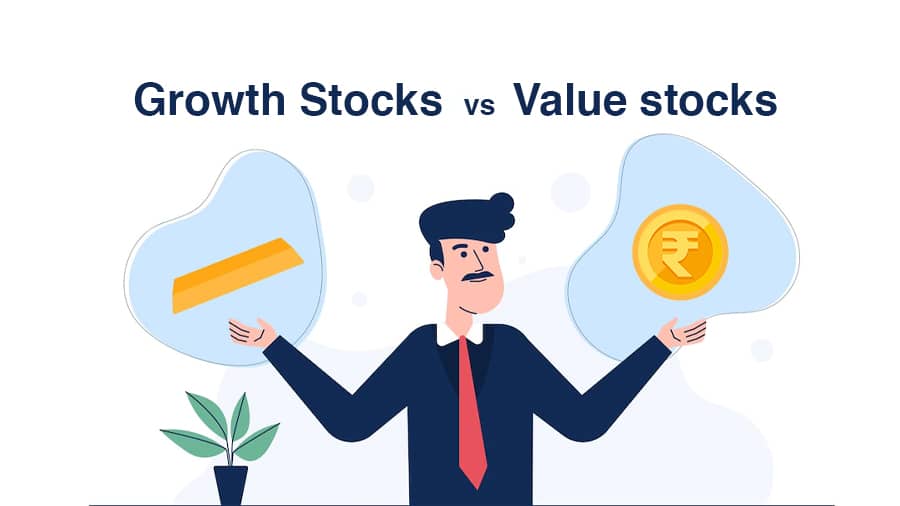
Performance of Growth & Value Stocks

Although many academics argue that value stocks outperform growth stocks, the returns for individuals investing through mutual funds demonstrate a near match. 

Introduction

A 2005 study Do Investors Capture the Value Premium? written by Todd Houge at The University of Iowa and Tim Loughran at The University of Notre Dame found that large company mutual funds in both the value and growth styles returned just over 11 percent for the period of 1975 to 2002. This paper contradicted many studies that demonstrated owning value stocks offers better long-term performance than growth stocks. 

The studies, led by Eugene Fama PhD and Kenneth French PhD, established the current consensus that the value style of investing does indeed offer a return premium. There are several theories as to why this has been the case, among the most persuasive being a series of behavioral arguments put forth by leading researchers. The studies suggest that the out performance of value stocks may result from investors’ tendency toward common behavioral traits, including the belief that the future will be similar to the past, overreaction to unexpected events, “herding” behavior which leads at times to overemphasis of a particular style or sector, overconfidence, and aversion to regret. All of these behaviors can cause price anomalies which create buying opportunities for value investors.

Another key ingredient argued for value out performance is lower business appraisals. Value stocks are plainly confined to a P/E range, whereas growth stocks have an upper limit that is infinite.  When growth stocks reach a high plateau in regard to P/E ratios, the ensuing returns are generally much lower than the category average over time. 

Moreover, growth stocks tend to lose more in bear markets.  In the last two major bear markets, growth stocks fared far worse than value.  From January 1973 until late 1974, large growth stocks lost 45 percent of their value, while large value stocks lost 26 percent. Similarly, from April 2000 to September 2002, large growth stocks lost 46 percent versus only 27 percent for large value stocks. These losses, academics insist, dramatically reduce the long-term investment returns of growth stocks.

***
***

However, the study by Houge and Loughran reasoned that although a premium may exist, investors have not been able to capture the excess return through mutual funds.  The study also maintained that any potential value premium is generated outside the securities held by most mutual funds.  Simply put, being growth or value had no material impact on a mutual fund’s performance.

Listed below in the table are the annualized returns and standard deviations for return data from January 1975 through December 2002.

Index                              Return                         SD      

S&P 500                            11.53%                     14.88%

Large Growth Funds         11.30%                     16.65%

Large Value Funds             11.41%                    15.39%

 Source:  Hough/Loughran Study

The Hough/Loughran study also found that the returns by style also varied over time.  From 1965-1983, a period widely known to favor the value style, large value funds averaged a 9.92 percent annual return, compared to 8.73 percent for large growth funds. This performance differential reverses over 1984-2001, as large growth funds generated a 14.1 percent average return compared to 12.9 percent for large value funds.  Thus, one style can outperform in any time period.

However, although the long-term returns are nearly identical, large differences between value and growth returns happen over time.   This is especially the case over the last ten years as growth and value have had extraordinary return differences – sometimes over 30 percentage points of under performance. 

This table indicates the return differential between the value and growth styles since 1992.

YEARLY RETURNS OF GROWTH/VALUE STOCKS

YearGrowthValue
19925.1%10.5%
19931.7%18.6%
19943.1%-0.6%
199538.1%37.1%
199624.0%22.0%
199736.5%30.6%
199842.2%14.7%
199928.2% 3.2%
2000-22.1%6.1%
2001-26.7%7.1%
2002-25.2%-20.5%
200328.2%27.7%
2004 6.3%16.5%
2005 3.6%6.1%
2006 10.8%20.6%
20078.8%1.5%
2008-38.43%-36.84%
200937.2%19.69%
201016.71%15.5%
20112.64%0.39%
201215.25%17.50%

Source:  Ibbottson.

Between the third quarter of 1994 and the second quarter of 2000, the S&P Growth Index produced annualized total returns of 30 percent, versus only about 18 percent for the S&P Value Index.  Since 2000, value has turned the tables and dramatically outperformed growth.  Growth has only outperformed value in two of the past eight years.  Since the two styles are successful at different times, combining them in one portfolio can create a buffer against dramatic swings, reducing volatility and the subsequent drag on returns. 

Assessment

In our analysis, the surest way to maximize the benefits of style investing is to combine growth and value in a single portfolio, and maintain the proportions evenly in a 50/50 split through regular rebalancing.  Research from Standard & Poor’s showed that since 1980, a 50/50 portfolio of value and growth stocks beats the market 75 percent of the time.

Conclusion

Due to the fact that both styles have near equal performance and either style can outperform for a significant time period, a medical professional might consider a blending of styles.  Rather than attempt to second-guess the market by switching in and out of styles as they roll with the cycle, it might be prudent to maintain an equal balance your investment between the two.

EDUCATION: Books

SPEAKING: Dr. Marcinko will be speaking and lecturing, signing and opining, teaching and preaching, storming and performing at many locations throughout the USA this year! His tour of witty and serious pontifications may be scheduled on a planned or ad-hoc basis; for public or private meetings and gatherings; formally, informally, or over lunch or dinner. All medical societies, financial advisory firms or Broker-Dealers are encouraged to submit a RFP for speaking engagements: MarcinkoAdvisors@outlook.com 

COMMENTS APPRECIATED

Refer, Subscribe and Like

***

***

CORPORATE EARNINGS: Per Share, Yield and EBDITA

DEFINITIONS

By Staff Reporters

SPONSOR: http://www.MarcinkoAssociates.com

***

***

Earnings per share (EPS): The portion of a company’s profits allocated to each outstanding share of its common stock. It is as an indicator of a company’s profitability.

Earnings yield: Earnings per share for the most recent 12 months, divided by the current market price per share; it is the inverse of the price to earnings (P/E) ratio.

EBITDA: Earnings before interest, taxes, depreciation and amortization (EBITDA) is an approximate measure of a company’s operating cash flow.

COMMENTS APPRECIATED

Subscribe and Refer

***

***

DAILY UPDATE: Walgreens to PE as CPI Upticks and Markets Blast Off this Morning

MEDICAL EXECUTIVE-POST TODAY’S NEWSLETTER BRIEFING

***

Essays, Opinions and Curated News in Health Economics, Investing, Business, Management and Financial Planning for Physician Entrepreneurs and their Savvy Advisors and Consultants

Serving Almost One Million Doctors, Financial Advisors and Medical Management Consultants Daily

A Partner of the Institute of Medical Business Advisors , Inc.

http://www.MedicalBusinessAdvisors.com

SPONSORED BY: Marcinko & Associates, Inc.

***

http://www.MarcinkoAssociates.com

Daily Update Provided By Staff Reporters Since 2007.
How May We Serve You?
© Copyright Institute of Medical Business Advisors, Inc. All rights reserved. 2024

REFER A COLLEAGUE: MarcinkoAdvisors@msn.com

SPONSORSHIPS AVAILABLE: https://medicalexecutivepost.com/sponsors/

ADVERTISE ON THE ME-P: https://tinyurl.com/ytb5955z

Your Referral Count -0-

According to reporting from the Wall Street Journal, the pharmacy chain Walgreen’s is discussing selling to private equity (PE) firm Sycamore Partners, a deal that could close early next year. This comes following a tumultuous year for the company, which announced it would close 1,200 stores in October and laid off more than 250 employees in November. The PE firm is allegedly considering selling off pieces of the business or working with partners, sources told the Journal. Following the news, Walgreens’s stock jumped 28%, its biggest single-day increase since 1980, according to Yahoo Finance.

CITE: https://www.r2library.com/Resource

Inflation rose 2.7% on an annual basis in November, according to the latest government report on the Consumer Price Index, or CPI. Last month’s CPI was forecast to come in at 2.7%, according to economists surveyed by financial data firm FactSet. The Consumer Price Index, a basket of goods and services typically bought by consumers, tracks the change in those prices over time. 

CITE: https://tinyurl.com/2h47urt5

US stocks opened higher on Wednesday as investors digested another month of sticky inflation data that met economists’ expectations and likely pointed to a Federal Reserve interest rate cut next week. The Dow Jones Industrial Average (^DJI) increased about 0.2%, while the S&P 500 (^GSPC) jumped nearly 0.5%. The tech-heavy NASDAQ Composite (^IXIC) also added to across-the-board gains, rising roughly 0.8%.

CITE: https://tinyurl.com/tj8smmes

Visualize: How private equity tangled banks in a web of debt, from the Financial Times.

COMMENTS APPRECIATED

PLEASE SUBSCRIBE: MarcinkoAdvisors@msn.com

Thank You

***

***

***

***

EDUCATIONAL TEXTBOOKS: https://tinyurl.com/4zdxuuwf

***

DAILY UPDATE: Healthcare Private Equity Prominent as Stocks Go Down

MEDICAL EXECUTIVE-POST TODAY’S NEWSLETTER BRIEFING

***

Essays, Opinions and Curated News in Health Economics, Investing, Business, Management and Financial Planning for Physician Entrepreneurs and their Savvy Advisors and Consultants

Serving Almost One Million Doctors, Financial Advisors and Medical Management Consultants Daily

A Partner of the Institute of Medical Business Advisors , Inc.

http://www.MedicalBusinessAdvisors.com

SPONSORED BY: Marcinko & Associates, Inc.

***

http://www.MarcinkoAssociates.com

Daily Update Provided By Staff Reporters Since 2007.
How May We Serve You?
© Copyright Institute of Medical Business Advisors, Inc. All rights reserved. 2024

REFER A COLLEAGUE: MarcinkoAdvisors@msn.com

SPONSORSHIPS AVAILABLE: https://medicalexecutivepost.com/sponsors/

ADVERTISE ON THE ME-P: https://tinyurl.com/ytb5955z

Your Referral Count -0-

Private equity (PE) dollars have become prominent in the US healthcare industry in recent decades, with PE firms now owning roughly 8% of all private hospitals in the country, according to nonprofit Private Equity Stakeholder Project. But studies have illustrated the financial model’s potential adverse effects, such one published in JAMA in December 2023 that found PE-owned hospitals are 25.4% more likely to report patient complications. Others have found that PE-owned healthcare companies represented more than one-fifth of healthcare company bankruptcies in 2023 and that PE-owned hospitals see their assets drop an average of 24% following an acquisition.

CITE: https://www.r2library.com/Resource

STOCKS UP

Tapestry, parent company of luxury brands like Coach and Kate Spade, and Capri, parent company of luxury brands like Versace and Jimmy Choo, have announced they will mutually terminate their planned merger. Tapestry popped 12.80%, while Capri rose 4.43%.

  • Speaking of luxury brands, Burberry soared 18.04% after its CEO announced a turnaround plan designed to halt the company’s recent decline.
  • Semiconductor maker ASML plummeted last month on a profit warning, but rose 2.90% today on reassurances that it’s still on track to meet its 2030 revenue forecasts.

STOCKS DOWN

  • Super Micro Computer fell yet another 11.41% as it nears the November 16 deadline to report fiscal year earnings or be delisted from the Nasdaq.
  • Trump Media & Technology Group dropped 6.71% as investors digested news that company insiders are shedding shares, as well as in reaction to a number of President-elect Trump’s cabinet appointments.
  • Hims & Hers Health tumbled 24.46% on the news that Amazon is getting into the telehealth game, offering Prime members fixed prices on treatments for hair loss and erectile dysfunction.
  • Ibotta is a cashback rewards company, but its shareholders may want their cash back. The company beat on top and bottom line estimates last quarter, but the win wasn’t good enough, and shares sank 12.55%.

CITE: https://tinyurl.com/2h47urt5

Here’s where the major benchmarks ended:

  • The S&P 500® index (SPX) fell 36.21 points (–0.60%) to 5,949.17; the Dow Jones Industrial Average® ($DJI) lost 207.33 points (–0.47%) to 43,750.86; and the NASDAQ Composite® ($COMP) dropped 123.07 points (–0.64%) to 19,107.65. 
  • The 10-year Treasury note yield fell three basis points to 4.42%.
  • The CBOE Volatility Index® (VIX) edged up to 14.17.

CITE: https://tinyurl.com/tj8smmes

Visualize: How private equity tangled banks in a web of debt, from the Financial Times.

COMMENTS APPRECIATED

PLEASE SUBSCRIBE: MarcinkoAdvisors@msn.com

Thank You

***

***

***

***

EDUCATIONAL TEXTBOOKS: https://tinyurl.com/4zdxuuwf

***

California Passes Bill Regulating Private Equity Deals

By Health Capital Consultants, LLC

***

***

On September 28th, 2024, California Governor Gavin Newsom vetoed Assembly Bill (AB) 3129, which sought to regulate private equity (PE) transactions involving healthcare organizations by requiring certain transactions to be reviewed by, and to receive approval from, the California Attorney General (AG).

In his veto message, Governor Newsom stated that the state’s Office of Health Care Affordability (OHCA), established in 2022, has the power to review and evaluate healthcare transactions (including the ones at issue in AB 3129). While OHCA does not have the power to block proposed transactions, as the AG would have had under AB 3129, it can refer transactions to the AG for further examination. Put simply, the governor’s veto seems to stem from concern that taking power away from the newly-created OHCA could muddy the waters in healthcare transaction regulation.

While there is a possibility that the California legislature could override Governor Newsom’s veto, it appears unlikely as of the publication of this Alert. However, the overall popularity of this bill in the legislature (as evidenced by the fairly wide margins with which it passed) indicates that PE groups looking to transact in the healthcare space – both in California and across the U.S. – should be on high alert, as regulators are increasingly turning their focus on the role of PE in healthcare.

CITE: https://www.r2library.com/Resource/Title/0826102549

For more information on AB 3129, as well as the status of state and federal regulation of PE, see the September 2024 Health Capital Topics article entitled, California Passes Bill Regulating Private Equity Deals.”

COMMENTS APPRECIATED

Thank You

***

***

J CURVE: The Economics Paradox

IN PRIVATE EQUITY AND MEDICINE

By Staff Reporters

***

***

PRIVATE EQUITY

In private equity, the J curve is used to illustrate the historical tendency of private equity funds to deliver negative returns in early years and investment gains in the outlying years as the portfolios of companies mature.

And, according to Wikipedia, in the early years of the fund, a number of factors contribute to negative returns including management fees, investment costs and under-performing investments that are identified early and written down. Over time the fund will begin to experience unrealized gains followed eventually by events in which gains are realized (e.g., IPOs, mergers and acquisitions, leveraged recapitalizations).

Historically, the J curve effect has been more pronounced in the US, where private equity firms tend to carry their investments at the lower of market value or investment cost and have been more aggressive in writing down investments than in writing up investments. As a result, the carrying value of any investment that is under performing will be written down but the carrying value of investments that are performing well tend to be recognized only when there is some kind of event that forces the PE to mark up the investment.

The steeper the positive part of the J curve, the quicker cash is returned to investors. A private equity firm that can make quick returns to investors provides investors with the opportunity to reinvest that cash elsewhere. Of course, with a tightening of credit markets, private equity firms have found it harder to sell businesses they previously invested in. Proceeds to investors have reduced. J curves have flattened dramatically. This leaves investors with less cash flow to invest elsewhere, such as in other private equity firms. The implications for private equity could well be severe. Being unable to sell businesses to generate proceeds and fees means some in the industry have predicted consolidation among private equity firms.

MEDICINE

In medicine, the “J curve” refers to a graph in which the x-axis measures either of two treatable symptoms (blood pressure or blood cholesterol level) while the y-axis measures the chance that a patient will develop cardiovascular disease (CVD). It is well known that high blood pressure or high cholesterol levels increase a patient’s risk.

Paradoxically, what is less well known is that plots of large populations against CVD mortality often take the shape of a J curve which indicates that patients with very low blood pressure and/or low cholesterol levels are also at increased risk.

CITE: https://www.r2library.com/Resource

COMMENTS APPRECIATED

Subscribe Today

***

***

California Passes Bill Regulating Private Equity Deals

By Health Capital Consultants, LLC

***

On August 31, 2024, the California legislature passed a bill that may curb private equity (PE) healthcare transactions in the state. The legislation is now on Governor Gavin Newsom’s desk for signature, who must sign or veto the bill by September 30, 2024. If signed into law, California will have the strictest regulation of PE deals of any state in the country.

CITE: https://www.r2library.com/Resource

This Health Capital Topics article discusses the new law and reviews the status of both state and federal regulation of PE. (Read more...)

COMMENTS APPRECIATED

Thank You

***

***

DAILY UPDATE: Apple, Uber, Temu, Papa John’s, Icahn Enterprises & NFL Private Equity as Stock Markets Nudge Upward

MEDICAL EXECUTIVE-POST TODAY’S NEWSLETTER BRIEFING

***

Essays, Opinions and Curated News in Health Economics, Investing, Business, Management and Financial Planning for Physician Entrepreneurs and their Savvy Advisors and Consultants

Serving Almost One Million Doctors, Financial Advisors and Medical Management Consultants Daily

A Partner of the Institute of Medical Business Advisors , Inc.

http://www.MedicalBusinessAdvisors.com

SPONSORED BY: Marcinko & Associates, Inc.

***

http://www.MarcinkoAssociates.com

Daily Update Provided By Staff Reporters Since 2007.
How May We Serve You?
© Copyright Institute of Medical Business Advisors, Inc. All rights reserved. 2024

REFER A COLLEAGUE: MarcinkoAdvisors@msn.com

SPONSORSHIPS AVAILABLE: https://medicalexecutivepost.com/sponsors/

ADVERTISE ON THE ME-P: https://tinyurl.com/ytb5955z

Your Referral Count -0-

The National Football League is expected to vote to allow private equity ownership of franchises, marking a significant change to its ultra-exclusive ownership club. The vote, all but guaranteed to pass, is a historic softening by the NFL, which will be the last of the major sports leagues in North America to permit private equity ownership. The NBA, MLB and NHL currently allow PE to own up to 30% of a team, while the NFL’s expected cap is 10%.

And, the stock of PDD Holdings, parent company of the fast-growing Temu shopping app, sank more than 30% on Monday, losing more than $50 billion in market value, after the e-commerce giant posted disappointing revenue results and executives warned of rapid competition and non-business challenges that may dampen growth and profits going forward.

CITE: https://www.r2library.com/Resource

What’s up

  • Costco (+1.84%) hit an all-time high and topped $900/share for the first time. Don’t be surprised if it becomes the latest retailer to announce a stock split after Chipotle, Walmart, and Williams-Sonoma, according to Barron’s.
  • Hain Celestial Group, the better-for-you food company that makes those veggie straw snacks in your office pantry, popped 18.59% after beating profit expectations for the latest quarter.

What’s down

  • Hims & Hers, the direct-to-consumer provider of generics, fell 7.51% after Eli Lilly announced a cheaper version of its weight loss drug Zepbound.
  • Paramount Global dropped 7.15% after billionaire Edgar Bronfman Jr. decided he wouldn’t pursue an acquisition of the legacy media company. That leaves Skydance Media poised for an $8 billion takeover.
  • Cannabis stocks including Curaleaf Holdings (-13.52%), Canopy Growth (-9.56%), and Green Thumb Industries (-10.76%) went up in smoke when the DEA said it would hold its hearing over changing the classification of cannabis on Dec. 2—after the election.
  • Cava got bowled over 6.10% after its CEO and other insiders revealed stock sales.

CITE: https://tinyurl.com/2h47urt5

Here’s where the major benchmarks ended:

  • The S&P 500® index (SPX) rose 8.96 points (0.16%) to 5,625.80; the Dow Jones Industrial Average® ($DJI) rose 9.98 (0.02%) to 41,250.50; the NASDAQ Composite®($COMP) added 29.05 points (0.16%) to 17,754.82.
  • The 10-year Treasury note yield (TNX) increased nearly two basis points to 3.83%.
  • The CBOE Volatility Index® (VIX) slipped to 15.42.

About half of S&P 500 sectors finished in the green today. Financials have been on a roll lately amid rate cut hopes and continued their solid performance Tuesday, while energy did a 180 Tuesday as crude oil lost ground.

Treasury yields remained in their recent trading range, with the gap narrowing further between the 2-year and 10-year Treasury note yields to roughly seven basis points. The inversion, in which two-year yields hold a premium to 10-year yields, reached 100 basis points a year ago as the Fed rapidly raised rates. The 10-year yield got some traction today from a solid Consumer Confidence report.

CITE: https://tinyurl.com/tj8smmes

Apple has announced “it’s glowtime” for a Sept. 9th event during which the company is expected to debut the iPhone 16.

And, Uber was fined 290 million euros ($347 million) by Dutch regulators for transferring driver data from the EU to the US. It’s one of the biggest fines ever issued under the EU’s data privacy law.

Icahn Enterprises L.P.’s stock tumbled 11.5% Monday to close at a roughly 21-year low, after billionaire Carl Icahn’s publicly traded investing arm filed to sell up to $400 million of its depositary units in an “at-the-market offering.” The news comes after Icahn and his company agreed last week to pay $2 million in civil penalties for failing to make required disclosures relating to personal margin loans worth billions of dollars. The stock closed at $14.07, its lowest level since it closed at $14.04 on Nov. 25, 2003.

Papa John’s (NASDAQ:PZZA) rose 4% and then surged amid some takeover speculation concerning Restaurants Brands (QSR), the parent of Burger King and Tim Hortons. 

Visualize: How private equity tangled banks in a web of debt, from the Financial Times.

COMMENTS APPRECIATED

PLEASE SUBSCRIBE: MarcinkoAdvisors@msn.com

Thank You

***

***

***

***

EDUCATIONAL TEXTBOOKS: https://tinyurl.com/4zdxuuwf

***

DAILY UPDATE: Hospital Private Equity and AI with Upbeat DJIA

MEDICAL EXECUTIVE-POST TODAY’S NEWSLETTER BRIEFING

***

Essays, Opinions and Curated News in Health Economics, Investing, Business, Management and Financial Planning for Physician Entrepreneurs and their Savvy Advisors and Consultants

Serving Almost One Million Doctors, Financial Advisors and Medical Management Consultants Daily

A Partner of the Institute of Medical Business Advisors , Inc.

http://www.MedicalBusinessAdvisors.com

SPONSORED BY: Marcinko & Associates, Inc.

***

http://www.MarcinkoAssociates.com

Daily Update Provided By Staff Reporters Since 2007.
How May We Serve You?
© Copyright Institute of Medical Business Advisors, Inc. All rights reserved. 2024

REFER A COLLEAGUE: MarcinkoAdvisors@msn.com

SPONSORSHIPS AVAILABLE: https://medicalexecutivepost.com/sponsors/

ADVERTISE ON THE ME-P: https://tinyurl.com/ytb5955z

Your Referral Count -0-

Private equity (PE) firms might make it rain cash for investors, but hospitals under their ownership are facing an asset drought, according to a research letter published in JAMA on July 30th. While fans of PE argue it can bring much-needed financial resources to struggling hospitals, the data disagrees. “Private equity acquisitions appear to have depleted, rather than augmented, hospital assets,” the authors, a group of physicians from medical institutions across the US, wrote.

CITE: https://www.r2library.com/Resource

What’s up

What’s down

  • Peloton Interactive stumbled 4.64% on the news of a deal allowing Google’s Fitbit users to have access to Peloton classes.
  • Brinker International sank 10.51% after the parent company of Chili’s announced lower-than-expected earnings last quarter.
  • Ouster plummeted 27.44% after the lidar manufacturer reported disappointing revenue last quarter and forecast for worse to come next quarter.
  • Starbucks fell 2.09% as investors took some profits after yesterday’s gigantic pop.

CITE: https://tinyurl.com/2h47urt5

Here’s where the major benchmarks ended:

  • The S&P 500 rose 20.78 points (0.38%) to 5,455.21; the Dow Jones Industrial Average® ($DJI) added 242.75 points (0.61%) to 40,008.39; the NASDAQ Composite®($COMP) squeaked out a slight gain of 4.99points (0.03%) to 17,192.60.
  • The 10-year Treasury note yield (TNX) dropped three basis points to 3.82%, the lowest close in more than a week.
  • The Cboe Volatility Index® (VIX) fell to 16.22, the lowest since July 23.

CITE: https://tinyurl.com/tj8smmes

Stat: 21%. That’s the percentage of US physicians who are still paying off student loan debt. (Becker’s Hospital Review)

Quote: “The federal government is particularly ineffective and slow these days.”—Rep. Brianna Titone, a Colorado Democrat, on why states need to “step up” and make their own laws regulating the use of artificial intelligence in healthcare (Axios)

Read: A US Olympic athlete is taking advantage of free healthcare to catch up on preventive care while in Paris. (the Washington Post)

Visualize: How private equity tangled banks in a web of debt, from the Financial Times.

COMMENTS APPRECIATED

PLEASE SUBSCRIBE: MarcinkoAdvisors@msn.com

Thank You

***

***

***

***

EDUCATIONAL TEXTBOOKS: https://tinyurl.com/4zdxuuwf

***

DAILY UPDATE: Costco Gold, CPI, US Stamps and the Mexican Peso as Technology Stocks Rise and Private Equity Takes on Medicine

MEDICAL EXECUTIVE-POST TODAY’S NEWSLETTER BRIEFING

***

Essays, Opinions and Curated News in Health Economics, Investing, Business, Management and Financial Planning for Physician Entrepreneurs and their Savvy Advisors and Consultants

Serving Almost One Million Doctors, Financial Advisors and Medical Management Consultants Daily

A Partner of the Institute of Medical Business Advisors , Inc.

http://www.MedicalBusinessAdvisors.com

SPONSORED BY: Marcinko & Associates, Inc.

***

http://www.MarcinkoAssociates.com

Daily Update Provided By Staff Reporters Since 2007.
How May We Serve You?
© Copyright Institute of Medical Business Advisors, Inc. All rights reserved. 20224

REFER A COLLEAGUE: MarcinkoAdvisors@msn.com

SPONSORSHIPS AVAILABLE: https://medicalexecutivepost.com/sponsors/

ADVERTISE ON THE ME-P: https://tinyurl.com/ytb5955z

***

Costco started selling gold bars to its members last August, and Wells Fargo analysts believe that the product is now bringing in between $100 million and $200 million a month. The retailer doesn’t reveal the price of the 1-ounce bullion to nonmembers online, but it’s estimated to be ~2% above the spot price gold trades at, per CNBC—and that price has soared since Costco got into the gold game. The price of gold has gone up 13% this year and reached record highs as investors pile in amid inflation worries.

The big numbers from the Consumer Price Index data released on Thursday

  • In March, inflation rose 3.5% from the year before, up from 3.2% in February.
  • The “core” CPI reading, which excludes volatile food and fuel prices, came in even higher, rising 3.8% on an annual basis. That’s the same as in February, but this time it’s serious.
  • Half of the increases came from rising gas prices and housing.

After seeing inflation fall by 3% over the course of 2023, Fed officials believed that higher inflation readings in January and February 2024 represented a hiccup in an otherwise downward trajectory. However, with the March reading also coming in hotter than anticipated, analysts say this is more than a fluke. That means hopes for a June interest rate cut are dashed. Even the US Postal Service plans to raise the price of “forever” stamps to $0.73 in July. Get yours now. And the Mexican peso is on an absolute tear, leaving the US dollar behind.

CITE: https://www.r2library.com/Resource/Title/082610254

Here’s where the major stock benchmarks ended:

  • The S&P 500® index (SPX) advanced 38.42 points (0.7%) to 5,199.06; the Dow Jones Industrial Average® ($DJI) lost 2.43 points to 38,459.08; the NASDAQ Composite gained 271.84 points (1.7%) to 16,442.20.
  • The 10-year Treasury note yield (TNX) rose nearly 2 basis points to 4.578%.
  • The CBOE Volatility Index® (VIX) fell 0.89 to 14.91.

Chip maker strength lifted the Philadelphia Semiconductor Index (SOX) more than 2% and extended the benchmark’s year-to-date gain to more than 17%. Communications services and transportation shares were also among the strongest sectors. Financial shares were mixed ahead of expected quarterly results Friday from some major banks including JPMorgan Chase (JPM), Citigroup (C), and Wells Fargo (WFC). 

CITE: https://tinyurl.com/2h47urt5

  • Big businesses such as hospital systems, insurers, and PE firms are gobbling up medical clinics.
  • Some doctors and industry experts fear corporate owners could prioritize profits ahead of patients.
  • The federal government is dialing up scrutiny of PE firms and other corporate owners in healthcare.

CITE: https://tinyurl.com/tj8smmes

QUESTION: Are Independent doctors almost a thing of the past?

COMMENTS APPRECIATED

PLEASE SUBSCRIBE: MarcinkoAdvisors@msns.com

Thank You

***

***

***

***

EDUCATIONAL TEXTBOOKS: https://tinyurl.com/4zdxuuwf

***

HEALTHCARE PRIVATE EQUITY: Federal Regulators Launch Inquiry

By Health Capital Consultants, LLC

On March 5th, 2024, the Department of Justice’s (DOJ’s) Antitrust Division, the Federal Trade Commission (FTC), and the Department of Health and Human Services (HHS), announced the launch of a multi-agency inquiry – in the form of a request for information (RFI) and public workshop – focusing on the increasing control of private equity (PE) and other corporations over the healthcare industry.

This Health Capital Topics article discusses the agencies recent actions and how it appears to be in line with the government’s recent moves to crack down on anti-competitive actions in healthcare. (Read more…)

COMMENTS APPRECIATED

Thank You

***

***

HOSPITALS: Private Equity Ownership Quality?

PATIENT COMPLICATION RATES

By Staff Reporters

***

***

Hospitals under private equity (PE) ownership reported higher rates of patient complications when compared to other facilities, according to a recent JAMA study—raising questions about how the business model might affect staffing and subsequent quality of care.

The surveyed Medicare beneficiaries saw a 25.4% increase in “hospital-acquired conditions,” which the Centers for Medicare and Medicaid Services defines as falls, infections, and other adverse events, when they received treatment at a PE-acquired hospital compared to those run under other forms of ownership.

On the whole, the study found that Medicare enrollees at hospitals under PE control were not only younger and less likely to additionally qualify for Medicaid but also more likely to experience complications.

COMMENTS APPRECIATED

Thank You

***

***

***

PRIVATE EQUITY: Hospitals Experience Adverse Patient Outcomes

By Health Capital Consultants, LLC

***

***

On December 26, 2023, a study published in the Journal of the American Medical Association (JAMA) found concerning changes in patient outcomes and hospital adverse events associated with private equity (PE) acquisition and ownership of hospitals. Over the past ten years, PE firms have set their sights on hospitals as a lucrative investment opportunity, spending nearly $1 trillion to finance healthcare acquisitions, and purchasing more than 200 hospitals from non-PE owners.

CITE: https://www.r2library.com/Resource

This Health Capital Topics article reviews the JAMA study and the impact of PE ownership on the healthcare industry. (Read more…)

COMMENTS APPRECIATED

Thank You

***

***

SUBWAY: Private Equity

By Staff Reporters

***

***

A private equity firm just ate Subway

More precisely, the families that founded the sandwich chain agreed to sell it to PE firm Roark Capital after seeking a buyer. The terms of the deal weren’t made public, but the Wall Street Journal previously reported that Roark offered ~$9.6 billion.

Subway, which has been losing market share to other sandwich chains, will be in good foodie company at Roark as it also owns Dunkin’, Jimmy John’s, Baskin-Robbins, Auntie Anne’s, Carvel, Cinnabon and other eateries.

COMMENTS APPRECIATED

Thank You

***

***