

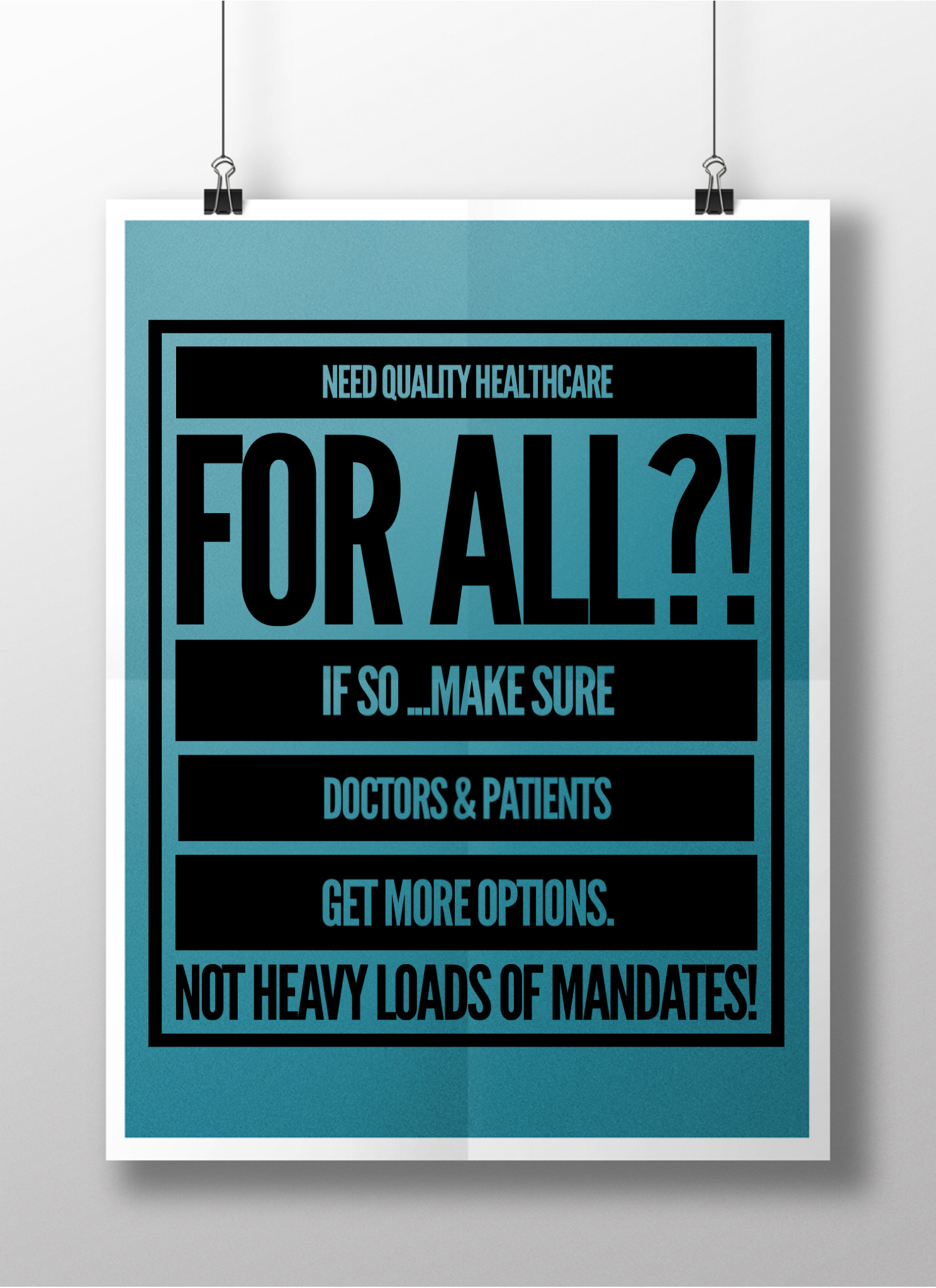
FOR ALL … ALL!
[By staff reporters]
***
***


***
Share this:

Filed under: iMBA, Inc. | Tagged: medical quality, medical quality improvement | Leave a comment »
ME-P SYNDICATIONS:
WSJ.com,
CNN.com,
Forbes.com,
WashingtonPost.com,
BusinessWeek.com,
USNews.com, Reuters.com,
TimeWarnerCable.com,
e-How.com,
News Alloy.com,
and Congress.org


BOARD CERTIFICATION EXAM STUDY GUIDES
Lower Extremity Trauma
[Click on Image to Enlarge]
The “Medical Executive-Post” is about connecting doctors, health care executives and modern consulting advisors. It’s about free-enterprise, business, practice, policy, personal financial planning and wealth building capitalism. We have an attitude that’s independent, outspoken, intelligent and so Next-Gen; often edgy, usually controversial. And, our consultants “got fly”, just like U. Read it! Write it! Post it! “Medical Executive-Post”. Call or email us for your FREE advertising and sales consultation TODAY [678.779.8597] Email: MarcinkoAdvisors@outlook.com



 ePodiatryConsentForms.com
 “Providing Management, Financial and Business Solutions for Modernity”
 Support our online development, and advance our onground research initiatives in free market economics, as we seek to showcase the brightest Next-Gen minds.
THE ME-P DISCLAIMER: Posts, comments and opinions do not necessarily represent iMBA, Inc., but become our property after submission. Copyright © 2006 to-date. iMBA, Inc allows colleges, universities, medical and financial professionals and related clinics, hospitals and non-profit healthcare organizations to distribute our proprietary essays, photos, videos, audios and other documents; etc. However, please review copyright and usage information for each individual asset before submission to us, and/or placement on your publication or web site. Attestation references, citations and/or back-links are required. All other assets are property of the individual copyright holder.
Support our online development, and advance our onground research initiatives in free market economics, as we seek to showcase the brightest Next-Gen minds.
THE ME-P DISCLAIMER: Posts, comments and opinions do not necessarily represent iMBA, Inc., but become our property after submission. Copyright © 2006 to-date. iMBA, Inc allows colleges, universities, medical and financial professionals and related clinics, hospitals and non-profit healthcare organizations to distribute our proprietary essays, photos, videos, audios and other documents; etc. However, please review copyright and usage information for each individual asset before submission to us, and/or placement on your publication or web site. Attestation references, citations and/or back-links are required. All other assets are property of the individual copyright holder.


FOR ALL … ALL!
[By staff reporters]
***
***
***
Filed under: iMBA, Inc. | Tagged: medical quality, medical quality improvement | Leave a comment »
Leadership Concepts for Physicians and Healthcare CXOs
By Dr. David Edward Marcinko MBA
[Editor-in-Chief]
The toughest part of implementing any medical quality improvement program is changing the healthcare organization’s culture. The physician-executive or chief executive officer must be committed to change, not just give lip service to it. The core to TQM or, for that matter, any of the several new popular quality programs, like six-sigma, is the buy-in of senior management to change the culture of the practice organization to support the individual’s pursuit of quality.
Re-Frame the Situation
The cultural change requires a complete reorientation of job descriptions and duties. It requires a collaborative rather than an adversarial work force. The phrase, “it’s not my job,” cannot work in a quality healthcare environment. Medical quality programs cannot work where employees refuse to be “their brothers’ keepers.” This collaborative working system is difficult to implement, but not impossible to achieve. It involves certain basic changes to the traditional American work ethic of “rugged individualism.” It suggests that the individual employee must become a partner in the healthcare enterprise and be just as concerned about quality as the CEO. Quality really does become everybody’s business.
Assessment
Quality requires new thinking about the relationships that have traditionally existed between labor [nurses, therapists, assistants, and aides, etc] and management [physician-owner, CEO, clinic administrator, managers, etc]. It requires a new direction; a new partnership must be forged between management and the clinical floor, between management and administrative staff, and between line and staff management.
Conclusion
Your thoughts and comments on this ME-P are appreciated. Feel free to review our top-left column, and top-right sidebar materials, links, URLs and related websites, too. Then, subscribe to the ME-P. It is fast, free and secure.
Link: http://feeds.feedburner.com/HealthcareFinancialsthePostForcxos
Speaker: If you need a moderator or speaker for an upcoming event, Dr. David E. Marcinko; MBA – Publisher-in-Chief of the Medical Executive-Post – is available for seminar or speaking engagements. Contact: MarcinkoAdvisors@msn.com
OUR OTHER PRINT BOOKS AND RELATED INFORMATION SOURCES:
DICTIONARIES: http://www.springerpub.com/Search/marcinko
PHYSICIANS: www.MedicalBusinessAdvisors.com
PRACTICES: www.BusinessofMedicalPractice.com
HOSPITALS: http://www.crcpress.com/product/isbn/9781466558731
CLINICS: http://www.crcpress.com/product/isbn/9781439879900
BLOG: www.MedicalExecutivePost.com
FINANCE: Financial Planning for Physicians and Advisors
INSURANCE: Risk Management and Insurance Strategies for Physicians and Advisors
Filed under: "Doctors Only", Career Development, Ethics, Practice Management, Quality Initiatives | Tagged: corporate culture, leadership, medical culture, medical quality improvement, organizational behavior | 8 Comments »
Emergency Department Diversions
By Staff Writers
According to Daniel L. Gee MD MBA, Scottsdale Healthcare in Arizona used consultants from Creative Healthcare USA on a recent project, rather than doing a full deployment of Six Sigma in its organization, to analyze its problem of emergency department (ED) “diversions.”
Emergency Department Diversions
Diversions happen when emergency departments are too full in capacity to handle acute emergencies and a decision is made to close its doors to patients and ambulances are diverted elsewhere. The issue of closed and diverted emergency rooms is a growing nationwide phenomenon because of fewer EDs and a growing aged and uninsured population. The consultants, using Six Sigma principles, mapped the ED process and found multiple bottlenecks that have a direct effect on the probability of evoking a “diversionary” status in the emergency room.
Out of Control Bottlenecks
One bottleneck process deemed “out of control,” in Six Sigma jargon, was the issue of bed control. A process is considered “in control” when operating within acceptable specification limits. It was found that the average transfer time for a patient admitted to a hospital bed from the emergency department was 80 minutes, of which half of this time, a bed is available and waiting. The process was a significant “waste of time” and, moreover, complicated by an Administrative Nurse “inspector” locating beds on different floors.
Sig Sigma Tenants
Two tenements of Six Sigma level of quality were violated: one is that having an inspection is a correction for an inefficient process and two, the more steps involved the less is the potential yield of a process. Through this revelation, the hospital eliminated the Administrative Nurse, reduced cycle time by 10% in bed control, and improvement ED throughput with greater turnover thereby, improving revenue by nearly $600,000.
Little’s Law
The addition of a nurse inspector and waiting patients in a busy ED is an example of “Little’s Law” or sometimes referred to as the first fundamental law of system behavior. When more and more inputs are put into a system, such as more ED patients and an additional nurse employee, and when there is variation in their arrival time (no control over patient arrivals) or process variation (different people doing the same things differently), there becomes an exponential rise in “cycle time.” Productivity of the system begins to fall and inefficiency and variation creeps in.
Assessment
An examination of the project types to which health care provider organizations have utilized Six Sigma methodology reveals almost any hospital or medical clinic process is a candidate.
Conclusion
And so, your thoughts and comments on this Medical Executive-Post are appreciated. Is Six Sigma a real medical quality control initiative that’s here to stay; or just another passing fad?
Speaker:If you need a moderator or speaker for an upcoming event, Dr. David E. Marcinko; MBA – Publisher-in-Chief of the Medical Executive-Post – is available for seminar or speaking engagements. Contact: MarcinkoAdvisors@msn.com or Bio: www.stpub.com/pubs/authors/MARCINKO.htm
Our Other Print Books and Related Information Sources:
Practice Management: http://www.springerpub.com/prod.aspx?prod_id=23759
Physician Financial Planning: http://www.jbpub.com/catalog/0763745790
Medical Risk Management: http://www.jbpub.com/catalog/9780763733421
Healthcare Organizations: www.HealthcareFinancials.com
Physician Advisors: www.CertifiedMedicalPlanner.com
Subscribe Now:Did you like this Medical Executive-Post, or find it helpful, interesting and informative? Want to get the latest ME-Ps delivered to your email box each morning? Just subscribe using the link below. You can unsubscribe at any time. Security is assured.
Link: http://feeds.feedburner.com/HealthcareFinancialsthePostForcxos
Filed under: Quality Initiatives, Research & Development, Uncategorized | Tagged: Creative Healthcare USA, Daniel Gee MD, ED, emergency department, emergency room, ER, health quality, medical quality, medical quality improvement, Six Sigma | 10 Comments »
Enter the Primary Care Docs, NPs, PAs and DNPs
Staff Reporters
Conclusion
And so, your thoughts and comments on this Medical Executive-Post are appreciated. Would more family practitioners, and professional medical care extenders, help or hinder true healthcare reform?
Speaker: If you need a moderator or speaker for an upcoming event, Dr. David E. Marcinko; MBA – Publisher-in-Chief of the Executive-Post – is available for seminar or speaking engagements. Contact: MarcinkoAdvisors@msn.com or Bio: www.stpub.com/pubs/authors/MARCINKO.htm
Our Other Print Books and Related Information Sources:
Practice Management: http://www.springerpub.com/prod.aspx?prod_id=23759
Physician Financial Planning: http://www.jbpub.com/catalog/0763745790
Medical Risk Management: http://www.jbpub.com/catalog/9780763733421
Healthcare Organizations: www.HealthcareFinancials.com
Health Administration Terms: www.HealthDictionarySeries.com
Physician Advisors: www.CertifiedMedicalPlanner.com
Subscribe Now: Did you like this Medical Executive-Post, or find it helpful, interesting and informative? Want to get the latest E-Ps delivered to your email box each morning? Just subscribe using the link below. You can unsubscribe at any time. Security is assured.
Link: http://feeds.feedburner.com/HealthcareFinancialsthePostForcxos
Filed under: Career Development, Health Economics, Health Insurance, Healthcare Finance, Information Technology, Insurance Matters, Practice Management, Quality Initiatives, Research & Development | Tagged: david marcinko, DNP, DNPs, Doctors of Nursing Practice, EBM, EMRs, health information technology, healthcare reform, hope hetico, medical quality improvement, Monte Uyemura MD, nurse practitioners, physician assistants, primary care, primary care physicians | 2 Comments »

[By Staff Reporters]
Did you know that at Missouri Baptist Medical Center in St. Louis, it only takes 90 seconds to save a life? While all hospitals keep staff on-call for emergencies, Missouri Baptist has implemented a rapid response program through which anyone, even family members, can call a team of clinicians to the bedside of a distressed patient within 90 seconds.
An Idea from Down-Under
As seen in Forbes, January 27, 2009, Missouri Baptist imported the idea from Australia, with an overall emphasis on safety that is evident not only in its innovative programs, but also in its numbers.
The Internal Data
According to reported internal data, only 48% of patients die as would be expected given their diagnoses. With outcomes like these, it’s no surprise that Missouri Baptist was designated by HealthGrades, a private hospital rating company in Golden, Colo., as one of the safest in the country. In its seventh annual study of “quality and clinical excellence”, known as Behind the Numbers, HealthGrades identified 270 hospitals out of 5,000 that collectively had a 28% lower mortality rate and 8% lower complication rate than the national average. The list reflects the top 5% of hospitals nationwide.
About HealthGrades
The HealthGrades [NASDAQ: HGRD] site promotes the firm as a leading healthcare ratings organization, providing ranking and profiles of hospitals, nursing homes and physicians to consumers, corporations, health plans and other hospitals. Millions of consumers and hundreds of the nation’s largest employers, health plans and hospitals rely on HealthGrades’ independent ratings, consulting and products to make healthcare decisions based on the quality of care. Founded in 1999, the firm has over 160 employees www.HealthGrades.com
Assessment
Now, what ever happened to governmental reporting, the Joint Commission, etc? Of course, after the IOM Report on Crossing the Quality Chasm in 2001, this type of service may be more important than ever.
Link: quality-chasm3
Conclusion
Your thoughts and comments on this ME-P are appreciated. Feel free to review our top-left column, and top-right sidebar materials, links, URLs and related websites, too. Then, subscribe to the ME-P. It is fast, free and secure.
Link: http://feeds.feedburner.com/HealthcareFinancialsthePostForcxos
Speaker: If you need a moderator or speaker for an upcoming event, Dr. David E. Marcinko; MBA – Publisher-in-Chief of the Medical Executive-Post – is available for seminar or speaking engagements. Contact: MarcinkoAdvisors@msn.com
OUR OTHER PRINT BOOKS AND RELATED INFORMATION SOURCES:
LEXICONS: http://www.springerpub.com/Search/marcinko
PHYSICIANS: www.MedicalBusinessAdvisors.com
PRACTICES: www.BusinessofMedicalPractice.com
HOSPITALS: http://www.crcpress.com/product/isbn/9781466558731
CLINICS: http://www.crcpress.com/product/isbn/9781439879900
ADVISORS: www.CertifiedMedicalPlanner.org
BLOG: www.MedicalExecutivePost.com
Filed under: Ethics, Quality Initiatives, Research & Development, Retirement and Benefits, Risk Management | Tagged: David Marcinio, David Nash, HealthGrades.com, hope hetico, IOM, John Wennberg, medical quality improvement, Quality Chasm, Robert Wachter | 7 Comments »
An Unwitting Proponent of Evidence Based Medicine
[By Dr. David Edward Marcinko; MBA, CMP™]
It is with some sadness that I leaned of the recent death of Donald F. Gleason MD, the Minnesota pathologist who developed the Gleason Scale for characterizing cancerous growths of the prostate gland. Of course, many of us recall first memorizing the stages of his classification scheme which is now used to predict the likely outcome of prostate cancer; in medical school.
The Gleason Scale
Lower scores are associated with small, closely packed glands. Cells spread out and lose glandular architecture as score increases [1 = well differentiated to 5 = poorly differentiated.
An Early Slow Movement
Unfortunately, like most quality advancements in medicine, the Gleason Scale was slow to catch on. But, in 1987, seven of the leading authorities in urology and oncology sent a letter to the Journal of Urology urging that it be applied uniformly in all publications on prostate cancer. Their recommendation was adopted and the scale quickly came into wide use. Today, four decades after establishment, the Gleason Score remains the “gold standard.”
Assessment
This adoption delay provides some unexpected insight into yet another instance of an agonizingly slow spread of evidence-based medicine [EBM, evidence-based dentistry [EBD] and evidence-based podiatry [EBP] etc, which still occurs. It unavoidably raises the question about the dissemination and diffusion of healthcare innovation today.
Conclusion
Your thoughts and comments on this ME-P are appreciated. Feel free to review our top-left column, and top-right sidebar materials, links, URLs and related websites, too. Then, subscribe to the ME-P. It is fast, free and secure.
Speaker: If you need a moderator or speaker for an upcoming event, Dr. David E. Marcinko; MBA – Publisher-in-Chief of the Medical Executive-Post – is available for seminar or speaking engagements. Contact: MarcinkoAdvisors@msn.com
OUR OTHER PRINT BOOKS AND RELATED INFORMATION SOURCES:
Filed under: "Doctors Only", Alerts Sign-Up, Breaking News, Ethics, Quality Initiatives, Research & Development | Tagged: david marcinko, Donald Gleason, evidence based dentistry, evidence based medicine, evidence based podiatry, health 2.0, medical quality improvement, prostate cancer, urology | 2 Comments »
The Persistent Non-Diagnosis Dilemma
By Dr. David Edward Marcinko; MBA, CMP™
It is well known that computerized information systems [CIS] are increasingly being used to analyze the cost-effectiveness and quality of care given by medical providers. And, providers are slowly receiving clarity in the methods used to track their practice patterns, whether the tracking includes the cost of the practice, quality of care (such as frequency of preventive services that a practice provides), and/or outcomes monitoring.
Using information systems for such purposes is part of the growing field of medical informatics, which can be defined as the applied science at the junction of the disciplines of medicine, business, and information technology, which supports the healthcare delivery process and promotes measurable improvements in both quality of care and cost-effectiveness [Source: Medical College of Wisconsin, and www.HealthDictionarySeries.com].
Health Risk Assessment Data
Although HRA data are not generally used to profile care processes per se, such measures help to determine which members are at highest risk for chronic illness in the future, such as heart disease. And, according to our Business of Medical Practice print-book colleague – Brent A. Metfessel MD, MIS – patients usually fill out such surveys directly, as many Internet sites have sprung up which include free HRAs and calculation of risk scores. Included in HRA surveys are smoking history, dietary habits, general health questions, energy levels, emotional health, driving habits, and other parameters. Providers may use these results as guides to ascertain which members need the most intensive intervention and thus help prevent poor future outcomes http://www.springerpub.com/prod.aspx?prod_id=23759
None address the emerging problem of persistent non-diagnosis, however.
The Problem
Therefore, Bradley Kittredge of Hyoumanity suggests that a significant dilemma is emerging when addressing – or not addressing – HRA data relative to persistent non-diagnosis. In other words, the persistent non-diagnosis dilemma may represent a significant under-recognized and under-addressed emerging problem in our healthcare system today.
Not Iatric
This situation is unlike iatrogenic conditions which may be defined as those conditions that are physician induced [complications, “never-events”, allergic reactions, un-necessary treatments, interventions and/or surgery, etc]. More formally; iatros means physician in Greek, and-genic, meaning induced-by, is derived from the International Scientific Vocabulary [ISV]. Combined, of course, they become iatrogenic, meaning physician-induced. Iatrogenic disease is obviously, then, disease which is caused by a physician [www.iatrogenic.org].
The Definition
Blogger Kittredge – an MBA/MPH candidate for 2009 at the Haas School of Business at UC Berkeley and a Brian Maxwell Fellow – defines persistent non-diagnosis as:
“any patient who experiences clinical symptoms that five or more doctors are unable to diagnose.”
And, he opines that every day, thousands of Americans are desperately seeking answers to complex medical conditions that doctors are unable to diagnose.
Quality Improvement Initiatives
Findings ways to improve the process of diagnosis and the handling of these tough cases for both patients and doctors will reduce costs, improve health outcomes, and dramatically impact lives. It is the stuff of such medical quality improvement icons like Robert M. Wachter MD, Professor and Associate Chairman of the Department of Medicine at UCSF and my colleague and print-journal Foreword contributor David B. Nash; MD, MBA of the Jefferson Medical College in Philadelphia, PA www.HealthcareFinancials.com
Assessment
Currently, Brad is working to build an online tool to assist with complex and difficult diagnoses, which he considers among the biggest problems in medical care. His technical off-spring, Hyoumanity, is committed to improving awareness and understanding of the prevalence, causes, and implications of persistent non-diagnosis – and misdiagnosis – and to the development of tools to assist and empower patients and doctors to resolve complex cases [http://hyoumanity.blogspot.com]. We wish him well.
Conclusion
And so, your thoughts and comments on this Medical Executive-Post are appreciated.
Speaker: If you need a moderator or speaker for an upcoming event, Dr. David E. Marcinko; MBA – Publisher-in-Chief of the Executive-Post – is available for seminar or speaking engagements. Contact: MarcinkoAdvisors@msn.com or Bio: www.stpub.com/pubs/authors/MARCINKO.htm
Our Other Print Books and Related Information Sources:
Practice Management: http://www.springerpub.com/prod.aspx?prod_id=23759
Physician Financial Planning: http://www.jbpub.com/catalog/0763745790
Medical Risk Management: http://www.jbpub.com/catalog/9780763733421
Healthcare Organizations: www.HealthcareFinancials.com
Health Administration Terms: www.HealthDictionarySeries.com
Physician Advisors: www.CertifiedMedicalPlanner.com
Subscribe Now: Did you like this Medical Executive-Post, or find it helpful, interesting and informative? Want to get the latest E-Ps delivered to your email box each morning? Just subscribe using the link below. It’s free. You can unsubscribe at any time. Security is assured.
Link: http://feeds.feedburner.com/HealthcareFinancialsthePostForcxos
Filed under: Breaking News, Ethics, Health Economics, Quality Initiatives, Research & Development | Tagged: Brent Metfessel, David B. Nash, david marcinko, health 2.0, HIT, Hyoumanity, medical quality improvement, quality care, Robert M. Wachter | 1 Comment »


 The Leading Business Education Network for Doctors, Financial Advisors and Health Industry Consultants