HEALTH FRAUD: Abuse Control Program Annual Report

By Staff Reporters

***

***

Healthcare Fraud and Abuse Control Program Annual Report Released

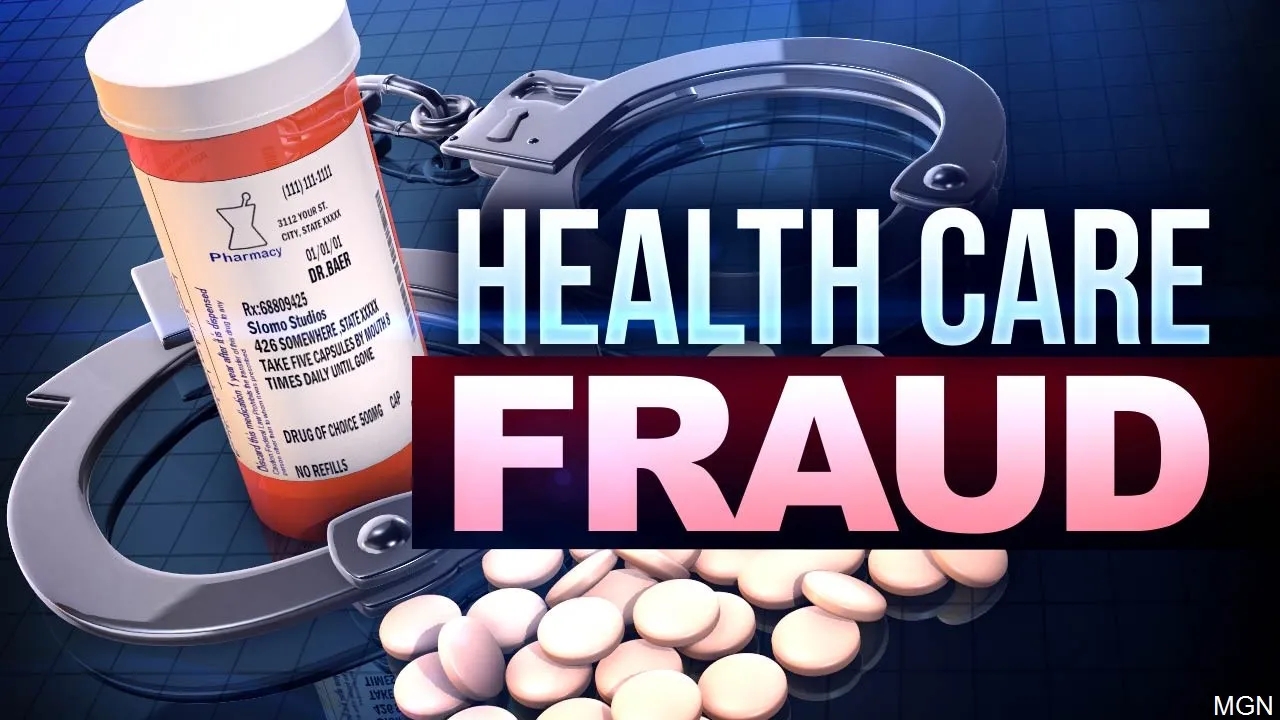
In Fiscal Year (FY) 2022, the Department of Justice (DOJ) opened more than 809 new criminal healthcare fraud investigations. Federal prosecutors filed criminal charges in over 419 cases involving at least 680 defendants. More than 477 defendants were convicted of healthcare fraud related crimes during the year. Also, in FY 2022, DOJ opened more than 774 new civil healthcare fraud investigations and had over 1,288 civil healthcare fraud matters pending at the end of the fiscal year. 

Federal Bureau of Investigation (FBI) investigative efforts resulted in over 499 operational disruptions of criminal fraud organizations and the dismantlement of the criminal hierarchy of more than 132 healthcare fraud criminal enterprises. In FY 2022, investigations conducted by HHS’s Office of Inspector General (HHS-OIG) resulted in 661 criminal actions against individuals or entities that engaged in crimes related to Medicare and Medicaid, and 726 civil actions, which include false claims, unjust-enrichment lawsuits filed in Federal district court, and civil monetary penalty (CMP) settlements. HHS-OIG excluded 2,332 individuals and entities from participation in Medicare, Medicaid, and other Federal healthcare programs.

Source: U.S. Department of Health and Human Services and U.S. Department of Justice

COMMENTS APPRECIATED

Thank You

***

***

PODCAST: The Principal-Agent Problem in Healthcare!

By Eric Bricker MD

***

***

Your thoughts and comments are appreciated.

THANK YOU

***

***

Atlanta’s Piedmont Hospital Pays $16 Million to Settle Kickback Allegations

Piedmont Pays $16 Million to Settle Kickback and Overbilling Allegations

By Health Capital Consultants, LLC

On June 25, 2020 Atlanta’s Piedmont Healthcare, Inc. agreed to pay $16 million to the federal government to resolve two False Claims Act (FCA) allegations of kickbacks and overbilling. The relator, a former Piedmont physician, alleged Stark Law and Anti-Kickback Statute (and subsequent FCA) violations of paying an amount that was above fair market value (FMV) and commercially unreasonable in Piedmont’s 2007 acquisition of Atlanta Cardiology Group (ACG).

Additionally, Piedmont’s payments settle allegations that the hospital admitted patients without medical necessity in order to bill Medicare and Medicaid for inpatient procedures that were recommended to be performed at the less expensive outpatient or observation settings.  (Read more…)

Assessment: Your thoughts are appreciated.

NOTE: I was on the courtesy medical staff of Piedmont Hospital in Atlanta for more than a decade = DEM.

“Medical Management and Health Economics Education for Financial Advisors”

CMP® CURRICULUM: https://lnkd.in/eDTRHex
CMP® WEB SITE: https://lnkd.in/guWSApq

BUSINESS, FINANCE, INVESTING AND INSURANCE TEXTS FOR DOCTORS:

1 – https://lnkd.in/ebWtzGg

2 – https://lnkd.in/ezkQMfR

3 – https://lnkd.in/ewJPTJs

THANK YOU

***

BENEFITS OF A HEALTHCARE COMPLIANCE PROGRAM

Join Our Mailing List 

Reality versus Perception

By Carol Miller RN MHA

Carol S. MillerThere are many associated benefits of a healthcare or medical practice compliance program, some of which are only perceived whereas others are very definitive.  Most providers try to comply with the rules and regulations and what is or is not covered by different insurance programs.

Risk Management and Quality Initiatives

Regardless of their ethical and quality processes in their office practice, the decision to develop and implement a compliance program still is an important and needed business decision.  The processes involved in a compliance program can help improve the organization’s performance by providing basic principles in quality improvement which can help improve the provider’s bottom line.

The Benefits

Several benefits of a compliance program are:

  • Improving the quality of patient care
  • Servicing as a resource for information about compliance-related issues
  • Saving time, money, and associated apprehensions during audits or reviews
  • Preventing or identifying improper conduct with systems for evaluation and correction
  • Providing training for employees and contracted services to recognize fraud and abuse
  • Providing a way for employees to report potential problems
  • Demonstrating to staff and community that the practice is committed to honesty and appropriate conduct
  • Minimizing loss associated with false claims through early recognition and reporting, and decreasing the provider’s exposure to civil penalties, sanctions and other administrative actions, such as exclusion

The OIG

The OIG has developed a series of voluntary compliance program guidance documents directed at various segments of the healthcare industry, such as hospitals, nursing homes, third-party billers, durable medical equipment suppliers, clinical laboratories, home health agencies, hospices, nursing facilities, ambulance suppliers, pharmaceutical manufacturers, physician practices, and others, to encourage the development and use of internal controls to monitor adherence to statutes, regulations and program requirements.

***

Safe

***

Fraud and Abuse, Too!

The OIG documents also identify fraud and abuse risks to watch out for when creating a programs

ABOUT

Ms. Carol S. Miller has an extensive healthcare background in operations, business development and capture in both the public and private sector. Over the last 10 years she has provided management support to projects in the Department of Health and Human Services, Veterans Affairs, and Department of Defense medical programs. In most recent years, Carol has served as Vice President and Senior Account Executive for NCI Information Systems, Inc., Assistant Vice President at SAIC, and Program Manager at MITRE. She has led the successful capture of large IDIQ/GWAC programs, managed the operations of multiple government contracts, interacted with many government key executives, and increased the new account portfolios for each firm she supported. She earned her MBA from Marymount University; BS in Business from Saint Joseph’s College, and BS in Nursing from the University of Pittsburgh. She is a Certified PMI Project Management Professional (PMP) (PMI PMP) and a Certified HIPAA Professional (CHP), with Top Secret Security clearance issued by the DoD in 2006. Ms. Miller is also a HIMSS Fellow.

CASE MODEL: Compliance

Assessment

The documents provide principles to follow when developing a compliance program that best suits the organization’s needs.

Conclusion

Your thoughts and comments on this ME-P are appreciated. Feel free to review our top-left column, and top-right sidebar materials, links, URLs and related websites, too. Then, subscribe to the ME-P. It is fast, free and secure.

Speaker: If you need a moderator or speaker for an upcoming event, Dr. David E. Marcinko; MBA – Publisher-in-Chief of the Medical Executive-Post – is available for seminar or speaking engagements. Contact: MarcinkoAdvisors@msn.com

OUR OTHER PRINT BOOKS AND RELATED INFORMATION SOURCES:

Comprehensive Financial Planning Strategies for Doctors and Advisors: Best Practices from Leading Consultants and Certified Medical Planners(TM) 

Understanding the Spoils of Healthcare Fraud and Abuse

Self Explanatory – Need we say more?

By ME-P Staff Writers

###

Picture1

[Click on image to enlarge]

###

Assessment

Conclusion

Your thoughts and comments on this ME-P are appreciated. Feel free to review our top-left column, and top-right sidebar materials, links, URLs and related websites, too. Then, subscribe to the ME-P. It is fast, free and secure.

Speaker: If you need a moderator or speaker for an upcoming event, Dr. David E. Marcinko; MBA – Publisher-in-Chief of the Medical Executive-Post – is available for seminar or speaking engagements. Contact: MarcinkoAdvisors@msn.com

OUR OTHER PRINT BOOKS AND RELATED INFORMATION SOURCES:

Product Details

Product DetailsProduct Details

Understanding the Healthcare Integrity and Protection Data Bank

Healthcare Fraud and Abuse Data Collection Program

By Patricia Trites; MPA, CHBC, CPC

The Healthcare Integrity and Protection Data Bank (HIPDB) were created to coordinate information with the National Practitioner Data Bank (NPDB). Currently, health plans, health maintenance organizations, and federal and state agencies are required to report final adverse actions taken against healthcare providers on a monthly basis.

The NP Database

The database operates under the auspices of DHHS, the Health Resources and Services Administration, and the Bureau of Health Professions. The Secretary of DHHS is responsible for operating this data bank in the same fashion as the NPDB.

Adverse Actions

Five types of final adverse actions against a healthcare provider, supplier, or practitioner are reported into this data bank:

1. civil judgments in federal or state court related to the delivery of a healthcare item or service;

2. federal or state criminal convictions related to the delivery of a healthcare item or service;

3. actions by federal or state agencies responsible for licensing and certification;

4. exclusions from participation in a federal or state healthcare program; and

5. any other adjudicated actions or decisions that the secretary of DHHS establishes by regulations.

Assessment

These actions must be reported, regardless of whether the subject of the report is appealing the action. Federal and state agencies, hospitals, and health plans are permitted to query the HIPDB. This will also lead to increased activities by other federal agencies, including the Internal Revenue Service and the Federal Trade Commission, which can lead to civil and criminal penalties.

Join Our Mailing List

Conclusion

Your thoughts and comments on this ME-P are appreciated. Feel free to review our top-left column, and top-right sidebar materials, links, URLs and related websites, too. Then, subscribe to the ME-P. It is fast, free and secure.

Link: http://feeds.feedburner.com/HealthcareFinancialsthePostForcxos

Speaker: If you need a moderator or speaker for an upcoming event, Dr. David E. Marcinko; MBA – Publisher-in-Chief of the Medical Executive-Post – is available for seminar or speaking engagements. Contact: MarcinkoAdvisors@msn.com

OUR OTHER PRINT BOOKS AND RELATED INFORMATION SOURCES:

DICTIONARIES: http://www.springerpub.com/Search/marcinko
PHYSICIANS: www.MedicalBusinessAdvisors.com
PRACTICES: www.BusinessofMedicalPractice.com
HOSPITALS: http://www.crcpress.com/product/isbn/9781466558731
CLINICS: http://www.crcpress.com/product/isbn/9781439879900
BLOG: www.MedicalExecutivePost.com
FINANCE: Financial Planning for Physicians and Advisors
INSURANCE: Risk Management and Insurance Strategies for Physicians and Advisors

Product DetailsProduct DetailsProduct Details

Understanding the Healthcare Fraud and Abuse Control Program

Join Our Mailing List

A Joint Project Between the OIG and DOJ

PT

By Patricia Trites; MPA, CHBC, CPC

The Healthcare Fraud and Abuse Control (HCFAC) program is a joint project between the Office of Inspector General [OIG] and the Department of Justice (DOJ).

Functions

The primary functions are to coordinate federal, state, and local enforcement in controlling healthcare fraud, and to conduct investigations relating to delivery and payment of healthcare services, and oversee Medicare and Medicaid exclusions, civil money penalties, and the anti-kickback law. The program is also designed to provide opinions, alerts, and a means for reporting and disclosing final adverse actions against healthcare providers.

HIPAA Policies

HIPAA established the Health Care Fraud and Abuse Control Account within the Medicare Part A Trust Fund and funds DOJ and DHHS activities for operation of the HCFAC. In addition to federal appropriations, the fund receives a portion of funds collected from healthcare fraud and abuse penalties and fines. HIPAA also authorizes funds from general revenues for the Federal Bureau of Investigation (FBI) to combat healthcare fraud and abuse.

Assessment

Anti-fraud and abuse provisions were also included in the Balanced Budget Act of 1997 and the Deficit Reduction Act [DRA] of 2005, and annotated and

Conclusion

Your thoughts and comments on this ME-P are appreciated. Feel free to review our top-left column, and top-right sidebar materials, links, URLs and related websites, too. Then, subscribe to the ME-P. It is fast, free and secure.

Link: http://feeds.feedburner.com/HealthcareFinancialsthePostForcxos

Speaker: If you need a moderator or speaker for an upcoming event, Dr. David E. Marcinko; MBA – Publisher-in-Chief of the Medical Executive-Post – is available for seminar or speaking engagements. Contact: MarcinkoAdvisors@msn.com

OUR OTHER PRINT BOOKS AND RELATED INFORMATION SOURCES:

DICTIONARIES: http://www.springerpub.com/Search/marcinko
PHYSICIANS: www.MedicalBusinessAdvisors.com
PRACTICES: www.BusinessofMedicalPractice.com
HOSPITALS: http://www.crcpress.com/product/isbn/9781466558731
CLINICS: http://www.crcpress.com/product/isbn/9781439879900
BLOG: www.MedicalExecutivePost.com
FINANCE: Financial Planning for Physicians and Advisors
INSURANCE: Risk Management and Insurance Strategies for Physicians and Advisors

Product DetailsProduct DetailsProduct Details

Product Details

Government-Enabled Patient “Bounty Hunters”

Spider Webbing Technology May Trip-Up Miscreant Doctors

By Dr. David Edward Marcinko; MBA CMP™

HO-JFMS-CD-ROMUnder the Health Insurance Portability Accountability Act (HIPAA), the U. S. Department of Health and Human Service (HHS) have operated an “Incentive Program for Fraud and Abuse Information.”

In this program, HHS pays $100 – $1,000 to Medicare recipients who report abuse in the program.

To assist patients in spotting fraud, HHS has published examples of potential fraud, which include:

  • medical services not provided;
  • duplicated services or procedures;
  • more expenses, services, or procedures claimed for than provided (upcoding/billing);
  • misused Medicare cards and numbers;
  • medical telemarketing scams; and
  • no-medical necessity.

Real Health Fraud Exists

There is no question that real fraud exists. The Office of Inspector General of HHS saved American taxpayers a record $32 billion in 2006, according to Inspector General Glenn A. Fine.  Savings were achieved through an intensive and continuing crackdown on waste, fraud, and abuse in Medicare and over 300 other HHS programs. To discourage flagrant allegations, regulations require that reported information directly contribute to monetary recovery for activities not already under investigation.  For the DRA in 2009, this includes the following:

  • promoting state False Claims Acts (section 6032);
  • enhancing the Fair and Accurate Credit Transaction Act, with “red flags” (PL 108-159); see http://www.gpo.gov/fdsys/pkg/PLAW-108publ159/content-detail.html
  • employee education about false claims recovery (section 6033);
  • augmenting the Medicaid Integrity Program (section 6034);
  • enhancing third party recovery (section 6035); and
  • “mining” medical claims for potential fraud with the help of sophisticated computer technology algorithms – called “spider-webbing” – which locate a common insurance claim denominator and then follow the thread throughout claims review. Indicators of  possible fraud include doctors charging more than peers; providers who administer more tests or procedures per patient; providers who conduct medically “unlikely” procedures; providers who bill for more expensive procedures and equipment when there are cheaper options; and patients who travel long distances for treatment.

Assessment

CMS and private companies are able to save far more money by detecting fraud before claims are paid than recovering the money after the factAnd so, a further erosion of patient confidence can be expected as CMS, and private insurers, assume the “bounty hunter” view of healthcare providers.

Conclusion

Of course, your thoughts and comments on this Medical Executive-Post are appreciated. Do you feel like the hunter; or the hunted? Tell us what you think? Do you ever – or never –  fear the spider? Feel free to review our top-left column, and top-right sidebar materials, links, URLs and related websites, too. Then, be sure to subscribe to the ME-P. It is fast, free and secure.

Link: http://feeds.feedburner.com/HealthcareFinancialsthePostForcxos

Speaker: If you need a moderator or speaker for an upcoming event, Dr. David E. Marcinko; MBA – Publisher-in-Chief of the Executive-Post – is available for seminar or speaking engagements. Contact: MarcinkoAdvisors@msn.com

Our Other Print Books and Related Information Sources:

Practice Management: http://www.springerpub.com/prod.aspx?prod_id=23759

Physician Financial Planning: http://www.jbpub.com/catalog/0763745790

Medical Risk Management: http://www.jbpub.com/catalog/9780763733421

Healthcare Organizations: www.HealthcareFinancials.com

Physician Advisors: www.CertifiedMedicalPlanner.org

Subscribe Now: Did you like this Medical Executive-Post, or find it helpful, interesting and informative? Want to get the latest ME-Ps delivered to your email box each morning? Just subscribe using the link below. You can unsubscribe at any time. Security is assured.

Link: http://feeds.feedburner.com/HealthcareFinancialsthePostForcxos

Sponsors Welcomed

And, credible sponsors and like-minded advertisers are always welcomed.

Link: https://healthcarefinancials.wordpress.com/2007/11/11/advertise


For details about how to report an abuse, see www.usdoj.gov/oig/FOIA/hotline.htm.

Product Details

Healthcare Fraud versus Healthcare Abuse

Join Our Mailing List

Understanding Definitional Semantics

[Staff Reporters]dhimc-book

Fraud Defined

Fraudmay be defined as any illegal healthcare activity where someone obtains something of value without paying for, or earning it. In healthcare, this usually occurs when someone bills for services not provided by the physician.

Abuse Defined

According to the Dictionary of Health Insurance and Managed Care, healthcare abuse is the activity where someone overuses or misuses services. And, according to the Center for Medicare and Medicaid Services [CMS]:

“although some of the practices may be initially considered to be abusive, rather than fraudulent activities, they may evolve into fraud.”

Example:

In the case of healthcare abuse, this may occur when a physician sees the patient for treatment more times than deemed medically appropriate. If there are reported issues or actions from other sources, such as the NPDB or a medical board, a health insurance program can take that opportunity to review healthcare providers’ activities. Most participation agreements allow for this type of scrutiny.

Assessment

And so, now that a workable definition of healthcare fraud and abuse has been proposed, and we have some definitional clarity, any preliminary billing or invoice review program will usually request a sampling of specific medical records. This may progress to an on-site review of any and all medical records of patients that participate in a CMS program.

These activities can be generated by the plan’s quality assurance, or quality improvement program, and often are tied to the credentialing process for a provider’s participation.

Conclusion

Your thoughts and comments on this ME-P are appreciated. Feel free to review our top-left column, and top-right sidebar materials, links, URLs and related websites, too. Then, subscribe to the ME-P. It is fast, free and secure.

Link: http://feeds.feedburner.com/HealthcareFinancialsthePostForcxos

Speaker: If you need a moderator or speaker for an upcoming event, Dr. David E. Marcinko; MBA – Publisher-in-Chief of the Medical Executive-Post – is available for seminar or speaking engagements. Contact: MarcinkoAdvisors@msn.com

OUR OTHER PRINT BOOKS AND RELATED INFORMATION SOURCES:

Product DetailsProduct DetailsProduct Details