


ME-P Special Report
Share this:

Filed under: Ethics, Experts Invited, Financial Planning | Tagged: Deception in the Financial Service Industry, fiduciary advisor, fiduciary oath, Financial Planning, Lon Jefferies MBA CFP® | Leave a comment »
ME-P SYNDICATIONS:
WSJ.com,
CNN.com,
Forbes.com,
WashingtonPost.com,
BusinessWeek.com,
USNews.com, Reuters.com,
TimeWarnerCable.com,
e-How.com,
News Alloy.com,
and Congress.org


BOARD CERTIFICATION EXAM STUDY GUIDES
Lower Extremity Trauma
[Click on Image to Enlarge]
The “Medical Executive-Post” is about connecting doctors, health care executives and modern consulting advisors. It’s about free-enterprise, business, practice, policy, personal financial planning and wealth building capitalism. We have an attitude that’s independent, outspoken, intelligent and so Next-Gen; often edgy, usually controversial. And, our consultants “got fly”, just like U. Read it! Write it! Post it! “Medical Executive-Post”. Call or email us for your FREE advertising and sales consultation TODAY [678.779.8597] Email: MarcinkoAdvisors@outlook.com



 ePodiatryConsentForms.com
 “Providing Management, Financial and Business Solutions for Modernity”
 Support our online development, and advance our onground research initiatives in free market economics, as we seek to showcase the brightest Next-Gen minds.
THE ME-P DISCLAIMER: Posts, comments and opinions do not necessarily represent iMBA, Inc., but become our property after submission. Copyright © 2006 to-date. iMBA, Inc allows colleges, universities, medical and financial professionals and related clinics, hospitals and non-profit healthcare organizations to distribute our proprietary essays, photos, videos, audios and other documents; etc. However, please review copyright and usage information for each individual asset before submission to us, and/or placement on your publication or web site. Attestation references, citations and/or back-links are required. All other assets are property of the individual copyright holder.
Support our online development, and advance our onground research initiatives in free market economics, as we seek to showcase the brightest Next-Gen minds.
THE ME-P DISCLAIMER: Posts, comments and opinions do not necessarily represent iMBA, Inc., but become our property after submission. Copyright © 2006 to-date. iMBA, Inc allows colleges, universities, medical and financial professionals and related clinics, hospitals and non-profit healthcare organizations to distribute our proprietary essays, photos, videos, audios and other documents; etc. However, please review copyright and usage information for each individual asset before submission to us, and/or placement on your publication or web site. Attestation references, citations and/or back-links are required. All other assets are property of the individual copyright holder.


Filed under: Ethics, Experts Invited, Financial Planning | Tagged: Deception in the Financial Service Industry, fiduciary advisor, fiduciary oath, Financial Planning, Lon Jefferies MBA CFP® | Leave a comment »
Are Consumers Losing Ethical Ground?
By Rick Kahler MS CFP™ http://www.KahlerFinancial.com
 Suppose one of my clients has his heart set on using half of his retirement account to buy each of his grandchildren a new car.
Or, a physician-client in a panic over falling markets wants to sell all her stocks and buy gold. What is my responsibility as their financial planner? How far should planners go to try to keep clients from making serious financial mistakes?
Just as with the patient engagement, it’s important for planners to respect clients’ competence and ability to make their own life decisions. Client-centered planners also need to remember that the goal is to help clients get what they want, not what the planner might want or think the client should want.
On the other hand, should a planner stand idly by and watch someone walk off what the planner perceives as the edge of a financial cliff?
Potential Answers?
Part of the answer to this dilemma stems from a planner’s legal obligation. Most advisors who sell financial products have no fiduciary duty and are not legally required to put their customers’ interests first. Fiduciary advisors, which include those who are fee-only, do have a legal obligation to act in their clients’ best interests.
Fiduciary Responsibility
Doctors, clergymen and attorneys are fiduciaries. But, what is the legal responsibility of a fiduciary financial planner who believes clients are about to do themselves financial harm?
Example:
Let’s say I have a client who is about to do something that may be viewed by a court of law as “extreme” or “imprudent.” (An example would be putting all his money into one asset class like gold, cash, penny stocks, etc.) At the minimum, I would need to protect myself by carefully fulfilling my legal responsibilities. This would include making certain I emphasized to the client that, given the research and data available, his actions could hurt him financially. I also would want to be sure the client fully understood and took responsibility for his actions.
***

***
In terms of the broader aspect of what financial planners owe to their clients, meeting this legal obligation is not enough. In my view, fiduciary planners’ obligation to put clients’ interests first includes an ethical responsibility to do no harm. Sometimes this ethical and legal responsibility requires planners to give clients information they may not want to hear.
As we focus on the clients’ goals and help them carry out their wishes, part of our role is to make sure they have all the information they need. This gives us a responsibility to educate ourselves so the advice we offer is as sound as we can make it. We also need to do whatever we can to help clients hear and understand that advice.
Clients who are hovering on the edge of a financial cliff are typically about to act out of strong emotions such as fear. They often can’t take in financial advice until they are able to move through that fear. It only makes things worse if financial advisors shame clients, bully them, or abandon them to their fears. The challenge for planners is to help clients reach a more rational place so they can gather additional information and make decisions that will serve them well.
Industry Update is Not Good – Give Up the ‘Fiduciary’ Fight
According to industry pundit Bob Veres, so-called Financial Advisors need to face a hard truth – Independent Registered Investment Advisors [RIAs] have lost this round.
But, we already told you so on this ME-P.
Fortunately, there are other better ways to set yourself in the medical ecosystem.
The Certified Medical Planner™ Designation
A Certified Medical Planner™ is a fiduciary at all times.
More:
Assessment
With the right kind of support, clients are almost always able to get past the fear that is pushing them to make imprudent decisions. Providing such support by working with clients’ emotions and beliefs about money, perhaps with the help of a financial therapist or financial coach, is well within a financial planner’s ethical responsibility. Our role is not merely to do no harm. It is also to use all the tools we have to help clients act in their own best interests.


Conclusion
Your thoughts and comments on this ME-P are appreciated. Feel free to review our top-left column, and top-right sidebar materials, links, URLs and related websites, too. Then, subscribe to the ME-P. It is fast, free and secure.
Speaker: If you need a moderator or speaker for an upcoming event, Dr. David E. Marcinko; MBA – Publisher-in-Chief of the Medical Executive-Post – is available for seminar or speaking engagements. Contact: MarcinkoAdvisors@msn.com
OUR OTHER PRINT BOOKS AND RELATED INFORMATION SOURCES:

Filed under: CMP Program, Ethics, Financial Planning | Tagged: Accredited Investment Fiduciary, certified medical planner, CMP™ Course, fiduciary accountability, fiduciary advisor, financial planners, Rick Kahler CFP®, www.CertifiedMedicalPlanner.org | Leave a comment »
Understanding the Difference
 By Dr. David Edward Marcinko MBA CMP™
GOAL: To understand the difference between fiduciaries and non-fiduciaries, examine the SEC conduct rules.
Stock-Brokers (non-fiduciaries) are subject to FINRA Conduct Rule 2310(a) which reads:
In recommending to a customer the purchase, sale or exchange of any security, a member shall have reasonable grounds for believing that the recommendation is suitable for such customer upon the basis of the facts, if any, disclosed by such customer as to his security holdings and as to his financial situation and needs.
A fiduciary follows a higher standard of conduct:
A fiduciary duty is an obligation to act in the best interest of another party. A fiduciary obligation exists whenever the relationship with the client involves a special trust, confidence and reliance on the fiduciary to exercise his discretion or expertise in acting for a client. A person acting in a fiduciary capacity is held to a high standard of honesty and full disclosure in regard to the client and must not obtain a personal benefit at the expense of the client.
Five primary responsibilities as a fiduciary to clients are:
More:
Assessment
Conclusion
Your thoughts and comments on this ME-P are appreciated. Feel free to review our top-left column, and top-right sidebar materials, links, URLs and related websites, too. Then, subscribe to the ME-P. It is fast, free and secure.
Link: http://feeds.feedburner.com/HealthcareFinancialsthePostForcxos
Speaker: If you need a moderator or speaker for an upcoming event, Dr. David E. Marcinko; MBA – Publisher-in-Chief of the Medical Executive-Post – is available for seminar or speaking engagements. Contact: MarcinkoAdvisors@msn.com
OUR OTHER PRINT BOOKS AND RELATED INFORMATION SOURCES:
DICTIONARIES: http://www.springerpub.com/Search/marcinko
PHYSICIANS: www.MedicalBusinessAdvisors.com
PRACTICES: www.BusinessofMedicalPractice.com
HOSPITALS: http://www.crcpress.com/product/isbn/9781466558731
CLINICS: http://www.crcpress.com/product/isbn/9781439879900
BLOG: www.MedicalExecutivePost.com
FINANCE: Financial Planning for Physicians and Advisors
INSURANCE: Risk Management and Insurance Strategies for Physicians and Advisors
Filed under: CMP Program, Investing | Tagged: CMP™ Course, fiduciary advisor, financial advisors, SEC, stock-brokers, www.CertifiedMedicalPlanner.org | 6 Comments »
|
SPONSOR NOTICE
Top 10 Reasons to Become a Certified Medical Planner™
1. Expertise: Provide health economics, business and financial advice to physicians. 2. Credibility: Gain health industry recognition and fiduciary clout. 3. Opportunity: Focus on the lucrative and expanding physician advisory niche. 4. Recognition: Join a select group of advisory experts. 5. Distinction: Become quality; rather than product driven. 6. Achievement: 500 hours of financial, health economics and management education. 7. Evidence: Validate deep healthcare industry knowledge. 8. Resource: CMP™ text and hand books, dictionaries, and institutional print journal. 9. Distinction: Set yourself apart with our chartered logo and trade-mark identity. 10. Commitment: Become the “go-to” financial advisor for all medical professionals.
|
|
www.CertifiedMedicalPlanner.com
|

Speaker: If you need a moderator or speaker for an upcoming event, Dr. David E. Marcinko; MBA – Publisher-in-Chief of the Executive-Post – is available for seminar or speaking engagements. Contact: MarcinkoAdvisors@msn.com or Bio: www.stpub.com/pubs/authors/MARCINKO.htm
Get our Widget: Get this widget!
Subscribe Now: Did you like this Medical Executive-Post, or find it helpful, interesting and informative? Want to get the latest ME-Ps delivered to your email box each morning? Just subscribe using the link below. You can unsubscribe at any time. Security is assured.
Link: http://feeds.feedburner.com/HealthcareFinancialsthePostForcxos
Filed under: "Advisors Only", Career Development, CMP Program, Ethics, Financial Planning, Health Economics, iMBA, Inc., Managed Care, Marketing & Advertising, Practice Management, Quality Initiatives, Sponsors | Tagged: certified medical planner, CFP, CMP, doctors, fiduciary advisor, financial advisor, financial planner, medical management, nurses, physician advisors, Practice Management, www.certifiedmedicalplanner.com | 2 Comments »
Advertisement
Enhanced Listing about Our Practice
At Sharkey, Howes & Javer, we specialize in people, their money and their choices. We offer our clients peace of mind and the guidance to help them make wise lifetime decisions along their path to success.
Team Approach
We are a team, working in partnership with our clients and their other professional advisors to ensure a comprehensive approach to long-lasting financial decisions.
Our History
We were established in Denver, Colorado in 1990, when Eileen M. Sharkey, CFP®, formed the firm of Sharkey, Howes & Javer, a partnership with Lawrence E. Howes, MBA, CFP® and Joel B. Javer, CLU, CFP®. Since then, our team of professional planners and support staff has grown to serve over 1000 clients.
Industry Acknowledged Certifications
Larry Howes, MBA, AIF®, CFP® is a founder and principal of Sharkey, Howes & Javer, Inc., a firm that provides financial planning and portfolio management to individuals and businesses. He received his MBA from Regis University and Bachelor of Science degree in Management from Metropolitan State College in Denver and was admitted to the Registry of Financial Planning Practitioners in 1986. He received his CFP® designation in 1987. Larry was awarded an AIF®, Accredited Investment Fiduciary, in 2004 from the University of Pittsburgh. He is also a Certified Medical Planner™ (Hon).
Fiduciary – Yes
RIA – Yes
Published Authors and Educators
Mr. Howes is an adjunct professor of financial planning at Metropolitan State College – Denver.
Larry teaches the Investment course for the Certified Financial Planning certification program for Metro.
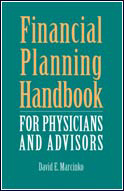
Larry is a featured writer for the Metropolitan Denver Dental Society’s journal entitled Articulator. Larry is also a featured writer for Colorado Medicine. In addition, Larry co-authored the Estate Planning and Execution chapter in the book entitled the Financial Planning Handbook for Physicians and Advisors.
Clean CRD record – Yes
Clean Criminal record – Yes
More information:
Tammy K. Durnford; MA
Manager of Client Relations
Sharkey, Howes & Javer, Inc.
720 S. Colorado Blvd.
Suite 600 South Tower
Denver, Colorado 80246
303-639-5100
800-557-9380
Fax 303-759-2335
Website: www.shwj.com
Filed under: "Advisors Only", "Ask-an-Advisor", "Doctors Only", Estate Planning, Experts Invited, Financial Advisor Listings, Financial Planning, Sponsors | Tagged: certified medical planner, CFP®, CLU, CMP, david marcinko, Eileen M. Sharkey, Estate Planning, fiduciary advisor, financial advisor, Financial Planning, hope hetico, Howes & Javer, Joel B. Javer, Larry Howes, Lawrence E. Howes, MBA, medical advisors, medical consultants, physician advisors, physician consultants, Sharkey | Leave a comment »


 The Leading Business Education Network for Doctors, Financial Advisors and Health Industry Consultants