







 Support our online development, and advance our onground research initiatives in free market economics, as we seek to showcase the brightest Next-Gen minds.
THE ME-P DISCLAIMER: Posts, comments and opinions do not necessarily represent iMBA, Inc., but become our property after submission. Copyright © 2006 to-date. iMBA, Inc allows colleges, universities, medical and financial professionals and related clinics, hospitals and non-profit healthcare organizations to distribute our proprietary essays, photos, videos, audios and other documents; etc. However, please review copyright and usage information for each individual asset before submission to us, and/or placement on your publication or web site. Attestation references, citations and/or back-links are required. All other assets are property of the individual copyright holder.
Support our online development, and advance our onground research initiatives in free market economics, as we seek to showcase the brightest Next-Gen minds.
THE ME-P DISCLAIMER: Posts, comments and opinions do not necessarily represent iMBA, Inc., but become our property after submission. Copyright © 2006 to-date. iMBA, Inc allows colleges, universities, medical and financial professionals and related clinics, hospitals and non-profit healthcare organizations to distribute our proprietary essays, photos, videos, audios and other documents; etc. However, please review copyright and usage information for each individual asset before submission to us, and/or placement on your publication or web site. Attestation references, citations and/or back-links are required. All other assets are property of the individual copyright holder.


Dr. David Edward Marcinko MBA MEd
SPONSOR: http://www.MarcinkoAssociates.com
***

***
Exchange‑traded funds (ETFs) have been one of the most transformative innovations in modern investing. Since the first U.S. ETF launched in the early 1990s, they have grown from a niche product to a dominant force, reshaping how individuals and institutions build portfolios. Their rise has been so dramatic that it’s fair to ask whether ETFs have already peaked. Are they past their prime, or are they simply entering a more mature—and still powerful—phase of their evolution?
To answer that, it helps to understand why ETFs became so popular in the first place. They offered something investors had long wanted: low‑cost, diversified exposure to markets without the high fees and underperformance that plagued many actively managed mutual funds. ETFs also traded like stocks, giving investors flexibility and transparency that mutual funds couldn’t match. These advantages fueled explosive growth, especially as passive investing gained cultural and academic momentum. For years, ETFs were the fresh, disruptive alternative to traditional funds.
But today, the landscape looks different. ETFs are no longer the scrappy upstarts; they are the establishment. With trillions of dollars in assets and thousands of products on the market, the ETF ecosystem is crowded, competitive, and increasingly complex. This shift has led some observers to argue that ETFs have reached saturation—that the innovation wave has crested and the industry is coasting on past success.
There is some truth to the idea that the ETF boom has matured. Many of the most useful, broad‑market ETFs already exist, and new launches often feel like variations on a theme. Investors can choose from dozens of S&P 500 ETFs, dozens more bond ETFs, and an overwhelming array of thematic funds that slice the market into ever‑narrower niches. When a market becomes this saturated, it’s natural to wonder whether the era of groundbreaking ETF innovation is behind us.
Yet maturity is not the same as decline. In fact, the very saturation that critics point to is evidence of the ETF’s enduring relevance. Investors continue to demand these products, and issuers continue to create them because ETFs remain one of the most efficient vehicles for accessing markets. Even if the pace of novelty has slowed, the core value proposition—low cost, liquidity, transparency—has not diminished.
Moreover, ETFs are still evolving in meaningful ways. One of the most significant developments in recent years has been the rise of actively managed ETFs. For decades, ETFs were synonymous with passive investing, but that boundary has blurred. Active managers have embraced the ETF structure because it offers tax advantages and lower operating costs compared to traditional mutual funds. This shift has opened the door to new strategies and has attracted investors who want the benefits of active management without the drawbacks of older fund structures. Far from being past their prime, ETFs are expanding into territory once considered off‑limits.
Another area of growth is fixed‑income ETFs. Bond markets have historically been opaque and difficult for individual investors to navigate. ETFs have changed that by offering simple, liquid access to everything from government bonds to high‑yield credit. During periods of market stress, bond ETFs have even served as price discovery tools, providing transparency when underlying bond markets were sluggish. This role suggests that ETFs are not just surviving—they are becoming integral to how modern markets function.
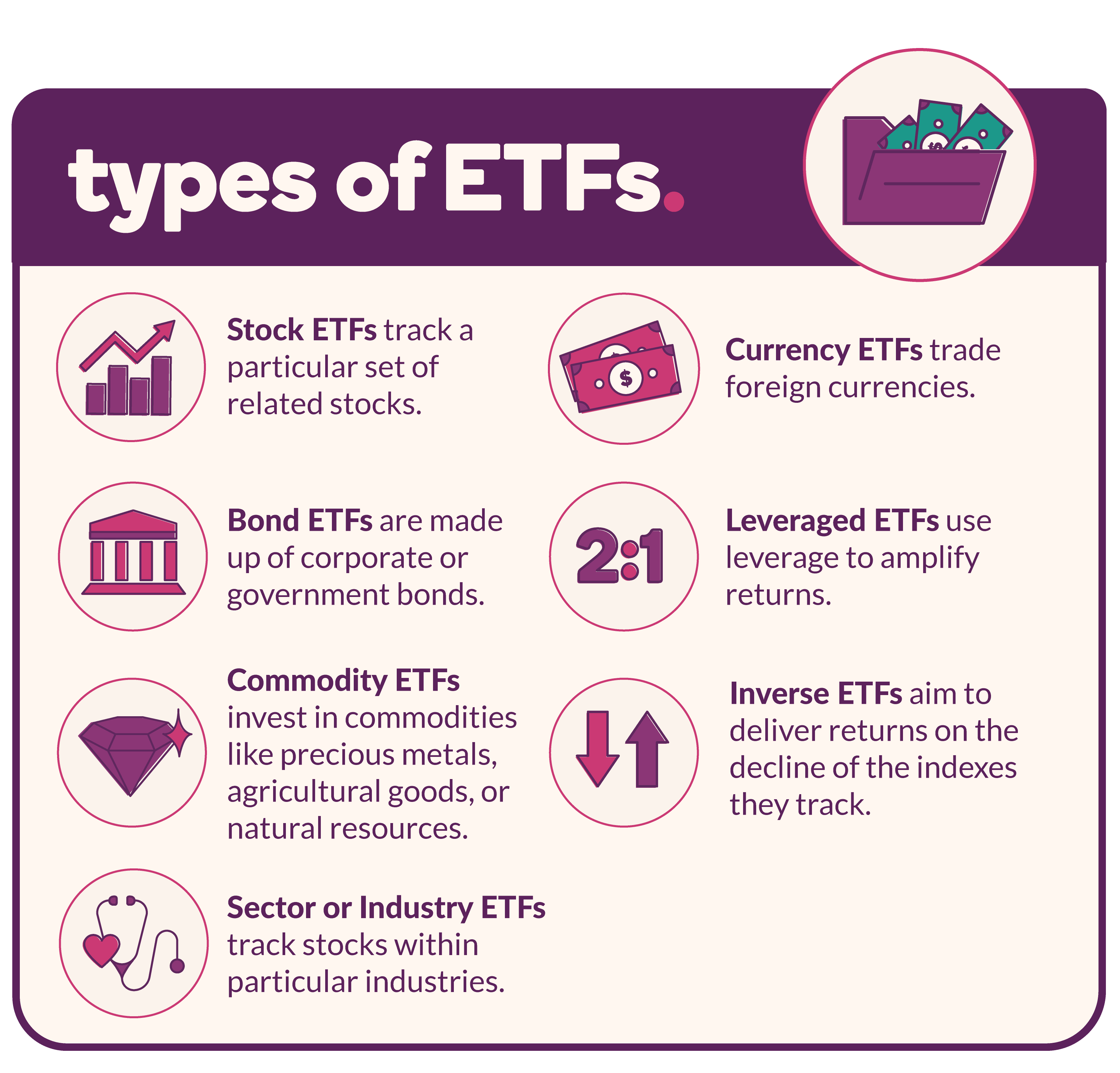
The rise of thematic and specialized ETFs also complicates the “past their prime” narrative. While some of these funds are gimmicky or short‑lived, others have tapped into genuine long‑term trends such as clean energy, cybersecurity, and artificial intelligence. These products allow investors to express views on specific sectors or technologies without picking individual stocks. Even if not every thematic ETF succeeds, the category reflects ongoing experimentation and investor interest.
***

***
Of course, ETFs are not without challenges. Their popularity has raised concerns about market concentration, especially in large index funds that hold significant portions of major companies. Some critics argue that passive investing distorts price signals or contributes to market bubbles. Others worry about liquidity risks in certain types of ETFs, particularly those holding less liquid assets. These debates are important, but they do not indicate that ETFs are fading. Instead, they show that ETFs have become so influential that their impact must be carefully examined.
Ultimately, the question of whether ETFs are past their prime depends on how one defines “prime.” If it means rapid, explosive growth driven by novelty, then yes—the early era of ETF disruption has passed. The industry is more mature, more crowded, and less defined by breakthrough innovation than it once was. But if “prime” refers to relevance, utility, and influence, then ETFs are arguably stronger than ever. They have become foundational tools for investors of all types, from retirees to hedge funds. Their evolution into active strategies, fixed‑income markets, and thematic investing shows that they are still adapting to new demands.
ETFs may no longer be the newest thing in finance, but they remain one of the most powerful. Rather than being past their prime, they appear to be settling into a long, stable middle age—one defined not by hype, but by enduring value.
COMMENTS APPRECIATED
SPEAKING: Dr. Marcinko will be speaking and lecturing, signing and opining, teaching and preaching, storming and performing at many locations throughout the USA this year! His tour of witty and serious pontifications may be scheduled on a planned or ad-hoc basis; for public or private meetings and gatherings; formally, informally, or over lunch or dinner. All medical societies, financial advisory firms or Broker-Dealers are encouraged to submit an RFP for speaking engagements: CONTACT: Ann Miller RN MHA at MarcinkoAdvisors@outlook.com -OR- http://www.MarcinkoAssociates.com
Like, Refer and Subscribe
***
***
Share this:

Filed under: "Ask-an-Advisor", economics, finance, Financial Planning, Funding Basics, Glossary Terms, Marcinko Associates, Touring with Marcinko | Tagged: are ETFs past thier prime?, david marcinko, ETF, ETFs, exchange traded funds, finance, Investing, personal-finance | Leave a comment »







 The Leading Business Education Network for Doctors, Financial Advisors and Health Industry Consultants