







 Support our online development, and advance our onground research initiatives in free market economics, as we seek to showcase the brightest Next-Gen minds.
THE ME-P DISCLAIMER: Posts, comments and opinions do not necessarily represent iMBA, Inc., but become our property after submission. Copyright © 2006 to-date. iMBA, Inc allows colleges, universities, medical and financial professionals and related clinics, hospitals and non-profit healthcare organizations to distribute our proprietary essays, photos, videos, audios and other documents; etc. However, please review copyright and usage information for each individual asset before submission to us, and/or placement on your publication or web site. Attestation references, citations and/or back-links are required. All other assets are property of the individual copyright holder.


By Dr. David Edward Marcinko; MBA MEd
SPONSOR: http://www.MarcinkoAssociates.com
***
****
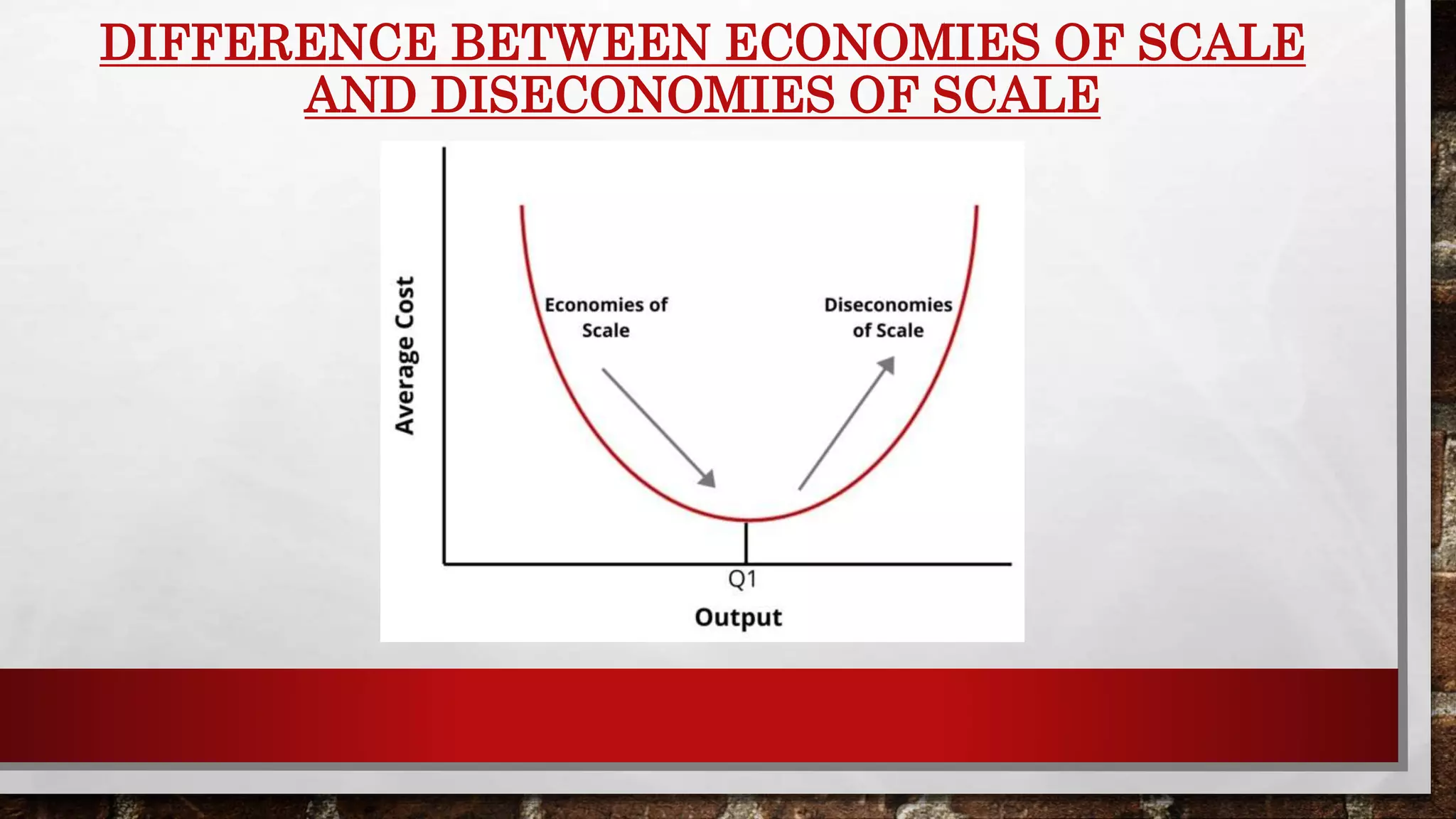
Diseconomies of scale occur when a business grows beyond a certain size and its average cost of production begins to increase. In the early stages of expansion, firms often benefit from economies of scale because producing more goods can reduce the average cost per unit. However, continued growth does not always lead to greater efficiency. When an organization becomes too large, managing its resources, employees, and operations can become difficult and expensive. The resulting increase in average costs is known as diseconomies of scale.
One major cause of diseconomies of scale is the difficulty of managing a large organization. As a business expands, it usually requires more managers and supervisors. The organizational structure can become complicated, with several levels of management between senior leaders and ordinary employees. This can slow down decision-making because information has to pass through many departments and levels of authority. As a result, decisions that could be made quickly in a small firm may take much longer in a large organization. Delays can increase costs and reduce the firm’s ability to respond to changes in the market.
Another important cause is communication problems. In a small business, employees can often communicate directly with owners and managers. In a large business, communication may involve different departments, offices, and management levels. Important information can be misunderstood, delayed, or lost as it moves through the organization. Poor communication may lead to mistakes, duplication of work, and inefficient use of resources. The larger the organization becomes, the more difficult it may be to maintain clear and effective communication.
Diseconomies of scale can also result from reduced employee motivation. In a small firm, workers may feel that their contribution has a direct impact on the success of the business. They may have closer relationships with managers and receive more personal recognition. In a very large organization, employees can sometimes feel that their individual efforts are less important. This may reduce motivation and productivity. If workers become less productive, the cost of producing each unit of output may increase.
Another factor is the difficulty of controlling operations. Large firms often operate across several factories, offices, or locations. Coordinating these different activities requires additional systems, technology, managers, and administrative staff. The business may also need to spend more money on monitoring employees and maintaining consistent standards. Although these systems can be necessary for a large organization, they can increase operating costs.
Diseconomies of scale may also arise because of limited resources. As a firm expands, it may place greater pressure on its suppliers, transportation systems, machinery, and other resources. For example, a company that rapidly increases production may experience shortages of raw materials or difficulties transporting finished products. These problems can cause delays and increase production costs. In some industries, rapid expansion may also lead to higher wages because the firm must compete for skilled workers.
The effects of diseconomies of scale can be significant. When average costs increase, a firm’s profitability may decline if it cannot increase its prices without losing customers. Higher costs can also make the business less competitive. In addition, inefficient management can reduce the quality of products and services. If customers become dissatisfied, the firm may lose sales and market share.
****
***
However, diseconomies of scale do not mean that large businesses are always inefficient. Many large firms develop methods to control the problems associated with growth. They may divide the organization into smaller departments or business units, improve communication systems, delegate decision-making, and use technology to coordinate operations. Effective management can therefore reduce the impact of diseconomies of scale.
In conclusion, diseconomies of scale occur when the expansion of a firm causes its average cost per unit to rise. They are mainly associated with problems such as complex management structures, communication difficulties, reduced employee motivation, weak coordination, and increasing administrative costs. While growth can provide many advantages, excessive expansion can create inefficiencies that make production more expensive. For this reason, businesses need to balance the benefits of growth with the challenges that come with becoming too large. Efficient organization, effective communication, and appropriate management are essential for controlling costs and maintaining productivity as a business expands.
SPEAKING: Dr. Marcinko will be speaking and lecturing, signing and opining, teaching and preaching, storming and performing at many locations throughout the USA this year! His tour of witty and serious pontifications may be scheduled on a planned or ad-hoc basis; for public or private meetings and gatherings; formally, informally, or over lunch or dinner. All medical societies, financial advisory firms or Broker-Dealers are encouraged to submit an RFP for speaking engagements: CONTACT: Ann Miller RN MHA at MarcinkoAdvisors1738@outlook.com -OR- http://www.MarcinkoAssociates.com
Like, Refer and Subscribe
SEND IN YOUR TOPIC IDEAS, TODAY!
HOSPITALS: http://www.crcpress.com/product/isbn/9781466558731
CLINICS: http://www.crcpress.com/product/isbn/9781439879900
ADVISORS: www.CertifiedMedicalPlanner.org
FINANCE:Financial Planning for Physicians and Advisors
INSURANCE:Risk Management and Insurance Strategies for Physicians and Advisors
Dictionary of Health Economics and Finance
Dictionary of Health Information Technology and Security
Dictionary of Health Insurance and Managed Care
***
Share this:

Filed under: iMBA, Inc. | Tagged: AI, business, dis-economies, economics, finance, Marcinko, news, Technology | Leave a comment »

