







 Support our online development, and advance our onground research initiatives in free market economics, as we seek to showcase the brightest Next-Gen minds.
THE ME-P DISCLAIMER: Posts, comments and opinions do not necessarily represent iMBA, Inc., but become our property after submission. Copyright © 2006 to-date. iMBA, Inc allows colleges, universities, medical and financial professionals and related clinics, hospitals and non-profit healthcare organizations to distribute our proprietary essays, photos, videos, audios and other documents; etc. However, please review copyright and usage information for each individual asset before submission to us, and/or placement on your publication or web site. Attestation references, citations and/or back-links are required. All other assets are property of the individual copyright holder.
Support our online development, and advance our onground research initiatives in free market economics, as we seek to showcase the brightest Next-Gen minds.
THE ME-P DISCLAIMER: Posts, comments and opinions do not necessarily represent iMBA, Inc., but become our property after submission. Copyright © 2006 to-date. iMBA, Inc allows colleges, universities, medical and financial professionals and related clinics, hospitals and non-profit healthcare organizations to distribute our proprietary essays, photos, videos, audios and other documents; etc. However, please review copyright and usage information for each individual asset before submission to us, and/or placement on your publication or web site. Attestation references, citations and/or back-links are required. All other assets are property of the individual copyright holder.


By Dr. David Edward Marcinko MBA MEd
***
***
An Overview
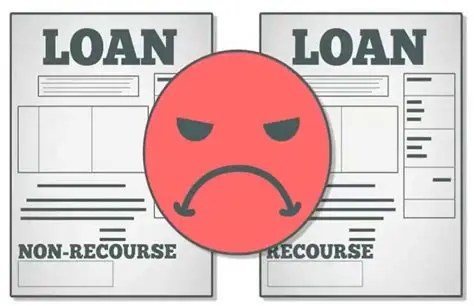
Introduction In the world of finance, the distinction between recourse and non-recourse loans is critical. Non-recourse financing refers to loans in which the lender’s rights are limited strictly to the collateral pledged for the loan. If the borrower defaults, the lender cannot pursue the borrower’s personal assets or income beyond the collateral. This structure makes non-recourse loans particularly attractive to borrowers who want to protect their broader financial portfolio, though it comes with trade-offs such as higher interest rates and stricter eligibility requirements.
Definition and Core Features
A non-recourse loan is secured by collateral, typically real estate or high-value assets. Unlike recourse loans, where lenders can seize collateral and pursue additional assets if the collateral does not cover the debt, non-recourse loans restrict recovery to the collateral alone.
Key features include:
- Collateral-based repayment: Only the pledged asset can be seized.
- Borrower protection: Other personal or business assets remain untouched.
- Higher lender risk: Because recovery is limited, lenders face greater exposure.
- Higher interest rates: To offset risk, lenders often charge more.
Applications in Real Estate and Project Financing
Non-recourse financing is most common in commercial real estate and large-scale projects. For example, developers building shopping centers or office towers often rely on non-recourse loans because repayment depends on future rental income once the project is complete. Similarly, infrastructure projects with long lead times—such as energy plants or toll roads—use non-recourse financing to align repayment with project revenues.
This structure allows borrowers to undertake ambitious projects without risking personal bankruptcy if the venture fails. It also encourages investment in sectors where upfront costs are high and returns are delayed.
Comparison with Recourse Loans
The difference between recourse and non-recourse loans lies in risk allocation:
- Recourse loans: Lenders can seize collateral and pursue other assets. These loans are lower risk for lenders and typically carry lower interest rates.
- Non-recourse loans: Lenders are limited to collateral. Borrowers gain protection, but lenders demand higher rates and stricter terms.
This trade-off means non-recourse loans are less common and usually reserved for borrowers with strong creditworthiness or projects with predictable revenue streams.
Advantages of Non-Recourse Financing
- Risk limitation for borrowers: Protects personal wealth and other business assets.
- Encourages investment: Makes large-scale, high-risk projects feasible.
- Predictable liability: Borrowers know their maximum exposure is limited to collateral.
Disadvantages and Risks
- Higher costs: Interest rates and fees are higher due to lender risk.
- Strict eligibility: Only borrowers with strong financial standing or valuable collateral qualify.
- Collateral dependency: If the collateral loses value, lenders face significant losses.
- Bad boy carve-outs: Certain clauses allow lenders to pursue borrowers if fraud, misrepresentation, or intentional misconduct occurs.
Legal and Financial Implications
Non-recourse financing is shaped by legal frameworks that define lender rights. In many jurisdictions, lenders cannot pursue deficiency judgments beyond collateral. However, exceptions exist through “bad boy carve-outs,” which hold borrowers personally liable for misconduct such as misappropriation of funds or environmental violations.
Conclusion
Non-recourse financing is a powerful tool in modern finance, particularly for commercial real estate and infrastructure projects. By limiting borrower liability to collateral, it enables ambitious ventures while protecting personal assets. However, this protection comes at the cost of higher interest rates, stricter eligibility, and potential carve-outs that reintroduce personal liability. Ultimately, non-recourse loans represent a balance between borrower protection and lender risk, shaping the way large-scale projects are funded and developed.
COMMENTS APPRECIATED
SPEAKING: Dr. Marcinko will be speaking and lecturing, signing and opining, teaching and preaching, storming and performing at many locations throughout the USA this year! His tour of witty and serious pontifications may be scheduled on a planned or ad-hoc basis; for public or private meetings and gatherings; formally, informally, or over lunch or dinner. All medical societies, financial advisory firms or Broker-Dealers are encouraged to submit an RFP for speaking engagements: CONTACT: Ann Miller RN MHA at MarcinkoAdvisors@outlook.com -OR- http://www.MarcinkoAssociates.com
Like, Refer and Subscribe
***
***
Share this:

Filed under: iMBA, Inc. | Tagged: credit score, finance, loans, personal-finance, real-estate | Leave a comment »




 The Leading Business Education Network for Doctors, Financial Advisors and Health Industry Consultants