“We Can Never Know About The Days [FINANCIAL MARKETS] To Come”

Join Our Mailing List

AS CARLY SIMON USED TO SING …

ArtBy Arthur Chalekian GEPC

[Financial Consultant]

However, that doesn’t stop anyone from making educated guesses about the future of companies, financial markets, and economies.

So, as we enter the second quarter, investment and business professionals have been offering their insights:

  • McKinsey & Company’s March Economic Conditions Snapshot indicated 80 percent of surveyed executives “… expect demand for their companies’ products and services will grow or stay the same in the coming months, and a majority believe (as they have in every survey since 2011) their companies’ profits will increase.” However, they are not as optimistic about the global economy as they were in December. About one-half of executives in developed and emerging markets said economic conditions globally are worse than they were six months ago
  • The Wall Street Journal’s April 2016 Economic Forecasting Survey, which queries 60 economists, reported three-of-four survey participants expect a Fed rate hike in June. Few expect a recession during the next 12 months, putting the odds at 19 percent. Almost one-half stated global risks were the greatest threat to the U.S. economy, followed by financial conditions, a slowdown in consumer spending, falling corporate profits, and U.S. politics.
  • PIMCO’s Cyclical Outlook predicts China’s gross domestic product (GDP) growth may be in the 5.5 to 6.5 percent range. The target is 6.5 percent. In addition, a gradual devaluation of the yuan is possible, although China’s currency policy often produces unexpected twists and turns.
  • BlackRock Investment Institute’s second quarter outlook centered on three themes. First, returns are likely to remain muted in the future. Second, monetary policies appear to be less divergent, which could be a positive for some markets. Third, volatility may persist as the Federal Reserve normalizes monetary policy. Diversity and careful asset selection are likely to be critical in this environment.

***

Photo of hands of businesspeople during discussing

***

Conclusion

Your thoughts and comments on this ME-P are appreciated. Feel free to review our top-left column, and top-right sidebar materials, links, URLs and related websites, too. Then, subscribe to the ME-P. It is fast, free and secure.

While it’s interesting to read experts’ predictions and expectations for coming months and years, it’s important to remember forecasts are not always accurate. An organization that tracked forecasting results through 2012 found forecasts were correct about 47 percent of the time.

Speaker: If you need a moderator or speaker for an upcoming event, Dr. David E. Marcinko; MBA – Publisher-in-Chief of the Medical Executive-Post – is available for seminar or speaking engagements. Contact: MarcinkoAdvisors@msn.com

OUR OTHER PRINT BOOKS AND RELATED INFORMATION SOURCES:

Comprehensive Financial Planning Strategies for Doctors and Advisors: Best Practices from Leading Consultants and Certified Medical Planners™

***

The “Big Mac Index” in Russia

Join Our Mailing List

IF YOU LIKE FAST FOOD AND A GOOD DEAL, YOU CAN FIND A REALLY CHEAP BIG MAC IN RUSSIA        

ArtBy Arthur Chalekian GEPC

[Financial Consultant]

The Economist created The Big Mac Index 30 years ago as a rough-and-ready gauge of world currencies. The index is based on the idea when currencies are aligned correctly, the same product (in this case, a Big Mac®) should have the same price in different countries when that price is denominated in a single currency. This is called purchasing power parity (PPP).

For the purposes of this commentary, we looked at the price of a Big Mac in U.S. dollars. Early in 2016, a Big Mac cost a hungry American about $4.93. In Russia, it cost about a $1.53, in the Euro area $4.00, and in Switzerland, about $6.44. These prices indicate the Russian ruble is undervalued by about 69 percent, the Euro is undervalued by about 19 percent, and the Swiss franc is overvalued by almost 31 percent. Switzerland is an outlier, according to The Economist:

“Americans hunting for cut-price burgers abroad are spoilt for choice: the index shows most currencies to be cheap relative to the greenback. This is partly owing to the Federal Reserve’s decision to raise interest rates when the central banks of the euro zone and Japan are loosening monetary policy… Another force weakening many currencies, including the ruble, has been the ongoing slump in commodity prices since mid-2014. Shrinking demand from China and a glut of supply have sapped the value of exports from Australia, Brazil, and Canada, among other places, causing their currencies to wilt, too.”

In theory, when a country’s currency depreciates relative to that of its trading partners, the country’s exports should become more attractive because they are less expensive and should boost economic growth. However, depreciation hasn’t produced the results many expected.

One explanation, offered by both the World Bank and the IMF, is globalization. If a country’s exports are part of a global supply chain, then the cost of materials imported to create the exports may offset gains from currency depreciation. According to The Economist,

“The IMF thinks this accounts for much of the sluggishness of Japan’s exports; the World Bank argues that it explains about 40 percent of the diminished impact of devaluations globally.”

***

IMG_0701

[An ME-P Correspondent in Moscow]

***

Conclusion

Your thoughts and comments on this ME-P are appreciated. Feel free to review our top-left column, and top-right sidebar materials, links, URLs and related websites, too. Then, subscribe to the ME-P. It is fast, free and secure.

Speaker: If you need a moderator or speaker for an upcoming event, Dr. David E. Marcinko; MBA – Publisher-in-Chief of the Medical Executive-Post – is available for seminar or speaking engagements. Contact: MarcinkoAdvisors@msn.com

OUR OTHER PRINT BOOKS AND RELATED INFORMATION SOURCES:

[PHYSICIAN FOCUSED FINANCIAL PLANNING AND RISK MANAGEMENT COMPANION TEXTBOOK SET]

  Risk Management, Liability Insurance, and Asset Protection Strategies for Doctors and Advisors: Best Practices from Leading Consultants and Certified Medical Planners™ Comprehensive Financial Planning Strategies for Doctors and Advisors: Best Practices from Leading Consultants and Certified Medical Planners™

[Dr. Cappiello PhD MBA] *** [Foreword Dr. Krieger MD MBA]

Front Matter with Foreword by Jason Dyken MD MBA

***

Plunging Oil Prices Bring Together Enemies in Alliance

Join Our Mailing List
What Next?
ArtBy Arthur Chalekian GEPC

[Financial Consultant]

***

And the economic data says …..
***
The United States economy is doing pretty well. So well that a March rate hike by the Federal Reserve is not entirely out of the question.
***
Barron’s described the situation like this:
***
“Squawking pessimism can’t drown out what is a very respectable start to 2016. Economic data so far this year, apart from predictions of deflation and negative interest rates, could justify what was scheduled to be, but what soon seemed impossible, a rate hike at the March FOMC.
***
Yes, global factors are a risk and are hurting the factory sector but service prices are definitely on the climb and vehicle prices and vehicle production, reflecting strength in domestic demand, are back up. Ignore the cacophony of doubt and look at the economic data for yourself!”
 ***
U.S. economic data was generally positive last week, but that wasn’t the primary driver behind the rally in U.S. stock markets, according to Reuters. Nope, that had more to do with oil prices. Despite serious political differences, Iran and Saudi Arabia appeared to reach an accord on oil production last week, when Iran endorsed a plan by Saudi Arabia to stabilize global oil prices, according to The Guardian. The agreement pushed oil prices higher mid-week.
 ***
However, late in the week, news that oil stockpiles in the U.S. were at record levels reignited worries about oversupply and oil prices fell at week’s end. U.S. stock markets followed, giving back some of the week’s gains on Friday, but all of the major indices finished more than 2 percent higher for the week.
 ***
Assessment
 ***
Economic data may dominate the news next week. We’ll get more information on housing, durable goods orders, jobless claims for February, and a revised estimate for fourth quarter’s gross domestic product growth. Barron’s suggested a strong employment report in tandem with rising prices could influence the Fed’s interest rate decision.
***

Conclusion

Your thoughts and comments on this ME-P are appreciated. Feel free to review our top-left column, and top-right sidebar materials, links, URLs and related websites, too. Then, subscribe to the ME-P. It is fast, free and secure.

Speaker: If you need a moderator or speaker for an upcoming event, Dr. David E. Marcinko; MBA – Publisher-in-Chief of the Medical Executive-Post – is available for seminar or speaking engagements. Contact: MarcinkoAdvisors@msn.com

OUR OTHER PRINT BOOKS AND RELATED INFORMATION SOURCES:

Risk Management, Liability Insurance, and Asset Protection Strategies for Doctors and Advisors: Best Practices from Leading Consultants and Certified Medical Planners™8Comprehensive Financial Planning Strategies for Doctors and Advisors: Best Practices from Leading Consultants and Certified Medical Planners™

***

WONDERING WHAT THE NEXT DECADE MAY BRING?

Join Our Mailing List

Art

By Arthur Chalekian GEPC

[Financial Consultant]

America is renowned for innovation

***

America is renowned for innovation – originating ideas that change the ways in which people live and work. From the cotton gin to the assembly line, the transcontinental railroad to the automobile, the telephone to the Internet, ideas and inventions have spurred America’s economic growth during the past two centuries.
 ***
Here are a few inventions that are on the horizon:
  • The Superman memory crystal: Imagine, a tiny piece of glass etched by a laser that has the capacity to save an enormous amount of data for more than 13 billion years, according to LiveScience.com. One tiny disc currently holds the Magna Carta, Universal Declaration of Human Rights, and King James Bible.
  • A transparent antipeep piezoelectric nanogenerator (TAPN): It may have a tongue twister of a name right now, but the TAPN could become as familiar as your phone charger in the future. All you’ll have to do is place a transparent film on the touchscreen of a smartphone or another device, and then every tap on the screen will generate electricity. Which begs the question: Could texting teenagers power the world?
  • A braille printer: A 12-year-old used Legos to build an inexpensive printer for people who are blind or suffering from macular degeneration or other conditions that affect eyesight. It used a thumbtack to punch braille dots into paper. Newer prototypes don’t rely on thumbtacks, and are expected to translate words from a computer screen into braille very quickly.
  • A fry pan that teaches cooking: Cooking will not become a lost art if a couple of hungry and cooking-challenged college students are successful. They’ve developed a smart frying pan. The pan transmits temperature data to the cook using a smartphone app that also lets the cook know when it’s time for the next step in a recipe.
 Assessment
 ***
The human brain is an engine for innovation, and innovation is a driver of economic growth. Let’s hope the outlook is good for brainstorms in the United States and across the globe.
***
Conclusion

Your thoughts and comments on this ME-P are appreciated. Feel free to review our top-left column, and top-right sidebar materials, links, URLs and related websites, too. Then, subscribe to the ME-P. It is fast, free and secure.

Speaker: If you need a moderator or speaker for an upcoming event, Dr. David E. Marcinko; MBA – Publisher-in-Chief of the Medical Executive-Post – is available for seminar or speaking engagements. Contact: MarcinkoAdvisors@msn.com

OUR OTHER PRINT BOOKS AND RELATED INFORMATION SOURCES:

Risk Management, Liability Insurance, and Asset Protection Strategies for Doctors and Advisors: Best Practices from Leading Consultants and Certified Medical Planners™8Comprehensive Financial Planning Strategies for Doctors and Advisors: Best Practices from Leading Consultants and Certified Medical Planners™

***

On “Negative” Interest Rates

Join Our Mailing List

ArtBy Arthur Chalekian GEPC

[Financial Consultant]

Are markets suffering from excessive worry?

Last week, markets headed south because investors were concerned about the possibility of negative interest rates in the United States – even though the U.S. Federal Reserve has been tightening monetary policy (i.e., they’ve been raising interest rates).

The worries appear to have taken root after the House Financial Services Committee asked Fed Chair Janet Yellen whether the Federal Reserve was opposed to reducing its target rate below zero should economic conditions warrant it (e.g., if the U.S. economy deteriorated in a significant way). Barron’s reported on the confab between the House and the Fed:

“Another, equally remote scenario also gave markets the willies last week: that the Federal Reserve could potentially push its key interest-rate targets below zero, as its central-bank counterparts in Europe and Japan already have. Not that anybody imagined it was on the agenda of the U.S. central bank, which, after all, had just embarked on raising short-term interest rates in December and marching to a different drummer than virtually all other central banks, which are in rate-cutting mode.”

Worried investors may want to consider insights offered by the Financial Times, which published an article in January titled, “Why global economic disaster is an unlikely event.” It discussed global risks, including inflation shocks, financial crises, and geopolitical upheaval and conflict while pointing out:

“The innovation-driven economy that emerged in the late 18th and 19th centuries and spread across the globe in the 20th and 21st just grows. That is the most important fact about it. It does not grow across the world at all evenly – far from it. It does not share its benefits among people at all equally – again, far from it. But it grows. It grew last year. Much the most plausible assumption is that it will grow again this year. The world economy will not grow forever. But it will only stop when…resource constraints offset innovation. We are certainly not there yet.”

Assessment

Markets bounced at the end of the week when the Organization of Petroleum Exporting Countries (OPEC) indicated its members were ready to cut production. The news pushed oil prices about 12 percent higher and alleviated one worry – for now.

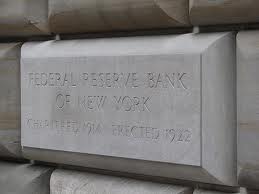
NY Fed Reserve Bank

Conclusion

Your thoughts and comments on this ME-P are appreciated. Feel free to review our top-left column, and top-right sidebar materials, links, URLs and related websites, too. Then, subscribe to the ME-P. It is fast, free and secure.

Speaker: If you need a moderator or speaker for an upcoming event, Dr. David E. Marcinko; MBA – Publisher-in-Chief of the Medical Executive-Post – is available for seminar or speaking engagements. Contact: MarcinkoAdvisors@msn.com

OUR OTHER PRINT BOOKS AND RELATED INFORMATION SOURCES:

***

Risk Management, Liability Insurance, and Asset Protection Strategies for Doctors and Advisors: Best Practices from Leading Consultants and Certified Medical Planners™8Comprehensive Financial Planning Strategies for Doctors and Advisors: Best Practices from Leading Consultants and Certified Medical Planners™

***

DOES THE STOCK MARKET OVER-REACT?

Join Our Mailing List 

Some say it does!

ArtBy Arthur Chalekian GEPC

[Financial Consultant]

Some experts say it does. In 1985, Werner DeBondt, currently a professor of finance at DePaul University, and Richard Thaler, currently a professor of behavioral science and economics at the University of Chicago, published an article titled, Does The Stock Market Overreact? 

Professor Speak

The professors were among the first economists to study behavioral finance, which explores the ways in which psychology explains investors’ behavior. Classic economic theory assumes all people make rational decisions all the time and always act in ways that optimize their benefits. Behavioral finance recognizes people don’t always act in rational ways, and it tries to explain how irrational behavior affects markets.

Research 

DeBondt and Thaler’s research, which has been explored and disputed over the years, supported the idea that markets tend to overreact to “unexpected and dramatic news and events.” The pair found people tend to give too much weight to new information. As a result, stock markets often are buffeted by bouts of optimism and bouts of pessimism, which push stock prices higher or lower than they deserve to be.

***

ambulance

***

In a recent memo, Oaktree Capital’s Howard Marks reiterated his long-held opinion, “…In order to be successful, an investor has to understand not just finance, accounting, and economics, but also psychology.” He makes a good point.

Assessment 

When markets become volatile, it’s a good idea to remember the words of Benjamin Graham, author of The Intelligent Investor, who wrote, “By developing your discipline and courage, you can refuse to let other people’s mood swings govern your financial destiny. In the end, how your investments behave is much less important than how you behave.”

Conclusion

Your thoughts and comments on this ME-P are appreciated. Feel free to review our top-left column, and top-right sidebar materials, links, URLs and related websites, too. Then, subscribe to the ME-P. It is fast, free and secure.

Speaker: If you need a moderator or speaker for an upcoming event, Dr. David E. Marcinko; MBA – Publisher-in-Chief of the Medical Executive-Post – is available for seminar or speaking engagements. Contact: MarcinkoAdvisors@msn.com

OUR OTHER PRINT BOOKS AND RELATED INFORMATION SOURCES:

Risk Management, Liability Insurance, and Asset Protection Strategies for Doctors and Advisors: Best Practices from Leading Consultants and Certified Medical Planners™8Comprehensive Financial Planning Strategies for Doctors and Advisors: Best Practices from Leading Consultants and Certified Medical Planners™

***

Financial Headlines Round-Up for 2015

Join Our Mailing List

LOOKING BACK … In Review  

The Economist Explains’

Art

By Arthur Chalekian GEPC

[Elite Financial Partners]

Each week, The Economist blog expounds on subjects ranging from current events to economics, from philosophical or scientific issues to everyday oddities.

***

Let’s take a quick look at a few of its headlines during 2015

***

Why the Swiss unpegged the Swiss franc (January 18, 2015). Remember when the Swiss National Bank removed its currency peg last January? The Swiss franc realized double-digit gains in value and the Swiss stock market dropped.

Everything you want to know about falling oil prices (March 18, 2015). “The main reason for falling prices is increased supply from America thanks to its fracking boom, which has reduced its demand for oil imports. Other countries, notably Saudi Arabia, have been loth to curb supply lest they lose their share of the global oil market.”

Why so many Dutch people work part time (May 11, 2015). More than one-half of the working population in Netherlands is employed part-time – a higher percentage than anywhere else in the world. “This is partly a relic of prevailing Christian attitudes which said that mothers should be home for tea time and partly down to the wide availability of well-paid “first tier” part-time jobs.”

What Greece must do to receive a new bail-out (July 14, 2015). After challenging negotiations, Greece and its European creditors cut a deal, allowing the country to remain in the euro area.

China’s botched stock market rescue (July 30, 2015). Chinese stocks lost nearly a third of their value last summer. China’s authorities “resorted to heavy-handed measures to prop up swooning share prices, from pressuring banks to buy stocks to blocking big investors from selling theirs.”

Why is the Nobel prize in chemistry given for things that are not chemistry (October 7, 2015)? Apparently, five of the last 10 Nobel chemistry prizes have been awarded for pursuits that might better be described as biology. A possible explanation is “the diversity of chemistry prizes reflects the fact that chemistry is found everywhere…”

How the Fed will raise interest rates (December 14, 2015). Just as the Fed employed unconventional monetary tools to stimulate the economy, it is using new policy tools to try to increase the Fed funds rate.

***

gas_pump_1

***

Oil Prices

Down…down…down! Need we say more?

Assessment 

We hope 2015 has been a memorable and rewarding year for you, and we look forward to working with you, and the ME-P, in the New Year.

Conclusion

Your thoughts and comments on this ME-P are appreciated. Feel free to review our top-left column, and top-right sidebar materials, links, URLs and related websites, too. Then, subscribe to the ME-P. It is fast, free and secure.

Speaker: If you need a moderator or speaker for an upcoming event, Dr. David E. Marcinko; MBA – Publisher-in-Chief of the Medical Executive-Post – is available for seminar or speaking engagements. Contact: MarcinkoAdvisors@msn.com

OUR OTHER PRINT BOOKS AND RELATED INFORMATION SOURCES:

***

[PHYSICIAN FOCUSED FINANCIAL PLANNING AND RISK MANAGEMENT COMPANION TEXTBOOK SET]

  Risk Management, Liability Insurance, and Asset Protection Strategies for Doctors and Advisors: Best Practices from Leading Consultants and Certified Medical Planners™   Comprehensive Financial Planning Strategies for Doctors and Advisors: Best Practices from Leading Consultants and Certified Medical Planners™

[Dr. Cappiello PhD MBA] *** [Foreword Dr. Krieger MD MBA]

***

Second Guessing the FED

Join Our Mailing List

A HISTORICAL CHAIR REVIEW

Art

By Arthur Chalekian GEPC

[Elite Financial Partners]

***

AN AGE OLD AMERICAN PASTIME

Americans have been speculating about the Federal Reserve’s monetary policy choices – rate hikes, rate declines, quantitative easing, etc. – for a long time. It’s clear when you take a look at a few modern Fed Chairs and the Fed’s activities under their leadership.

Paul Volcker (1979-1987) took over an economic quagmire known as The Great Inflation. In the early 1980s, U.S. inflation was 14 percent and unemployment reached 9.7 percent. Volcker unexpectedly raised the Fed funds rate by 4 percent in a single month, following a secret and unscheduled Federal Open Market Committee meeting. His policies initially sent the country into recession. The St. Louis Fed reported “Wanted” posters targeted Volcker for “killing” so many small businesses. By the mid-1980s, employment and inflation reached targeted levels.

Alan Greenspan (1987-2006) was in charge through two U.S. recessions, the Asian financial crisis, and the September 11 terrorist attacks. Regardless, he oversaw the country’s longest peacetime expansion. In the late 1990s, when financial markets were bubbly, critics suggested, “…Mr. Greenspan’s monetary policies spawned an era of booms and busts, culminating in the 2008 financial crisis.”

Ben Bernanke (2006-2014) took the helm of the Fed just before the financial crisis and Great Recession. When economic growth collapsed in 2007, the Fed lowered rates and adopted unconventional monetary policy (quantitative easing) in an effort to stimulate economic growth. In 2012, economist Paul Krugman called Bernanke out in The New York Times, “…the fact is that the Fed isn’t doing the job many economists expected it to do, and a result is mass suffering for American workers.”

Janet Yellen (2014-present) is the current Chairwoman of the Fed. Under Yellen’s leadership, after providing abundant guidance, the Fed raised rates for the first time in seven years. The International Business Times reported several prominent economists think the increase was premature, in part, because there are few signs of inflation in the U.S. economy.

Assessment 

In many cases, it’s difficult to gauge the achievements and/or failures of a leader – Fed Chairperson, President, Congressman, or Congresswoman – until the economic or political dust settles. Sometimes, that’s long after they’ve left office.  

Conclusion

Your thoughts and comments on this ME-P are appreciated. Feel free to review our top-left column, and top-right sidebar materials, links, URLs and related websites, too. Then, subscribe to the ME-P. It is fast, free and secure.

Speaker: If you need a moderator or speaker for an upcoming event, Dr. David E. Marcinko; MBA – Publisher-in-Chief of the Medical Executive-Post – is available for seminar or speaking engagements. Contact: MarcinkoAdvisors@msn.com

OUR OTHER PRINT BOOKS AND RELATED INFORMATION SOURCES:

Comprehensive Financial Planning Strategies for Doctors and Advisors: Best Practices from Leading Consultants and Certified Medical Planners™

***

FORECASTS – IT’S THAT TIME OF THE YEAR FOR [Physician] INVESTORS

Join Our Mailing List 

No, not the holidays!

Art

By Arthur Chalekian GEPC

[Financial Consultant]

 ***

It’s the time when physician investors begin to consider pundits’ forecasts for the coming year.

Here are a few of those forecasts:     

1. “Flat is the new up,” was the catch phrase for Goldman Sachs’ analysts last August, and their outlook doesn’t appear to have changed for the United States. In Outlook 2016, they predicted U.S. stocks will have limited upside next year and expressed concern that positive economic news may bring additional Fed tightening. Goldman expects global growth to stabilize during 2016 as emerging markets rebound, and Europe and Japan may experience improvement.

2. Jeremy Grantham of GMO, who is known for gloomy outlooks, is not concerned about the Federal Reserve raising rates, according to Financial Times (FT). FT quoted Grantham as saying,

“We might have a wobbly few weeks … but I’m sure the Fed will stroke us like you wouldn’t believe and the markets will settle down, and most probably go to a new high.”

Grantham expects the high to be followed by a low. He has been predicting global markets will experience a major decline in 2016 for a couple years, and he anticipates the downturn could be accompanied by global bankruptcies.

3. PWC’s Trendsetter Barometer offered a business outlook after surveying corporate executives. After the third quarter of 2015, it found:

“U.S. economic fundamentals remain strong, but markets and executives like predictability, and that’s not what we’ve been getting lately … Trendsetter growth forecasts are down, so are plans for [capital expenditure] spending, hiring, and more. It doesn’t help that we’ve entered a contentious 2016 election season …”

4. The Economist had this advice for investors who are reviewing economic forecasts:

“Economic forecasting is an art, not a science. Of course, we have to make some guess. The average citizen would be well advised, however, to treat all forecasts with a bucket (not just a pinch) of salt.”

***

0be5f030277425_561bf03bbcd62

[End 2015 – Begin 2016]

***

Assessment

Doctor – What are your stock market predictions for 2016?

Conclusion

Your thoughts and comments on this ME-P are appreciated. Feel free to review our top-left column, and top-right sidebar materials, links, URLs and related websites, too. Then, subscribe to the ME-P. It is fast, free and secure.

Speaker: If you need a moderator or speaker for an upcoming event, Dr. David E. Marcinko; MBA – Publisher-in-Chief of the Medical Executive-Post – is available for seminar or speaking engagements. Contact: MarcinkoAdvisors@msn.com

OUR OTHER PRINT BOOKS AND RELATED INFORMATION SOURCES:

***

Risk Management, Liability Insurance, and Asset Protection Strategies for Doctors and Advisors: Best Practices from Leading Consultants and Certified Medical Planners™8Comprehensive Financial Planning Strategies for Doctors and Advisors: Best Practices from Leading Consultants and Certified Medical Planners™

***

Are Interest Rates expected to increase in December?

Join Our Mailing List

And, the Bureau of Labor Statistics (BLS) said …

Art

By Arthur Chalekian GEPC
[Financial Consultant]

U.S. job growth surpassed expectations in October. About 271,000 jobs were created across diverse industries: professional and business services, health care, retail, construction, and others. That was a significantly higher number than predicted by economists who participated in a survey conducted by The Wall Street Journal. They expected to see 183,000 new jobs for October.

BLS revised

The BLS revised August and September jobs numbers higher overall and reported improvement on the wage front, too. Average hourly earnings increased by nine cents during October. For the year, hourly earnings are up 2.5 percent. Rising wages and a 5 percent unemployment rate “appear to indicate the labor market has reached full employment,” reported Barron’s.

Strong employment data supports the idea the Fed will begin to lift the Fed funds rate this year. On Friday, former Chairman of the Federal Reserve Ben Bernanke wrote in his blog:

“Wednesday was something of a trifecta for Fed watchers: Chair Yellen, Board Vice-Chair Stanley Fischer, and Federal Reserve Bank of New York president Bill Dudley (who is also the vice chair of the Federal Open Market Committee) all made public appearances. Moreover, the comments by all three members of the Fed’s leadership explicitly or implicitly supported the idea that a December rate increase by the FOMC is a distinct possibility. (The possibility of a rate increase is even more distinct with this morning’s strong job market report.)”

Markets responded swiftly, according to The Wall Street Journal, as investors repositioned their portfolios in anticipation of a rate hike. While stock market indices remained relatively steady, there was considerable volatility within certain sectors. An expert cited by the publication commented:

“…one of the big rotation trades on Friday was investors taking money out of companies such as utilities and real-estate-investment trusts, and putting it into those that are expected to benefit from higher rates, such as financial companies.”

Conclusion

Your thoughts and comments on this ME-P are appreciated. Feel free to review our top-left column, and top-right sidebar materials, links, URLs and related websites, too. Then, subscribe to the ME-P. It is fast, free and secure.

Speaker: If you need a moderator or speaker for an upcoming event, Dr. David E. Marcinko; MBA – Publisher-in-Chief of the Medical Executive-Post – is available for seminar or speaking engagements. Contact: MarcinkoAdvisors@msn.com

OUR OTHER PRINT BOOKS AND RELATED INFORMATION SOURCES:

***

Comprehensive Financial Planning Strategies for Doctors and Advisors: Best Practices from Leading Consultants and Certified Medical Planners(TM)

***

The Central Banks are at it Again!

Join Our Mailing List
Central banks were at it again – and markets loved it!
Art
 ***
By Arthur Chalekian GEPC [Elite Financial Partners]
 ***
Several weeks ago, European Central Bank (ECB) President Mario Draghi surprised markets when he indicated the ECB’s governing council was considering cutting interest rates and engaging in another round of quantitative easing.
The Economist explained European monetary policy was heavily tilted toward growth before the announcement:
 ***
“The ECB is already delivering a hefty stimulus to the Euro area, following decisions taken between June 2014 and early 2015. It has introduced a negative interest rate, of minus 0.2%, which is charged on deposits left by banks with the ECB. It has also been providing ultra-cheap, long-term funding to banks provided that they improve their lending record to the private sector. And, most important of all, in January it announced a full-blooded program of quantitative easing (QE) – creating money to buy financial assets – which got under way in March with purchases of €60 billion ($68 billion) of mainly public debt each month until at least September 2016.”
***
Despite these hefty measures, recovery in the Euro area has been anemic, and deflation remains a significant issue. According to Draghi, Euro area QE is expected to continue until there is “a sustained adjustment in the path of inflation.” Europe is shooting for 2 percent inflation, just like the United States.
***
The People’s Bank of China (PBOC) eased monetary policy last week, too. On Monday, data showed the Chinese economy grew by 6.9 percent during the third quarter, year-over-year. Projections for future growth remain muted, according to BloombergBusiness. On Friday, the PBOC indicated it was cutting interest rates for the sixth time in 12 months.
***
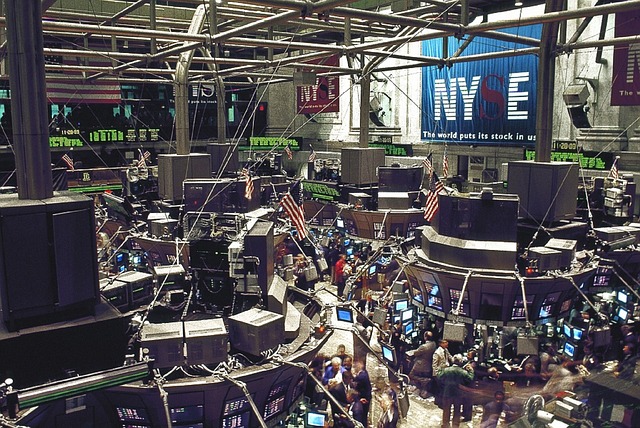
stock-exchange
 ***
U.S. markets thrilled to the news. The Dow Jones Industrial Average, Standard & Poor’s 500 Index, and NASDAQ were all up more than 2 percent for the week. Many global markets delivered positive returns for the week, as well.
***
Conclusion
Your thoughts and comments on this ME-P are appreciated. Feel free to review our top-left column, and top-right sidebar materials, links, URLs and related websites, too. Then, subscribe to the ME-P. It is fast, free and secure.

Speaker: If you need a moderator or speaker for an upcoming event, Dr. David E. Marcinko; MBA – Publisher-in-Chief of the Medical Executive-Post – is available for seminar or speaking engagements. Contact: MarcinkoAdvisors@msn.com

OUR OTHER PRINT BOOKS AND RELATED INFORMATION SOURCES:

***

[PHYSICIAN FOCUSED FINANCIAL PLANNING AND RISK MANAGEMENT COMPANION TEXTBOOK SET]

  Risk Management, Liability Insurance, and Asset Protection Strategies for Doctors and Advisors: Best Practices from Leading Consultants and Certified Medical Planners™ Comprehensive Financial Planning Strategies for Doctors and Advisors: Best Practices from Leading Consultants and Certified Medical Planners™

 ***

Investors are allowed to change their minds

Join Our Mailing List 
The Markets
Art

By Arthur Chalekian GEPC

[Financial Consultant]

***

They’re investors. They’re allowed to change their minds.
*** 
Just a few weeks ago, on September 17, the Federal Reserve Open Market Committee (FOMC) decided to leave the fed funds rate unchanged. In part, this was because, “Recent global economic and financial developments may restrain economic activity somewhat and are likely to put further downward pressure on inflation in the near term.”
 
The next day, September 18, stock markets tumbled. By the time September was over, many markets had closed on their worst quarter in four years, according to the BBC. The Dow Jones Industrial Average fell by almost 8 percent, Britain’s FTSE 100 was down 7 percent, Germany’s Dax was off by almost 12 percent, and the Shanghai Composite lost more than 24 percent.
 
Last week, on Thursday, the minutes of the FOMC meeting were released. Investors’ response was quite different. Barron’s reported many believe a rate hike during 2015 is less likely than it once was, and that reinvigorated investor optimism:
 
“Going into Friday’s session, global equity markets’ valuations were enriched by some $2.5 trillion, according to Bloomberg calculations. As for U.S. stocks, Wilshire Associates reckons that they tacked on 3.44 percent, or approximately $800 billion, over the full week, based on the gain in the Wilshire 5000 index, their biggest weekly gain in nearly 12 months.”
 
Why does the same news elicit two very different responses? There are many reasons. Foremost among them is the fact a lot of elements influence markets – investor confidence, company valuations, central bank actions, automated trading, and many others.
***
Stock_Market
***
Assessment
 
What does last week’s upward push mean? One analyst cited by Barron’s suggested we’re seeing a bear market rally, but only time will tell.
***
Conclusion

Your thoughts and comments on this ME-P are appreciated. Feel free to review our top-left column, and top-right sidebar materials, links, URLs and related websites, too. Then, subscribe to the ME-P. It is fast, free and secure.

Speaker: If you need a moderator or speaker for an upcoming event, Dr. David E. Marcinko; MBA – Publisher-in-Chief of the Medical Executive-Post – is available for seminar or speaking engagements. Contact: MarcinkoAdvisors@msn.com

OUR OTHER PRINT BOOKS AND RELATED INFORMATION SOURCES:

Risk Management, Liability Insurance, and Asset Protection Strategies for Doctors and Advisors: Best Practices from Leading Consultants and Certified Medical Planners™8Comprehensive Financial Planning Strategies for Doctors and Advisors: Best Practices from Leading Consultants and Certified Medical Planners™

***

The third quarter for 2015 was a REAL humdinger!

 Join Our Mailing List
The Markets – Update
Art

By Arthur Chalekian GEPC

[Financial Consultant]

Well, the third quarter for 2015 was a REAL humdinger!
                                            ***
It began with the first International Monetary Fund (IMF) default by a developed country (Greece) and finished with Hurricane Joaquin possibly headed toward the east coast. In between, China’s stock market tumbled, the Federal Reserve tried to interpret conflicting signals, and trade growth slowed globally. After such a stressful quarter, we may see an uptick in the quantity of alcoholic beverages consumed per person around the world. That number had declined (along with economic growth in China) between 2012 and 2014, according to The Economist.
***
No Grexit – for now
Despite defaulting on its IMF loan, rejecting a multi-billion-euro bailout plan, and closing its banks for more than two weeks, Greece was not forced out of the Eurozone. Instead, Europe cooked up a deal that left the IMF unhappy and analysts shaking their heads. The Economist reported the new deal for Greece was an exercise in wishful thinking. The problem is the deal relies on “the same old recipe of austerity and implausible assumptions. The IMF is supposed to be financing part of the bailout. Even it thinks the deal makes no sense.” It’s a recipe we’re familiar with in the United States: When in doubt, defer the problem to the future.
***
A downturn in China
Despite reports from the Chinese government that it hit its economic growth target (7 percent) on the nose during the first two quarters of the year, The Economist was skeptical about the veracity of those claims. During the first quarter.
***
“Growth in industrial production was the weakest since the depths of the financial crisis; the property market, a pillar of the economy, crumbled. China reported real growth (i.e., after accounting for inflation) of 7 percent year-on-year in the first quarter, but nominal growth of just 5.8 percent.”
***
That statistical sleight of hand implies China experienced deflation early in the year. It did not.
On a related note, from mid-June through the end of the third quarter, the Shenzhen Stock Exchange Composite Index fell from 3,140 to about 1,716, according to BloombergBusiness. That’s about a 45 percent decline in value.
***
Red light, green light at the Federal Reserve
Green light: employment numbers. Red light: consumer prices, inflation expectations, wages, and global growth. Late in the quarter, the Federal Reserve decided not to begin tightening monetary policy.
According to Reuters, voting members of the Federal Open Market Committee (FOMC) decided uncertainty in global markets had the potential to negatively affect domestic economic strength. They may have been right. The Wall Street Journal reported, although unemployment remained at 5.1 percent, just 142,000 jobs were added in September. That was significantly below economists’ expectations that 200,000 jobs would be created. The Journal suggested the labor market has downshifted after 18 months of solid jobs creation.
***
Global trade in the doldrums
The global economy isn’t as robust as many expected it to be. According to the Business Standard, the World Trade Organization (WTO) lowered its forecast for global trade growth during 2015 from 3.3 percent to 2.8 percent. Falling demand for imports in developing nations and low commodity prices are translating into less global trade. Expectations are trade growth will be 3.9 percent in 2016, which could help support global economic growth.
***
Coming Change
America’s share of the global economy is potent. Our country accounts for 16 percent (after being adjusted for currency differences) of the world’s gross domestic product (GDP) and 12 percent of merchandise trade.
Again, according to The Economist, we dominate “the brainiest and most complex parts of the global economy.” Our presence is strong in social media, cloud computing, venture capital, and finance. In addition, the dollar is the world’s dominant currency. While the view from the top is pleasing, we may not be there forever. The Economist explained:
***
“In the first change in the world economic order since 1920-45, when America overtook Britain, [America’s] dominance is now being eroded. As a share of world GDP, America and China (including Hong Kong) are neck and neck at 16 percent and 17 percent respectively, measured at purchasing-power parity. At market exchange rates, a fair gap remains with America at 23 percent and China at 14 percent … But any reordering of the world economy’s architecture will not be as fast or decisive as it was last time…the Middle Kingdom is a middle-income country with immature financial markets and without the rule of law. The absence of democracy, too, may be a serious drawback.”
***
It may be hard to believe, in light of recent economic and market events in China, but change is on its way. Regardless, the influence of the United States should continue to be powerful well into the future.

Conclusion

Your thoughts and comments on this ME-P are appreciated. Feel free to review our top-left column, and top-right sidebar materials, links, URLs and related websites, too. Then, subscribe to the ME-P. It is fast, free and secure.

Speaker: If you need a moderator or speaker for an upcoming event, Dr. David E. Marcinko; MBA – Publisher-in-Chief of the Medical Executive-Post – is available for seminar or speaking engagements. Contact: MarcinkoAdvisors@msn.com

OUR OTHER PRINT BOOKS AND RELATED INFORMATION SOURCES:

***

Comprehensive Financial Planning Strategies for Doctors and Advisors: Best Practices from Leading Consultants and Certified Medical Planners(TM)

Front Matter with Foreword by Jason Dyken MD MBA

logos

“BY DOCTORS – FOR DOCTORS – PEER REVIEWED – FIDUCIARY FOCUSED”

***

The IGs [Ig® Nobel Prize Ceremony] are In!

Join Our Mailing List

IT’S OFFICIAL …. THE IGs ARE IN … Really!

ImageProxy

By Arthur Chalekian GEPC  www.elitefinancialpartners.com

Ignoble is a word rarely heard in everyday conversation. Merriam-Webster defines it as meaning, “of low birth or common origin, or characterized by baseness, lowness, or meanness.” 

***

The 25th First Annual Ig® Nobel Prize Ceremony was held last week at Harvard University. Improbable.com reported, “Winners traveled to the ceremony, at their own expense, from around the world to receive their prizes from a group of genuine, genuinely bemused Nobel Laureates…”  Winners completed research that made people laugh and then caused them to think.
  • The Management Prize went to Gennaro Bernile, Vineet Bhagwat, and P. Raghavendra Rau, authors of ‘What Doesn’t Kill You Will Only Make You More Risk-Loving: Early-Life Disasters and CEO Behavior.’ They examined the link between CEOs’ early-life exposure to major fatal disasters and the financial and investment policies adopted by their companies. They found, “CEOs who experience fatal disasters without extremely negative consequences lead firms that behave more aggressively, whereas CEOs who witness the extreme downside of disasters behave more conservatively.”
  • The Economics Prize was awarded to the Bangkok Metropolitan Police, which implemented a new policy in an effort to reduce bribery. They pay a bonus to police officers who refuse to accept bribes, even though the officers are required by law not to accept bribes. (It’s a concept that may resonate with parents.)
  • The Literature Prize went to Mark Dingemanse, Francisco Torreira, and Nick J. Enfield, who presented evidence and arguments supporting the idea that ‘huh?’ is a word, and that it “is found in roughly the same form and function in spoken languages across the globe.”
Assessment
If you’re interested in learning about the ignoble undertakings of other winners (who documented chicken walking like dinosaurs, created bee sting pain indices, and completed other thought-provoking experiments), visit www.Improbable.com

Conclusion

Your thoughts and comments on this ME-P are appreciated. Feel free to review our top-left column, and top-right sidebar materials, links, URLs and related websites, too. Then, subscribe to the ME-P. It is fast, free and secure.

Speaker: If you need a moderator or speaker for an upcoming event, Dr. David E. Marcinko; MBA – Publisher-in-Chief of the Medical Executive-Post – is available for seminar or speaking engagements. Contact: MarcinkoAdvisors@msn.com

OUR OTHER PRINT BOOKS AND RELATED INFORMATION SOURCES:

***

[HEALTH INSURANCE, MANAGED CARE, ECONOMICS, FINANCE AND HEALTH INFORMATION TECHNOLOGY COMPANION DICTIONARY SET]

      Product DetailsProduct DetailsProduct Details

[Mike Stahl PhD MBA] *** [Foreword Dr.Mata MD CIS] *** [Dr. Getzen PhD]

***

ARE WE SEEING THE BIG PICTURE ON ECONOMIC GROWTH?

Join Our Mailing List 

On changing monetary policy   

Art

By Arthur Chalekian, GEPC

[Financial Consultant – Elite Financial Partners]

Economic Growth

It’s safe to say many people – like doctors ad medical professionals – are worried about whether economic growth – in the United States and abroad – will be stifled by changing monetary policy in the United States. As a result, all eyes have been on the Federal Reserve, which is expected to begin raising the Fed funds rates sometime soon. But, it didn’t happen on 9/17/15.

However, the Federal Reserve’s monetary policy isn’t the only game in town. Fiscal policy – the actions taken by our government – can also have a profound effect on economic growth. A July Brookings’ blog post ‘Fiscal Headwinds are Abating,’ reported:

“Tight fiscal policy by local, state, and federal governments held down economic growth for more than four years, but that restraint finally appears to be over….Fiscal policy is no longer a source of contraction for the economy, but neither is it a source of strength.”

The blog post discusses the reasons that government spending has held back economic growth. At the federal level, contraction was attributed to “… tight caps on annually appropriated spending and the automatic spending cuts known as sequestration.” The organization’s Federal Impact Measure (FIM), which estimates the effect of federal, state, and local spending (and taxes) on gross domestic product growth, suggests federal spending caused economic growth to be 0.35 percentage points lower per year, on average, between 2011 and 2013.

There is talk of a government shutdown at the end of September. If it happens, it could have an effect on economic growth. The last time the government shut down was in 2013. Experts cited by the BBC reported the 2013 shutdown cost the U.S. economy about $24 billion and reduced quarterly economic growth by 0.6 percent. That shutdown lasted 16 days.

***

stock-exchange-

***

Assessment

It is possible economic growth may slow for some period of time. It’s also possible monetary policy, fiscal policy, and other factors may be responsible.

Conclusion

Your thoughts and comments on this ME-P are appreciated. Feel free to review our top-left column, and top-right sidebar materials, links, URLs and related websites, too. Then, subscribe to the ME-P. It is fast, free and secure.

Speaker: If you need a moderator or speaker for an upcoming event, Dr. David E. Marcinko; MBA – Publisher-in-Chief of the Medical Executive-Post – is available for seminar or speaking engagements. Contact: MarcinkoAdvisors@msn.com

OUR OTHER PRINT BOOKS AND RELATED INFORMATION SOURCES:

 Our New Text – “Take a Peek Inside – Now Available

Comprehensive Financial Planning Strategies for Doctors and Advisors: Best Practices from Leading Consultants and Certified Medical Planners(TM)

Front Matter with Foreword by Jason Dyken MD MBA

logos

“BY DOCTORS – FOR DOCTORS – PEER REVIEWED – FIDUCIARY FOCUSED”

***