







 Support our online development, and advance our onground research initiatives in free market economics, as we seek to showcase the brightest Next-Gen minds.
THE ME-P DISCLAIMER: Posts, comments and opinions do not necessarily represent iMBA, Inc., but become our property after submission. Copyright © 2006 to-date. iMBA, Inc allows colleges, universities, medical and financial professionals and related clinics, hospitals and non-profit healthcare organizations to distribute our proprietary essays, photos, videos, audios and other documents; etc. However, please review copyright and usage information for each individual asset before submission to us, and/or placement on your publication or web site. Attestation references, citations and/or back-links are required. All other assets are property of the individual copyright holder.
Support our online development, and advance our onground research initiatives in free market economics, as we seek to showcase the brightest Next-Gen minds.
THE ME-P DISCLAIMER: Posts, comments and opinions do not necessarily represent iMBA, Inc., but become our property after submission. Copyright © 2006 to-date. iMBA, Inc allows colleges, universities, medical and financial professionals and related clinics, hospitals and non-profit healthcare organizations to distribute our proprietary essays, photos, videos, audios and other documents; etc. However, please review copyright and usage information for each individual asset before submission to us, and/or placement on your publication or web site. Attestation references, citations and/or back-links are required. All other assets are property of the individual copyright holder.


DEFINITIONS
By Staff Reporters
SPONSOR: http://www.MarcinkoAssociates.com
***
***
Seed money, also known as seed funding or seed capital, is a form of securities offering in which an investor puts capital in a startup company in exchange for an equity stake or convertible note stake in the company.
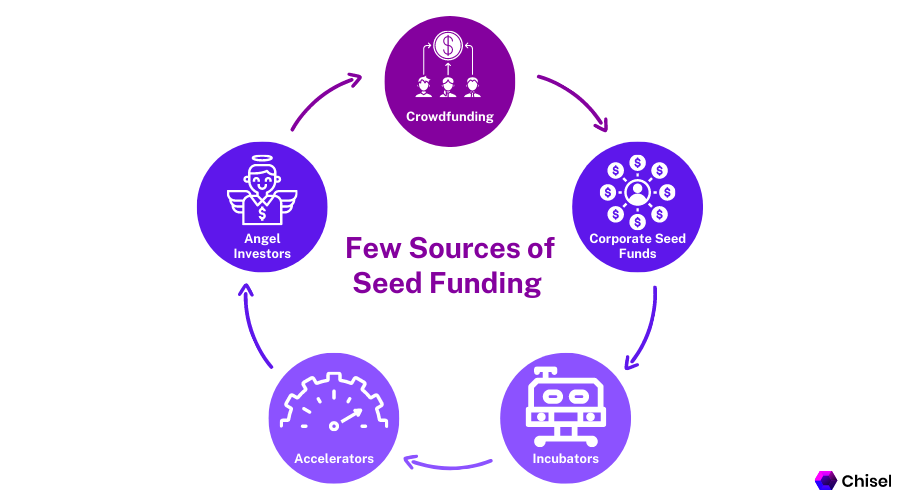
The term seed suggests that this is a very early investment, meant to support the business until it can generate cash of its own, or until it is ready for further investments. Seed money options include friends and family funding, seed venture capital funds, angel funding, and crowdfunding.
Types of Seed funding
- Friends and family funding: This type of seed funding involves raising money from friends and family members.
- Angel investing: As mentioned above, angel investors are wealthy individuals who provide seed funding in exchange for equity ownership.
- Seed accelerators: These are programs that provide startups with seed funding, mentorship, and resources to help them grow their businesses.
- Crowdfunding: This type of funding allows startups to raise money from a large number of people, typically through an online platform.
- Incubators: These are organizations that provide startups with seed funding, office space, and resources to help them grow their businesses.
- Government grants: Some government agencies provide seed funding for startups working on specific projects or in specific industries.
- Corporate ventures: Some big companies set up venture arms to provide seed funding to startups in their industry or complementary field.
- Micro-Venture Capital: A type of venture capital that provides seed funding to new startups and early-stage companies with a small amount of money.
COMMENTS APPRECIATED
Refer and Subscribe
***
***
Share this:

Filed under: "Ask-an-Advisor", Alternative Investments, Experts Invited, Funding Basics, Glossary Terms, Investing, Touring with Marcinko | Tagged: angel funding, angel investing, capital, corporate seed funds, crowd funding, crowd sourcing, funding, investors, Marcinko, micro-venture capital, seed capital, seed funds, seed money, Venture Capital | Leave a comment »






 The Leading Business Education Network for Doctors, Financial Advisors and Health Industry Consultants