Investing “Tips” on Initial Public Offerings [IPOs]

Some Investing Tips and Pearls

By Dr. David Marcinko MBA MEd CMP

http://www.MarcinkoAssociates.com

Initial public offerings, known as IPOs, tend to attract a lot of investor interest – especially when the company is well-known. However, that excitement isn’t always matched by investment returns.

“Tips and Pearls”

So, here are some tips to consider before you decide to invest in an IPO:

• Don’t let the excitement surrounding an IPO cloud your judgment. Too often, there is little financial information about the companies themselves, and many are not profitable. This can translate into extremely volatile stock prices.

• While an IPO’s stock price tends to rise on the day it begins trading, investors who bought shares at the end of the first day haven’t always fared well. The stocks have often fallen below the closing first-day price after six months.

High volatility and a falling stock price are not generally a recipe for attractive investor returns.

So what steps should you take if you’re still interested in an IPO?

1. Understand that the opening price will likely be different from the official IPO price. New issues can experience extreme volatility in the first few hours and days of trading in the secondary market. When the company’s stock opens for secondary trading and becomes more widely available, the price can be significantly different from the IPO price set by the security underwriters. In addition, new issues often do not begin trading the moment the market opens.

2. Use a limit order. This can help you avoid paying more for the stock than you intended. Once you understand the risks of purchasing a stock during its first public trading days, work with your financial advisor to determine the highest price you’re willing to pay for the stock, and then set that amount as your limit.

3. Remember that an IPO must be priced before an order can be accepted. For example, Edward Jones typically does not accept orders until after an IPO has been priced, which is usually the morning the new issue begins trading. In addition, your financial advisor is not permitted to accept market orders for any IPO prior to its trading in the secondary market.

***

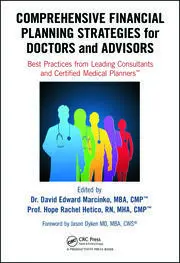
https://www.amazon.com/Comprehensive-Financial-Planning-Strategies-Advisors/dp/1482240289/ref=sr_1_1?ie=UTF8&qid=1418580820&sr=8-1&keywords=david+marcinko

***

Assessment

Remember to always do your homework before deciding on any investment, including an IPO. This includes working with your financial advisor or accountant to determine whether the investment is suitable for your portfolio.

Conclusion

Your thoughts and comments on this ME-P are appreciated. Feel free to review our top-left column, and top-right sidebar materials, links, URLs and related websites, too. Then, subscribe to the ME-P. It is fast, free and secure.

Speaker: If you need a moderator or speaker for an upcoming event, Dr. David E. Marcinko; MBA – Publisher-in-Chief of the Medical Executive-Post – is available for seminar or speaking engagements.

Book Marcinko: https://medicalexecutivepost.com/dr-david-marcinkos-bookings/

Subscribe: MEDICAL EXECUTIVE POST for curated news, essays, opinions and analysis from the public health, economics, finance, marketing, IT, business and policy management ecosystem.

***

Risk Management, Liability Insurance, and Asset Protection Strategies for Doctors and Advisors: Best Practices from Leading Consultants and Certified Medical Planners™8Comprehensive Financial Planning Strategies for Doctors and Advisors: Best Practices from Leading Consultants and Certified Medical Planners™

***

On Standard & Poor’s Depository Receipts

Don’t be Afraid of ‘SPIDERS’

By Dr. David Edward Marcinko MBA MEd CMP™

http://www.CertifiedMedicalPlanner.org

[Publisher-in-Chief]

What they are – How they work?

No, I’m not talking about creepy, crawly insects. I’m referring to Standard & Poor’s Depository Receipts (SPDRs, or spiders), a derivative product, which combines many of the advantages of index funds with the superior trading flexibility of common stocks.

Creation

SPDRs were created in January 1993 by the American Stock Exchange. SPDRs are units in a trust holding the S&P 500 securities in proportion to their index weighting and which are adjusted as necessary to track changes made to the index by S&P. They pay quarterly cash dividend distributions based on the accumulated dividends paid by the stocks held in the SPDR trust minus an annual fee of about .19% of principal to cover trust expenses. They trade at approximately one-tenth the value of the index.

Conclusion

And so, your thoughts and comments on this ME-P are appreciated. Do you use SPDRs; why or why not? Feel free to review our top-left column, and top-right sidebar materials, links, URLs and related websites, too. Then, subscribe to the ME-P. It is fast, free and secure.

Speaker: If you need a moderator or speaker for an upcoming event, Dr. David E. Marcinko; MBA – Publisher-in-Chief of the Medical Executive-Post – is available for seminar or speaking engagements. Contact: MarcinkoAdvisors@msn.com

Subscribe Now: Did you like this Medical Executive-Post, or find it helpful, interesting and informative? Want to get the latest ME-Ps delivered to your email box each morning? Just subscribe using the link below. You can unsubscribe at any time. Security is assured.

Sponsors Welcomed: And, credible sponsors and like-minded advertisers are always welcomed.

Link: https://healthcarefinancials.wordpress.com/2007/11/11/advertise

Product DetailsProduct DetailsProduct Details

***

FEELING WEALTHY: How Much is [Really] Enough?

By Staff Reporters

***

***

At the most general level, economists may define wealth as “the total of anything of value” that captures both the subjective nature of the idea and the idea that it is not a fixed or static concept. Various definitions and concepts of wealth have been asserted by various people in different contexts. Defining wealth can be a normative process with various ethical implications, since often wealth maximization is seen as a goal or is thought to be a normative principle of its own. A community, region or country that possesses an abundance of such possessions or resources to the benefit of the common good is known as wealthy.

What does wealth mean to you?

In a recent survey by Edelman Financial Engines, 57% of respondents said they’d feel wealthy if they had $1 million in the bank. But for many people, that’s not enough.

Among those with $500,000 and $3 million in assets, 53% said it would take over $3 million in the bank for them to feel wealthy, and 33% said it would take over $5 million. Given that these are amounts some people will never even come close to amassing in their lifetimes, it may be hard to wrap your head around these answers.

***

ORDER: https://www.routledge.com/Comprehensive-Financial-Planning-Strategies-for-Doctors-and-Advisors-Best/Marcinko-Hetico/p/book/9781482240283

***

COMMENTS APPRECIATED

Thank You

***

DAILY UPDATE: Unemployment Rate, Banking Rules and Mental Health as the Markets Continue to Rise

MEDICAL EXECUTIVE-POST TODAY’S NEWSLETTER BRIEFING

***

Essays, Opinions and Curated News in Health Economics, Investing, Business, Management and Financial Planning for Physician Entrepreneurs and their Savvy Advisors and Consultants

Serving Almost One Million Doctors, Financial Advisors and Medical Management Consultants Daily

A Partner of the Institute of Medical Business Advisors , Inc.

http://www.MedicalBusinessAdvisors.com

SPONSORED BY: Marcinko & Associates, Inc.

***

http://www.MarcinkoAssociates.com

Daily Update Provided By Staff Reporters Since 2007.
How May We Serve You?
© Copyright Institute of Medical Business Advisors, Inc. All rights reserved. 2024

REFER A COLLEAGUE: MarcinkoAdvisors@msn.com

SPONSORSHIPS AVAILABLE: https://medicalexecutivepost.com/sponsors/

ADVERTISE ON THE ME-P: https://tinyurl.com/ytb5955z

Your Referral Count -0-

After rising for more than a year, the unemployment rate fell to 4.2% in August from 4.3% in July, the Bureau of Labor Statistics reported. That dip matched Wall Street’s consensus forecast, but the 142,000 new jobs added fell short of the 160,000 that analysts had expected, according to FactSet data cited by CNN.

The Biden administration released a final rule this week that would require payers to cover behavioral health services, including addiction care, to the same extent that they’d cover all other forms of healthcare. The move comes amid a rising mental health crisis in the US and in light of the fact that the vast majority of people with substance use disorders don’t receive treatment.

CITE: https://www.r2library.com/Resource

What’s up

  • Dave & Busters Entertainment popped 4.66% after announcing strong sales and earnings growth last quarter, along with opening 13 new locations (more tokens for everyone!).
  • Petco Health and Wellness roared 32.90% despite mixed earnings last quarter, though shareholders wagged their tails at new CEO Joel Anderson’s plans to improve profitability.
  • Viking Therapeutics rose 11.31% thanks to JP Morgan initiating coverage of the company with a bullish overweight rating.

What’s down

  • Bank of America slipped 0.71% after a new filing revealed that Warren Buffett sold more shares of the company last quarter.
  • Rentokil Initial plummeted 21.07% once the pest control company made it clear that slow sales and currency exchange rates will take a $105 million toll on full-year profits.

CITE: https://tinyurl.com/2h47urt5

Here’s where the major benchmarks ended:

  • The SPX rose 59 points (1.0%) to 5,554.13; the Dow Jones Industrial Average® ($DJI) gained 125 points (0.3%) to 40,861.71; the NASDAQ Composite® ($COMP)rose 370 points (2.17%) to 17,395.53.
  • The 10-year Treasury note yield (TNX) climbed just under two basis points to 3.66%.
  • The CBOE Volatility Index® (VIX) fell to 17.7, the lowest close so far this month.

CITE: https://tinyurl.com/tj8smmes

Planned Fed rules are a win for big banks. The likes of JPMorgan and Bank of America celebrated the Fed walking back some of its proposals for tighter banking rules yesterday

Visualize: How private equity tangled banks in a web of debt, from the Financial Times.

COMMENTS APPRECIATED

PLEASE SUBSCRIBE: MarcinkoAdvisors@msn.com

Thank You

***

***

***

***

EDUCATIONAL TEXTBOOKS: https://tinyurl.com/4zdxuuwf

***