







 Support our online development, and advance our onground research initiatives in free market economics, as we seek to showcase the brightest Next-Gen minds.
THE ME-P DISCLAIMER: Posts, comments and opinions do not necessarily represent iMBA, Inc., but become our property after submission. Copyright © 2006 to-date. iMBA, Inc allows colleges, universities, medical and financial professionals and related clinics, hospitals and non-profit healthcare organizations to distribute our proprietary essays, photos, videos, audios and other documents; etc. However, please review copyright and usage information for each individual asset before submission to us, and/or placement on your publication or web site. Attestation references, citations and/or back-links are required. All other assets are property of the individual copyright holder.
Support our online development, and advance our onground research initiatives in free market economics, as we seek to showcase the brightest Next-Gen minds.
THE ME-P DISCLAIMER: Posts, comments and opinions do not necessarily represent iMBA, Inc., but become our property after submission. Copyright © 2006 to-date. iMBA, Inc allows colleges, universities, medical and financial professionals and related clinics, hospitals and non-profit healthcare organizations to distribute our proprietary essays, photos, videos, audios and other documents; etc. However, please review copyright and usage information for each individual asset before submission to us, and/or placement on your publication or web site. Attestation references, citations and/or back-links are required. All other assets are property of the individual copyright holder.


Considerations for the Next-Generation of Potential Providers
By Brian J. Knabe MD CMP™ CFP™
SPONSOR: www.CertifiedMedicalPlanner.org
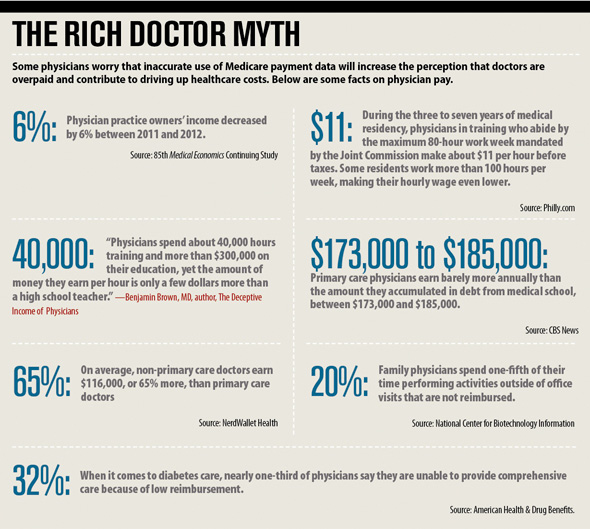
 Almost 2 decades ago, Fortune magazine carried the headline “When Six Figured Incomes Aren’t Enough. Now Doctors Want a Union.” To the man in the street, it was just a matter of the rich getting richer.
The sentiment was more precisely quantified, according to health economist and financial advisor Dr. David E. Marcinko MBA CMP™, in the March 31, 2005 issue of Physician’s Money Digest, who with Editor Gregory Kelly reported that a 47-year-old doctor with $184,000 in annual income would need about $5.5 million dollars for retirement at age 65.
Of course, physicians were not complaining back then under the traditional fee-for-service system; the imbroglio only began when managed care adversely impacted income, or when the stock market crashed in 2008; or with passage of the Patient Protection and Affordable Care Act [PP-ACA] in 2010 or its’ full implementation in 2014.
And now, in the post-Trump era?
***
More:
- More on the Doctor Salary Conundrum
- Doctor Salary v. Others [Present Value of Career Wealth]
- Are Doctors Members of the Middle Class?
- Taxing the [not so] Rich [doctors]
- Doctor – Are You on Your Way to $5.5 Million?
Conclusion
Your thoughts and comments on this ME-P are appreciated. Feel free to review our top-left column, and top-right sidebar materials, links, URLs and related websites, too. Then, subscribe to the ME-P. It is fast, free and secure.
Link: http://feeds.feedburner.com/HealthcareFinancialsthePostForcxos
Speaker: If you need a moderator or speaker for an upcoming event, Dr. David E. Marcinko; MBA – Publisher-in-Chief of the Medical Executive-Post – is available for seminar or speaking engagements. Contact: MarcinkoAdvisors@msn.com
OUR OTHER PRINT BOOKS AND RELATED INFORMATION SOURCES:


Share this:

Filed under: Career Development, Financial Planning | Tagged: physian salary, physician wealth management, rich doctors | 8 Comments »






 The Leading Business Education Network for Doctors, Financial Advisors and Health Industry Consultants