ME-P SYNDICATIONS:
WSJ.com,
CNN.com,
Forbes.com,
WashingtonPost.com,
BusinessWeek.com,
USNews.com, Reuters.com,
TimeWarnerCable.com,
e-How.com,
News Alloy.com,
and Congress.org


BOARD CERTIFICATION EXAM STUDY GUIDES
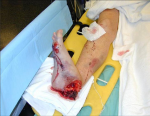
Lower Extremity Trauma
[Click on Image to Enlarge]
The “Medical Executive-Post” is about connecting doctors, health care executives and modern consulting advisors. It’s about free-enterprise, business, practice, policy, personal financial planning and wealth building capitalism. We have an attitude that’s independent, outspoken, intelligent and so Next-Gen; often edgy, usually controversial. And, our consultants “got fly”, just like U. Read it! Write it! Post it! “Medical Executive-Post”. Call or email us for your FREE advertising and sales consultation TODAY [678.779.8597] Email: MarcinkoAdvisors@outlook.com



ePodiatryConsentForms.com
Suite #5901 Wilbanks Drive, Norcross, Georgia, 30092 USA [1.678.779.8597]. Our location is real and we are now virtually enabled to assist new long distance clients and out-of-town colleagues.
If you want the opportunity to work with leading health care industry insiders, innovators and watchers, the “ME-P” may be right for you? We are unbiased and operate at the nexus of theoretical and applied R&D. Collaborate with us and you’ll put your brand in front of a smart & tightly focused demographic; one at the forefront of our emerging healthcare free marketplace of informed and professional “movers and shakers.” Our Ad Rate Card is available upon request [678-779-8597].

“Providing Management, Financial and Business Solutions for Modernity”
Whether you’re a mature CXO, physician or start-up entrepreneur in need of management, financial, HR or business planning information on free markets and competition, the "Medical Executive-Post” is the online place to meet for Capitalism 2.0 collaboration.

Support our online development, and advance our onground research initiatives in free market economics, as we seek to showcase the brightest Next-Gen minds.
THE ME-P DISCLAIMER: Posts, comments and opinions do not necessarily represent iMBA, Inc., but become our property after submission. Copyright © 2006 to-date. iMBA, Inc allows colleges, universities, medical and financial professionals and related clinics, hospitals and non-profit healthcare organizations to distribute our proprietary essays, photos, videos, audios and other documents; etc. However, please review copyright and usage information for each individual asset before submission to us, and/or placement on your publication or web site. Attestation references, citations and/or back-links are required. All other assets are property of the individual copyright holder.





 The Leading Business Education Network for Doctors, Financial Advisors and Health Industry Consultants
Financial Planning Book Review
“All physicians, and their advisors, are well served by reading this book with its step-by-step process for financial success in a complicated business full of pitfalls and misinformation. Simply put, my recommendation is to read Financial Planning for Physicians and Advisors and ‘reap’.”
Frank A. Cappiello, MBA
[President, McCullough, Andrews & Cappiello, Inc].
Distinguished Visiting Professor of Finance
Loyola College, Maryland
“This book would make an excellent reference for teaching medical students and residents the basics of monetary management. I highly recommend this book and commend Dr. Marcinko and the Institute of Medical Business Advisors, Inc. on a job well done.”
Manuel J. Colón, MD
[American College of Physycian Executives]
LikeLike
Insurance Planning and Risk Management Strategies Book Review
“This book is an excellent primer for physicians of all levels and interests providing important personal and professional advice. It is “must reading” for all medical students who need a fundamental understanding of the current healthcare environment and is equally important to the established physician executive looking for a reference on topics like capitation or the Health Insurance Portability and Accountability Act (HIPAA).”
David C. Stockwell MD
Anthony D. Slonim MD, MPH
[American College of Physician Executives]
LikeLike
Doctors Delaying Retirement Plans
With the stock markets crashing [again] around the world – did you know that slightly more than half (52 percent) of physicians, in a recent survey, say they’ve changed their retirement plans since the recession hit.
The doctors cited reasons of healthcare reform uncertainties, no longer enjoying the work, rising costs of business, family concerns, and depleting personal finances.
http://www.fiercehealthcare.com/press-releases/survey-physicians-delay-retirement-open-options?utm_medium=nl&utm_source=internal
But, should they?
Hope Rachel Hetico RN MHA
[Managing Editor]
LikeLike
Risk management—It’s not all about medical malpractice
By Murray J. Goodman, MD
In the narrow world of our day-to-day practice, orthopaedic surgeons often think of risk management strictly in terms of avoiding exposure to medical liability lawsuits. But, in Insurance and Risk Management Strategies for Physicians and Advisors, author, physician, and healthcare economist Dr. David E. Marcinko MBA, has assembled a cadre of experts who address the broader issue of risk management.
This book examines the many important risks that we as physicians face daily in the practice of medicine. You may not think of life insurance, sexual harassment, Medicare fraud, marital divorce, and privacy issues as part of a risk management plan, but they are. Dr. Marcinko has written a book that provides an initial reference point for these diverse issues.
Each of the 15 chapters covers a single area, providing a broad overview as well as specific information and recommendations. This book addresses the personal, professional and business risks physicians face on a daily basis.
Taking care of yourself
The personal side is first, beginning with a discussion on insuring the doctor’s life. The chapter explains the various types of policies available, as well as various permutations and combinations of policy provisions. It briefly discusses both health insurance and long-term care insurance. It includes the critical features to look for in selecting a long-term care policy for yourself and the necessary criteria for successfully filing a claim under such a policy.
Many orthopaedic practices are also small businesses, so property insurance and the business uses of life insurance, such as in buy-out and succession planning, are covered. The author reviews the use of restrictive covenants and employment contracts, providing examples of what works and what does not. One of the questions this chapter addresses is the difference in applicability between a restrictive covenant with regard to a departing employed physician and a restrictive covenant included in the sale of a medical practice.
Compliance and workplace issues
Recent actions by the Department of Justice and activities of the Office of the Inspector General regarding Medicare have focused attention on compliance issues. The text provides a good overview on medical documentation and healthcare compliance, including a summary of record-keeping obligations.
In addition, the author includes pointers on how a medical practice can avoid running afoul of the federal False Claims Act, fraud and abuse statutes, Stark and safe harbor laws, and the “alphabet soup” of HIPAA, OSHA, and ERISA regulations. Risks involved with serving as an expert witness, doing peer review and taking call are also covered. The discussions are as timely as those sponsored by the AAOS. The chapter on medical malpractice even includes a discussion of physician self-regulation and expert witness discipline.
The section on sexual harassment explains what constitutes a hostile work environment and what the physician’s role should be in risk avoidance. Complimenting an employee’s dress or telling a slightly off-color joke may seem innocent enough, but not if they meet the two criteria that determine offensive behavior and can lead to a lawsuit. Violence in the workplace is discussed as it relates to patients and employees, both as perpetrators and as victims. The author recommends that every orthopaedic practice have a policy and a plan in place to deal with these issues should they arise.
Going to court
One-quarter of the book is devoted to medical liability risks. Although the discussion of the medical liability crisis might be a bit dated and only too familiar to many readers, the section on the anatomy and procedures of a medical liability trial and the physician defendant’s role in that process is excellent. From subpoena to verdict, the process is laid out. Written by a malpractice attorney who is also a physician, the chapter provides solid advice on how to respond to the subpoena, secure the medical record (make an exact copy and seal it), and find personal counsel.
The financial risks of divorce are rarely covered in books geared to medical professionals, but this text examines them in detail. It also discusses prenuptial agreements and the special circumstances surrounding older divorcing medical professionals. Final chapters cover asset protection principles and how to select insurance and financial advisers who specialize in serving medical professionals.
Recommended reading
Each chapter is authored by an expert in that particular field, but the text has a uniform consistency and approach, listing basic principles and citing specific examples to illustrate the issues involved. Ample references are provided, including written texts and articles, case law, and Internet Web sites. The table of contents is functional, and the index is well-organized for quick reference.
Insurance and Risk Management Strategies for Physicians and Advisors (Jones and Bartlett Publishers, Sudbury, Mass.) is a comprehensive examination of risk management strategies. It does not provide specific legal or financial advice, but it does provide a background in many areas germane to the practical aspects of maintaining a medical practice in this millennium. Although not a stand-alone text, it gives the reader the vocabulary and information necessary to take many of these issues to the next level.
This book is recommended reading for those about to enter the practice of medicine; those already in practice will find it a helpful reference when seeking resources on a particular issue.
My wife tells me that because it also addresses the personal and emotional issues affecting physicians’ lives, it is suitable for spouses as well.
Murray J. Goodman MD
Editor’s Note: Dr. Goodman is a member of the Medical Liability Committee.
LikeLike
Things Docs Should Not Do Online
Posting drunken pictures on social media could get a physician in trouble, the same as other “online” behaviors that would spark an investigation if done offline, a survey of state medical boards suggested.
Click to access pub-social-media-guidelines.pdf
The biggest consensus on Web no-no’s was around misrepresenting credentials or treatment outcomes (81% of respondents said this would spark an investigation) and inappropriately contacting patients or using their photos (79%), researchers found.
Hope Rachel Hetico RN MHA
LikeLike