A Doctor – Economist’s Solution for Health Reform

My Laundry Wish List for all US Healthcare Stakeholders

By Dr. David Edward Marcinko; MBA, CMP™

[Publisher-in-Chief]Fox News

As President Obama spoke, prodded and cajoled for Congress to pass HR 3200-3400 in 2008, I believe that for any healthcare reform effort to work successfully for the American people – for the long term – we need to consider the following in no particular prioritized order:

  • Insurance portability uncoupled from patient employment
  • Health insurance regional exchanges with inter-state purchase competition
  • Doctor, drug, DME and hospital pricing and payment transparency for HSAs, and all of us
  • Modifying or eliminating AMA owned CPT Codes®; a huge money maker for them
  • Abandoning ala’ carte medicine for values-based outcomes
  • Reduce JCAHO influence; encourage competition from Norwegian Det Norske Veritas [DNV]
  • Reduce big-pharma influence thru-out the entire medical education, career and care pipeline
  • End DTC advertising from big-pharma
  • Promote wholesale drug purchase competition, MC bidding and generic drugs
  • Encourage evidence-based medicine, not expert-based medicine
  • Less pay for medical specialists with a  re-evaluation of the hospitalist concept
  • Advance the dying art of physical diagnosis, teach and embrace Paretto’s 80/20 rule for clinic issues
  • Reduce lab test, diagnostic imaging and testing
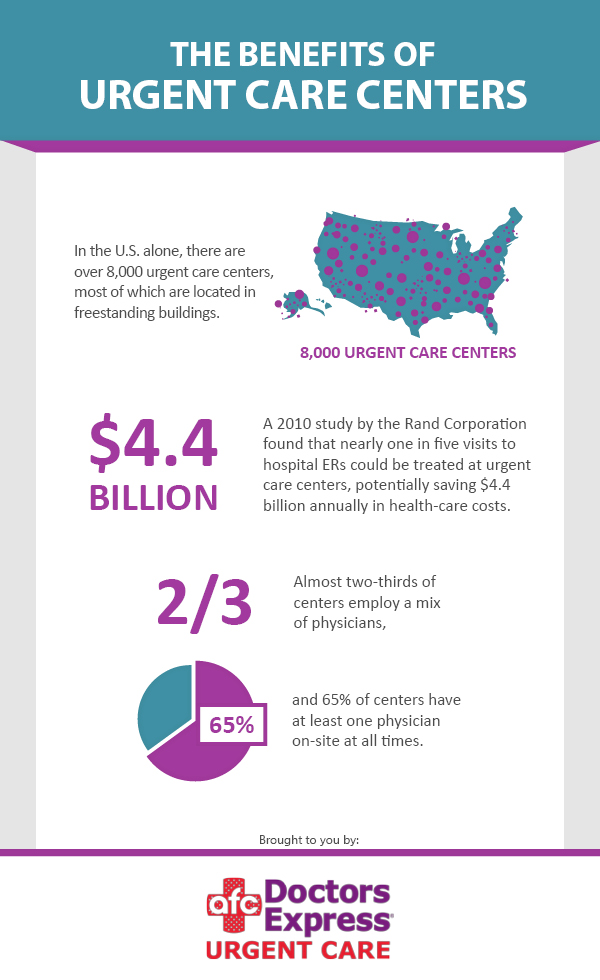
  • Encourage private 24/7/365 medical offices and clinics; and on-site and retail clinics
  • Abandon P4P, medical homes and disease management ideas
  • Give more economic skin-in-game to patients relative to health benchmarks
  • Concretize the “never-event” prohibitions and include a list of patient health responsibilities
  • More pay for primary care docs and internists
  • Adopt digital records and cloud computing for patients
  • Phase in true eHRs incrementally; and abandon CCHIT for open source SaaS
  • Promote Health 2.0 social media.
  • Augmented scope of practice, numbers and pay for NPs and DNPs, etc
  • Reduce pay for CRNAs and increase it for staff RNs
  • Develop step down triage and treatment units to reduce the number of full service ERs
  • Increase medical, osteopathic, dental, optometric and podiatric medical school classes
  • Increased practice scope for dentists, podiatrists and optometrists
  • Make some sort of catastrophic HI mandatory, much like auto insurance for all
  • End pre-existing conditon health insurance contract clauses
  • More choice  and end of life control for the terminally ill patient
  • Increase marketplace competition with fewer political and financial “externalities”.
  • Teach basic healthcare topics in school and encourage physical exercise
  • Health and insurance education should be, but is not, the “answer” for Americans
  • Protect borders and discourage undocumented illegals
  • Adopt medical malpractice tort reform
  • Make all stakeholders fiduciaries
  • No public “option” unless you like food stamps, Section 8 housing, public transportation and schools
  • Budget deficit neutrality
  • Slow down!

Assessment

Recently, while in the Baltimore/Washing area, I was asked by several reporters to opine on the healthcare debate; which I did so freely having never been known as the shy type. And, regular readers will note that many of these items have been used as posts or comments on this ME-P. Unfortunately, my “laundry list” interview was pre-empted by two local but boisterous town-hall meetings with respective passionate politicians. It was redacted no doubt, but never broadcast. Thus, I missed the potential for my “five minutes” of fame. C’est la vive!

Conclusion

There you have it; direct and straight forward. And so, your thoughts and comments on this Medical Executive-Post are appreciated. Feel free to review our top-left column, and top-right sidebar materials, links, URLs and related websites, too. Then, be sure to subscribe to the ME-P. It is fast, free and secure.

Link: http://feeds.feedburner.com/HealthcareFinancialsthePostForcxos

Speaker: If you need a moderator or speaker for an upcoming event, Dr. David E. Marcinko; MBA – Publisher-in-Chief of the Executive-Post – is available for seminar or speaking engagements. Contact: MarcinkoAdvisors@msn.com

Our Other Print Books and Related Information Sources:

Practice Management: http://www.springerpub.com/prod.aspx?prod_id=23759

Physician Financial Planning: http://www.jbpub.com/catalog/0763745790

Medical Risk Management: http://www.jbpub.com/catalog/9780763733421

Healthcare Organizations: www.HealthcareFinancials.com

Health Administration Terms: www.HealthDictionarySeries.com

Physician Advisors: www.CertifiedMedicalPlanner.com

THANK YOU

On Urgent Care Centers and Retail Medical Clinics

Join Our Mailing List 

And the Convenient Care Association

[By Dr. David Edward Marcinko MBA]

DEM blueThe Convenient Care Association [CCA] is comprised of companies, medical providers and healthcare systems that provide patients and consumers with accessible, [urgent], affordable and quality healthcare in retail-based locations.

The CCA works primarily to enhance and sustain the growth of the convenient care industry through sharing of best practices and common standards of operation.

urgent urgent

The CCA was founded in October 2006 and the first Convenient Care Clinics [CCCs] opened in 2000. The industry grew quickly since then.

Today there are approximately 1,060 clinics in operation, and CCA member clinics represent more than 95% of the industry.

To date, CCCs have served more than 3.5 million patients with its nurse practitioners [NPs] and physician assistants [PAs]. With this rapid expansion, and projected continued growth, it quickly became clear that the shared concerns and needs of both providers and patients could best be served through an association that allowed for:

  • Sharing best practices, common standards of operation, experiences and ideas.
  • Developing common standards of operation to ensure the highest quality of care.
  • A united voice to advance the needs of CCCs and their customers
  • A unified effort to promote the concept of CCCs, and to respond to questions about this evolving industry.
  • Reaching out to the existing medical community and creating new partnerships.
  • Building synergies with traditional medical service providers.

Assessment

The Public Health Management Corporation [PHMC], a nonprofit public health institute, provides executive management and administrative support for the Convenient Care Association.

urg 2

Conclusion

Your thoughts and comments on this ME-P are appreciated. Feel free to review our top-left column, and top-right sidebar materials, links, URLs and related websites, too. Then, subscribe to the ME-P. It is fast, free and secure.

Speaker: If you need a moderator or speaker for an upcoming event, Dr. David E. Marcinko; MBA – Publisher-in-Chief of the Medical Executive-Post – is available for seminar or speaking engagements. Contact: MarcinkoAdvisors@msn.com

OUR OTHER PRINT BOOKS AND RELATED INFORMATION SOURCES:

Product Details

Product DetailsProduct Details

Wal-Mart Health Care

Join Our Mailing List

Healthcare’s New [Old] Innovative Disruption

By Dr. David Edward Marcinko; MBA, CMP™

[Publisher-in-Chief]dem2

So, the American Medical Association [AMA] couldn’t or wouldn’t do it; nor could/would the American Osteopathic Association, American Podiatric Medical Association, American Dental Association or any combination thereof.

Neither could/would Hillary Clinton in 1992, nor the US Congress, US Senate, Insurance Association of America [“Big I”], AARP, or plethora of other national organizations, medical trade unions and/or policy-makers.

One is not even sure the current crop of presidential candidates can “do it.”

What it is?

So, what am I talking about?

Why, free-market driven, non-universal [government sponsored] healthcare competitive reform; of course!

And maybe; just maybe; Wal-Mart can do-it?

The Wal-Mart Way

Look, clinics in giant wholesale stores are not new. The optometrists have been there for decades, nobly triaging and providing basic eye-care, but with a certain disdain from “real-doctors” and some patients.

But, all that is fading with the dearth of family practitioners, and rise of on-site and walk-in retail clinics staffed with nurse practitioners, Doctor-Nurse Practitioners [DNPs] and the like. The movement is both gaining traction as well as gravitas. And, the medical kiosks are increasingly being staffed by physicians.

Moreover, with the economy flagging, cheap generic drugs available, convenient hours and locations in many stores, electronic medical records, consumer directed health plans with high-deductibles and private paying patients; Wal-Mart may just have the marketing power to provide some modicum of basic healthcare for many of our nation’s uninsured, or under-insured.

And, imbued with the belief that capitalism always finds a way to wring out marketplace excesses in any industry – albeit slowly – I call the initiative “a perfect-storm of market-place reform.”

Vilfredo Pareto – ReDeux

Perhaps, by being so huge, Wal-Mart understands Pareto’s Law and realizes that many patients get better because-of, or in spite-of, the doctor’s intervention. This was the original promise of managed care that went awry; differentiating and treating the trivial many ills – from the vital few serious diseases.

The Pareto principle (also known as the 80-20 rule, the law of the vital few and the principle of factor scarcity) states that, for many events, 80% of the effects come from 20% of the causes. Business management thinker Joseph M. Juran suggested the principle and named it after Italian economist Vilfredo Pareto, who observed that 80% of income in Italy went to 20% of the population. It is a common benchmark in business; e.g., “80% of sales come from 20% of clients.”

Wal-Mart has studied the market and knows where the price and break-points are.

And, when 80% of healthcare expenditures are spent in the last 12 months of life, maybe there really is a better way; The Wal-Mart Way.    

Assessment

And Wal-Mart isn’t stopping here. In April, it opened the first of its walk-in health clinics in stores in Atlanta, Dallas and Little Rock, Ark. This joint venture with local hospitals will build up the almost 80 clinics already in place in Wal-Mart stores. The goal is 400 co-branded clinics by 2010.

Wouldn’t Sam, and I don’t mean “Uncle”, be proud of the above accomplishments?

Conclusion

Your thoughts and comments on this ME-P are appreciated. Feel free to review our top-left column, and top-right sidebar materials, links, URLs and related websites, too. Then, subscribe to the ME-P. It is fast, free and secure.

Speaker: If you need a moderator or speaker for an upcoming event, Dr. David E. Marcinko; MBA – Publisher-in-Chief of the Medical Executive-Post – is available for seminar or speaking engagements. Contact: MarcinkoAdvisors@msn.com

OUR OTHER PRINT BOOKS AND RELATED INFORMATION SOURCES:


Product DetailsProduct DetailsProduct Details


Retail Medical Clinics and IT

Join Our Mailing List

Competitive HIT Issues Emerging by Default

[By Dr. David Edward Marcinko; MBA CMP™]

Publisher-in-Chief

dem2

Health entities of the Physician Practice Management Corporation [PPMC] era might be termed the originators of corporate medicine despite contentious legal policies and prohibitions. Since then, there have been other modifications to the business model, as those PPMCs left for dead by the year 1999 made a modest comeback thru 2003-04.

They did so by evolving from first generation multi-specialty national concerns, to second generation regional single specialty groups, to third generation regional concerns, and finally to fourth generation Internet enabled service companies, providing both business-to-business [B2B] solutions to affiliated medical practices, as well as business-to-consumer [B2C] health solutions to plan members.  

Prior machinations were ambulatory surgery centers [ASCs] and out-patient treatment centers [OPTCs], while the newer twists are specialty owned hospitals.

Social Transformation of Medicine 

And so, I believe that Paul Starr, author of the Pulitzer-prize-winning book “The Social Transformation of American Medicine” who first predicted healthcare corporatization was more correct, than not.

But, his vision was early in the evolutionary game. And, while corporate medicine seems inevitable in 2008 and beyond, the marketplace is still struggling for the correct business mode. It needs something that bridges the gap between medical professionalism and ROI.

The Balancing Act 

In-other-words, a better balancing act is needed. Slowly, like capitalism itself, the pendulum will swing back and forth between paucity and excess, until a point is reached where all concerned are moderately satisfied, ethical, and marginally profitable; while delivering quality medical care that is more needed by the citizenry-many [i.e., more pediatricians, internists, primary care doctors, OB-GYNs, nurse-practitioners, PAs, etc]; than the vital-few [neuro-surgeons, pediatric endocrinologists, super specialists, etc].

Maybe this “missing balance link” is the retail medical clinic model.

Retail Clinics 

As most doctors, payers, patients and consumers are aware, the retail quick-service medical care concept has found a familiar place in national chains such as Target, Wal-Mart and CVS, where pharmacies and patients already exist, and space is inexpensive and abundant.

These clinics are typically staffed by nurse practitioners and offer a limited menu of walk-in medical services with insurance co-payments between $10 and $30. And, unlike some physician practices, private pay patients are welcomed with fees ranging from $55 to $85 cash in many parts of the country!  Prescription drugs are nearby at robust generic discounts, or even for free in some cases. Office hours are extended, and convenience reigns.

HIT Issues by Default? 

Ironically, as one positive side-effect of this innovative next-gen corporate practice model, may be the goading of late adopting, tight-fisted and/or refusing MD-niks to enter into the modern health-information-technology [HIT] age.

Thus, one way to get margin compressed private medical practices up and running with electronic medical records [EMRs] may be these same retail clinics.

***

doctor-37707_640

***

Projected Growth of the Retail Industry 

Today, more than 800 retail clinics are open for business, and analysts predict that 85 percent of the U.S. population will have a clinic within five miles of home in five years. And, the number of retail health clinics is expected to multiply in 2009; as recently reported by the Washington Times

Illustration

Now, ponder the current state of affairs where a retail clinic [say Walgreen’s, etc] treats a vacationing patient for $65; who then receives the medical-record instantly on a flash-drive or securely uploaded to some virtual storage facility?

Just how will that patient’s premium priced private practitioner back-home explain his/her lack of EMR technology, and ages-old anchor to the hand-written paper-based medical records of yore?

Can you say Dossia.org, HealthVault.com, etc?

Competitive Assessment 

The ideological leap from technical buffoonery – to clinical distrust – will not be great in the minds of the modern, intelligent, educated and insightful patients that we all crave.

Assessment

Of course, one wonders how long will it take for EMRs to become a strategic competitive advantage for early adopting physicians. Will late adopters even survive as EMTs become main-stream?    

Channel Surfing the ME-P

Have you visited our other topic channels? Established to facilitate idea exchange and link our community together, the value of these topics is dependent upon your input. Please take a minute to visit. And, to prevent that annoying spam, we ask that you register. It is fast, free and secure.

Conclusion

Your thoughts and comments on this ME-P are appreciated. Feel free to review our top-left column, and top-right sidebar materials, links, URLs and related websites, too. Then, subscribe to the ME-P. It is fast, free and secure.

Speaker: If you need a moderator or speaker for an upcoming event, Dr. David E. Marcinko; MBA – Publisher-in-Chief of the Medical Executive-Post – is available for seminar or speaking engagements. Contact: MarcinkoAdvisors@msn.com

OUR OTHER PRINT BOOKS AND RELATED INFORMATION SOURCES:

Product DetailsProduct Details