Physician Owned Hospitals Myths DeBunked

BY HEALTH CAPITAL CONSULTANTS, LLC

Literature Review Debunks Claims Against Physician-Owned Hospitals


Approximately 250 hospitals across the U.S. are completely or partially physician owned. These physician-owned hospitals (POHs) can offer a variety of services, from general care to specialty services, such as cardiovascular or orthopedic care, known as “focused factories.”

Over the past several decades, healthcare providers and policymakers have claimed that POHs have a negative impact on the healthcare industry, suggesting that: (1) POHs “cherry-pick” the most profitable patients; (2) the quality of care provided at POHs is substandard; and, (3) conflicts of interest exist due to the financial incentive for physician owners to refer patients to their POHs. (Read more…) 

YOUR COMMENTS ARE APPRECIATED.

Thank You

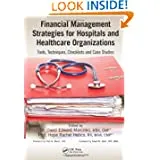
MORE: https://www.amazon.com/Financial-Management-Strategies-Healthcare-Organizations/dp/1466558733/ref=sr_1_3?ie=UTF8&qid=1380743521&sr=8-3&keywords=david+marcinko

***

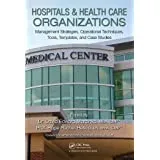
RELATED: https://www.amazon.com/Hospitals-Healthcare-Organizations-Management-Operational/dp/1439879907/ref=sr_1_4?s=books&ie=UTF8&qid=1334193619&sr=1-4

***

Is the Return of Physician-Owned Hospitals Imminent?

By Health Capital Consultants, LLC

***

Is the Return of Physician-Owned Hospitals Imminent?

Recent congressional actions and a white paper authored by officials from the Department of Justice (DOJ), Federal Trade Commission (FTC), and the American Medical Association (AMA) are pushing for the removal of barriers for physician-owned hospitals (POHs), potentially paving a path by which these controversial facilities can be established and expanded going forward.  (Read more…)

***

CITE: https://www.r2library.com/Resource/Title/082610254

COMMENTS APPRECIATED

Thank You

***

ORDER: https://www.amazon.com/Financial-Management-Strategies-Healthcare-Organizations/dp/1466558733/ref=sr_1_3?ie=UTF8&qid=1380743521&sr=8-3&keywords=david+marcinko

***

ORDER: https://www.amazon.com/Hospitals-Healthcare-Organizations-Management-Operational/dp/1439879907/ref=sr_1_4?s=books&ie=UTF8&qid=1334193619&sr=1-4

***

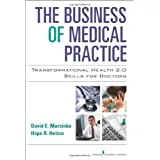
ORDER: https://www.amazon.com/Business-Medical-Practice-Transformational-Doctors/dp/0826105750/ref=sr_1_9?ie=UTF8&qid=1448163039&sr=8-9&keywords=david+marcinko

***

Hospitals and Healthcare Organizations

INVITE DR. MARCINKO: https://medicalexecutivepost.com/dr-david-marcinkos-bookings/

Thank You

***

HOSPITALS: Management Strategies, Operational Techniques, Tools, Templates and Case Studies

***

TEXTBOOK REVIEW

Drawing on the expertise of decision-making professionals, leaders, and managers in health care organizations, Hospitals & Health Care Organizations: Management Strategies, Operational Techniques, Tools, Templates, and Case Studies addresses decreasing revenues, increasing costs, and growing consumer expectations in today’s increasingly competitive health care market.

Offering practical experience and applied operating vision, the authors integrate Lean managerial applications, and regulatory perspectives with real-world case studies, models, reports, charts, tables, diagrams, and sample contracts. The result is an integration of post PP-ACA market competition insight with Lean management and operational strategies vital to all health care administrators, comptrollers, and physician executives. The text is divided into three sections:

  1. Managerial Fundamentals
  2. Policy and Procedures
  3. Strategies and Execution

Using an engaging style, the book is filled with authoritative guidance, practical health care–centered discussions, templates, checklists, and clinical examples to provide you with the tools to build a clinically efficient system. Its wide-ranging coverage includes hard-to-find topics such as hospital inventory management, capital formation, and revenue cycle enhancement. Health care leadership, governance, and compliance practices like OSHA, HIPAA, Sarbanes–Oxley, and emerging ACO model policies are included. Health 2.0 information technologies, EMRs, CPOEs, and social media collaboration are also covered, as are 5S, Six Sigma, and other logistical enhancing flow-through principles. The result is a must-have, “how-to” book for all industry participants.

***

NVITE DR. MARCINKO: https://medicalexecutivepost.com/dr-david-marcinkos-bookings/

Thank You

***

YOUR THOUGHTS are appreciated.

PP-ACA Physician Ownership Provisions

Join Our Mailing List

Understanding the “whole hospital exception” to the Stark laws

By Dr. David Edward Marcinko MBA CMP®

www.CertifiedMedicalPlanner.org

Dr. David E. Marcinko MBAThis was a big week for healthcare reform, wasn’t it? Some provisions of the PP-ACA requiring the employer mandates were delayed another year; until January 1, 2015.

But, before passage of the ACA in 2010, the “whole hospital exception” to the Stark law allowed physicians to have an ownership interest in a hospital to which those physicians refer patients, provided the physician is invested in the whole hospital and not a subdivision of the hospital, with no limitations as to the amount or extent of physician ownership, on either an aggregate or individual basis.

Prohibitions

Now, according to colleague Robert James Cimasi MHA, AVA, ASA, MCBA, CMP®, of www.HealthCapital.com, The ACA completely prohibits physician-owned hospitals which were not Medicare-certified by December 31, 2010.

[1] The ACA allows hospitals with a provider agreement prior to December 31, 2010 to continue Medicare participation if they meet the following four criteria: (1) located in a county with a population growth rate of at least150% the state’s population growth over the last 5 years; (2) have Medicaid inpatient admission percentage of at least the average of all hospitals in the county; (3) located in a state with below-national-average bed capacity; and, (4) have bed occupancy rate greater than state average. [2]

Grandfathered

A very limited number of physician-owned hospital existing in 2010 met or were close to meeting all 4 of criteria.[3] The Reconciliation Act provided a limited exception to the ACA growth restrictions for grandfathered physician owned hospitals that treat the highest percentage of Medicaid patients in their county (and are not the sole hospital in a county).[4]

###

Financial Management Strategies for Hospitals and Healthcare Organizations: Tools, Techniques, Checklists and…

### 

Assessment

Based on these provisions, the 2010 healthcare reform legislation will likely have a considerable negative impact on physician-owned hospitals, in terms of impeding development of new hospitals and expansion of existing hospitals.

Conclusion

Your thoughts and comments on this ME-P are appreciated. Feel free to review our top-left column, and top-right sidebar materials, links, URLs and related websites, too. Then, subscribe to the ME-P. It is fast, free and secure.

Link: http://feeds.feedburner.com/HealthcareFinancialsthePostForcxos

Speaker: If you need a moderator or speaker for an upcoming event, Dr. David E. Marcinko; MBA – Publisher-in-Chief of the Medical Executive-Post – is available for seminar or speaking engagements. Contact: MarcinkoAdvisors@msn.com

OUR OTHER PRINT BOOKS AND RELATED INFORMATION SOURCES:

Health Dictionary Series: http://www.springerpub.com/Search/marcinko

Practice Management: http://www.springerpub.com/product/9780826105752

Physician Financial Planning: http://www.jbpub.com/catalog/0763745790

Medical Risk Management: http://www.jbpub.com/catalog/9780763733421

Hospitals: http://www.crcpress.com/product/isbn/9781439879900

Physician Advisors: www.CertifiedMedicalPlanner.org


[1]       “Section-by-Section Analysis with Changes Made by Title X and Reconciliation included within Titles I-IX,” Democratic Policy Committee, http://dpc.senate.gov/healthreformbill/healthbill96.pdf (Accessed 5/24/2010).

[2]       “Section-by-Section Analysis with Changes Made by Title X and Reconciliation included within Titles I-IX,” Democratic Policy Committee, http://dpc.senate.gov/healthreformbill/healthbill96.pdf (Accessed 5/24/2010).

[3]       “Healthcare Reform: A Brief Analysis on How it Impacts ASCs and Physician-OwnedHospitals – 10 Observations”, By Scott Becker, Leigh Page, and Rob Kurtz, Becker’s Hospital Review, http://www.beckersorthopedicandspine.com/news-a-analysis/legal-a-regulatory/1193-healthcare-reform-abrief- analysis-on-how-it-impacts-ascs-and-physician-owned-hospitals-10-observations (Accessed 5/20/10).

[4]       “Section-by-Section Analysis with Changes Made by Title X and Reconciliation included within Titles I-IX,” Democratic Policy Committee, http://dpc.senate.gov/healthreformbill/healthbill96.pdf (Accessed 5/24/2010).

Product DetailsProduct Details

Defining Hospital Competitive Markets

Join Our Mailing List

Clarifying Often Nebulous and Contentious Terminology

[By Staff Reporters]

According to Robert James Cimasi; MHA, CMP™ of Health Capital Consultants LLC in St. Louis, MO; the definition of a hospital’s “market” is often nebulous.

Ambiguous Terms

Some entities are defined by terms as ambiguous as “acute care inpatient hospitals,” “specialty hospitals,” or “anchor hospitals.” This ambiguity occurs because healthcare is increasingly provided on an outpatient basis, and general acute care inpatient hospitals face competition from a range of allied healthcare providers for the medical services they deliver.

Link: www.HealthcareFinancials.com

US Supreme Court Explains

For example, none other than the US Supreme Court has explained that the determination of relevant hospital product and geographic markets is “a necessary predicate” to deciding whether a hospital merger contravenes the Clayton Act (antitrust).

Assessment

For additional information, please see United States v. Marine Ban Corporation Inc., 418 U.S. 602, 618 (1974) (citing United States v. E.I. Du Pont De Nemours & Co., 353 U.S. 586, 593 (1957); Brown Shoe Co. v. United States, 370 U.S. 294, 324 (1962).

Conclusion

Your thoughts and comments on this ME-P are appreciated. Feel free to review our top-left column, and top-right sidebar materials, links, URLs and related websites, too. Then, subscribe to the ME-P. It is fast, free and secure.

Speaker: If you need a moderator or speaker for an upcoming event, Dr. David E. Marcinko; MBA – Publisher-in-Chief of the Medical Executive-Post – is available for seminar or speaking engagements. Contact: MarcinkoAdvisors@msn.com

OUR OTHER PRINT BOOKS AND RELATED INFORMATION SOURCES:

***

[HEALTH INSURANCE, MANAGED CARE, ECONOMICS, FINANCE AND HEALTH INFORMATION TECHNOLOGY COMPANION DICTIONARY SET]

      Product DetailsProduct DetailsProduct Details

[Mike Stahl PhD MBA] *** [Foreword Dr.Mata MD CIS] *** [Dr. Getzen PhD]

***

Troubles Brewing for Physician Owned Hospitals

Financial Problems Predicted

Staff Reporterscrazy-house

According to the Wall Street Journal, January 22, 2009, a bill making its way through Congress to provide more low-income children with health-insurance coverage might mean financial trouble for scores of physician owned hospitals.  


Emergence and Growth

The very existence of doctor-owned hospitals is controversial. But, their numbers have tripled to about 200 since 1990.

The Supporters

Supporters say these hospitals, which usually focus on several lucrative services, such as cardiac care or orthopedics, are highly efficient, saving expenses for both patients and insurance programs, including Medicare.

More: www.HealthcareFinancials.com

The Critics

Critics say physicians who refer patients to hospitals with an ownership stake drive up costs, because they order more tests or perform unnecessary surgery. They argue that such hospitals also cherry pick healthy patients hurting surrounding non-profits hospitals.

Assessment

According to Pete Stark, chairman of the House Ways and Means health subcommittee, the proposed legislation would prohibit “the unethical kickbacks that physicians receive from ownership hospitals, most of which are of questionable safety and quality.”

Conclusion

And so, your thoughts and comments on this Medical Executive-Post are appreciated. Do you agree, or disagree with the thesis; why or why not? Does this mean that not-for-profit hospitals, for-profit entities, or those hospitals with training programs don’t order un-needed tests? Are these hospitals and physician-investors, “crazy” or colorful and sane? 

Speaker: If you need a moderator or speaker for an upcoming event, Dr. David E. Marcinko; MBA – Publisher-in-Chief of the Executive-Post – is available for seminar or speaking engagements. Contact: MarcinkoAdvisors@msn.com  or Bio: www.stpub.com/pubs/authors/MARCINKO.htm

Our Other Print Books and Related Information Sources:

Practice Management: http://www.springerpub.com/prod.aspx?prod_id=23759

Physician Financial Planning: http://www.jbpub.com/catalog/0763745790

Medical Risk Management: http://www.jbpub.com/catalog/9780763733421

Healthcare Organizations: www.HealthcareFinancials.com

Health Administration Terms: www.HealthDictionarySeries.com

Physician Advisors: www.CertifiedMedicalPlanner.com

Subscribe Now: Did you like this Medical Executive-Post, or find it helpful, interesting and informative? Want to get the latest E-Ps delivered to your email box each morning? Just subscribe using the link below. You can unsubscribe at any time. Security is assured.

Link: http://feeds.feedburner.com/HealthcareFinancialsthePostForcxos

Physician Owned Hospitals

New Patient Disclosure Rules

Staff Reporters

According to Bloomberg News, August 19, 2008, doctors with financial stakes in hospitals where they work must tell patients being referred to those facilities about the ownership link, under new rules from Medicare.

Patient Queries

Patients who ask about investors in a physician-owned hospital must be furnished with a list of all doctors, and their immediate family members, who own or have an investment interest and make referrals.

Assessment

Medicare is seeking to make it harder for doctors to boost their payments by referring patients to their own facilities; and it already bars self-referrals for 11 services. The agency said it would end reimbursement agreements with physician-owned hospitals that don’t follow the new disclosure requirements.

Conclusion

What do you think about this, “if they don’t ask – don’t tell” policy; your informed opinions and comments are appreciated. Is it too much disclosure, or not enough?


Practice Management:
http://www.springerpub.com/prod.aspx?prod_id=23759

Physician Financial Planning: http://www.jbpub.com/catalog/0763745790

Medical Risk Management: http://www.jbpub.com/catalog/9780763733421

Healthcare Organizations: www.HealthcareFinancials.com

Health Administration Terms: www.HealthDictionarySeries.com

Physician Advisors: www.CertifiedMedicalPlanner.com

Speaker: If you need a moderator or speaker for an upcoming event, Dr. David E. Marcinko; MBA – Publisher-in-Chief of the Executive-Post – is available for seminar or speaking engagements. Contact: MarcinkoAdvisors@msn.com  or Bio: www.stpub.com/pubs/authors/MARCINKO.htm

Subscribe Now: Did you like this Executive-Post, or find it helpful, interesting and informative? Want to get the latest E-Ps delivered to your email box each morning? Just subscribe using the link below. You can unsubscribe at any time. Security is assured.

Link: http://feeds.feedburner.com/HealthcareFinancialsthePostForcxos

Copyright 2008 iMBA Inc: All rights reserved, USA, unless otherwise noted. Use is restricted to Executive-Post subscribers only. No redistribution is allowed. To avoid violation of iMBA Inc copyright restrictions and redistribution policy, please register for your own free Executive-Post membership. Detailed information and registration links are available at:

Link: http://feeds.feedburner.com/HealthcareFinancialsthePostForcxos

Referrals: Thank you in advance for your electronic referrals to the Executive-Post