







 Support our online development, and advance our onground research initiatives in free market economics, as we seek to showcase the brightest Next-Gen minds.
THE ME-P DISCLAIMER: Posts, comments and opinions do not necessarily represent iMBA, Inc., but become our property after submission. Copyright © 2006 to-date. iMBA, Inc allows colleges, universities, medical and financial professionals and related clinics, hospitals and non-profit healthcare organizations to distribute our proprietary essays, photos, videos, audios and other documents; etc. However, please review copyright and usage information for each individual asset before submission to us, and/or placement on your publication or web site. Attestation references, citations and/or back-links are required. All other assets are property of the individual copyright holder.
Support our online development, and advance our onground research initiatives in free market economics, as we seek to showcase the brightest Next-Gen minds.
THE ME-P DISCLAIMER: Posts, comments and opinions do not necessarily represent iMBA, Inc., but become our property after submission. Copyright © 2006 to-date. iMBA, Inc allows colleges, universities, medical and financial professionals and related clinics, hospitals and non-profit healthcare organizations to distribute our proprietary essays, photos, videos, audios and other documents; etc. However, please review copyright and usage information for each individual asset before submission to us, and/or placement on your publication or web site. Attestation references, citations and/or back-links are required. All other assets are property of the individual copyright holder.


How to check for signs of aging?
By Staff Reporters
***
***
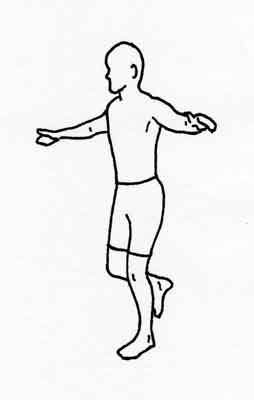
Standing on one leg
Dr. Claudio Gil Araujo’s 12-year study in Brazil of 1,702 people enlisted participants to try the above exercise (it was then repeated on the other leg.) One hundred and twenty-three people died in the 10 years that followed – equivalent to an 84 per cent heightened risk of death, when adjustments for underlying conditions, age and sex were made.
Causation has yet to be established. However: “this rapid and objective feedback… adds useful information regarding mortality risk in middle-aged and older men and women,” the paper reports.
And, the findings of the study has led to Araujo pushing for balance tests to be part of health screenings for the elderly due to correlation between poor balance and various medical conditions – from hearing loss to severe diseases such as Parkinson’s and Alzheimer’s.
Even if you are considered to be a healthy adult, the inability to balance on one leg for over 20 seconds could be linked to an increased risk of small blood vessel damage in the brain, reduced cognitive function and strokes.
COMMENTS APPRECIATED
Refer and Subscribe
***
***
Share this:

Filed under: "Doctors Only", Glossary Terms, LifeStyle | Tagged: Alzheimer, Araujo, balance, Claudio Araujo, cognitive function, health screenings, leg balance, one leg balance, Parkinson, standing one leg | 1 Comment »




 The Leading Business Education Network for Doctors, Financial Advisors and Health Industry Consultants