ACO Opinion and Voting Poll

Join Our Mailing List

Are Accountable Care Organizations Another Form of Medical Capitation Reimbursement?

Conclusion

Your thoughts and comments on this ME-P are appreciated. Feel free to review our top-left column, and top-right sidebar materials, links, URLs and related websites, too. Then, subscribe to the ME-P. It is fast, free and secure.

Link: http://feeds.feedburner.com/HealthcareFinancialsthePostForcxos

Speaker: If you need a moderator or speaker for an upcoming event, Dr. David E. Marcinko; MBA – Publisher-in-Chief of the Medical Executive-Post – is available for seminar or speaking engagements. Contact: MarcinkoAdvisors@msn.com

Our Other Print Books and Related Information Sources:

Health Dictionary Series: http://www.springerpub.com/Search/marcinko

Practice Management: http://www.springerpub.com/product/9780826105752

Physician Financial Planning: http://www.jbpub.com/catalog/0763745790

Medical Risk Management: http://www.jbpub.com/catalog/9780763733421

Healthcare Organizations: www.HealthcareFinancials.com

Physician Advisors: www.CertifiedMedicalPlanner.com

Subscribe Now: Did you like this Medical Executive-Post, or find it helpful, interesting and informative? Want to get the latest ME-Ps delivered to your email box each morning? Just subscribe using the link below. You can unsubscribe at any time. Security is assured.

Link: http://feeds.feedburner.com/HealthcareFinancialsthePostForcxos

Sponsors Welcomed: And, credible sponsors and like-minded advertisers are always welcomed.

Link: https://healthcarefinancials.wordpress.com/2007/11/11/advertise

Product DetailsProduct DetailsProduct Details

Product Details  Product Details

Product Details

Barriers to Performance Based Healthcare Networks and Medical Cost Savings

 Understanding the need to align care models, payment, products and networks

Join Our Mailing List 

[Number 4 in a series of 6]

By Sam Mupalla – Vice President, McKesson Health Solutions, Network Performance Management (NPM)

I wanted to follow up on last month’s ME-P discussion about Performance-based Networks and Medical Cost Savings. I wrote about the need to align care models, payment, products and networks, and then promised to address some of the barriers standing in the way of achieving alignment. Well, that’s what I’m writing about today.

Strategic Difficulties

Health plan operations responsible for supporting the intent of the provider network designs will find it increasingly difficult to maintain strategies that provide affordable care by applying existing methods and systems.

Currently, the systems and processes that enable these operations are frequently based on systems that are neither integrated nor automated, rather relying on various manual interventions to achieve some scale of efficiency. Creating and maintaining innovative value-based offerings in this environment requires process excellence coupled with tight coordination executed across multiple departments. As the complexity and frequency of demand for these offerings increase, this approach becomes more challenging to sustain, thus risking long term success of the affordable care promise.

Figure 1: Today’s operational engine interactions are not optimized for enabling innovation.

The traditional systems and processes that health plans have used to respond to specific client demands appear in Figure 1.

For example, product demands from consumers may come in through the sales team, which manually interacts with the product management, care management, network development, and health economic teams to design a product to meet the market need. This first set of interactions, in effect, becomes the innovation engine for value-based product designs. Additionally, it becomes the starting point for a myriad of manual and highly paper-based interactions that ripple throughout the enterprise.

The interactions within this innovation engine then set forth a series of parallel and independent sequences with three different operational engines: the provider contracting department, the provider management department and the claims operations department. Each of these areas relies heavily upon their own set of manual and paper-based processes and interactions. The inefficiency of this current approach suggests the potential for an annual administrative cost savings opportunity of $5-25 million, depending on the health plan’s size and current system architecture.

In addition to administrative costs, this approach creates inefficiency and waste in IT costs and medical costs that could be between $40-100 million.

Assessment

So, how can you unlock these savings and eliminate this waste? We’ll discuss that next week. I’ll say only three words here: Integrated Building Blocks. I’m not going to say a word more — but if you can’t wait for next week you can read the entire Unlocking Affordable Care by Aligning Products white paper; it’s available on our website now.

Conclusion

Your thoughts and comments on this ME-P are appreciated. Feel free to review our top-left column, and top-right sidebar materials, links, URLs and related websites, too. Then, subscribe to the ME-P. It is fast, free and secure.

Link: http://feeds.feedburner.com/HealthcareFinancialsthePostForcxos

Speaker: If you need a moderator or speaker for an upcoming event, Dr. David E. Marcinko; MBA – Publisher-in-Chief of the Medical Executive-Post – is available for seminar or speaking engagements. Contact: MarcinkoAdvisors@msn.com

OUR OTHER PRINT BOOKS AND RELATED INFORMATION SOURCES:

DICTIONARIES: http://www.springerpub.com/Search/marcinko
PHYSICIANS: www.MedicalBusinessAdvisors.com
PRACTICES: www.BusinessofMedicalPractice.com
HOSPITALS: http://www.crcpress.com/product/isbn/9781466558731
CLINICS: http://www.crcpress.com/product/isbn/9781439879900
BLOG: www.MedicalExecutivePost.com
FINANCE: Financial Planning for Physicians and Advisors
INSURANCE: Risk Management and Insurance Strategies for Physicians and Advisors

Product DetailsProduct DetailsProduct Details

Product Details  Product Details

   Product Details

More Evidence of the Association between Hospital Market Concentration and Higher Prices and Profits

NIHCM Expert Voices in Health Care Policy

By James C. Robinson, PhD

Join Our Mailing List

In this essay, Dr. James Robinson presents results from his latest work showing that the prices hospitals charge to private insurers for 6 common procedures are 30 to 50 percent higher when the hospital is located in a market where it faces less competition from other hospitals.

These findings add to the already substantial body of research showing that consolidation in hospital markets confers market power that enables hospitals to secure higher prices.

When seen in the context of current policies encouraging additional provider consolidation through accountable care organizations [ACOs], this work serves as an important reminder that ongoing vigilance of the potential anti-competitive effects of these new delivery systems is needed along with other measures to counteract growing market power of providers.

About the Author:

James C. Robinson, PhD is the Leonard D. Schaeffer Professor of Health Economics and Director, Berkeley Centerfor Health Technology, University of California, at Berkeley.

Conclusion

Your thoughts and comments on this ME-P are appreciated. Feel free to review our top-left column, and top-right sidebar materials, links, URLs and related websites, too. Then, subscribe to the ME-P. It is fast, free and secure.

Speaker: If you need a moderator or speaker for an upcoming event, Dr. David E. Marcinko; MBA – Publisher-in-Chief of the Medical Executive-Post – is available for seminar or speaking engagements. Contact: MarcinkoAdvisors@msn.com

OUR OTHER PRINT BOOKS AND RELATED INFORMATION SOURCES:

Product DetailsProduct DetailsProduct Details

Accountable Care Organizations are Here

The Final Federal Guidelines

By Garfunkel Wild PC

http://www.garfunkelwild.com

Join Our Mailing List

The much anticipated final federal regulations on accountable care organizations (ACOs) were published on October 20th, 2011. The Affordable Care Act created ACOs to deliver seamless, high quality care to traditional fee-for-service Medicare beneficiaries while reducing the cost of care to those beneficiaries. If successful, ACOs will receive a portion of the shared savings they achieve for the Medicare program.

ACO Workgroup 

The Garfunkel Wild ACO Workgroup is in the process of analyzing these final regulations, and we will be hosting a webinar in the near future to discuss ACO participation and other ways providers can move towards collaborative care.

Final Regulations

In reviewing the final regulations, it is clear CMS took public comments to their proposed regulations seriously and made significant changes that should strengthen the ACO program. Some of these changes include:

  • Allowing ACOs to participate in an upside shared savings track (without being subject to downside losses) for the first three years of participation
  • Expanding the definition of participants eligible to form ACOs to include federally qualified health centers (“FQHCs”)
  • Reducing by about half the number of quality measures ACOs have to report
  • Permitting ACOs to share in first dollar saved once a minimum savings rate is achieved
  • Creating more flexibility for start dates for ACOs beginning in 2012
  • Removing EHR readiness as a condition of participation
  • Revising the process of assigning beneficiaries to ACOs from a pure retrospective process to a prospective process that includes retroactive adjustments

Assessment

Also published with the CMS final regulations were interim final regulations published by the Office of Inspector General addressing the waiver of the application of federal fraud and abuse laws; a final policy statement issued by the Federal Trade Commission and Department of Justice outlining the agencies’ antitrust enforcement policies for ACOs, and an IRS Fact Sheet regarding tax exempt organizations participating in the Medicare Shared Savings program.

Conclusion                

And so, your thoughts and comments on this ME-P are appreciated. Feel free to review our top-left column, and top-right sidebar materials, links, URLs and related websites, too. Then, subscribe to the ME-P. It is fast, free and secure.

Link: http://feeds.feedburner.com/HealthcareFinancialsthePostForcxos

Our Other Print Books and Related Information Sources:

Health Dictionary Series: http://www.springerpub.com/Search/marcinko

Practice Management: http://www.springerpub.com/product/9780826105752

Physician Financial Planning: http://www.jbpub.com/catalog/0763745790

Medical Risk Management: http://www.jbpub.com/catalog/9780763733421

Healthcare Organizations: www.HealthcareFinancials.com

Physician Advisors: www.CertifiedMedicalPlanner.com

Subscribe Now: Did you like this Medical Executive-Post, or find it helpful, interesting and informative? Want to get the latest ME-Ps delivered to your email box each morning? Just subscribe using the link below. You can unsubscribe at any time. Security is assured.

Link: http://feeds.feedburner.com/HealthcareFinancialsthePostForcxos

Sponsors Welcomed: And, credible sponsors and like-minded advertisers are always welcomed.

Link: https://healthcarefinancials.wordpress.com/2007/11/11/advertise

Product Details

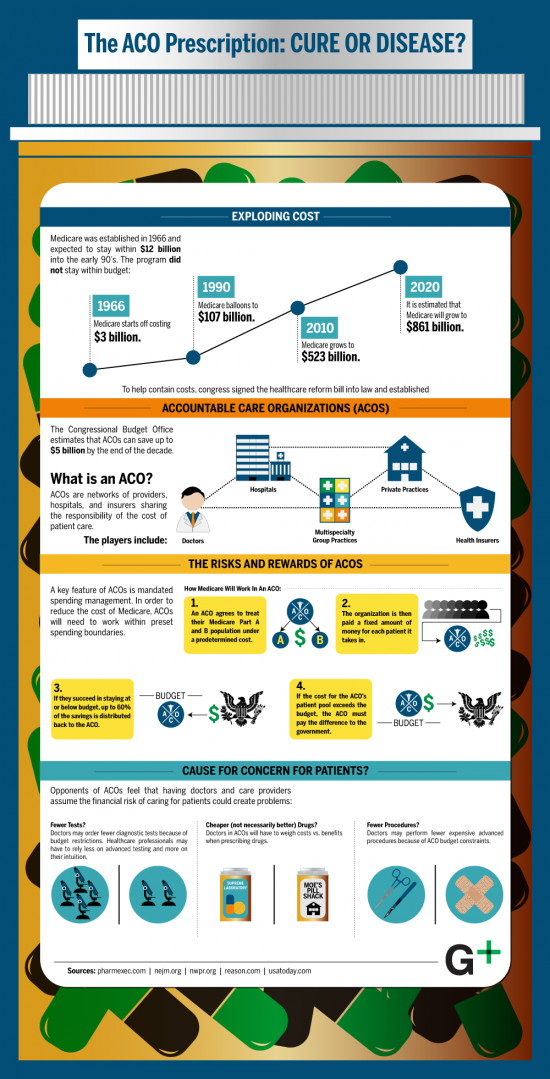
The ACO Prescription?

Cure or Disease?

Join Our Mailing List 

Accountable Care Organizations are the ACA’s [Obamacare] answer to skyrocketing Medicare costs, but who wins besides the government? Doctors take on the financial risk, and patients could suffer as a result.

Here’s a look at how Accountable Care Organizations could affect the quality of healthcare in the near future. Brought to you by gplus.com

Conclusion

Your thoughts and comments on this ME-P are appreciated. Feel free to review our top-left column, and top-right sidebar materials, links, URLs and related websites, too. Then, subscribe to the ME-P. It is fast, free and secure.

Speaker: If you need a moderator or speaker for an upcoming event, Dr. David E. Marcinko; MBA – Publisher-in-Chief of the Medical Executive-Post – is available for seminar or speaking engagements. Contact: MarcinkoAdvisors@msn.com

OUR OTHER PRINT BOOKS AND RELATED INFORMATION SOURCES:

***

Product Details 

***

Has the HIT Bubble Already Popped?

Long Before Reaching … Dentistry

[By Darrell K. Pruitt DDS]

HCPlexus recently partnered with Thompson Reuters to conduct a nationwide survey of almost 3,000 physicians about their opinions of the quality of health care in the near future considering the Patient Protection and Affordable Care Act (PPACA), Electronic Medical Records, and their effects on physicians and their patients. (See “5-page Executive Summary”)

http://www.hcplexus.com/PDFs/Summary—2011-Thomson-Reuters-HCPlexus-National-P

Results:

“Sixty-five percent of respondents believe that the quality of health care in the country will deteriorate in the near term. Many cited political reasons, anger directed at insurance companies, and critiques of the reform act – some articulating the strong feelings they have regarding the negative effects they expect from the PPACA.”

What’s more, one in four physicians think eHRs will cause more harm than help. So what’s the accepted threshold for the Hippocratic Oath to come into play?

Do you also find excitement in healthcare reform’s surprises? Experiencing the sudden, last minute turns healthcare reform has taken lately is like riding shotgun with Mayhem behind the wheel, texting. Here’s other discouraging news from the same HCPlexus-Thompston Reuters survey: “A surprising 45% of all respondents indicated they did not know what an ACO is, exposing a much lower awareness of ACOs versus the broader implications of PPACA. It appears there has been a lack of physician education in this area.”

ACOs Defined 

Since I also had no idea what an ACO is, I searched the term and came across a timely article that was posted on NPR only days ago titled, “Accountable Care Organizations, Explained.”

http://www.npr.org/2011/01/18/132937232/accountable-care-organizations-explained

Author Jenny Gold writes: “ACOs are a new model for delivering health services that offers doctors and hospitals financial incentives to provide good quality care to Medicare beneficiaries while keeping down costs.” Does that remind anyone of insurance HMO promises just before the bad idea collided with surprisingly intelligent consumers in the early 1990s? Kelly Devers, a senior fellow at the nonprofit Urban Institute, is quoted: “Some people say ACOs are HMOs in drag,” There’s a sharp turn nobody warned us about.

HMO Differentiation 

Further blurring the difference between ACOs and HMOs, Gold adds “An ACO is a network of doctors and hospitals that shares responsibility for providing care to patients. Under the new law, ACOs would agree to manage all of the health care needs of a minimum of 5,000 Medicare beneficiaries for at least three years.” I wonder if we’ll see a resurrection of HMO gag orders preventing physicians from discussing effective but expensive treatment alternatives not offered by the ACO.

As expected, not only are hospitals and doctors competing for the opportunity to run ACOs, but so are former HMO insurance agents. Devers explains, “Insurers say they can play an important role in ACOs because they track and collect data on patients, which is critical for coordinating care and reporting on the results.” As a provider, do you trust UnitedHealth’s Ingenix data mining tendencies? A few years ago, NY State Attorney General Andrew Cuomo spanked the company for selling insurers pseudo-scientific excuses to cheat out-of-network physicians.

Just like Health Maintenance Organizations don’t maintain health, insurer-based Accountable Care Organizations will not bring accountability to care any more than the Patient Protection and Affordable Care Act provides patient protection and affordable care. And since I’m exposing blatant bi-partisan deceptions, there is no privacy or accountability in the Health Insurance Portability and Accountability Act, and the “HIPAA Administrative Simplification Statute and Rules Act” doesn’t.

HITECH Funding

Gold suggests that because HITECH rules were written intentionally vague in order to push the envelope of stakeholders’ imaginations, similar to HIPAA’s ineffective security rules I suppose, the doctors’ predictable ignorance of ACOs is understandable.

But then again, all this may not even matter in a few months. According to Howard Anderson, Executive Editor of HealthcareInfoSecurity.com, HITECH funding itself is threatened. He recently posted “GOP Bill Would Gut HITECH Funding – Unobligated HITECH Act Funds Would be Eliminated.”

http://www.govinfosecurity.com/articles.php?art_id=3306

Assessment

While Obama’s healthcare reform teeters between two houses, I encourage consumers to plead with their lawmakers to stop being suckered in by cheap, meaningless buzzwords sprinkled in the titles of bills. I’m hoping we can at least get them to read a little deeper. Be on your toes. Mayhem is “recalculating.”

Conclusion

Your thoughts and comments on this ME-P are appreciated. Feel free to review our top-left column, and top-right sidebar materials, links, URLs and related websites, too. Then, subscribe to the ME-P. It is fast, free and secure.

Speaker: If you need a moderator or speaker for an upcoming event, Dr. David E. Marcinko; MBA – Publisher-in-Chief of the Medical Executive-Post – is available for seminar or speaking engagements. Contact: MarcinkoAdvisors@msn.com

OUR OTHER PRINT BOOKS AND RELATED INFORMATION SOURCES:

Product DetailsProduct DetailsProduct Details

Product Details  Product Details

   Product Details 

Values-Based Health Insurance

Join Our Mailing List

Another New Idea?

[By Staff Writers]

According to Mark Fendrick MD and Michael E. Chernew PhD, instead of the one size fits all approach of traditional health insurance, a “clinically-sensitive” cost-sharing system that supports co-payments related to evidence-based value for targeted patients seems plausible.  

The Model

In this model, out-of-pocket costs are based on price and a cost/quality tradeoff in clinical circumstances: low co-payments for interventions of highest value, and higher co-payments for interventions with little proven health benefit.  

Benefit Product Packages

Smarter benefit products and packages are then designed to combine disease management with cost sharing to address spending growth. 

product sales

Assessment

What do you think of this new health insurance business model; is it revolutionary or evolutionary?

Conclusion

Your thoughts and comments on this ME-P are appreciated. Feel free to review our top-left column, and top-right sidebar materials, links, URLs and related websites, too. Then, subscribe to the ME-P. It is fast, free and secure.

Link: http://feeds.feedburner.com/HealthcareFinancialsthePostForcxos

Speaker: If you need a moderator or speaker for an upcoming event, Dr. David E. Marcinko; MBA – Publisher-in-Chief of the Medical Executive-Post – is available for seminar or speaking engagements. Contact: MarcinkoAdvisors@msn.com

OUR OTHER PRINT BOOKS AND RELATED INFORMATION SOURCES:

Product DetailsProduct Details

Product Details