Medical Franchises, MLM and In-Office Dispensation

BY Dr. DAVID EDWARD MARCINKO MBA MEd CMP

http://www.MARCINKOASSOCIATES.com

***

***
Healthcare Business and Medical Franchises

The International Franchise Association (IFA) estimates that that about $1 trillion in sales, or 40% of all retail sales, were made through franchised establishment last decade. On the positive side, franchises offer a branded practice concept with management training and access to proprietary methods, marketing and advertising campaigns and a host of support. Moreover, there are franchises available for virtually every healthcare product or service, including: diet, weight loss and fitness; vein care and laser surgery; vitamins, nutriceuticals and pharmaceuticals; plastic and cosmetic surgery; dermatology, tanning and skin care; home healthcare and extended, etc.

CITE: https://www.r2library.com/Resource

Some well know established healthcare and medical franchises are: Doctors Express, Being There Senior Care, Home Care Assistance, Personal Training Institute, Inches-A-Weigh, Remedy Intelligent Staffing, Visiting Angels, Unlimited MedSearch, prnYourHealth and Any Lab Test Now.

On the downside, franchises incur high start-up costs, rules and obligations, payment of franchise percentages and many contractual obligations.

Questions to consider when contemplating this business entity include:

 Franchise stability, track record, licensing and costs.
 Training, support and proximity of other franchises.
 Independence, ownership laws, contracts and dispute resolutions,
 Screening methods, market size and potential market share.
 Replacement cost and transferability?

For more information on Uniform Franchise Offerings Circulars (UFOCs) contact:

Frandata
1130 Connecticut Avenue, NW
Washington DC 20036
202.659.8640

International Franchise Association7
1350 New York Avenue, NW
Washington, DC 20005
202.628.800

Multi-Level Marketing and In-Office Dispensation


A multi-level marketing (MLM) business delivers products or services through a chain of independent distributors rather than traditional retail business outlets. Existing medical practices not only pursue income ancillary, but it is not unusual for beginning practitioners to plan for and include it in their start-up models and business plans.

The first layer is usually the distributor who must sell products/services and recruit additional members to produce a hierarchical organization with many employees. Each distributor profits from direct sales, and from a varying commission stream down-line. It may be best to investigate before you leap into these situations since some may be fraudulent pyramid schemes that sell no useful product or service, and requires only recruiting others into the scheme. Be sure to obtain a Dunn & Bradstreet or TRW credit
report about any MLM company and inquire about current litigation. Most authorities agree that it take 3-5 years before serious money is made in the MLM business.

Moreover, care must be taken with this model. According to colleague Stephen Barrett MD, writing on the Mirage of Multilevel Marketing: “Many any physicians are selling health-related multi-level products to patients in their offices. The companies most involved have included Amway (now doing business as Quixtar), Body Wise, Nu Skin (Interior Design), Rexall, and Juice Plus+. Doctors are typically recruited with promises that the extra income will replace income lost to managed-care.

Back, in December 1997, the AMA Council on Ethical and Judicial Affairs (CEJA) advised against profiting from the sale of “non- health-related products” to their patients. Although CEJA’s policy statement does
not mention products sold through multilevel marketing, CEJA’s chairman said the statement was triggered by the growing number of physicians who had added an Amway distributorship to their practice.”

COMMENTS APPRECIATED

Thank You

***

***

DAILY UPDATE: Tesla, PBMs, Medicare Part C and the Hot Stock Markets

MEDICAL EXECUTIVE-POST TODAY’S NEWSLETTER BRIEFING

***

Essays, Opinions and Curated News in Health Economics, Investing, Business, Management and Financial Planning for Physician Entrepreneurs and their Savvy Advisors and Consultants

Serving Almost One Million Doctors, Financial Advisors and Medical Management Consultants Daily

A Partner of the Institute of Medical Business Advisors , Inc.

http://www.MedicalBusinessAdvisors.com

SPONSORED BY: Marcinko & Associates, Inc.

***

http://www.MarcinkoAssociates.com

Daily Update Provided By Staff Reporters Since 2007.
How May We Serve You?
© Copyright Institute of Medical Business Advisors, Inc. All rights reserved. 2024

REFER A COLLEAGUE: MarcinkoAdvisors@msn.com

SPONSORSHIPS AVAILABLE: https://medicalexecutivepost.com/sponsors/

ADVERTISE ON THE ME-P: https://tinyurl.com/ytb5955z

***

A day before the June CPI report, major indexes extended their rally amid growing demand for semiconductors and rate cut hopes.

  • The S&P 500 rose above 5,600 for the first time ever, only a few short days after breaking above 5,500, with the index hitting a new record for the last seven straight trading sessions. The NASDAQ also enjoyed a solid day as well thanks to strong performances by tech stocks, while even the Dow got in on the action and ended the session in the green.
  • Bond yields stayed almost right where they’ve been all week as investors hold their breath ahead of tomorrow’s key CPI reading.
  • Gold rose as investors hope for a strong CPI report to point the Fed toward more rate cuts, while oil rose as well thanks to a stronger-than-expected outlook on global demand from OPEC.

***

The Centers for Medicare & Medicaid Services (CMS) announced in June it would recalculate 2024 Medicare Advantage (MA) star ratings for all plans after two court rulings called into question the agency’s method for determining this year’s ratings. The decision is estimated to cost the federal agency roughly $1 billion in additional bonus payments for insurers, according to healthcare analytics firm Cotiviti. The move comes after several large insurers laid off employees in late 2023 after their star ratings decreased.

HIPAA: Some groups are disputing a proposed federal rule that would require hospitals to report cybersecurity incidents, saying they want it to also include insurers and third-party vendors. (Healthcare Dive)

CITE: https://www.r2library.com/Resource

What’s up

  • Taiwan Semiconductor rose 3.54% after it reported that its June revenue fell 10% month over month, but its sales rose roughly 33% year over year.
  • Advanced Micro Devices popped 3.87% on the news it is acquiring Silo AI, the largest private artificial intelligence lab in Europe, for $665 million.
  • Carvana drove 4.21% higher after Needham analysts upgraded the stock from “hold” to “buy” due in part to new features at checkout highlighting EVs. Competitor CarMax jumped 6.42% in sympathy.
  • Aehr Test Systems rocketed 24.01% after the semiconductor testing equipment maker raised earnings guidance thanks to strong AI demand.
  • Smart Global Holdings rose 26.27% thanks to earnings that beat Wall Street expectations in the third quarter and a strong outlook for the rest of the year.

What’s down

  • LegalZoom plummeted 25.35% to a new all-time low after the company cut its outlook and its CEO stepped down.
  • HubSpot sank 12.24% on a report that Alphabet is no longer interested in acquiring the company.
  • Intuit dropped 2.57% on the news that the tax prep company is cutting 10% of its workforce.
  • Deckers Outdoor fell 4.86% after M Science analysts published a note cautioning that sales for key brands UGG and HOKA fell in June.
  • Ziff Davis fell 10.32% after the digital media company tried to get ahead of the bad news and pre-announced that second-quarter earnings will fall below analyst expectations.
  • Fast-casual restaurant stocks continued to sink today as investors grow more concerned about lower consumer spending and higher valuations. CAVA Group fell 5.47%, Sweetgreen dropped 1.72%, and Dutch Bros fell 4.34%.

CITE: https://tinyurl.com/2h47urt5

Tesla’s US electric car market share fell below 50% in Q2 for the first time, according to estimates by the research firm Cox Automotive.

CITE: https://tinyurl.com/tj8smmes

In a scathing report, the Federal Trade Commission accused [PBMs] pharmacy benefit managers—the companies that act as go-betweens for drug makers and consumers—of jacking up drug prices

COMMENTS APPRECIATED

PLEASE SUBSCRIBE: MarcinkoAdvisors@msn.com

Thank You

***

***

***

***

EDUCATIONAL TEXTBOOKS: https://tinyurl.com/4zdxuuwf

***

Why a Physician’s Charitable Contribution was Denied

Setty Gundanna Viralam et ux. v. Commissioner

[A Case Model]

By Children’s Home Society of Florida Foundation

In Setty Gundanna Viralam et ux. v. Commissioner; 136 T.C. No. 8; No. 21355-03 (13 Feb 2011), the Tax Court denied a deduction for a charitable gift to an organization maintaining donor advised funds for doctors. In addition to not receiving the charitable deduction, the doctor was subject to capital gains tax on sale of the stock and an accuracy-related penalty.

Physician Example

Dr. Viralam is a medical practitioner. In 1998, Dr. Viralam sold his 50% interest in a medical practice for $2,262,500, producing a taxable gain of $2,261,750. Dr. Viralam had joined a membership organization of doctors named Xelan. He paid a $975 membership fee for the “Xelan tax reduction plan.”

Xelan Foundation

Based upon promotional materials that promised “a tax reduction” program, Dr. Viralam transferred appreciated stock to the Xelan Foundation (“Foundation”) in 1998. The Foundation indicated that Dr. Viralam could create an account described variously as a “donor advised fund” or “family public charity.” The fund was available for “charitable giving, income tax reduction planning, estate tax reduction, educational funding and future retirement planning.”

The Xelan Foundation had been recognized by the IRS as a public charity and was included in IRS Publication 78. In addition, the Foundation had obtained an opinion letter from the Conner & Winters law firm on deductibility of gifts. In their opinion letter, Conner & Winters suggested that gifts to the Foundation were more likely than not to be deductible. However, the opinion letter declined to issue an opinion on the specific grants or educational programs of the Foundation donor advised funds.

The Gifting Mechanism

Following Dr. Viralam’s gift of stock with fair market value of $262,433 and cost basis of $131,360, the Foundation sold the gifted stock and provided him with a receipt. The receipt included the Sec. 170(f)(8) statement that “no goods or services” were transferred in exchange for the gift.

At the recommendation of Dr. Viralam, the Foundation accountant distributed $15,500 to religious organizations for the next two years. However, his Foundation account also made distributions to the University of Pennsylvania of $70,299. Dr. Viralam’s son Vinay was at that time a student at that university. The IRS audited Dr. Viralam and issued a notice of deficiency for 1998. The IRS denied the charitable deduction, assessed a tax on the sale of the appreciated stock by Xelan Corporation and also accessed an accuracy-related penalty under Sec. 6662.

The Court and IRS Opines

The court noted that under Sec. 170(c)(2), a charitable contribution is permitted if it is given to “a foundation organized and operated exclusively for charitable or educational purposes.”

The IRS claimed that the supposed “student loan” to Vinay showed that Dr. Viralam had “never surrendered dominion and control” over the fund. When Dr. Viralam created the fund in 1998, he anticipated that his three children would receive most of the fund for their college expenses. The initial distributions for the benefit of Vinay were made and “the Foundation’s approval of petitioner’s son as a student loan beneficiary was perfunctory.”
While it was true that the Foundation had been granted exempt status and was listed in Publication 78, the issue of the operation exclusively for the benefit of charitable purposes remained. Even though the purported donor advised fund was supposedly for charitable purposes, the facts indicated that Dr. Viralam had retained dominion and control.

The Sec. 170(f)(8)(A) receipt issued by Xelan Foundation indicated that there were no “goods or services” provided in consideration of the gift. However, the “student loans” were clearly within the regulatory definition of “cash, property, services, benefits and privileges.” Because the student loans were contemplated as part of the fund benefits, the gift failed the “no goods or services” test. Under Sec. 170(f)(8), there is “no deduction” if that test is failed.

Assessment

Because there was no charitable deduction, Dr. Viralam is also taxable on the long-term capital gain produced by sale of the stock in 1998. In addition, the penalty under Sec. 6662 applied. Dr. Viralam pointed to the legal opinion by the law firm Connor & Winters. However, that legal opinion explicitly excepted a potential student loan program. In the view of the court, the arrangement fails the “too good to be true” test. In the view of a reasonable person, a taxpayer should realize that this gift to provide university-level educations for children would not be deductible.

Conclusion

And so, your thoughts and comments on this ME-P are appreciated. Feel free to review our top-left column, and top-right sidebar materials, links, URLs and related websites, too. Then, subscribe to the ME-P. It is fast, free and secure.

Speaker: If you need a moderator or speaker for an upcoming event, Dr. David E. Marcinko; MBA – Publisher-in-Chief of the Medical Executive-Post – is available for seminar or speaking engagements. Contact: MarcinkoAdvisors@msn.com

Our Other Print Books and Related Information Sources:

Physician Financial Planning: http://www.jbpub.com/catalog/0763745790

Medical Risk Management: http://www.jbpub.com/catalog/9780763733421

Subscribe Now: Did you like this Medical Executive-Post, or find it helpful, interesting and informative? Want to get the latest ME-Ps delivered to your email box each morning? Just subscribe. You can unsubscribe at any time. Security is assured.

Sponsors Welcomed: And, credible sponsors and like-minded advertisers are always welcomed.

Link: https://healthcarefinancials.wordpress.com/2007/11/11/advertise

Product DetailsProduct DetailsProduct Details

Product Details  Product Details

On Donor Advised Funds

More on DAFs

By Rick Kahler CFP®

In A Christmas Carol, Charles Dickens has a scene where two charity workers raising funds for the poor approach Ebenezer Scrooge on Christmas Eve.

” What shall I put you down for?”
   “Nothing!” Scrooge replied.
   “You wish to be anonymous?”
   “I wish to be left alone,” said Scrooge.

Scrooge may not be alone in his desire to be left alone. With 60% of Americans supporting presidential candidates’ proposals for wealth taxes, financial transaction taxes, higher capital gains tax rates, and increases in income taxes, many of our affluent neighbors are just not feeling the love this Christmas.

Nevertheless, there are still millions more who want to give. Charitable giving, though, can be more complicated than it was in Scrooge’s time. For example:

  • Are you bunching your itemized deductions into every other year and would like to give a substantial amount to charities this year, but you haven’t had time to research which charity you want to support or you want to spread the giving out over time as opposed to giving it all this month?
  • Do you support a number of charities and would like to support even more, but find the IRS requirements for documenting your gifts to be burdensome?
  • Would you like to set aside a sum of money for your favorite charities that could generate an annual income forever, but forming a foundation or charitable trust is beyond your reach?

All the above are possible with a donor-advised fund.

Let’s say you wanted to give small amounts to fifty different charities. Rather than write fifty checks and obtain fifty receipts, you can make one gift to the fund, which distributes the money to the fifty charities. You only have to provide one receipt to the IRS.

You can also make a charitable gift to the donor-advised fund that qualifies as a deduction on your 2019 tax return, but you can delay the distribution of the funds until sometime in the future. This gives you time to explore the various causes you may want to support.

What really sets a donor-advised fund apart from other types of charitable giving is that you can decide how your donations are used, much as you would if you set up your own foundation. You can even create either an endowed or a non-permanent fund for a particular purpose, such as a specifically-designated scholarship fund in memory of a loved one.

***

***

Case Example:

One example of a donor-advised fund is the Black Hills Area Community Foundation. The BHACF supports scores of local charities and special projects. However, almost all financial institutions like Fidelity, TD Ameritrade, and Schwab have relationships with donor-advised funds.

While DAFs create an easy-to-establish, low-cost, flexible vehicle for charitable giving as an alternative to an expensive and complex private foundation, they are not hassle-free or without costs. Many charge a combination of fixed quarterly fees and an annual percentage of the undistributed funds. There is also a reasonable amount of administrative work involved. One DAF that I use assesses a penalty of $500 if the account is closed in under a year. They work best when a person anticipates significant contributions and a long-term giving plan.

Every donor-advised fund has different charities, minimums, processes, and costs, so it’s important to do your homework. Research whether the fund approves of the charities you want to support, as well as the costs involved.

Assessment

A donor advised fund may be a good way to take a large deduction this year, reduce the administrative hassles and costs of setting up a foundation, and still give to causes you choose to support.

Your thoughts are appreciated.

BUSINESS, FINANCE, INVESTING AND INSURANCE TEXTS FOR DOCTORS:

Comments Appreciated

THANK YOU

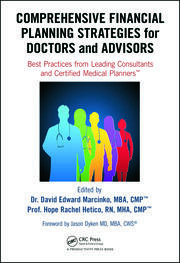
Risk Management, Liability Insurance, and Asset Protection Strategies for Doctors and Advisors: Best Practices from Leading Consultants and Certified Medical Planners™8Comprehensive Financial Planning Strategies for Doctors and Advisors: Best Practices from Leading Consultants and Certified Medical Planners™