





 Support our online development, and advance our onground research initiatives in free market economics, as we seek to showcase the brightest Next-Gen minds.
THE ME-P DISCLAIMER: Posts, comments and opinions do not necessarily represent iMBA, Inc., but become our property after submission. Copyright © 2006 to-date. iMBA, Inc allows colleges, universities, medical and financial professionals and related clinics, hospitals and non-profit healthcare organizations to distribute our proprietary essays, photos, videos, audios and other documents; etc. However, please review copyright and usage information for each individual asset before submission to us, and/or placement on your publication or web site. Attestation references, citations and/or back-links are required. All other assets are property of the individual copyright holder.
Support our online development, and advance our onground research initiatives in free market economics, as we seek to showcase the brightest Next-Gen minds.
THE ME-P DISCLAIMER: Posts, comments and opinions do not necessarily represent iMBA, Inc., but become our property after submission. Copyright © 2006 to-date. iMBA, Inc allows colleges, universities, medical and financial professionals and related clinics, hospitals and non-profit healthcare organizations to distribute our proprietary essays, photos, videos, audios and other documents; etc. However, please review copyright and usage information for each individual asset before submission to us, and/or placement on your publication or web site. Attestation references, citations and/or back-links are required. All other assets are property of the individual copyright holder.


Enter the Certified Medical Planners™
By Ann Miller RN MHA
[Executive-Director]
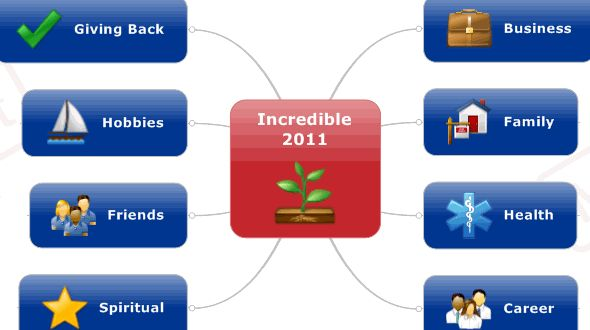
Life planning and behavioral finance, as proposed by physicians and financial advisors, and as integrated by the Institute of Medical Business Advisors (iMBA), emanates from a holistic union of personal financial planning and medical practice management solely for the healthcare space.
Source: https://www.mapsforthat.com/map.php?m=587
The CMP™ Difference
Unlike pure life planning, pure financial planning, or pure management theory, it is both a quantitative and qualitative “hard and soft” science. It has an ambitious economic, psychological and managerial niche value proposition never before proposed and codified, while still representing an evolving philosophy. Its’ zealous practitioners are called Certified Medical Planners (CMPs).
Assessment
Health 2.0 focused physician baby boomers & modern Gen-X financial advisors can help transition you successfully through medical practice and life changing financial events by exchanging knowledge, experiences and inspiration with industry professionals and peers in the casual and friendly atmosphere of the ME-P. Join us today.
More: https://medicalexecutivepost.com/2009/10/20/understanding-behavioral-finance/
Conclusion
Your thoughts and comments on this ME-P are appreciated. Feel free to review our top-left column, and top-right sidebar materials, links, URLs and related websites, too. Then, subscribe to the ME-P. It is fast, free and secure.
Speaker: If you need a moderator or speaker for an upcoming event, Dr. David E. Marcinko; MBA – Publisher-in-Chief of the Medical Executive-Post – is available for seminar or speaking engagements. Contact: MarcinkoAdvisors@msn.com
OUR OTHER PRINT BOOKS AND RELATED INFORMATION SOURCES:
- PRACTICES: www.BusinessofMedicalPractice.com
- HOSPITALS: http://www.crcpress.com/product/isbn/9781466558731
- CLINICS: http://www.crcpress.com/product/isbn/9781439879900
- ADVISORS: www.CertifiedMedicalPlanner.org
- FINANCE: Financial Planning for Physicians and Advisors
- INSURANCE: Risk Management and Insurance Strategies for Physicians and Advisors
- Dictionary of Health Economics and Finance
- Dictionary of Health Information Technology and Security
- Dictionary of Health Insurance and Managed Care



Share this:

Filed under: CMP Program, Financial Planning, iMBA, Inc., LifeStyle, Practice Management | Tagged: behavioral econmomics, CMP, Dr. David Edward Marcinko MBA, holistic life planning, medical executive post, www.certifiedmedicalplanner.com, www.medicalbusinessadvisors.com |
 The Leading Business Education Network for Doctors, Financial Advisors and Health Industry Consultants
I want to speak to someone regarding the program; how I may benefit, time commitment and course load. etc.
Jesse G. Garcia MD
http://www.corpusmedicine.com
LikeLike
Ann,
I would like to talk to you a little bit about the program. And, I think paying with paypal works great …
Kind regards,
Ben Eger, MBA
Financial Specialist
Honolulu, HI
LikeLike
OUR NEW BOOK
Comprehensive Financial Planning Strategies for Doctors and Advisors: Best Practices from Leading Consultants and Certified Medical Planners
SECTION ONE: FOR ALL PRACTITIONERS
The vast majority of physicians and medical professionals major in one of the hard science while in college; biology, engineering, chemistry, mathematics, computer science or physics; etc. Few take undergraduate courses in finance, business management, securities analysis, accounting or economics; although this paradigm is changing with modernity. These course are not particularly difficult for the pre-medical baccalaureate major, they are just not on the radar screen for time compressed and highly competitive students; nor are they needed for medical or nursing school admission, or the many related allied health professionals schools.
In fact, William C. Roberts MD, originally from Emory University in Atlanta, and former editor for the Baylor University Medical Center Proceedings and The American Journal of Cardiology, opined just a decade ago: “Of the 125 medical schools in the USA, only one of them to my knowledge offers a class related to saving or investing money.” And so, it is important to review some basic principles of economics, finance and accounting as they relate to financial planning in this first section of this textbook.
Section One is not intended as a replacement for such courses, but it will serve as a place to start the discussion, enhance independent life-long learning, or perhaps even ignite the path forward to a more formal educational journey. After all, many of our contributors are dual degreed business, legal, financial and medical professionals of all stripes, degrees, specialties and financial industry designations. It is good to learn from them by example, and harvest their insatiable curiosity and experiences. Such enhancement may be cumbersome and challenging, but it is always worthwhile.
Hope R. Hetico RN MHA
[Managing Editor]
LikeLike
The path to financial wellness
One of the most important financial journeys we can take is the path to financial wellness. Building financial security and independence, while certainly important, makes up only one slice of the whole financial wellness pie. Financial wellness also incorporates the ways wealth and income affect our emotional and physical well-being. In most cases, the impact is both positive and negative.
The journey to financial wellness is far different than the path to becoming rich. Achieving financial wellness cannot be done in a vacuum; it requires developing a degree of emotional and physical wellness as well. Searching for one inherently will expand to a search for all three. Just as with emotional and physical health, developing financial wellness is certainly a journey. I doubt that journey ever has a final destination, and it’s one that relatively few people choose to make.
If you are considering a journey to financial wellness, here are a few thoughts.
1. Remember, it’s your journey. It doesn’t work to follow the path to financial wellness because a spouse, parent, friend, or financial planner recommends it. If your motivation is a “should” or an “ought,” you might as well save yourself a lot of frustration and pain by stopping before the journey starts.
2. Don’t attempt to guilt, shame, or manipulate anyone else to come along with you on the journey. We can’t find financial wellness for anyone else but ourselves. We certainly can join with others for mutual support and learning along the way, but all those on the path need to be there for themselves regardless of whether others are on the path.
3. Be prepared for the naysayers. Not everyone in your life is going to support your quest for financial wellness. Many will try to convince to stop before you start or to turn back once you’ve begun. Often, the closer a person is to you and the more dependent they are on your financial choices, the more threatening your journey may be to them and the more they will resist you changing.
4. Lower your expectations of how quickly your attitudes and behaviors around money and finances will change. Chances are it has taken you a lifetime to get to where you are with your relationship with money. Unlike the journey that Ebenezer Scrooge took to financial wellness, your relationship won’t be miraculously transformed overnight.
5. In the early stages of your journey, resist the urge to substitute getting more practical and logical information about money and finances instead of looking at the emotions and feelings you have around money. Most of the journey to financial wellness is not about the money. It’s about the thoughts, beliefs, and emotions you have about money and wealth.
6. Find one or more trusted guides to help you along the journey. Seek out those who are traveling the path ahead of you and who appear to practice at least some of the financial wellness you want. Learn from their missteps. Benefit from their experience and wisdom.
7. Open yourself to new awareness and knowledge. Be prepared to let go of your most deeply held “truths” about money. The more stubbornly we cling to strong beliefs about how systems work or people function around money, the more likely that those beliefs are not serving us well.
8. Be gentle with yourself when you get off the main path and need to retrace your steps. Everyone on the journey to financial wellness takes their share of wrong turns. Mistakes and dead ends are inevitable and are not failures. They are opportunities to learn, to make course corrections, and to continue your journey.
Rick Kahler MS CFP™
LikeLike
Being present …. Living in the moment
These important aspects of personal and spiritual growth may sound simple and attractive, but they are far more difficult to practice than they seem. Like many of us, I spend a lot of time worrying about events in the past I cannot change and trying to control events in the future that may not happen.
One thing that took me several years to sort out is that living in the moment doesn’t mean ignoring the consequences of past events or avoiding planning for the future. Being present includes attaching appropriate weight to the way our current lives are shaped by the past. It also involves having clarity about what we can and can’t control today that will positively impact our future.
The best time to prepare for events that carry a high probability of happening is before they happen. This may seem obvious. Why, then, do so many of us have such resistance to planning? It’s common to wait until events are almost upon us before we start preparing for them.
One major life event especially can find people focused so strongly on the present that they ignore the past and neglect to plan for the future. This is marriage. Most engaged couples start wedding planning many months before the big day. Countless details—securing a location, booking caterers, ordering flowers, and finding dresses and tuxedos—must be done well in advance to avoid disappointments. Yet, quite often, couples ignore or avoid discussing essential financial concerns that will have long-term impacts on their lives together. These include budgeting, financial goals, debt and spending patterns, prenuptial agreements, and estate planning.
Consider just one of these issues, a prenuptial agreement. It’s probably a bit late to ask your attorney to knock one out the day before the wedding. Deciding whether a prenup makes sense in a given situation is best done well before you pop the question. The later in the relationship the need for a prenup is introduced, the higher the probability that potential partners won’t be able to agree to one.
Another area that newlyweds tend to neglect is estate planning. Young couples just starting out, with minimal net worth and death seeming too far away to even contemplate, may not see this as important. Yet making wills should be as much a part of marriage planning as picking out wedding rings. For couples marrying later in life, estate planning is even more essential.
It may seem contradictory, but another important aspect of preparing for the future is for couples to share their financial pasts. As well as being honest with each other about debts, financial mistakes, and other financial baggage, this includes talking about significant childhood money experiences and family patterns of managing money. Each partner’s history and beliefs around money will significantly affect their lives together.
For engaged couples focused on the romance and happiness of the present, financial planning may seem irrelevant or too mundane to bother with. Taking time for it may seem like an interruption to the enjoyment of this special time.
Yet when it comes to being present with our money and finances, decisions we make today affect tomorrow, often in profound ways. This is especially true in relationships. Disagreement over money is one of the most common issues that can create conflict and unhappiness in a marriage.
Taking time to look at the financial past and plan for the financial future does not interfere with living in the present moment. Instead, it increases a couple’s chances of building a strong future together and living happily ever after.
Rick Kahler MSFS CFP™
LikeLike
Making sound money decisions
Making sound money decisions is fundamental to financial and emotional wellness. One component of that decision-making is applying logic and rationality to a set of known facts.
For example, perhaps I read several articles on financial health. One says that living on less than I make is fundamental, another recommends saving at least 20% of my paycheck to retire with a comfortable income, and a third advocates paying off credit cards monthly. I am doing none of those things.
Approaching the problem logically, I create a spreadsheet of income and expenses. This shows me I am overspending my income by 5% and gradually accumulating credit card debt. I decide I need to do something to change this, now.
Increasing my income today is not an option, so I need to cut 5% just to break even and another 20% to fund retirement accounts. This is not an easy task. I notice a lot of difficult emotions as I look line by line at my expenditures and imagine what I could reduce or do without. I research creative ways of getting what I value for less money. I decide to sell my late model car, pay off the loan and buy an older one. I reduce my rent by splitting costs with a friend. In short order, I reach my goal of living within my means and fully funding my retirement plan. While it wasn’t easy, and I have a lot of sadness over some of my cuts, I have even greater feelings of satisfaction, joy, and hope for my future.
Easy, right? It can be, when our emotional and logical brains are in sync with one another. The problem with this scenario is that, when it comes to money, they rarely are. Research shows that 90% of money decisions are made strictly emotionally. To be clear, the odds suggest that not every emotional money decision is a poor one. However, the most consistently successful money decisions have both an emotional and logical component to them.
While I don’t have research on what percent of all money decisions probably don’t serve us well, we do know that 75% of Americans would need to sell something to come up with $1,000. Most of us live hand to mouth, having no significant emergency reserve, much less a nest egg of savings for retirement. This strongly suggests that the majority of Americans’ money decisions are made with the rational mind off-line. The logical process described above for creating financial health is hard for most people and almost impossible for some.
How can we make better money decisions? Decades of learning about the brain and money psychology has taught me that it requires a transformative process that integrates our rational thinking and our emotions. One of the strongest metaphors for that process is the transformation of Ebenezer Scrooge that Charles Dickens describes in A Christmas Carol.
The ghosts who led Scrooge to explore his past, present, and future helped him become aware of his emotions and freed him to be fully present in the here and now. Only in this state could he clearly absorb the knowledge of how his actions were affecting him and those around him.
To make sound money decisions we really need to become present, to be aware of our emotions but not controlled by them. This allows us to make decisions more objectively, with logic and rationality that respect and acknowledge our emotional as well as practical needs. That integration helps our emotions support strong financial decisions rather than sabotage them. It is the key that unlocks the door to financial wellness.
Rick Kahler MSFS CFP™
LikeLike