







 Support our online development, and advance our onground research initiatives in free market economics, as we seek to showcase the brightest Next-Gen minds.
THE ME-P DISCLAIMER: Posts, comments and opinions do not necessarily represent iMBA, Inc., but become our property after submission. Copyright © 2006 to-date. iMBA, Inc allows colleges, universities, medical and financial professionals and related clinics, hospitals and non-profit healthcare organizations to distribute our proprietary essays, photos, videos, audios and other documents; etc. However, please review copyright and usage information for each individual asset before submission to us, and/or placement on your publication or web site. Attestation references, citations and/or back-links are required. All other assets are property of the individual copyright holder.
Support our online development, and advance our onground research initiatives in free market economics, as we seek to showcase the brightest Next-Gen minds.
THE ME-P DISCLAIMER: Posts, comments and opinions do not necessarily represent iMBA, Inc., but become our property after submission. Copyright © 2006 to-date. iMBA, Inc allows colleges, universities, medical and financial professionals and related clinics, hospitals and non-profit healthcare organizations to distribute our proprietary essays, photos, videos, audios and other documents; etc. However, please review copyright and usage information for each individual asset before submission to us, and/or placement on your publication or web site. Attestation references, citations and/or back-links are required. All other assets are property of the individual copyright holder.


NIST, A.I. and Staff Reporters
***

***
SPONSOR: http://www.CertifiedMedicalPlanner.org
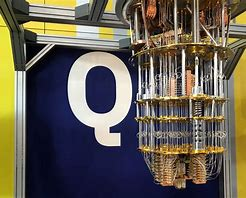
A computer that could break the encryption that safeguards your private information on the internet. A machine that can design powerful new drugs by precisely simulating the behavior of individual molecules. A device that optimizes complex supply chains to help companies get the parts they need and assemble them in the most efficient way possible.
These are all examples of how an emerging technology — the quantum computer — could change our world.
These computers work by harnessing quantum physics — the strange, often counterintuitive laws that govern the universe at its smallest scales and coldest temperatures. Today’s quantum computers are rudimentary and error-prone. But if more advanced and robust versions can be made, they have the potential to rapidly crunch through certain problems that would take current computers years. That’s why governments, companies and research labs around the world are working feverishly toward this goal.
Quantum computers will not replace our familiar “classical” computers. Rather, the two types of machines could work together to solve problems that stymie classical computers, potentially supercharging scientific research in fields such as materials and drug discovery, giving a boost to industry and upending cybersecurity as we know it.
So, let’s explore how quantum computers work.
MORE: https://www.nist.gov/quantum-information-science/quantum-computing-explained
COMMENTS APPRECIATED
Like, Refer and Subscribe
***
***
Share this:

Filed under: CMP Program, Drugs and Pharma, Ethics, Experts Invited, Information Technology | Tagged: CMP, computers, Cyber Security, Drugs, internet, molecules, NIST, PC, PCs, personal computer, physics, quantum computers | Leave a comment »



 The Leading Business Education Network for Doctors, Financial Advisors and Health Industry Consultants