
Some Tax Basics for Medical Professionals
[By Edwin P. Morrow; III, JD, LLM]
Staff Writers
Medical professional should be careful overusing this technique, in the office or other business.
IRS Attacks
Why? The IRS has successfully attacked many companies that tried to classify their workers as independent contractors rather than employees. The back taxes and penalties can be fierce.
Delegation not Employment
However, many tasks may be successfully delegated to independent contractors or consultants without fear of such characterization. For example, a company does not have to withhold payroll taxes for an independent contractor, but must file a 1099-MISC whenever payments exceed $600 a year. To distinguish between the two, there are several factors to consider. In general, the more you have control over a worker, the more the worker looks like an employee. Two brief tables below note a few of the differences:
Employee:
- Works at site of employer
- Uses company tools or equipment
- Cannot delegate or hire others for job
- Method/timing of job specified/controlled
- Expenses reimbursed
- Little invested by worker
- Payment weekly, bi-weekly or monthly
- Only works for one employer
- No risk of non-payment if poor job
- Profit/bonus limited
- No advertising
- Contract states employee relationship
- Position seems permanent
- Work done is essential to business
Independent Contractor:
- Works off-site
- Uses own tools and equipment
- Can hire others or delegate
- Method/timing of job uncontrolled
- Expenses borne by worker
- More invested by worker
- Payment by the job or flat fee
- Works for several clients
- Opportunity for profit
- Advertising to general public
- Contract says independent contractor
- Position temporary
- Work done is non-core function
Multi-Factorial Analysis Needed
No single one of these factors determines status. The IRS has a 20-factor test outlined in Revenue Ruling 87-41 and discussed in Publication 1976, “Independent Contractor or Employee”. When you have a relationship that is unclear, you should consult with the IRS guidelines and publications. If your intent is to hire an independent contractor, try to make sure the relationship has more of the factors indicative of that status, checking the latest IRS publication for all relevant factors. Because of the large amounts at stake, you should err on the side of employee status if uncertain. You may wish consult a tax attorney or accountant as well, especially if you have multiple workers in a gray area. In addition, you can request that the IRS make a determination of worker classification by submitting Form SS-8, “Determination of Employee Work Status for Purposes of Federal Employment Taxes and Income Tax Withholding.
***

***
Assessment
The IRS guidelines on this topic are rather lengthy. And, $600 is still the threshold amount this year unless it is royalties ($10). Non-employee compensation, rent, royalties, prizes or awards, and services are only a few of the situations giving rise to a 1099-MISC. Doctors may also find this link of additional benefit:
http://www.ehow.com/how_13664_know-issue-1099.html
Conclusion
Your thoughts and comments on this ME-P are appreciated. Feel free to review our top-left column, and top-right sidebar materials, links, URLs and related websites, too. Then, subscribe to the ME-P. It is fast, free and secure.
Link: http://feeds.feedburner.com/HealthcareFinancialsthePostForcxos
Speaker: If you need a moderator or speaker for an upcoming event, Dr. David E. Marcinko; MBA – Publisher-in-Chief of the Medical Executive-Post – is available for seminar or speaking engagements. Contact: MarcinkoAdvisors@msn.com
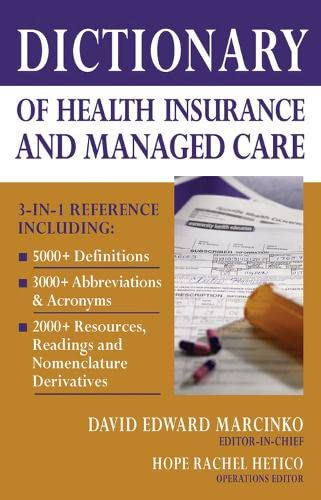
OUR OTHER PRINT BOOKS AND RELATED INFORMATION SOURCES:


***







 Support our online development, and advance our onground research initiatives in free market economics, as we seek to showcase the brightest Next-Gen minds.
THE ME-P DISCLAIMER: Posts, comments and opinions do not necessarily represent iMBA, Inc., but become our property after submission. Copyright © 2006 to-date. iMBA, Inc allows colleges, universities, medical and financial professionals and related clinics, hospitals and non-profit healthcare organizations to distribute our proprietary essays, photos, videos, audios and other documents; etc. However, please review copyright and usage information for each individual asset before submission to us, and/or placement on your publication or web site. Attestation references, citations and/or back-links are required. All other assets are property of the individual copyright holder.
Support our online development, and advance our onground research initiatives in free market economics, as we seek to showcase the brightest Next-Gen minds.
THE ME-P DISCLAIMER: Posts, comments and opinions do not necessarily represent iMBA, Inc., but become our property after submission. Copyright © 2006 to-date. iMBA, Inc allows colleges, universities, medical and financial professionals and related clinics, hospitals and non-profit healthcare organizations to distribute our proprietary essays, photos, videos, audios and other documents; etc. However, please review copyright and usage information for each individual asset before submission to us, and/or placement on your publication or web site. Attestation references, citations and/or back-links are required. All other assets are property of the individual copyright holder.




 The Leading Business Education Network for Doctors, Financial Advisors and Health Industry Consultants