BETTORS & GAMBLERS: Taxation Update

SPONSOR: http://www.CertifiedMedicalPlanner.org

By Staff Reporters

***

***

What’s Different?

Bettors are currently able to deduct 100% of their gambling losses, so they only pay taxes on their winnings. But starting next year, only 90% of gambling losses will be deductible.

So, if a professional gambler wins $100,000, then loses $100,000 that same year, according to the New York Times:

  • In 2025, that gambler would owe taxes on $0.
  • In 2026, that gambler would owe taxes on $10,000.

Bettors could even end up paying taxes if they finished the year with a net loss.

COMMENTS APPRECIATED

Like and Subscribe

***

***

SECTION 179 DEDUCTIONS: Physicians Avoiding IRS Tax Mistakes

By Staff Reporters

***

***

DEFINITION: Section 179 of the U.S. IRS code is an immediate expense deduction that business owners can take for purchases of depreciating business equipment instead of capitalizing and depreciating the asset over a period of time. The Section 179 deduction can be taken if the piece of equipment is purchased or financed and the full amount of the purchase price is eligible for the deduction.

CITE: https://www.r2library.com/Resource/Title/082610254

Not understanding parameters – Eligible property and annual limits

Medical practices may make mistakes by not fully understanding which types of property qualify for a Section 179 deduction. Section 179 is applicable only to assets used for business purposes. Failing to allocate assets properly can lead to improper deductions.

Eligible property for Section 179 may include:

  • Equipment, X-Ray, computers, fax machines, telephones, and other business property
  • Furniture and fixtures
  • Off-the-shelf-software that is used for business operations
  • Improvements to real-estate such as roofs, heating, ventilation, and air-conditioning.

Section 179 limits are updated annually, so it is important for doctors and practice owners to be aware of these limits and to plan accordingly.

Source: Natalie Westfall, Physicians Practice [12/4/23]

COMMENTS APPRECIATED

Thank You

***

***

Income Tax Brackets for 2021

By Staff Reporters

***

CITE: https://www.r2library.com/Resource/Title/082610254

***

If taxable income is:The tax due is:
Under $9,95010% of the taxable income
Over $9,950 but under or equal to $40,525$995 plus 12% of the excess over $9,950
Over $40,525 but under or equal to $86,375$4,664 plus 22% of the excess over $40,525
Over $86,375 but under or equal to $164,925$14,751 plus 24% of the excess over $86,375
Over $164,925 but under or equal to $209,425$33,603 plus 32% of the excess over $164,925
Over $209,425 but under or equal to $523,600$47,843 plus 35% of the excess over $209,425
Over $523,600$157,804.25 plus 37% of the excess over $523,600

,

If taxable income is:The tax due is:
Not over $9,95010% of the taxable income
Over $9,950 but under or equal to $40,525$995 plus 12% of the excess over $9,950
Over $40,525 but under or equal to $86,375$4,664 plus 22% of the excess over $40,525
Over $86,375 but under or equal to $164,925$14,751 plus 24% of the excess over $86,375
Over $164,925 but under or equal to $209,425$33,603 plus 32% of the the excess over $164,925
Over $209,425 but under or equal to $314,150$47,843 plus 35% of the excess over $209,425
Over $314,150$84,496 plus 37% of the excess over $314,150

,

If taxable income is:The tax due is:
Not over $19,90010% of the taxable income
Over $19,900 but under or equal to $81,050$1,990 plus 12% of the excess over $19,900
Over $81,050 but under or equal to $172,750$9,328 plus 22% of the excess over $81,050
Over $172,750 but under or equal to $329,850$29,502 plus 24% of the excess over $172,750
Over $329,850 but under or equal to $418,850$67,206 plus 32% of the excess over $329,850
Over $418,850 but under or equal to $628,300$95,686 plus 35% of the excess over $418,850
Over $628,300$168,993.50 plus 37% of the excess over $628,300

,

If taxable income is:The tax due is:
Not over $14,20010% of the taxable income
Over $14,200 but under or equal to $54,200$1,420 plus 12% of the excess over $14,200
Over $54,200 but under or equal to $86,350$6,220 plus 22% of the excess over $54,200
Over $86,350 but under or equal to $164,900$13,293 plus 24% of the excess over $86,350
Over $164,900 but under or equal to $209,400$32,145 plus 32% of the the excess over $164,900
Over $209,400 but under or equal to $523,600$46,385 plus 35% of the excess over $209,400
Over $523,600$156,355 plus 37% of the excess over $523,600

***

COMMENTS APPRECIATED

Thank You

Subscribe to the Medical Executive-Post

***

***

DOCTORS & TAX DEDUCTIONS: Top Ten [10] Most Over-Looked

By Staff Reporters

****

IRS Lists Top 10 Criminal Tax Investigations in 2021 - Small Business Trends

***

The most recent numbers show that more than 45 million of us itemized deductions on our 1040s—claiming $1.2 trillion dollars’ worth of tax deductions. That’s right: $1,200,000,000,000!  That same year, taxpayers who claimed the standard deduction accounted for $747 billion. Some of those who took the easy way out probably shortchanged themselves. (If you turned age 65 in 2021 or earlier, remember that you deserve a bigger standard deduction than younger folks.)

Here are our 10 most overlooked tax deductions. Claim them if you deserve them, and keep more money in your pocket. Good advice for all physicians, nurse and medical professionals, too.

1. State sales taxes

This write-off makes sense primarily for those who live in states that do not impose an income tax. Especially Alaska, Florida, Nevada, New Hampshire, South Dakota, Tennessee, Texas, Washington, and Wyoming. Here’s why this is a factor. You must choose between deducting state and local income taxes or state and local sales taxes. For most citizens of income-taxing-states, the state and local income tax deduction is usually the better deal.

For those of you in an income-tax free state, there are two ways to claim the sales tax deduction on your tax return. One, you can use the IRS tables provided for your state to determine what you can deduct. In addition, if you purchased a vehicle, boat, airplane, home or did major home renovations, you may be able to add the state sales tax you paid on these items to the amount shown in the IRS tables up to the limit for your state. Or two, you can you can keep track of all of the sales tax you paid throughout the year and use that.

The best way to see what you can deduct is to use the IRS’s Sales Tax Calculator for this. Keep in mind, the total of your itemized deductions for all of your state and local taxes is limited to $10,000 per year.

2. Reinvested dividends

This isn’t really a tax deduction, but it is a subtraction that can save you a lot of money. And it’s one that many taxpayers miss. If, like most investors, you have mutual fund dividends automatically invested in extra shares, remember that each reinvestment increases your “tax basis” in the stock or mutual fund. That, in turn, reduces the amount of taxable capital gain (or increases the tax-saving loss) when you sell your shares.

Forgetting to include the reinvested dividends in your cost basis—which you subtract from the proceeds of sale to determine your gain—means overpaying your taxes.

3. Out-of-pocket charitable contributions

It’s hard to overlook the big charitable gifts you made during the year by check or payroll deduction. But the little things add up, too, and you can write off out-of-pocket costs you incur while doing good deeds. Ingredients for casseroles you regularly prepare for a qualified nonprofit organization’s soup kitchen, for example, or the cost of stamps you buy for your school’s fundraiser count as a charitable contribution. If you drove your car for charity in 2021, remember to deduct 14 cents per mile.

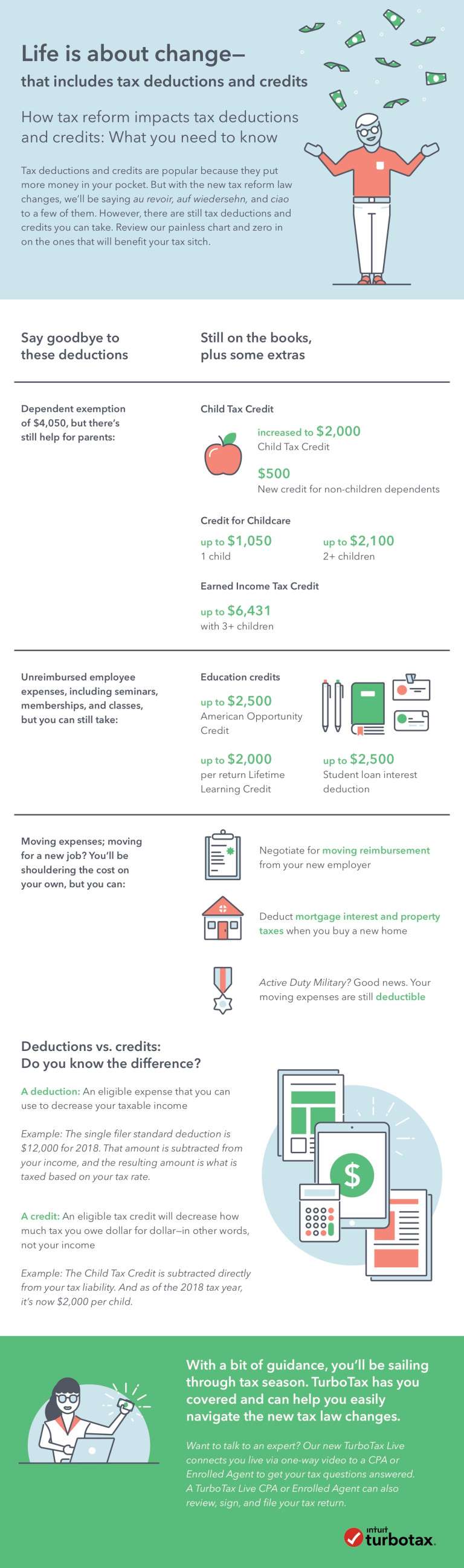
4. Student loan interest paid by you or someone else

In the past, if parents or someone else paid back a medical school or other loan incurred by a student, no one got a tax break. To get a deduction, the law said that you had to be both liable for the debt and actually pay it yourself. But now there’s an exception. You may know that you might be eligible to take a deduction but even if someone else pays back the loan, the IRS treats it as though they gave you the  money, and you then paid the debt. So, a student who’s not claimed as a dependent can qualify to deduct up to $2,500 of student loan interest paid by you or by someone else.

5. Moving expenses

While most taxpayers lost the ability to deduct moving expenses beginning in 2018, one main group of people who can still claim their moving expenses to the IRS. Who are they? Military personnel. If you’re an active duty military member who is relocating, you can still deduct these expenses —if you don’t receive reimbursement from the government for the move.

Also, as long as the move is permanent —and your relocation was ordered by the military — you don’t have to pay tax on qualified moving expense reimbursements. So start getting those receipts out now – because you can claim travel and lodging expenses for you and your family, moving household goods, and the costs for shipping your cars and your beloved pets! And that’s good news for the men and women we thank for bravely serving our country.

Sam (1)

6. Child and Dependent Care Tax Credit

A tax credit is so much better than a tax deduction—it reduces your tax bill dollar for dollar. So missing one is even more painful than missing a deduction that simply reduces the amount of income that’s subject to tax.

But it’s easy to overlook the Child and Dependent Care Credit if you pay your child care bills through a reimbursement account at work. For 2020, the law allows you to run up to $5,000 of such expenses through a tax-favored reimbursement account at work. Up to $6,000 in care expenses can qualify for the credit, but the $5,000 from a tax favored account can’t be used. So if you run the maximum $5,000 through a plan at work but spend more for work-related child care, you can claim the credit on up to an extra $1,000. That would cut your tax bill by at least $200 using the minimum 20 percent of the expenses. The credit percentage goes up for lower income households.

However, there are big changes for 2021, The American Rescue Plan signed into law on March 11, 2021 brought significant changes to the amount and way that the child and dependent care tax credit can be claimed only for tax year 2021. The new law not only increases the credit, but also the amount of taxpayers that will benefit from the credit’s highest rate and it also makes it fully refundable.  This means that, unlike previous years, you can still get the credit even if you don’t owe taxes. Changes to the Child and Dependent Care Credit that apply only for tax year 2021 (the taxes you file in 2022) include:

  • The highest credit percentage increased from 35% to 50% of qualifying expenses
  • Qualifying child and dependent care expenses increased from $3,000 to $8,000 for one qualifying person and from $6,000 to $16,000 for two or more qualifying individuals
  • The adjusted gross income (AGI) level at which the credit percentage is reduced is increased from $15,000 to $125,000

For example, prior to the 2021 tax year, a taxpayer with one qualifying person, $3,000 in qualifying expenses and an AGI of $60,000 would qualify for a nonrefundable credit of approximately $600 (20% x $3,000). By contrast, under the new law for tax year 2021 only, a taxpayer with the same circumstances can potentially claim a refundable credit of approximately $1,500 (50% x $3,000).

Also for tax year 2021, the maximum amount that can be contributed to a dependent care flexible spending account and the amount of tax-free employer-provided dependent care benefits is increased from $5,000 to $10,500.

7. Earned Income Tax Credit (EITC)

Millions of lower-income people take this credit every year. However, 25% of taxpayers who are eligible for the Earned Income Tax Credit fail to claim it, according to the IRS. Some people miss out on the credit because the rules can be complicated. Others simply aren’t aware that they qualify.

The EITC is a refundable tax credit—not a deduction— with maximum amounts for different filing statuses ranging from $1,502 to $6,728 for 2021. The credit is designed to supplement wages for low-to-moderate income workers. But the credit doesn’t just apply to lower income people. Tens of millions of individuals and families previously classified as “middle class”—including many medical colleagues and white-collar workers—are now considered “low income” because they:

  • lost a job
  • took a pay cut
  • or worked fewer hours during the year

The exact refund you receive depends on your income, marital status and family size. To get a refund from the EITC you must file a tax return, even if you don’t owe any taxes. Moreover, if you were eligible to claim the credit in the past but didn’t, you can file any time during the year to claim an EITC refund for up to three previous tax years.

8. State tax you paid last spring

Did you owe taxes when you filed your 2020 state tax return in 2021? Then remember to include that amount with your state tax itemized deduction on your 2021 return, along with state income taxes withheld from your paychecks or paid via quarterly estimated payments. Beginning in 2018, the deduction for state and local taxes is limited to a maximum of $10,000 per year.

9. Refinancing mortgage points

When you buy a house, you often get to deduct points paid to obtain your mortgage all at one time. When you refinance a mortgage, however, you have to deduct the points over the life of the loan. That means you can deduct 1/30th of the points a year if it’s a 30-year mortgage—that’s $33 a year for each $1,000 of points you paid. Doesn’t seem like much, but why throw it away?

Also, in the year you pay off the loan—because you sell the house or refinance again—you get to deduct all the points not yet deducted, unless you refinance with the same lender.

10. Jury pay paid to employer

Some employers continue to pay employees’ full salary while they are doing their civic duty, but ask that they turn over their jury fees to the company. The only problem is that the IRS demands that you report those fees as taxable income. If you give the money to your employer you have a right to deduct the amount so you aren’t taxed on money that simply passes through your hands.

***

COMMENTS APPRECIATED

Thank You

Subscribe to the Medical Excutive-Post

***

FIN PLANNING: https://www.amazon.com/Comprehensive-Financial-Planning-Strategies-Advisors/dp/1482240289/ref=sr_1_1?ie=UTF8&qid=1418580820&sr=8-1&keywords=david+marcinko

****

2019 Tax Deductions and Credits

Update on Tax Reform

***

***

Conclusion

Your thoughts and comments on this ME-P are appreciated. Feel free to review our top-left column, and top-right sidebar materials, links, URLs and related websites, too. Then, subscribe to the ME-P. It is fast, free and secure.

Speaker: If you need a moderator or speaker for an upcoming event, Dr. David E. Marcinko; MBA – Publisher-in-Chief of the Medical Executive-Post – is available for seminar or speaking engagements.

Book Marcinko: https://medicalexecutivepost.com/dr-david-marcinkos-bookings/

Subscribe: MEDICAL EXECUTIVE POST for curated news, essays, opinions and analysis from the public health, economics, finance, marketing, IT, business and policy management ecosystem.

DOCTORS:

“Insurance & Risk Management Strategies for Doctors” https://tinyurl.com/ydx9kd93

“Fiduciary Financial Planning for Physicians” https://tinyurl.com/y7f5pnox

“Business of Medical Practice 2.0” https://tinyurl.com/yb3x6wr8

HOSPITALS:

“Financial Management Strategies for Hospitals” https://tinyurl.com/yagu567d

“Operational Strategies for Clinics and Hospitals” https://tinyurl.com/y9avbrq5

***

Comprehensive Financial Planning Strategies for Doctors and Advisors: Best Practices from Leading Consultants and Certified Medical Planners™

Risk Management, Liability Insurance, and Asset Protection Strategies for Doctors and Advisors: Best Practices from Leading Consultants and Certified Medical Planners™

About Tax Record Retention

Join Our Mailing List

Which Ones to Keep—How Long?

[By Staff Writers]fp-book2

By law, we are all required to keep records the IRS could use to determine our tax liability accurately. And doctors, more than most, know what it’s like to keep records. So you should retain whatever papers and documents support or clarify your calculations. If the IRS thinks you owe it money, you—both as an individual taxpayer and as a medical business owner—must prove it wrong. Your records are your only real protection if the IRS sets its sights on you for an audit.

Query: But what papers? And how long does the IRS have to determine your taxes for any given year? Do you have to keep everything forever? He following information may provide some clarity to this query.

Individual Tax Records

Accuracy means more to the IRS than the form of recordkeeping you use. Even more important is thoroughness. While certain papers are more significant than others, all of them together build your case for stated adjusted gross income, taxable income, deductions, exemptions, etc. For example:

Income:

Your medical, and other, employment-related records are top priority. The basic ones are W-2s from your hospital, clinic or medial practice, W-2P (for recipients of pensions, annuities, and IRA payouts), and 1099s for freelance income, speaking and pharmaceutical fees, and royalties, etc. You will also need 1099s that show interest and dividend income, as well as stock brokerage statements and any other documents that contain information pertaining to the amount you report as income.

Deductions

Generally, to back up your various deductions, the records you keep should include all related canceled checks and receipts. Here are some specific deductions and their requirements:

Medical expenses:

Keep all canceled checks and receipts. Keep records of any expense reimbursed or paid directly by medical insurance and medical insurance policies on which you deduct the premium cost. The person on whose behalf payments were made should be noted on every check, bill, and receipt.

Mortgage interest:

Keep bank (or mortgage company) statements, notes, and canceled checks.

Child-care credit:

Maintain a record of the name and address of the person or center providing the care, copies of canceled checks, and receipts to verify costs, and amounts paid for household services during the year. The latter will allow you to differentiate costs if the IRS tries to claim your child-care payments were really for a housekeeper. If you pay an individual to provide child care, keep a record of his or her taxpayer ID number, since you need that to get the credit.

Alimony:

You should maintain a copy of the divorce decree, separate maintenance agreement, or other document that specified the basis for the payments; name and address of the ex-spouse to whom you made payments; and canceled alimony checks. If you made payments indirectly through insurance policies, annuity contracts, or endowments, keep the documents showing the source of the payments.

Charitable contributions:

To prove charitable contributions, keep canceled checks and receipts showing the donee’s name, plus the date and amount of the contributions. If you don’t have a check, you need other reliable records showing the same information. If contributions are made by credit card, keep the receipt, the bill, and a statement from the charity with the required information. If you make a contribution of above certain periodically indexed thresholds, or more, to a particular charity, you must get a written acknowledgment from the charity (letter, postcard, etc.). A canceled check is not enough. Generally speaking, if you make separate deminimus contributions each year, the written acknowledgment rule may not apply.

A donation of property will complicate recordkeeping. You need the same items as above, plus a description of the property and the place you made the contribution. You should also keep documents showing the method you used to determine the fair market value of the property, with a signed copy of appraisal reports, if any. If you have an agreement with the charitable organization regarding the use of the donated property, hang on to a copy of that as well.

For property, you will also need documents showing how and why you acquired the property and your cost or other basis (except for publicly traded securities) if you held it for less than one year. For property valued over certain thresholds, you must get a qualifying appraisal and keep a copy of the report

IRS

Business Tax Records

As a medical business owner, your recordkeeping requirements are more substantial. There are so many more soft spots where the IRS can probe. The following areas are of particular importance:

Depreciation:

Keep any records needed to establish the reasonableness of a depreciation deduction, such as the original sales receipt showing what you paid for the property. Records must show the yearly depreciation claimed.

Withholding:

Keep all compensation records. For each employee, show name, address, job, and Social Security number, total amount and date of each wage payment, and any other type or form of payment; amount of wages subject to withholding; amount of tax collected; employee W-4 forms; and any agreement with employees regarding additional withholding.

Travel and entertainment:

The IRS does not accept estimates. You must keep itemized bills and receipts, Back them up with a diary showing cost, time, place of travel or entertainment, business purpose, and business relationship of guests.

Also, you must keep a log of your business use of items, such as a car, pager, computer, or server; or PDA, ipod or cell phone, etc., that you use partly for business and partly for personal purposes. For travel, your diary should show the date of departure and return, plus how many days of the total trip were spent on business. If you are an independent medical contractor, keep a diary of your daily work activities. This will reinforce the specific items and pull them together.

How Long to Retain Records?

By law, you have to keep tax records “as long as material” to the administration of the tax law. Since the statute of limitations runs for three years from the time you file your return or the due date of the return (whichever is later), and the IRS is free to audit your return during this time, you want to keep the records at least that long. After an assessment, the IRS has six years to begin collecting, so you are up to nine years. But you then have two years to claim a refund after payment, giving you a grand total of 11 years.

This may seem extreme, and not everyone keeps records that long. Many individuals keep records for six years—the amount of time the IRS has to audit if it suspects a gross error—an underreporting of 25% or more of the gross income shown on your return.

The 11-year time frame is the maximum time frame for assessment, collection, and refund claim. Business owners would be wise to use that period as a rule of thumb, even if individual taxpayers don’t.

Homeowners—

Keep any documents connected to home ownership that have a bearing on your taxes, if any, for the entire time you own your home. If you sell your home, keep the documents as long after the last tax filing as they have a bearing on your tax records. Remember the newer rules for homeowner tax exemption.

Withholding—

These records are subject to a special four-year retention rule. Most doctors and medical business owners keep them longer.

Fraud

In the case of fraud, there is no limit on the time the IRS has to charge you. But here, the burden of proof shifts to the IRS, and you get the presumption of innocence. So you need not feel you have to keep records forever to protect yourself against such an accusation. 

Conclusion

Your thoughts and comments on this ME-P are appreciated. Feel free to review our top-left column, and top-right sidebar materials, links, URLs and related websites, too. Then, subscribe to the ME-P. It is fast, free and secure.

Speaker: If you need a moderator or speaker for an upcoming event, Dr. David E. Marcinko; MBA – Publisher-in-Chief of the Medical Executive-Post – is available for seminar or speaking engagements. Contact: MarcinkoAdvisors@msn.com

OUR OTHER PRINT BOOKS AND RELATED INFORMATION SOURCES:

Product Details  Product Details