PODCAST: Drs. Vivian Lee, Marty Makary, Atul Gawande and Robert Pearl Blame Physician Culture for the Poor State of US Healthcare

At Least in Part ACCORDING TO THESE BOOKS

Texas CEO Magazine Eric Bricker 1 - SO 14 - Texas CEO Magazine

BY ERIC BRICKER MD

Understandably, Many Doctors Take Issue with This Accusation and Say They Treat Their Patients with Integrity and Accountability. Both Statements May Be TRUE … How is That Possible?

Because of Bad Apples.’

While the Majority of Physicians May Put Their Patients First, There Are a Minority of Physicians that Put Money, Power, Prestige and Promotions Ahead of Patients. It’s These Bad Apples That Ruin Physician Culture.

Problem: Fee-for-Service Rewards Bad Apple Physicians, While Paying the High-Integrity Doctors as Well.

Assessment: If Doctors Want to Keep Fee-for-Service, Then the Bad Apples Must Be Reduced Through 1) Increased Transparency, 2) Greater Doctor Self-Regulation, 3) More Federal Oversight and 4) Increased Employer Investigation.

Many of the Books by Drs. Vivian Lee, Marty Makary, Atul Gawande and Robert Pearl Blame Physician Culture in Part for the Poor State of US Healthcare

Your thoughts are appreciated.

THANK YOU

***

More on the Doctor Salary “WARS” – er! ah! … CONUNDRUM!

Join Our Mailing List

Compensation Trend Data Sources

cropped-dem

By Dr. David Edward Marcinko MBA

[Editor-in-Chief] www.BusinessofMedicalPractice.com

Related chapters: Chapter 27: Salary Compensation and Chapter 29: Concierge Medicine and Chapter 30: Practice Value-Worth


***

PERSONAL PREAMBLE

***

Physician compensation is a contentious issue and often much fodder for public scrutiny. Throw modern pay for performance [P4P], and related metrics, into the mix and few situations produce the same level of emotion as doctors fighting over wages, salary and other forms of reimbursement.

This situation often springs from a failure of both sides to understand mutual compensation terms-of-art when the remuneration deal was first negotiated. This physician salary and compensation information is thus offered as a reference point for further investigations.

Introduction 

More than a decade ago, Fortune magazine carried the headline “When Six Figured Incomes Aren’t Enough. Now Doctors Want a Union.” To the man in the street, it was just a matter of the rich getting richer. The sentiment was quantified in the March 31, 2005 issue of Physician’s Money Digest when Greg Kelly and I reported that a 47-y.o. doctor with 184,000 dollars in annual income would need about 5.5 million dollars for retirement at age.

Of course, physicians were not complaining back then under the traditional fee-for-service system; the imbroglio only began when managed care adversely impacted income and the stock market crashed in 2008.

Today, the situation is vastly different as medical professionals struggle to maintain adequate income levels. Rightly or wrongly, the public has little sympathy for affluent doctors following healthcare reform. While a few specialties flourish, others, such as primary care, barely move.

In the words of colleague Atul Gawande, MD, a surgeon and author from Brigham and Women’s Hospital in Boston, “Doctors quickly learn that how much they make has little to do with how good they are. It largely depends on how they handle the business side of practice.”  And so, it is critical to understand contemporary thoughts on physician compensation and related trends.

Compensation Trend Data Sources

A growing number of surveys measure physician compensation, encompassing a varying depth of analysis. Physician compensation data, divided by specialty and subspecialty, is central to a range of consulting activities including practice assessments and valuations of medical entities. It may be used as a benchmarking tool, allowing the physician executive or consultant to compare a practitioner’s earnings with national and local averages.

The Medical Group Management Association’s (MGMA’s) annual Physician Compensation and Production Correlations Survey is a particularly well-known source of this data in the valuation community. Other information sources include Merritt Hawkins and Associates; and the annual the Health Care Group’s, [www.theHealthCareGroup.com] Goodwill Registry.

###

Portfolio analysis

www.CertifiedMedicalPlanner.org

Assessment

However, all sources are fluid and should be taken with a grain of statistical skepticism, and users are urged to seek out as much data as possible and assess all available information in order to determine a compensation amount that may be reasonably expected for a comparable specialty situation. And, realize that net income is defined as salary after practice expenses but before payment of personal income taxes.

Conclusion

Your thoughts and comments on this ME-P are appreciated. Feel free to review our top-left column, and top-right sidebar materials, links, URLs and related websites, too. Then, subscribe to the ME-P. It is fast, free and secure.

Link: http://feeds.feedburner.com/HealthcareFinancialsthePostForcxos

Speaker: If you need a moderator or speaker for an upcoming event, Dr. David E. Marcinko; MBA – Publisher-in-Chief of the Medical Executive-Post – is available for seminar or speaking engagements. Contact: MarcinkoAdvisors@msn.com

OUR OTHER PRINT BOOKS AND RELATED INFORMATION SOURCES:

DICTIONARIES: http://www.springerpub.com/Search/marcinko
PHYSICIANS: www.MedicalBusinessAdvisors.com
PRACTICES: www.BusinessofMedicalPractice.com
HOSPITALS: http://www.crcpress.com/product/isbn/9781466558731
CLINICS: http://www.crcpress.com/product/isbn/9781439879900
BLOG: www.MedicalExecutivePost.com
FINANCE: Financial Planning for Physicians and Advisors
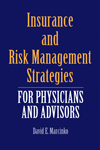
INSURANCE: Risk Management and Insurance Strategies for Physicians and Advisors

Product Details

Risk Management, Liability Insurance, and Asset Protection Strategies for Doctors and Advisors: Best Practices from Leading Consultants and Certified Medical Planners™ Risk Management, Liability Insurance, and Asset Protection Strategies for Doctors and Advisors: Best Practices from Leading Consultants and Certified Medical Planners™

***

Invite Dr. Marcinko

***

The Case for Domestic Healthcare Change—Why Bother?

Join Our Mailing List

A Crisis of Volume and Cost

By Jennifer Tomasik MS

“Fee-for-service” has been the dominant financial dynamic in the US healthcare system for decades, whereby providers are reimbursed for the quantity of visits, tests, or procedures that are performed, often without adequate regard for the cost of the interventions relative to patient outcomes.

Atul Speaks

This focus has arguably fueled incredible advances in medical devices, diagnostic tests, pharmaceuticals, and other innovations. Atul Gawande MD, surgeon and author, describes how far medicine has come since the days before penicillin—when convalescence in the shelter of a hospital was the best of only a few treatment options and, therefore, “when what was known you [as a doctor] could know. You could hold it all in your head, and you could do it all.”

The surge in the number of diagnoses and treatments that physicians have access to today is transforming their profession from a field of autonomous craftsmen wielding basic tools to what Gawande suggests should be race-car like “pit crews” that together can deliver on the scientific promise of 4,000 medical and surgical procedures and 6,000 drugs.

A Double-Edged Sword

This is a double-edged sword, as the autonomous mentality on which the field developed is now often at odds with the machine-like functioning expected of an effective and efficient “pit crew.” Together with the fee-for-service incentive structure, these realities have collided in a perfect storm propelling tremendous growth in healthcare spending characterized by fragmentation and high volume, a high cost per episode, and inconsistent quality.

Assessment

And so, we are now witnessing the costly “failure of success” from focusing so extremely on “sick care” while ignoring “well care” attempts to keep individuals and populations healthy from the start.

More info Link: http://www.routledge.com/books/details/9781466558731/

Conclusion

Your thoughts and comments on this ME-P are appreciated. Feel free to review our top-left column, and top-right sidebar materials, links, URLs and related websites, too. Then, subscribe to the ME-P. It is fast, free and secure.

Link: http://feeds.feedburner.com/HealthcareFinancialsthePostForcxos

Speaker: If you need a moderator or speaker for an upcoming event, Dr. David E. Marcinko; MBA – Publisher-in-Chief of the Medical Executive-Post – is available for seminar or speaking engagements. Contact: MarcinkoAdvisors@msn.com

Our Other Print Books and Related Information Sources:

Health Dictionary Series: http://www.springerpub.com/Search/marcinko

Practice Management: http://www.springerpub.com/product/9780826105752

Physician Financial Planning: http://www.jbpub.com/catalog/0763745790

Medical Risk Management: http://www.jbpub.com/catalog/9780763733421

Hospitals: http://www.crcpress.com/product/isbn/9781439879900

Physician Advisors: www.CertifiedMedicalPlanner.org

Our Newest Textbook Release

Buy from Amazon

Learn How to Profit and Thrive in the PP-ACA Era

BOOK FOREWORD / TESTIMONIAL

Remembering the IOM Medical Quality Report

Join Our Mailing List

Despite the IOM Warning, Medical Errors May Have Killed 1 Million Plus In Past Decade

[By Fard Johnmar: First posted May 20, 2009]

IOM Report

Much like remembering the fallen Berlin Wall, it is fitting during this time of political healthcare reform debate, to again consider the IOM report – now more than a decade old.

In a scathing report, Consumers Union estimates that more than 1 million people have died over the last decade due to preventable medical harm.  The newly released report, “To Err is Human — To Delay is Deadly,” suggests that since the Institute of Medicine’s influential 1999 report on medical errors, “98,000 people die each year needlessly because of preventable medical harm, including healthcare-acquired infections. Ten years after To Err is Human, we have no national entity comprehensively tracking patient safety events or progress.”

While some hospitals have made great strides in the effort to reduce medical errors and the U.S. government has taken steps to limit reimbursement for preventable medical events, the nation still has a long way to go.  Consumers Union is recommending that we develop a national system for tracking medical errors.  The organization suggests that concerns about malpractice lawsuits due to reports of medical harm may be overstated.

Assessment

To learn more about the Consumer Union report, please click here.

Channel Surfing

Have you visited our other topic channels? Established to facilitate idea exchange and link our community together, the value of these topics is dependent upon your input. Please take a minute to visit. And, to prevent that annoying spam, we ask that you . You can unsubscribe at any time. Security is assured.

Conclusion

Your thoughts and comments on this ME-P are appreciated. Feel free to review our top-left column, and top-right sidebar materials, links, URLs and related websites, too. Then, subscribe to the ME-P. It is fast, free and secure.

Speaker: If you need a moderator or speaker for an upcoming event, Dr. David E. Marcinko; MBA – Publisher-in-Chief of the Medical Executive-Post – is available for seminar or speaking engagements. Contact: MarcinkoAdvisors@msn.com

OUR OTHER PRINT BOOKS AND RELATED INFORMATION SOURCES:


Checklists: Homer Simpson’s Moment of Clarity on Medical Quality

Accountants do it – Attorneys do it – Why Not Docs?

By Dr. David Edward Marcinko; MBA, CPHQ, CMP™insurance-book2

Like the Nike slogan, hospitals should just do-it! Make checklists, that is! A new report by the Associated Press, on January 15, 2009, suggests simple checklists might improve medical quality and save hospitals $15 billion a year.  

NEJM Study

The study was led by Atul Gawande MD, now a Harvard surgeon and medical journalist, and just published in the New England Journal of Medicine [NEJM]. The 19-item checklist, used in the study, was far more detailed than what is required for most institutions. In summary, doctors who followed a checklist of steps cut death rates from surgery, almost in half, and complications by more than a third in a large study on how to avoid blatant operating room mistakes.

The Checklist

The 19 point surgical checklist was developed by the World Health Organization [WHO] and includes common sense, and inexpensive, measures like these two:

  • Prior to the patient being given anesthesia, make sure relevant anatomy is marked, and everyone knows if the patient has an allergy.
  • After surgery, check that all the needles, sponges and instruments are accounted for.
  • Before the checklist was introduced, 1.5 percent of patients in a comparison group died within 30 days of surgery at eight hospitals. Afterward, the rate dropped to 0.8 percent — a 47 percent decrease. Duh; as Homer Simpson might say! Not exactly rocket science; is it?

Skeptics Exist

However, Dr. Peter Pronovost – a Johns Hopkins University researcher in my hometown of Baltimore – led a highly influential checklist study a few years back on cutting infection rates from various intravenous tubes. He was a skeptic of this study because the researchers collected their own data and acknowledged the possibility that results were partly skewed because folks perform better when observed.

A Next-Gen Quality Proponent

I have been a fan of Atul since his medical school and surgical training days as a resident at Brigham and Women’s Hospital in Boston. I even cited him as a precocious young up-start in the preface of my book, Insurance and Risk Management Strategies for Physicians and Advisors. His own works, of course, are best-sellers: Complications: A Surgeon’s Notes on an Imperfect Science, and Better: A Surgeon’s Notes on Performance. In fact, I often posit that he is a leading example of next-gen quality gurus, following in the foot-steps of Robert Wachter MD before him, and John E. Wennberg MD, MPH of the Dartmouth Atlas, before Bob.

My Experiences

Yet, far too many medical quality issues are being blindly addressed with powerful information technology systems. But, do we really need RFID tags to ensure proper side surgery, or bar codes bracelets for newborns? For example, while a medical student from Temple University back in the late seventies, I was observing surgery during an orthopedic rotation and noted the wrong extremity had been prepped and draped, awaiting the surgeons’ incision. Luckily, my big mouth was an advantage at the time. Decades later, at birth, I helped deliver my own daughter and immediately splashed a (far-too-large) swatch of gentian-violet on her left heel as an identifier; cheap … effective … simple. It did horrify the youngish nursing staff, but not so the more mature PICU staff. These, and related issues, might be alleviated with some managerial common sense; along with a dose of mindset change.

Assessment

With the Obama administration about to spend massive amounts of money on eHRs and other sophisticated – but largely unproven and non inter-operable HIT systems – medical quality improvement measures; perhaps it’s time to take a breath, think and KISS! 

Most medical practices, clinics and hospitals ought not [should not] operate at full capacity, and maybe the best patient care is driven by demand (needs) – and not the supply driven (wants) of administrators, doctors, stockholders and private [physician owned] hospitals and/or other stakeholders. Still, financial advisors do-it, automobile mechanics do-it; so why don’t docs and hospitals do it… the checklist-thing?

Conclusion

Your thoughts and comments on this ME-P are appreciated. Feel free to review our top-left column, and top-right sidebar materials, links, URLs and related websites, too. Then, subscribe to the ME-P. It is fast, free and secure.

Speaker: If you need a moderator or speaker for an upcoming event, Dr. David E. Marcinko; MBA – Publisher-in-Chief of the Medical Executive-Post – is available for seminar or speaking engagements. Contact: MarcinkoAdvisors@msn.com

OUR OTHER PRINT BOOKS AND RELATED INFORMATION SOURCES:

Product Details  Product Details

Product DetailsProduct Details