
In Wake of Congressional Inquiries
By Joaquin Sapien, ProPublica – January 22, 2010 5:56 pm EDT
Dr. Howard Frumkin, the embattled director of a little-known but important division of the Centers for Disease Control and Prevention, has been reassigned to a position with less authority, a smaller staff and a lower budget.
Agency for Toxic Substances and Disease Registry
Frumkin had led the CDC’s Agency for Toxic Substances and Disease Registry (ATSDR) and the National Center for Environmental Health since 2005. For the past two years he had endured scathing criticism from Congress and the media for ATSDR’s poor handling of public health problems created by the formaldehyde-contaminated trailers that the government provided to Hurricane Katrina victims. The agency, which assesses public health risks posed by environmental hazards, also was criticized for understating the health risks of several other, less-publicized cases.
Internal CDC e-Mail
An internal CDC e-mail sent by Frumkin on Jan. 15 and obtained by ProPublica said he was leaving his position that day and would become a special assistant to the CDC’s director of Climate Change and Public Health. His old job will be temporarily filled by Henry Falk, who led ATSDR from 2003 to 2005. In the e-mail, Frumkin praised his staff and described more than 20 ATSDR accomplishments during his tenure. They include strengthening the agency’s tobacco laboratory and creating the Climate Change and Public Health program.
A Change of Function
A CDC spokesman said Frumkin’s transfer shouldn’t be considered a demotion but rather a change of function and responsibilities that the CDC’s director, Dr. Thomas Frieden, said would benefit both the agency and Dr. Frumkin, who is a recognized expert on climate change. But Frumkin’s authority has been sharply reduced, even though his salary won’t change. Previously, he oversaw two departments with a combined budget of about $264 million and 746 full-time employees. Now he will be an assistant to the director of a new program that has a budget of about $7.5 million, five full-time employees and five contractors, two of whom are part time. Through a CDC spokesman, Frumkin declined a request to be interviewed for this story.

A 2008 ProPublica Report
In 2008, ProPublica reported [1] that Frumkin and others failed to take action after learning that ATSDR botched a study [2] on the trailers provided to Katrina victims. The Federal Emergency Management Agency used the study to assure trailer occupants that the formaldehyde levels weren’t high enough to harm them. ATSDR never corrected FEMA, even though Christopher De Rosa, who led ATSDR’s toxicology and environmental medicine division, repeatedly warned Frumkin that the report didn’t take into account the long-term health consequences of exposure to formaldehyde, like cancer risks. Frumkin eventually reassigned De Rosa to the newly created position of assistant director for toxicology and risk analysis. De Rosa went from leading a staff of about 70 employees to having none. He has since left the agency and is starting a nonprofit that will consult with communities close to environmental hazards.
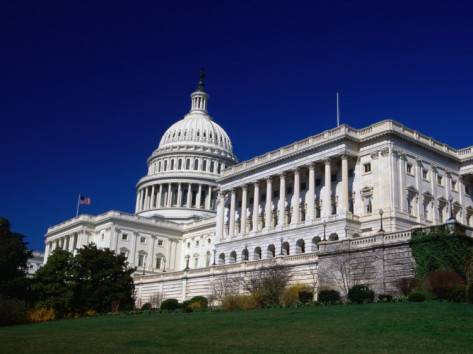
The involvement of Frumkin and ATSDR in the formaldehyde debacle was the focus of an April 2008 Congressional hearing held by a subcommittee of the House Science and Technology Committee. A report [3] by the subcommittee’s Democratic majority, released that October, concluded that the failure of ATSDR’s leadership “kept Hurricane Katrina and Rita families living in trailers with elevated levels of formaldehyde … for at least one year longer than necessary.”
About six months after the report came out, the same panel, the Subcommittee on Investigations and Oversight, held another hearing [4] that touched on other problems at ATSDR.
Flawed Data
Before that hearing, the Democrats on the subcommittee released a report [5] that revealed other cases in which the agency relied on scientifically flawed data, causing other federal agencies to mislead communities about the dangers of their exposure to hazardous substances.
For example, an ATSDR report about water contamination at Camp Lejeune, a Marine Corps base in North Carolina, said the chemically tainted drinking water didn’t pose an increased cancer risk to residents there. The report was used to deny at least one veteran’s medical benefits for ailments that the veteran believed were related to the contamination. A month after the subcommittee hearing, ATSDR rescinded [6] some of its findings, saying it didn’t adequately consider the presence of benzene, a carcinogen that it found in the water. Eight months later, the agency said it would modify another report that was criticized at the hearing, about a bomb testing site in Vieques, Puerto Rico. For decades, the U.S. military used the site to test ammunition that contained depleted uranium and other toxins. In a 2003 report, ATSDR said that heavy metals and explosive compounds found on Vieques weren’t harmful to people living there. But Frumkin decided to take a fresh look at those findings because ATSDR hadn’t thoroughly investigated the site.
Assessment
Subcommittee investigators acknowledged that Frumkin inherited many of the problems in the report from previous ATSDR directors — the original Vieques and Camp Lejeune reports were both done before Frumkin was named director in 2005. But the investigators said he was aware of the agency’s problems and did little to fix them unless he was under political pressure. A CDC spokesman said that Frumkin’s reassignment had nothing to do with the congressional inquiries.
“Americans should know when their government tells them that they have nothing to worry about from environmental exposure that they really have nothing to worry about,” Rep. Brad MillerHouse Science and Technology Committee, D-N.C., the subcommittee’s chairman, said in a statement to ProPublica regarding Frumkin’s reassignment. “The nation needs ATSDR to do honest, scientifically rigorous work. There are many capable professionals at ATSDR who are committed to doing just that.”
Conclusion
Your thoughts and comments on this ME-P are appreciated. Feel free to review our top-left column, and top-right sidebar materials, links, URLs and related websites, too. Then, subscribe to the ME-P. It is fast, free and secure.
Speaker: If you need a moderator or speaker for an upcoming event, Dr. David E. Marcinko; MBA – Publisher-in-Chief of the Medical Executive-Post – is available for seminar or speaking engagements. Contact: MarcinkoAdvisors@msn.com
OUR OTHER PRINT BOOKS AND RELATED INFORMATION SOURCES:


Filed under: Ethics, Health Law & Policy, Quality Initiatives, Risk Management | Tagged: Agency for Toxic Substances and Disease Registry, ATSDR, CDC, Centers for Disease Control and Prevention, Christopher De Rosa, Dr. Howard Frumkin, Dr. Thomas Frieden, Federal Emergency Management Agency, FEMA, formaldehyde-contaminated trailers, Henry Falk, House Science and Technology Committee, Joaquin Sapien, National Center for Environmental Health, ProPublica | 1 Comment »






 Support our online development, and advance our onground research initiatives in free market economics, as we seek to showcase the brightest Next-Gen minds.
THE ME-P DISCLAIMER: Posts, comments and opinions do not necessarily represent iMBA, Inc., but become our property after submission. Copyright © 2006 to-date. iMBA, Inc allows colleges, universities, medical and financial professionals and related clinics, hospitals and non-profit healthcare organizations to distribute our proprietary essays, photos, videos, audios and other documents; etc. However, please review copyright and usage information for each individual asset before submission to us, and/or placement on your publication or web site. Attestation references, citations and/or back-links are required. All other assets are property of the individual copyright holder.
Support our online development, and advance our onground research initiatives in free market economics, as we seek to showcase the brightest Next-Gen minds.
THE ME-P DISCLAIMER: Posts, comments and opinions do not necessarily represent iMBA, Inc., but become our property after submission. Copyright © 2006 to-date. iMBA, Inc allows colleges, universities, medical and financial professionals and related clinics, hospitals and non-profit healthcare organizations to distribute our proprietary essays, photos, videos, audios and other documents; etc. However, please review copyright and usage information for each individual asset before submission to us, and/or placement on your publication or web site. Attestation references, citations and/or back-links are required. All other assets are property of the individual copyright holder.






 The Leading Business Education Network for Doctors, Financial Advisors and Health Industry Consultants