What it is – How it works
By wikipedia

David Edward Marcinko
http://www.HealthDictionarySeries.org
Medication therapy management (MTM) is medical care provided by pharmacists whose aim is to optimize drug therapy and improve therapeutic outcomes for patients.
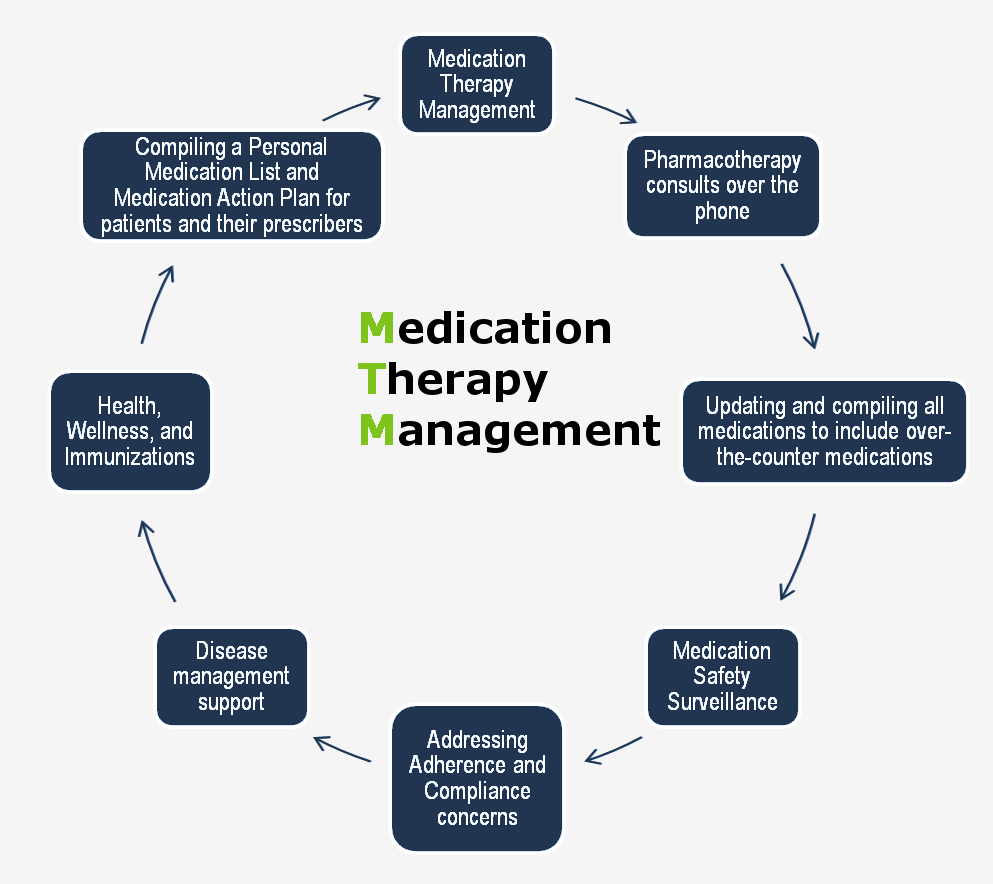
Eleven national pharmacy organizations adopted this definition in 2004. Medication therapy management includes a broad range of professional activities, including but not limited to performing patient assessment and/or a comprehensive medication review, formulating a medication treatment plan, monitoring efficacy and safety of medication therapy, enhancing medication adherence through patient empowerment and education, and documenting and communicating MTM services to prescribers in order to maintain comprehensive patient care.
Core Elements
Medication therapy management includes five core components: a medication therapy review (MTR), personal medication record (PMR), medication-related action plan (MAP), intervention and/or referral, and documentation and follow-up. A MTR is a systematic process of collecting patient and medication-related information which occurs during the pharmacist-patient encounter.
In addition, the MTR assists in the identification and prioritization of medication-related problems. During the MTM encounter, the pharmacist develops a PMR for use by the patient. The PMR includes all prescription and nonprescription products and requires updating as necessary. After assessing and identifying medication-related problems, the pharmacist develops a patient-specific MAP. The MAP is a list of self-management actions necessary to achieve the patient’s specific health goals.
Moreover, the patient and pharmacist utilize the MAP to record actions and track progress towards health goals. During the MTM session, the pharmacist identifies medication-related problem(s) and determines appropriate intervention(s) for resolution. Often, the pharmacist collaborates with other health care professionals to resolve the identified problem(s). Following the patient encounter and/or intervention, the pharmacist must document his/her encounter and determine appropriate patient follow-up.
Pharmaceutical care defined
Hepler and Strand define pharmaceutical care as the provision of drug therapy in order to achieve definite outcomes that improve a patient’s quality of life. Outcomes include cure of a disease, elimination or reduction of a patient’s symptoms, arresting or slowing of a disease process, and preventing a disease or symptom. The process includes pharmacist collaboration with other health care professionals in designing, implementing, and monitoring a therapeutic plan for a patient. Pharmaceutical care focuses on the pharmacist’s role in achieving therapeutic goals to improve the patient’s quality of life.
MMA of 2003 – Part D
The Medicare Modernization Act of 2003, requires Medicare Part D prescription drug plans to include medication therapy management services delivered by a qualified healthcare professional, including pharmacists, beginning in 2006. MTM services target beneficiaries who have multiple chronic conditions (such as diabetes, asthma, hypertension, hyperlipidemia, and congestive heart failure), take multiple medications, or are likely to incur annual costs above a predetermined level.
***
***
Assessment
Medication therapy management is a unique niche for the pharmacy profession, allowing pharmacists to apply their extensive medication knowledge as medication experts with the intent of improving patient outcomes.
Conclusion
Your thoughts and comments on this ME-P are appreciated. Feel free to review our top-left column, and top-right sidebar materials, links, urls and related websites, too. Then, subscribe to the ME-P. It is fast, free and secure.
Speaker: If you need a moderator or speaker for an upcoming event, Dr. David E. Marcinko; MBA – Publisher-in-Chief of the Medical Executive-Post – is available for seminar or speaking engagements.
Contact: MarcinkoAdvisors@msn.com
Subscribe: MEDICAL EXECUTIVE POST for curated news, essays, opinions and analysis from the public health, economics, finance, marketing, I.T, business and policy management ecosystem.
***
Filed under: Drugs and Pharma | Tagged: Medicare Modernization Act of 2003, Medicare Part D, Medication Therapy Management, medication therapy review, MMA, MTM, personal medication record | 10 Comments »







 Support our online development, and advance our onground research initiatives in free market economics, as we seek to showcase the brightest Next-Gen minds.
THE ME-P DISCLAIMER: Posts, comments and opinions do not necessarily represent iMBA, Inc., but become our property after submission. Copyright © 2006 to-date. iMBA, Inc allows colleges, universities, medical and financial professionals and related clinics, hospitals and non-profit healthcare organizations to distribute our proprietary essays, photos, videos, audios and other documents; etc. However, please review copyright and usage information for each individual asset before submission to us, and/or placement on your publication or web site. Attestation references, citations and/or back-links are required. All other assets are property of the individual copyright holder.
Support our online development, and advance our onground research initiatives in free market economics, as we seek to showcase the brightest Next-Gen minds.
THE ME-P DISCLAIMER: Posts, comments and opinions do not necessarily represent iMBA, Inc., but become our property after submission. Copyright © 2006 to-date. iMBA, Inc allows colleges, universities, medical and financial professionals and related clinics, hospitals and non-profit healthcare organizations to distribute our proprietary essays, photos, videos, audios and other documents; etc. However, please review copyright and usage information for each individual asset before submission to us, and/or placement on your publication or web site. Attestation references, citations and/or back-links are required. All other assets are property of the individual copyright holder.





 The Leading Business Education Network for Doctors, Financial Advisors and Health Industry Consultants