On Hospital Price Growth

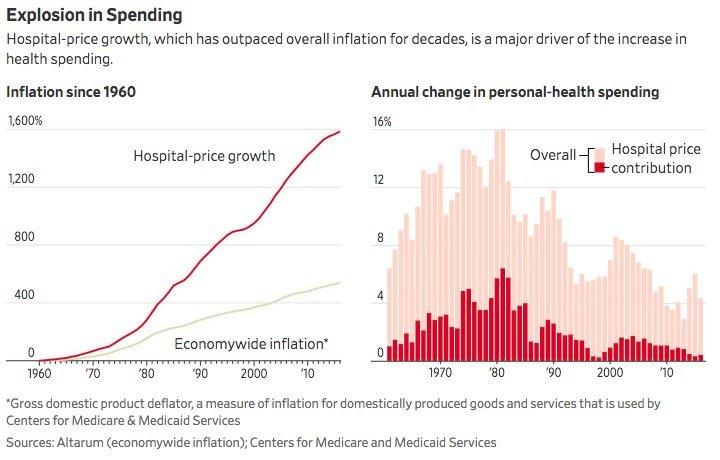
Explosion in Spending – Inflation Since 1960

By CMS

***

[Click to Enlarge]

***

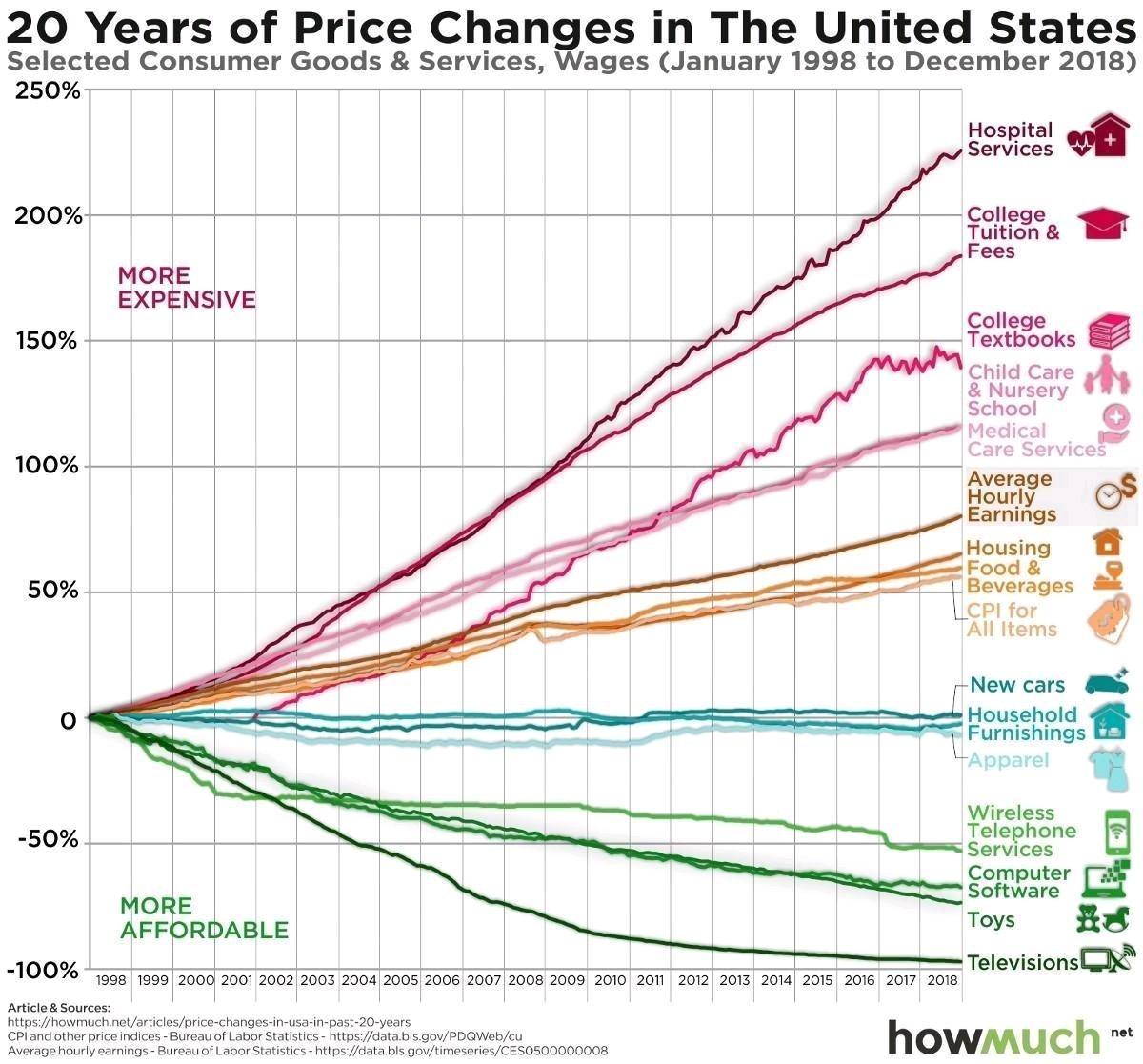
The greatest wealth transfer in American history has been from the working/middle class to a wasteful healthcare system.

Sadly, once-mission-based hospitals lost their way failing to address healthcare caused 20 yr long economic depression for working/middle class. Employers spending far more on employees than 20 years ago but all of it has gone to healthcare with no demonstrable outcomes improvement

-Dave Chase [Creator HealthRosetta]

***

Conclusion

Your thoughts and comments on this ME-P are appreciated. Feel free to review our top-left column, and top-right sidebar materials, links, URLs and related websites, too. Then, subscribe to the ME-P. It is fast, free and secure.

Speaker: If you need a moderator or speaker for an upcoming event, Dr. David E. Marcinko; MBA – Publisher-in-Chief of the Medical Executive-Post – is available for seminar or speaking engagements.

Book Marcinko: https://medicalexecutivepost.com/dr-david-marcinkos-bookings/

Subscribe: MEDICAL EXECUTIVE POST for curated news, essays, opinions and analysis from the public health, economics, finance, marketing, IT, business and policy management ecosystem.

DOCTORS:

“Insurance & Risk Management Strategies for Doctors” https://tinyurl.com/ydx9kd93

“Fiduciary Financial Planning for Physicians” https://tinyurl.com/y7f5pnox

“Business of Medical Practice 2.0” https://tinyurl.com/yb3x6wr8

HOSPITALS:

“Financial Management Strategies for Hospitals” https://tinyurl.com/yagu567d

“Operational Strategies for Clinics and Hospitals” https://tinyurl.com/y9avbrq5

***

Product DetailsProduct Details

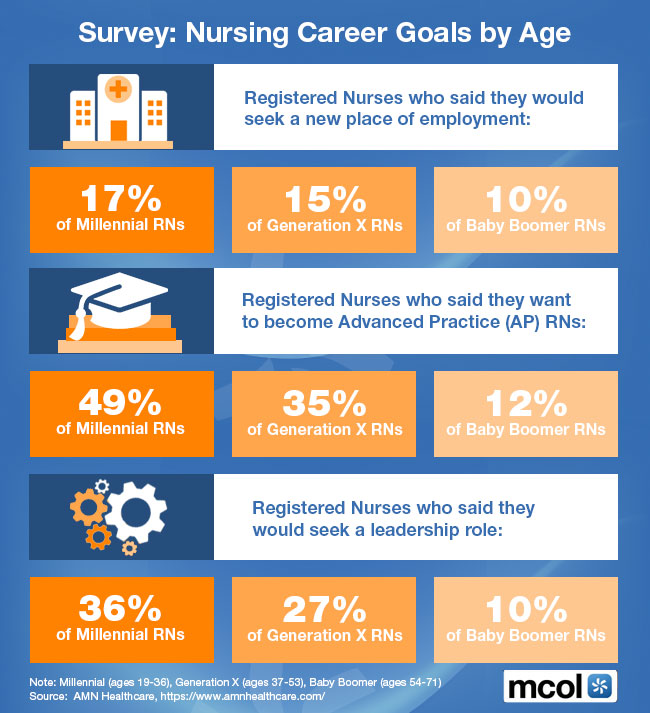
Nursing Career Goals by Age

A Survey

By http://www.MCOL.com

***

***

Conclusion

Your thoughts and comments on this ME-P are appreciated. Feel free to review our top-left column, and top-right sidebar materials, links, URLs and related websites, too. Then, subscribe to the ME-P. It is fast, free and secure.

Speaker: If you need a moderator or speaker for an upcoming event, Dr. David E. Marcinko; MBA – Publisher-in-Chief of the Medical Executive-Post – is available for seminar or speaking engagements.

Book Marcinko: https://medicalexecutivepost.com/dr-david-marcinkos-bookings/

Subscribe: MEDICAL EXECUTIVE POST for curated news, essays, opinions and analysis from the public health, economics, finance, marketing, IT, business and policy management ecosystem.

MORE FOR DOCTORS AND NURES:

“Insurance & Risk Management Strategies for Doctors” https://tinyurl.com/ydx9kd93

“Financial Management Strategies for Hospitals” https://tinyurl.com/yagu567d

“Operational Strategies for Clinics and Hospitals” https://tinyurl.com/y9avbrq5

***

Product DetailsProduct Details

More on US Health Care Costs

Highest in the World?

By Rick Kahler MS CFP®

The soaring cost of health care in the United States is painfully obvious to anyone who looks at a medical bill. This aspect of our system has been out of control for decades.

For example, a recent study by the Kaiser Foundation compared health care prices in the U.S. with those in other developed nations, virtually all of which have some form of universal health care. It found ours to be the highest in the world. The average American spends more than $10,348 a year on health care, amounting to a total of 18% of GDP. The average for citizens in other developed countries was about $5,198 per year, or 9% of total GDP.

Despite paying more, Americans average fewer physician consultations. Our rate of about 3.9 per person per year is well below the 7.6 average in the other countries studied. The researchers also found American hospital stays to be shorter, averaging 6.1 days while the average in other countries was 10.2 days.

The Kaiser study also compared costs for several expensive drugs and various medical procedures, including angioplasty and coronary bypass surgery, MRI exams, colonoscopies, appendectomies, and knee replacements. Costs in the U.S. were significantly higher. In fact, the average cost of replacing one knee here ($28,184) would almost pay for two new ones in Australia, where the average cost per knee is $15,941.

The study doesn’t attempt to assess the impact of the Affordable Care Act on U.S. medical costs or to offer any suggested solutions. Nor does it address the respective tax burdens of the various countries. This last is a shortcoming of the study that is important to consider.

***

***

Many of the European countries that feature significant “cradle to grave” universal health systems also have considerably higher taxes than does the U.S. According to data from the Tax Policy Center, the taxes at all levels of government in many European countries exceed 40 percent of GDP. Taxes in the U.S. are low in comparison. In 2015, U.S. taxes represented 26 percent of GDP. Of the 34 member countries of the Organisation for Economic Co-operation and Development (OECD), only four (Korea, Chile, Mexico, and Ireland) collected less than the United States as a percentage of GDP. It may not be surprising that these countries generally provide more extensive government services than the U.S. does.

Let’s put this into perspective. If Americans pay 18% of GDP in health care costs but spend 14% of GDP less in taxes than many European countries, that would leave the US paying a net of 4% of GDP for health care. This is almost half of what Europeans pay. Perhaps the lower amount we actually spend on health care is explained by the fewer physician visits and shorter hospital stays.

Certainly, not all of the 14% higher GDP in taxes collected by European nations goes to health care. Still, it is reasonable to assume that a significant portion of it does.

***

***

Another fact that is often omitted by studies critical of the US for not having universal health care is that the US does have government funded health care that (as of April 2018) covers over 130 million people through Medicare, Medicaid, and CHIP. This compares with some 179 million people (2016 numbers) with private insurance. In addition, many U.S. citizens currently qualify for health insurance premium subsidies. A family of four with an income under $72,000 a year would qualify.

Assessment

The high cost of U.S. health care is certainly a serious problem that needs to be addressed. However, a valid comparison of costs here to those in other countries needs to include the differences in tax burdens.

Conclusion

Your thoughts and comments on this ME-P are appreciated. Feel free to review our top-left column, and top-right sidebar materials, links, URLs and related websites, too. Then, subscribe to the ME-P. It is fast, free and secure.

Speaker: If you need a moderator or speaker for an upcoming event, Dr. David E. Marcinko; MBA – Publisher-in-Chief of the Medical Executive-Post – is available for seminar or speaking engagements.

Book Marcinko: https://medicalexecutivepost.com/dr-david-marcinkos-bookings/

Subscribe: MEDICAL EXECUTIVE POST for curated news, essays, opinions and analysis from the public health, economics, finance, marketing, IT, business and policy management ecosystem.

***

Product DetailsProduct Details

Top Ten Money Truisms

Top Ten Money Truisms

By Rick Kahler CFP®

Jonathan Clements is a longtime former columnist for the Wall Street Journal, editor of the HumbleDollar blog, and author whose latest book, From Here to Financial Happiness, comes out in September. I’ve long been a fan of his, and I appreciate his list of 41 Twitter-length truisms that pack a lot of wisdom into a few words.

Here are what I think are the top ten:

1. “We get just one shot at making the journey from birth to retirement. Flirting with financial disaster is not advisable.” I would add that flirting with financial disaster can come as much from being afraid to take action as from taking the wrong action.

2. “We are voracious acquirers of financial information, but mostly to buttress opinions we already hold.” I find very few people have open minds about money. Most hold on tightly to their money scripts because they are too frightened to entertain the notion that they don’t know.

3. “Picking superior investments is a crowded trade. Saving more is an easy win.” One of the least dramatic but most important components to creating wealth is frugality, whether it takes the form of choosing lower-fee investments or living below one’s means.

4. “What’s the difference between an equity-indexed annuity and an index fund? One needs an army of salespeople. The other sells itself.” I have never, ever had a client who purchased an annuity of any kind on their own accord. I have had scores who purchased index funds. Avoiding “investments” being aggressively pushed by salespeople can save you thousands and potentially make you millions.

5. “Cash value life insurance isn’t an investment, it’s a religion—and you’ll never meet a more prickly group of disciples.” I absolutely agree, and the proof is in the nasty comments that fill my email inbox every time I write about this topic.

6. “Draw up a list of your greatest pleasures in life. Then ask yourself: Do you need great wealth to enjoy any of them?” Of course you don’t need great wealth to spend time with those you love, drink in a gorgeous sunset, or do something nice for someone else. You do, however, need some financial well-being to make meaningful pleasures happen.

7. “When you’re ill, you realize how great it is to feel healthy. Money’s similar: When you’re broke, you realize how great it is to be solvent.” The flip side of this truism is the gratitude many of my clients feel for having financial security.

8. “A boat is not your financial friend, but a friend with a boat is.” Buying toys, tools, or other big-ticket items you rarely use and can barely afford is a common money mistake.

9. “Trying to beat the market is a game for the rich. Only they can afford the inevitable disappointing results.” Timing markets doesn’t work whether you are poor or rich; even the rich can only afford to be wrong for a while.

10. “The big financial risk isn’t dying early in retirement but, rather, living longer than we ever imagined.” Most people significantly underestimate how long they will live. That is why 48% start Social Security benefits at age 62 and another 48% start them at age 66. Only 4% wait until age 70, despite statistics showing the odds are this choice will net more lifetime income.

Assessment

I know that’s ten, but one more seems appropriate to end with: “Our only earthly immortality will be the recollection of others. Make sure those memories are good.” One of the ways we can be remembered fondly is through giving back to our communities with both our money and our time.

Conclusion

Your thoughts and comments on this ME-P are appreciated. Feel free to review our top-left column, and top-right sidebar materials, links, URLs and related websites, too. Then, subscribe to the ME-P. It is fast, free and secure.

Speaker: If you need a moderator or speaker for an upcoming event, Dr. David E. Marcinko; MBA – Publisher-in-Chief of the Medical Executive-Post – is available for seminar or speaking engagements.

Book Marcinko: https://medicalexecutivepost.com/dr-david-marcinkos-bookings/

Subscribe: MEDICAL EXECUTIVE POST for curated news, essays, opinions and analysis from the public health, economics, finance, marketing, IT, business and policy management ecosystem.

***

Comprehensive Financial Planning Strategies for Doctors and Advisors: Best Practices from Leading Consultants and Certified Medical Planners™

More Changes to Medicare for Doctors

More Changes to Medicare

By Ira Nash MD

Conclusion

Your thoughts and comments on this ME-P are appreciated. Feel free to review our top-left column, and top-right sidebar materials, links, URLs and related websites, too. Then, subscribe to the ME-P. It is fast, free and secure.

Speaker: If you need a moderator or speaker for an upcoming event, Dr. David E. Marcinko; MBA – Publisher-in-Chief of the Medical Executive-Post – is available for seminar or speaking engagements.

Book Marcinko: https://medicalexecutivepost.com/dr-david-marcinkos-bookings/

Subscribe: MEDICAL EXECUTIVE POST for curated news, essays, opinions and analysis from the public health, economics, finance, marketing, IT, business and policy management ecosystem.

***

Product DetailsProduct Details


Why My Firm Sold Short-Term Bond ETFs and Bought U.S. Treasury Bills

Why My Firm Sold Short-Term Bond ETFs and Bought U.S. Treasury Bills

By Vitaliy Katsenelson, CFA

Conclusion

Your thoughts and comments on this ME-P are appreciated. Feel free to review our top-left column, and top-right sidebar materials, links, URLs and related websites, too. Then, subscribe to the ME-P. It is fast, free and secure.

Speaker: If you need a moderator or speaker for an upcoming event, Dr. David E. Marcinko; MBA – Publisher-in-Chief of the Medical Executive-Post – is available for seminar or speaking engagements.

Book Marcinko: https://medicalexecutivepost.com/dr-david-marcinkos-bookings/

Subscribe: MEDICAL EXECUTIVE POST for curated news, essays, opinions and analysis from the public health, economics, finance, marketing, IT, business and policy management ecosystem.

DOCTORS:

“Insurance & Risk Management Strategies for Doctors” https://tinyurl.com/ydx9kd93

“Fiduciary Financial Planning for Physicians” https://tinyurl.com/y7f5pnox

“Business of Medical Practice 2.0” https://tinyurl.com/yb3x6wr8

HOSPITALS:

“Financial Management Strategies for Hospitals” https://tinyurl.com/yagu567d

“Operational Strategies for Clinics and Hospitals” https://tinyurl.com/y9avbrq5

***

Risk Management, Liability Insurance, and Asset Protection Strategies for Doctors and Advisors: Best Practices from Leading Consultants and Certified Medical Planners™8Comprehensive Financial Planning Strategies for Doctors and Advisors: Best Practices from Leading Consultants and Certified Medical Planners™

Geographic Variation in Maternal Deaths

In the USA

By http://www.MCOL.com

***

***

Conclusion

Your thoughts and comments on this ME-P are appreciated. Feel free to review our top-left column, and top-right sidebar materials, links, URLs and related websites, too. Then, subscribe to the ME-P. It is fast, free and secure.

Speaker: If you need a moderator or speaker for an upcoming event, Dr. David E. Marcinko; MBA – Publisher-in-Chief of the Medical Executive-Post – is available for seminar or speaking engagements.

Book Marcinko: https://medicalexecutivepost.com/dr-david-marcinkos-bookings/

Subscribe: MEDICAL EXECUTIVE POST for curated news, essays, opinions and analysis from the public health, economics, finance, marketing, IT, business and policy management ecosystem.

DOCTORS:

“Insurance & Risk Management Strategies for Doctors” https://tinyurl.com/ydx9kd93

“Fiduciary Financial Planning for Physicians” https://tinyurl.com/y7f5pnox

“Business of Medical Practice 2.0” https://tinyurl.com/yb3x6wr8

HOSPITALS:

“Financial Management Strategies for Hospitals” https://tinyurl.com/yagu567d

“Operational Strategies for Clinics and Hospitals” https://tinyurl.com/y9avbrq5

***

Product DetailsProduct Details

How Low Can Healthcare Prices Really Go?

How Low Can Healthcare Prices Really Go?

Conclusion

Your thoughts and comments on this ME-P are appreciated. Feel free to review our top-left column, and top-right sidebar materials, links, URLs and related websites, too. Then, subscribe to the ME-P. It is fast, free and secure.

Speaker: If you need a moderator or speaker for an upcoming event, Dr. David E. Marcinko; MBA – Publisher-in-Chief of the Medical Executive-Post – is available for seminar or speaking engagements.

Book Marcinko: https://medicalexecutivepost.com/dr-david-marcinkos-bookings/

Subscribe: MEDICAL EXECUTIVE POST for curated news, essays, opinions and analysis from the public health, economics, finance, marketing, IT, business and policy management ecosystem.

MORE FOR DOCTORS AND NURES:

“Insurance & Risk Management Strategies for Doctors” https://tinyurl.com/ydx9kd93

“Financial Management Strategies for Hospitals” https://tinyurl.com/yagu567d

“Operational Strategies for Clinics and Hospitals” https://tinyurl.com/y9avbrq5

***

Product DetailsProduct Details


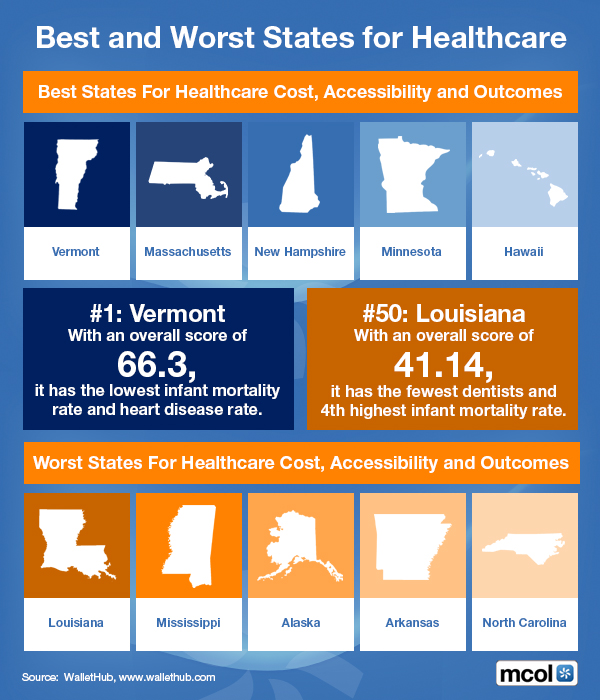
Worst and Best States for Healthcare

US Costs and Outcomes

By http://www.MCOL.com

***’

***

Conclusion

Your thoughts and comments on this ME-P are appreciated. Feel free to review our top-left column, and top-right sidebar materials, links, URLs and related websites, too. Then, subscribe to the ME-P. It is fast, free and secure.

Speaker: If you need a moderator or speaker for an upcoming event, Dr. David E. Marcinko; MBA – Publisher-in-Chief of the Medical Executive-Post – is available for seminar or speaking engagements.

Book Marcinko: https://medicalexecutivepost.com/dr-david-marcinkos-bookings/

Subscribe: MEDICAL EXECUTIVE POST for curated news, essays, opinions and analysis from the public health, economics, finance, marketing, IT, business and policy management ecosystem.

MORE FOR DOCTORS AND NURES:

“Insurance & Risk Management Strategies for Doctors” https://tinyurl.com/ydx9kd93

“Financial Management Strategies for Hospitals” https://tinyurl.com/yagu567d

“Operational Strategies for Clinics and Hospitals” https://tinyurl.com/y9avbrq5

***

Product DetailsProduct Details

Questions I’d be Asking If I Owned Tesla Stock

Questions I’d be Asking If I Owned Tesla Stock

By Vitaliy Katsenelson CFA

 What happened to 345,000 reservations?

When Tesla’s Model 3 was released, it was supposed to be a $35,000 car. Four hundred thousand people, including yours truly, put down a $1,000 deposit to reserve their spots in line so they could get their hands on that marvel as soon as it became available. It was a brilliant move by Tesla, as it provided the company $400 million of interest-free financing — the biggest crowdfunding project ever.

Today, after some delays, the Model 3 is being produced. However, $35,000 seems to have been a fiction of CEO Elon Musk’s imagination. Though the car is getting great reviews from auto critics, the price for a bare-bones Model 3 starts at $49,000, and the tax incentives are fading away.

But something interesting happened recently. I received an email from Tesla that said: Model 3 is available to order, and no reservation is required in the U.S. We’re now offering all our best options — including our Long Range and Performance configurations with dual motor all-wheel drive. You can design and order yours today for delivery in approximately 2–4 months.

On the surface this sounds like great news, except that it begs a question: What happened to 345,000 orders? Let me explain. According to Bloomberg, which has been tracking Tesla’s production, to date (as of July 28, 2018) Tesla has produced 55,000 Model 3 cars. Since a $1,000 deposit was supposed to secure buyers a place in line, any car ordered today will only be delivered after orders that were placed years ago are fulfilled — after all, 400,000 people paid Tesla $1,000 to hold their places.

Thus there are only three possible explanations for the email I received. One is that Model 3 production is expected to accelerate at an exponential rate to 40,000 cars a week, starting now. However, Bloomberg estimates that Tesla’s normal production cadence of the Model 3 is closer to 2,825 cars a week, so this is a highly unlikely scenario.

Or two, maybe Tesla has been extremely liberal with its statement of a two-to-four month delivery schedule because it still has 345,000 cars to produce before it can start fulfilling new orders, and the company is using that email to raise additional funds from new customers making deposits. (The required deposit is now $2,500.)

There is a third explanation: The bulk of the original 400,000 orders were for a $35,000 car. When it came time to actually buy the car, consumers may have realized that the out-of-pocket expense was much more than expected and simply canceled their orders, draining Tesla’s balance sheet of $345 million.

How sound is Tesla’s balance sheet?

What Musk has achieved with Tesla and SpaceX is truly astounding. I have incredible respect for him, but he is also a magician playing a confidence game. If Musk can continue to convince the market that Tesla has a bright future, then the market will continue to finance Tesla’s losses, and maybe Musk will figure out how to produce the Model 3 more cheaply and then Tesla will sell hundreds of thousands of Model 3s and the future will be as bright as Musk paints it.

For that to happen, Tesla needs to maintain its high stock price, and investors have to believe that Musk is the Iron Man. Investors have to suspend belief, ignore current problems, and focus on the future. However, if the market loses confidence in Tesla and Musk, Tesla is done. This company is losing billions of dollars a year; it has an over-levered balance sheet. This is where Musk’s confidence game comes in.

If you believe in magic stop reading right now. Okay, you’ve been warned.

There is no magic. Magic is just the art of misdirection. The magician gets you to focus on the shiny object he holds in his left hand and you don’t see what he is doing with his right hand.

Musk has been showing us a lot of shiny objects. Some are real, like the success of SpaceX; some are superfluous, like sending a Tesla Roadster into space, and some are future promises on which Musk may or may not be able to deliver, like his futuristic underground railroad for cars (the hyperloop) and the Tesla truck, which is unlikely to be produced on time and at the promised price. The list is long in this category and never-ending; Musk’s futuristic thinking knows no bounds.

But importantly, these promises are the shiny objects that keep Tesla’s stock price high.

If I was a Tesla investor I’d be seriously worried about the company’s balance sheet. There are some ominous signs that Tesla’s financial situation is deteriorating rapidly. Tesla reportedly recently sent an email to its suppliers asking them to give some money back to help the company with its profitability.

Such requests are made by companies looking for Hail Mary solutions to significant financial problems. If suppliers start questioning Tesla’s financial viability, they’ll start shortening their accounts receivables periods and start requesting letters of credit. This would escalate the company’s problems. Hail Marys are acts of desperation. Putting this in the context of the likely Model 3 cancellations, — Tesla’s cash burn has likely gotten a lot worse.

 How effective is Musk at running Tesla?

Tesla is Elon Musk. He has achieved more than many of us will achieve in a thousand lifetimes. But today Musk is running half a dozen companies (Tesla, SpaceX, Solar City, Boring, OpenAI, Hyperloop). To make matters worse, he is also an incredible micromanager. I read that he interviews (or at least used to) every new employee who joins Tesla and SpaceX.

It is clear that Musk is quite exhausted, and his behavior is becoming more erratic. In a conference call snafu in April, he called the British diver who saved the Thai cave kids a “pedo” on Twitter. This sort of thing undermines Musk’s Iron Man image — if he loses that, the confidence game is lost and Tesla is done.

Another red flag went up recently: Musk started to attack short sellers. A short seller who went under the name of Montana Sceptic posted negative research on Tesla on Twitter and SeekingAlpha. Elon Musk personally called the man’s employer and threatened a lawsuit if the employer didn’t silence Montana Sceptic. Historically, companies that have gone after short sellers have had something to hide or were playing a confidence game. (The short sellers were interfering with the misdirection to shiny objects.)

Assessment

Tesla investors are still fascinated by the shiny objects, but I note that CDS insurance on Tesla’s bonds prices in a 24% risk of default by 2025. I am not long or short the stock. But if I were long Tesla’s shares I’d be asking myself these questions. After all, you’re paying $50 billion for a company that trades completely on the spoils of future dreams.

 Conclusion

Your thoughts and comments on this ME-P are appreciated. Feel free to review our top-left column, and top-right sidebar materials, links, URLs and related websites, too. Then, subscribe to the ME-P. It is fast, free and secure.

Speaker: If you need a moderator or speaker for an upcoming event, Dr. David E. Marcinko; MBA – Publisher-in-Chief of the Medical Executive-Post – is available for seminar or speaking engagements.

Book Marcinko: https://medicalexecutivepost.com/dr-david-marcinkos-bookings/

Subscribe: MEDICAL EXECUTIVE POST for curated news, essays, opinions and analysis from the public health, economics, finance, marketing, IT, business and policy management ecosystem.

DOCTORS:

“Insurance & Risk Management Strategies for Doctors” https://tinyurl.com/ydx9kd93

“Fiduciary Financial Planning for Physicians” https://tinyurl.com/y7f5pnox

“Business of Medical Practice 2.0” https://tinyurl.com/yb3x6wr8

HOSPITALS:

“Financial Management Strategies for Hospitals” https://tinyurl.com/yagu567d

“Operational Strategies for Clinics and Hospitals” https://tinyurl.com/y9avbrq5

***

Risk Management, Liability Insurance, and Asset Protection Strategies for Doctors and Advisors: Best Practices from Leading Consultants and Certified Medical Planners™8Comprehensive Financial Planning Strategies for Doctors and Advisors: Best Practices from Leading Consultants and Certified Medical Planners™


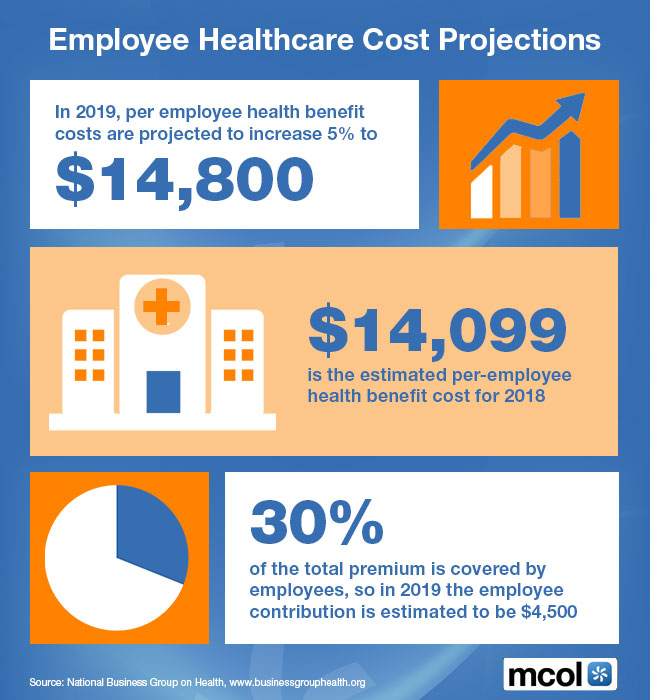
Employee Healthcare Cost Projections

In 2019 per Employee Health Benefit Costs

By http://www.MCOL.com

***

***

Conclusion

Your thoughts and comments on this ME-P are appreciated. Feel free to review our top-left column, and top-right sidebar materials, links, URLs and related websites, too. Then, subscribe to the ME-P. It is fast, free and secure.

Speaker: If you need a moderator or speaker for an upcoming event, Dr. David E. Marcinko; MBA – Publisher-in-Chief of the Medical Executive-Post – is available for seminar or speaking engagements.

Book Marcinko: https://medicalexecutivepost.com/dr-david-marcinkos-bookings/

Subscribe: MEDICAL EXECUTIVE POST for curated news, essays, opinions and analysis from the public health, economics, finance, marketing, IT, business and policy management ecosystem.

MORE FOR DOCTORS AND NURES:

“Insurance & Risk Management Strategies for Doctors” https://tinyurl.com/ydx9kd93

“Financial Management Strategies for Hospitals” https://tinyurl.com/yagu567d

“Operational Strategies for Clinics and Hospitals” https://tinyurl.com/y9avbrq5

***

Product DetailsProduct DetailsProduct Details

On Medicare Bureaucratization

Isn’t limited to governments

By Rick Kahler MS CFP®

A client recently told me about her first medical checkup after becoming eligible for Medicare. “The doctor said things like, ‘They require us to fill out this form,’ and ‘This test is covered every three years, so we can’t do it this year,’ and ‘Medicare will pay for a baseline EKG even though you have no history of heart disease.’ I’ve gone to this doctor for ten years. I’m the same person I was a year ago. Yet it felt as if I had moved to a category where the appointment was all about the paperwork instead of my health. ”

A situation like this, where the paperwork seems more important than the person, demonstrates something I call the Principle of Bureaucratization: the idea that the more layers of decision-making are added to an organization, the less efficient it becomes in delivering its goods or services.

While this phenomenon affects organizations and governments of all sizes, the negative outcomes seem to increase the larger a company becomes or the further away the seat of government is from its constituents. Municipal services seem to be delivered more efficiently than state services. State services tend to be more efficient that those coming from the federal government. There are some exceptions, but not many.

One reason is that the further removed from you the decision-maker is, the less personal the services will be. Moving from the private health care system to the government-run health care system called Medicare is just one example. The same principle seems to apply in other countries. I have visited the UK numerous times, and it seems that every time I’ve read a newspaper article about some specific failing of the NHS (National Health Service). Just recently, at a workshop in Europe, a participant from the UK told me that the waiting list to see a psychiatrist was one year. “The NHS simply works against you,” she said with exasperation.

I think most Americans can agree that our healthcare system is badly flawed. We may disagree on the causes and cures. I see as one major problem that our federal government has created a regulatory structure which allows a select number of health insurance and pharmaceutical companies control over the health care system. These regulations have sent insurance costs soaring by almost eliminating competition. Third-party payment of medical bills means those receiving the services don’t have any incentive to even ask about costs.

***

***

Bureaucratization isn’t limited to governments. It also affects large companies where the policies are made by people many layers away from the customers, and the employees dealing with customers don’t have the authority to make decisions or solve problems. Who hasn’t experienced having a seemingly easy problem to solve with a service provider, calling a customer service representative, and ending up on the phone for 45 minutes being passed from department to department and supervisor to supervisor?

Many employees of large firms and governments are equally frustrated by the bureaucracy created in their organizations. Bureaucratic organizations stagnate innovation and responsiveness. They are especially inefficient when those dealing directly with consumers don’t have any significant consequences riding on the quality of the goods or services provided. This is one reason why many, like Brian Robertson in his book Holacracy, believe the “best practices” governance model for organizations is a self-organizing structure that empowers employees closest to consumers to make decisions.

What’s the bottom line?

You’re ultimately responsible for your own well-being. Ask questions, be the squeaky wheel, and, above all, make connections with those working in the bureaucracies you deal with. Help them keep in mind that their purpose is to serve people, not paperwork. 

Conclusion

Your thoughts and comments on this ME-P are appreciated. Feel free to review our top-left column, and top-right sidebar materials, links, URLs and related websites, too. Then, subscribe to the ME-P. It is fast, free and secure.

Speaker: If you need a moderator or speaker for an upcoming event, Dr. David E. Marcinko; MBA – Publisher-in-Chief of the Medical Executive-Post – is available for seminar or speaking engagements.

Book Marcinko: https://medicalexecutivepost.com/dr-david-marcinkos-bookings/

Subscribe: MEDICAL EXECUTIVE POST for curated news, essays, opinions and analysis from the public health, economics, finance, marketing, IT, business and policy management ecosystem.

***

Product DetailsProduct Details


Update on Mobile Health 2018

Latest on m-Health

[By staff reporters]

With Amazon in Mind, Walgreens Unveils New Digital Platform to Connect Patients to Doctors
Walgreens has unveiled a new digital platform to connect customers to medical services, just weeks after its stock dove on news that Amazon is expanding into the pharmacy business. Deerfield-based Walgreens’ new Find Care Now platform, available online and on the pharmacy chain’s app, allows patients to schedule appointments at its in-store Advocate clinics, talk with doctors and therapists through telehealth company MDLIVE, and schedule online dermatology appointments through online dermatology service DermatologistOnCall. Chicago Tribune, July 27, 2018

Anthem and IBM Announce Agreement to Drive Digital Transformation
Expanded agreement with IBM Services to improve healthcare experience for nearly 40-million consumers IBM (NYSE: IBM) today announced the expansion of a services agreement with Anthem, Inc., one of the nation’s leading healthcare companies. With this collaboration, IBM and Anthem will work together to help drive Anthem’s digital transformation and deliver an enhanced digital experience for its nearly 40 million consumers. IBM Newsroom, July 26, 2018

***

smart phone mobile ME-P

***

UnitedHealth Group Touts Digital Health Efforts as it Posts Earnings Gains
The new chief executive of UnitedHealth Group’s fast-growing Optum division told investors Tuesday that digital health is a key part of the company’s future as he touted a United-backed business that soon will open a new office in Minneapolis. For several years, UnitedHealth has been developing a digital health platform called Rally, which includes online and mobile tools that subscribers use to compare insurance benefit options, search for health care providers and participate in employer wellness programs. Star Tribune, July 17, 2018

What Do Patients, Consumers Want in Digital Health Tools?
As patients continue to assume the role of healthcare consumer, healthcare providers and payers are beginning to leverage healthcare technology that helps connect patients to their care. Those innovations, when utilized correctly, help drive an overall better consumer experience, according to a recent Black Book survey. Patient Engagement HIT, July 12, 2018

Conclusion

Your thoughts and comments on this ME-P are appreciated. Feel free to review our top-left column, and top-right sidebar materials, links, URLs and related websites, too. Then, subscribe to the ME-P. It is fast, free and secure.

Speaker: If you need a moderator or speaker for an upcoming event, Dr. David E. Marcinko; MBA – Publisher-in-Chief of the Medical Executive-Post – is available for seminar or speaking engagements.

Book Marcinko: https://medicalexecutivepost.com/dr-david-marcinkos-bookings/

Subscribe: MEDICAL EXECUTIVE POST for curated news, essays, opinions and analysis from the public health, economics, finance, marketing, IT, business and policy management ecosystem.

DOCTORS:

“Insurance & Risk Management Strategies for Doctors” https://tinyurl.com/ydx9kd93

“Fiduciary Financial Planning for Physicians” https://tinyurl.com/y7f5pnox

“Business of Medical Practice 2.0” https://tinyurl.com/yb3x6wr8

HOSPITALS:

“Financial Management Strategies for Hospitals” https://tinyurl.com/yagu567d

“Operational Strategies for Clinics and Hospitals” https://tinyurl.com/y9avbrq5

***

Product DetailsProduct Details


Medicare Reimbursement for Remote Monitoring Should Drive Adoption (What a long, strange trip it’s been….)

The cHealth Blog

The Centers for Medicare & Medicaid Services (CMS) released the 2018 Physician Fee Schedule about two weeks ago and there is at least one nugget in there that should speed the adoption of remote patient monitoring.  In fact, the news is even better, but I’m getting ahead of myself.  First, let’s examine the broader context of what adoption of remote monitoring will mean for healthcare delivery and the amazing story of how we got here.

Why it matters

By 2050, 16% of the world’s population will be over 65, more than double the number under five years old.  Inevitably, older people require more healthcare resources and caregiving.  The math is too stark to ignore:  we’re running out of young people to care for our elders if we continue to offer only one-to-one, face-to-face care as an option.  If you want to learn more about this conundrum, it is covered…

View original post 1,275 more words

Value-based or Fee-For-Service Connected Health Reimbursement: Which Canoe Should We Put Our Feet In?

The cHealth Blog

About 10 years ago, I and many others, started talking about how care delivery enabled by connected health should be an ideal strategy in the world of value-based (VB) reimbursement. To date, there have been just a few instances where this has come to pass. Most relevant is Kaiser Permanente, where > 50% of patient interactions are virtual.  Unfortunately, there are few other examples of organizations that have invested heavily in connected health and state publicly that it represents a strategy for success in a value-based world.

Image courtesy of National Telehealth Policy Resource Center

By contrast, in the past decade, there has been significant progress in payer reimbursement for telehealth as a service (fee-for-service [FFS] payments).  For example, 48 states now have Medicaid requirements for telehealth reimbursement (10 years ago it was about 25); 21 states have requirements for remote monitoring reimbursements; and 15 for store-and-forward telemedicine reimbursement.  Currently, 33…

View original post 871 more words

CMS to Review Stark Law Relevance Once Again

CMS to Review Stark Law Relevance Once Again

***

By Health Capital Consultants LLC

***

On June 25, 2018, the Centers for Medicare & Medicaid Services (CMS) issued a Request for Information (RFI) related to the regulatory burden of the physician self-referral law (known as the Stark Law), on both providers and the overall healthcare industry.
***
***
The aim of this request is to determine whether revision(s) of healthcare fraud and abuse laws is needed in order to remove any regulatory impediments to the accelerating shift toward value-based reimbursement (VBR) and coordinated care, and further innovation in the U.S. healthcare delivery system. (Read more…) 
***

Conclusion

Your thoughts and comments on this ME-P are appreciated. Feel free to review our top-left column, and top-right sidebar materials, links, URLs and related websites, too. Then, subscribe to the ME-P. It is fast, free and secure.

Speaker: If you need a moderator or speaker for an upcoming event, Dr. David E. Marcinko; MBA – Publisher-in-Chief of the Medical Executive-Post – is available for seminar or speaking engagements.

Book Marcinko: https://medicalexecutivepost.com/dr-david-marcinkos-bookings/

Subscribe: MEDICAL EXECUTIVE POST for curated news, essays, opinions and analysis from the public health, economics, finance, marketing, IT, business and policy management ecosystem.

DOCTORS:

“Insurance & Risk Management Strategies for Doctors” https://tinyurl.com/ydx9kd93

“Fiduciary Financial Planning for Physicians” https://tinyurl.com/y7f5pnox

“Business of Medical Practice 2.0” https://tinyurl.com/yb3x6wr8

HOSPITALS:

“Financial Management Strategies for Hospitals” https://tinyurl.com/yagu567d

“Operational Strategies for Clinics and Hospitals” https://tinyurl.com/y9avbrq5

 ***

Product DetailsProduct Details

The Micro-Hospital Reimbursement Environment

The New Kid on the Block:

***
By Health Capital Consultants LLC
***
Micro-hospitals are licensed as general acute care hospitals, and they are reimbursed as such by public and private payors (e.g., under the inpatient prospective payment system [IPPS]).
***
***
However, given their small size and volume of services compared to traditional hospitals, micro-hospitals may have the advantage of remaining exempt from certain reimbursement regulations, e.g., mandatory quality reporting under VBR programs such as the Merit-based Incentive Program (MIPS). (Read more…) 
***

Conclusion

Your thoughts and comments on this ME-P are appreciated. Feel free to review our top-left column, and top-right sidebar materials, links, URLs and related websites, too. Then, subscribe to the ME-P. It is fast, free and secure.

Speaker: If you need a moderator or speaker for an upcoming event, Dr. David E. Marcinko; MBA – Publisher-in-Chief of the Medical Executive-Post – is available for seminar or speaking engagements.

Book Marcinko: https://medicalexecutivepost.com/dr-david-marcinkos-bookings/

Subscribe: MEDICAL EXECUTIVE POST for curated news, essays, opinions and analysis from the public health, economics, finance, marketing, IT, business and policy management ecosystem.

DOCTORS:

“Insurance & Risk Management Strategies for Doctors” https://tinyurl.com/ydx9kd93

“Fiduciary Financial Planning for Physicians” https://tinyurl.com/y7f5pnox

“Business of Medical Practice 2.0” https://tinyurl.com/yb3x6wr8

HOSPITALS:

“Financial Management Strategies for Hospitals” https://tinyurl.com/yagu567d

“Operational Strategies for Clinics and Hospitals” https://tinyurl.com/y9avbrq5

 ***

Product DetailsProduct Details